
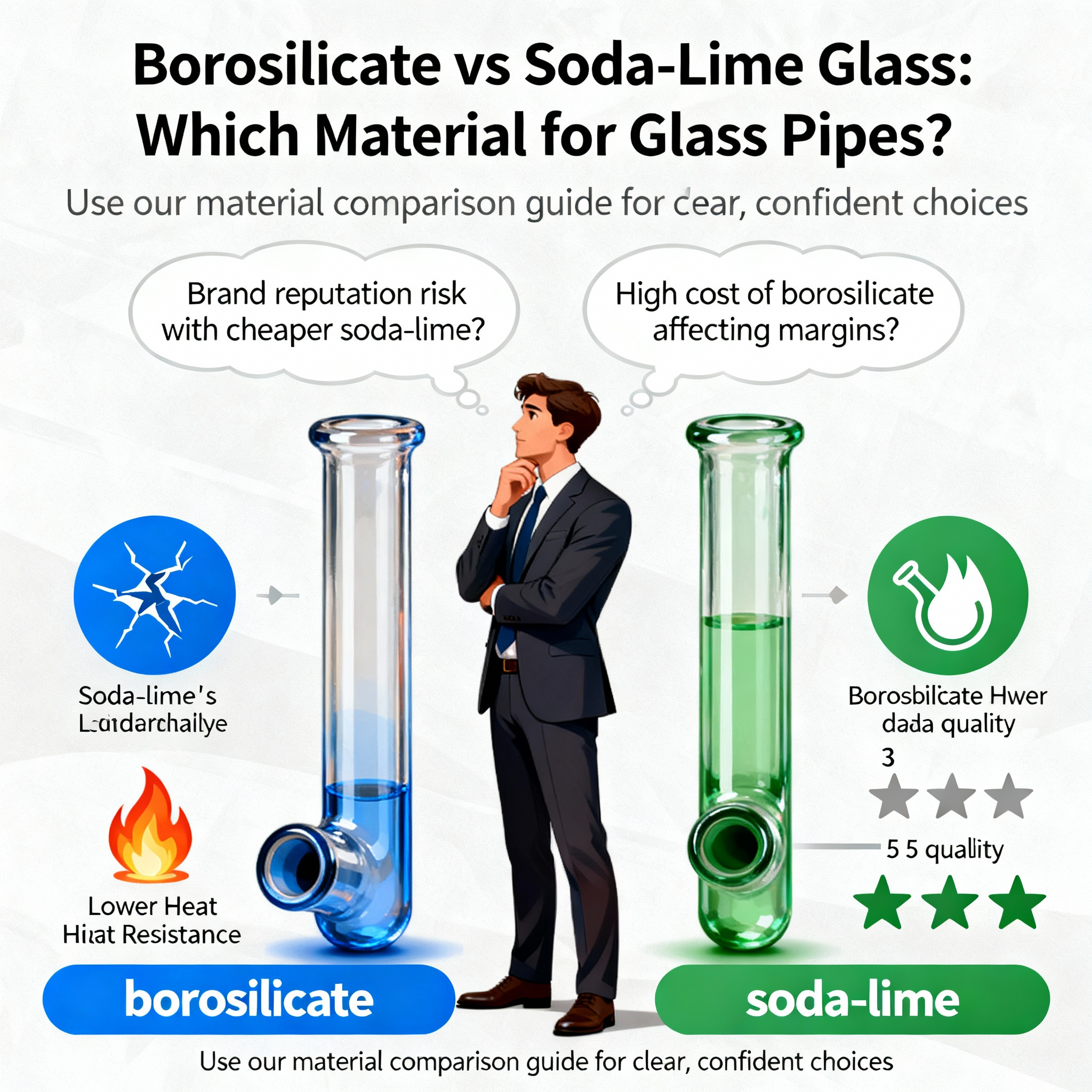
“I need to select materials for my product, but I don’t understand the actual differences between borosilicate vs soda-lime glass. ”
“I’m worried that choosing the cheaper one might damage the brand reputation, while choosing the more expensive one makes me unsure if it’s really necessary.”
In the glass pipes industry, do you ever have such questions?
That guide will help you make clear and confident choices.
What is Borosilicate Glass? The Standard for Science and Quality
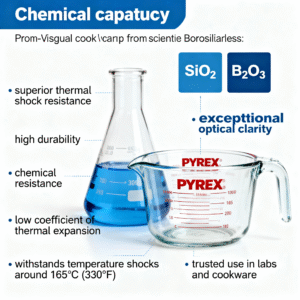
Borosilicate glass is engineered for performance under pressure.
It’s the trusted material for laboratory beakers and high-end PYREX® cookware for a reason: it’s incredibly tough and resistant to extreme temperature changes.
Its unique properties come from its chemical makeup—primarily silica and boron trioxide.
The key to its performance is an extremely low
coefficient of thermal expansion, meaning it expands and contracts very little when heated or cooled.
This prevents the internal stress that causes other glass to crack, allowing it to withstand temperature shocks of around 165°C (330°F).
Key Properties of Borosilicate Glass:
Superior Thermal Shock Resistance
High Durability & Chemical Resistance
Exceptional Optical Clarity
What is Soda-Lime Glass? The Standard for Cost and Commonality
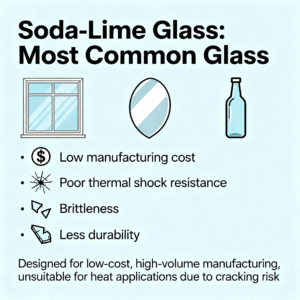
Soda-lime glass is the most common glass in the world, making up about 90% of all glass produced.
It’s in your windows, mirrors, and the bottles in your fridge.
Its formula is designed for one primary purpose: low-cost, high-volume manufacturing.
However, this affordability comes with critical trade-offs.
Soda-lime glass has poor thermal shock resistance and can crack or even shatter when exposed to the sudden temperature changes inherent in smoking accessories.
It is simply not designed for applications involving direct heat.
Key Properties of Soda-Lime Glass:
Low Manufacturing Cost
Poor Thermal Shock Resistance
brittle and less durable
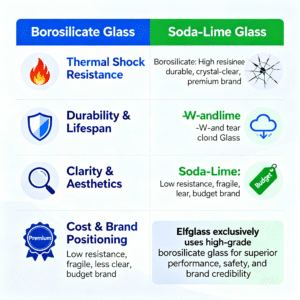
The Head-to-Head Showdown: Borosilicate vs. Soda-Lime Glass
For a brand founder, the choice between these materials directly impacts your product’s performance, safety, and market position.
Here’s how they stack up in the areas that matter most.
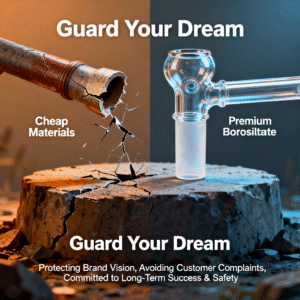
The Bridge: Elfglass’s Uncompromising Commitment
At Elfglass, this choice was never a debate.
We exclusively use high-grade borosilicate glass for all our products.
This isn’t just a technical specification; it’s a core part of our philosophy to “guard your dream.”
We’ve seen too many promising brands get burned by customer complaints about cracked pipes.
Believe me, it’s a painful lesson to learn that saving a few dollars on material can cost you your entire reputation.
We refuse to build your precious vision on a fragile foundation.
Our commitment to using only borosilicate glass is our commitment to your brand’s long-term success and the safety of your customers.

Conclusion: Your Material is Your Message
The material you choose is the first story your product tells the world.
Now, you are no longer a founder wrestling with confusing quotes, but an informed leader who can make a strategic decision that protects your brand.
By understanding the language of glass, you can ensure the product you deliver is a promise of safety, durability, and trust.
Making the right material choice is the foundation of a great product.
Discuss your design with our material experts to ensure your vision is built to last.
Frequently Asked Questions (FAQ)
Q: Is soda-lime glass safe for smoking pipes?
A: No, it is not considered safe for this purpose.
Its poor thermal shock resistance means it can crack or shatter when exposed to the rapid heating and cooling cycles of smoking, posing a significant safety risk to the user.
For any product involving direct heat, borosilicate glass is the only responsible choice.
Q: How can I tell if a pipe is made from borosilicate glass?
A: While it can be tough for the untrained eye, look for a few clues.
Borosilicate glass often feels lighter, has superior optical clarity, and may produce a higher-pitched “clink” when tapped.
However, the most reliable indicators are the price and the reputation of the manufacturer.
A low price is a major red flag, while a trusted brand will proudly state they use high-quality borosilicate.
Q: Does borosilicate glass affect the flavor of the smoke?
A: No, and that’s a key benefit. Borosilicate glass is non-porous and chemically inert, meaning it doesn’t absorb odors or leach any flavors into the smoke.
This ensures a pure taste, allowing the user to experience only their smoking material as intended.
