

Walking into a smoke shop can feel like stepping into a science lab.
The many glass pipe types—Bongs, Dab Rigs, Bubblers—can be intimidating.
You’re not alone. The world of glass pipes is rich, but it doesn’t have to be confusing.
This guide is your friendly expert, breaking down the differenttypes of glass pipes with clear pictures and simple language.
In the next ten minutes, you’ll go from newcomer to a confident connoisseur, ready to find the perfect piece.
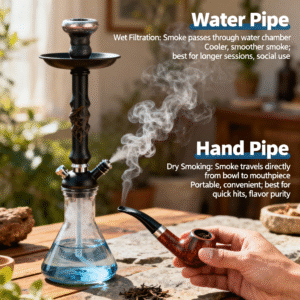
Understanding the 2 Families of Glass Pipe Types
Despite the endless variety you see, every glass pipe in the world belongs to one of two families, based on one simple question: Does it use water?
Understanding this core difference is the key. Every pipe, no matter how complex it looks, starts here.
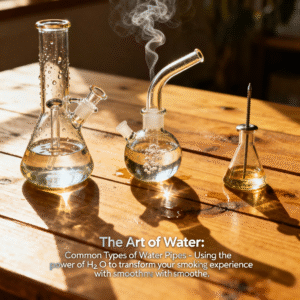
The Art of Water: Common Types of Water Pipes
Water pipes use the power of H₂O to transform your smoking experience.
By filtering the smoke, they provide a level of smoothness that dry pipes simply can’t match.
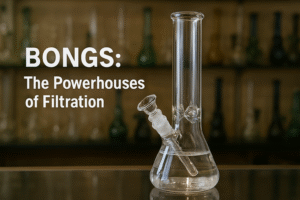
Bongs: The Powerhouses of Filtration
Bongs are the undisputed kings of water filtration, designed for powerful, cool, and smooth hits.
Their larger size allows for more water and a longer path for the smoke to travel, resulting in maximum cooling.
The science is simple: as smoke bubbles through the water, its temperature drops dramatically while particulates and water-soluble compounds are filtered out.
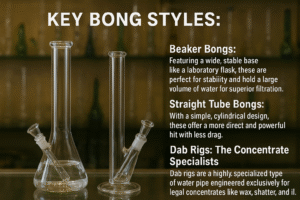
Key Bong Styles:
Beaker Bongs: Featuring a wide, stable base like a laboratory flask, these are perfect for stability and hold a large volume of water for superior filtration.
Straight Tube Bongs: With a simple, cylindrical design, these offer a more direct and powerful hit with less drag.
Many bongs also include advanced features like
Percolators (extra, internal water chambers that create more bubbles for even smoother hits) and Ice Catchers (notches in the neck that hold ice cubes for ultimate cooling).
Dab Rigs: The Concentrate Specialists
Dab Rigs are a highly specialized type of water pipe engineered
exclusively for legal concentrates like wax, shatter, and oil. You do not use them for dry herbs.
The key difference is how the material is heated.
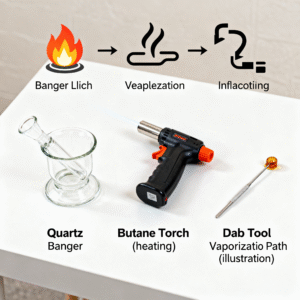
How a Dab Rig Works:
- The “Banger”: Instead of a standard bowl for herbs, a dab rig has a “nail” or “banger,” typically made of quartz.
- Heating: The banger is heated to an extremely high temperature with a butane torch.
- Vaporization: A small amount of concentrate is “dabbed” onto the hot surface, where it instantly vaporizes for inhalation.
This vaporization process produces a cleaner, more potent, and flavorful experience compared to combustion.
Bubblers: The Best of Both Worlds
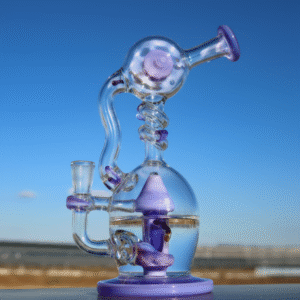
A Bubbler is the perfect hybrid, combining the water filtration of a bong with the portable size of a hand pipe.
They are compact, typically only 4-6 inches tall, but feature a small chamber of water that provides surprisingly smooth, filtered hits.
For those who want the cooling effect of water without the size and setup of a full bong, the bubbler is an ideal choice for personal use and travel.
The Portable Classics: Common Types of Hand Pipes
Hand pipes are the original and most straightforward way to smoke.
Their “dry” design prioritizes portability, convenience, and the pure flavor of your material.
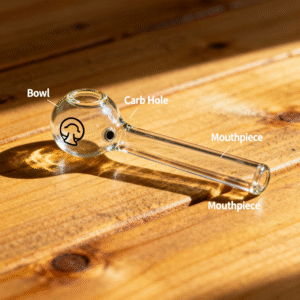
Spoon Pipes: The Quintessential Beginner’s Pipe
The Spoon is the most iconic and common hand pipe for a reason: its design is foolproof and incredibly easy to use.
If you’re new to glass pipes, this is the perfect place to start.
Believe me, after fumbling with complex water pipes early on, the straightforward simplicity of a spoon pipe was a welcome relief and the reason I truly fell in love with the craft.
Anatomy of a Spoon Pipe:
Bowl: Where you pack your dry herbs.
Carb Hole: A small hole on the side that you cover with your thumb to control airflow.
Mouthpiece: Where you inhale.
The glass construction gives you a visual advantage, allowing you to see the smoke build up, while the carb hole gives you complete control over the intensity of each hit.
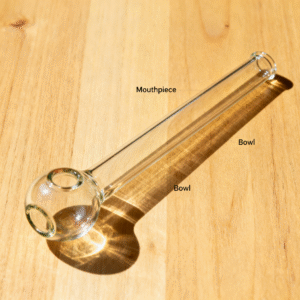
Chillums: The Original One-Hitter
A Chillum is the purest and simplest form of a pipe.
It’s a straight tube with no carb hole, offering a direct, unfiltered path from the bowl to you.
This design is favored by purists who want the most direct and unadulterated flavor from their material.
The draw is controlled entirely by your inhalation speed, offering a potent and intense experience.
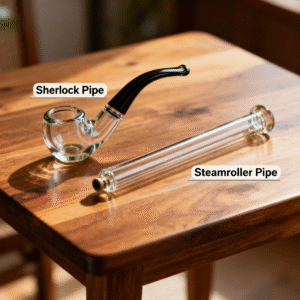
Other Creative Shapes: Where Form Meets Function
The artistry of glass blowing truly shines in the world of hand pipes.
- Sherlock Pipes: With their iconic curved stem, these pipes do more than just look distinguished.The longer smoke path allows the smoke to cool down before it reaches you, resulting in a smoother hit than a straight pipe.
- Steamrollers: These are powerful pipes for experienced users.The cylindrical design with a carb at the end allows you to clear a massive amount of smoke quickly for very large, intense hits.
The Bridge: How to Choose the Perfect Pipe for You
Now you know the main players.
Choosing the right one is simply a matter of matching the pipe’s strengths to your lifestyle and needs.
For Brand Founders & Retailers: Understanding these core types is the first step to building a product line that serves every customer.
A well-rounded catalog should include entry-level spoons, hybrid bubblers, classic bongs, and specialized dab rigs to meet the full spectrum of user preferences.
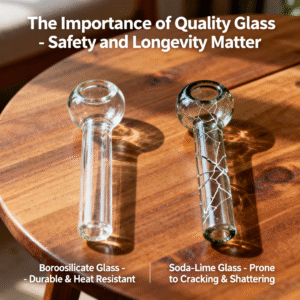
The Importance of Quality Glass
Just as important as the type of pipe is the material it’s made from.
High-quality pipes are made from borosilicate glass, a durable, heat-resistant material used in science labs.
Cheaper pipes are often made from soda-lime glass, which can crack or shatter under heat stress.
Choosing the right material is a crucial decision for safety and longevity.
Conclusion: Your Journey Begins
What once seemed like a confusing maze of scientific instruments is now a clear and organized world.
You now have the knowledge to walk into any smoke shop with confidence, understand the function behind the form, and choose a piece that’s perfect for you.
This beautiful intersection of art and science is now yours to explore.
Ready to build your own collection?
Explore our wholesale catalog to see a full range of high-quality glass pipes, or talk to our team about creating your own unique design.
Frequently Asked Questions (FAQ)
Q: What is the easiest type of pipe for a beginner to use?
A: For most beginners, the classic Spoon Pipe is the easiest and most straightforward option.
It’s a “dry” pipe, meaning it doesn’t use water, which simplifies the process.
It’s small, portable, and has only three key parts to manage: the bowl (where you place the herb), the carb hole (to control airflow), and the mouthpiece.
Its simple design makes it incredibly easy to use and clean, making it the perfect starting point.
Q: What’s the difference between a pipe for dry herbs and a Dab Rig for concentrates?
A: The fundamental difference is the material they are designed for.
Pipes for Dry Herbs (like bongs and spoons) are designed for the combustion of dried plant material. You place the herb in a bowl and use a flame to burn it.
Dab Rigs are designed for the vaporization of legal concentrates (like wax or oil).
Instead of a bowl, they have a “nail” or “banger” which is heated to a very high temperature with a torch.
The concentrate is then touched to the hot surface, instantly turning into vapor to be inhaled.
The key visual difference is the bowl versus the nail/banger.
Q: What’s a reasonable budget for my first high-quality glass pipe?
A: A “high-quality” first piece means it’s made from durable borosilicate glass.
The price can vary widely, but here’s a general guide for a solid, entry-level piece from a reputable source:
Spoon Pipe: $20 – $50
Basic Bong (Beaker or Straight Tube): $70 – $150 Prices can go much higher for pieces with complex features (like intricate percolators), artistic designs, or from famous brands.
For your first piece, focus on simple, well-made borosilicate glass in the style that best suits your needs.
