
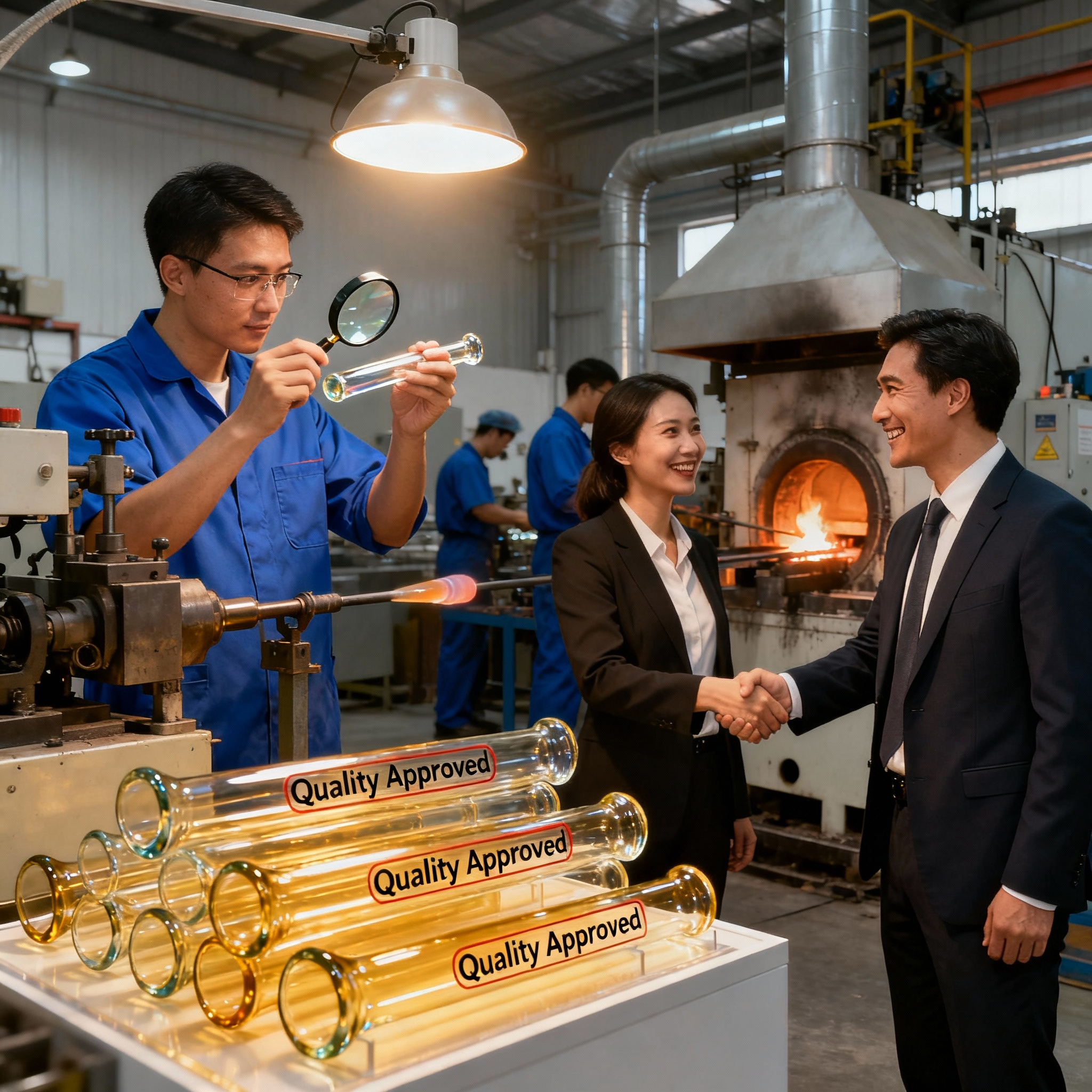
In the glass pipes industry, finding a reliable glass pipe manufacturer is the most critical step for any brand.
Many founders purchasing from China, or managers seeking better partners, fear collaborating with unreliable factories.
They worry about deception, poor quality, and the potential loss of their investment.
This guide is designed to help you navigate the procurement process, avoid common pitfalls, and find a genuine manufacturing partner to protect your brand.

Red Flag #1: The Illusion of Communication
Your first interaction with a potential reliable glass pipe manufacturer is the most telling.
Vague, slow, or generic communication isn’t just an inconvenience—it’s a direct reflection of their internal chaos and lack of respect for your partnership.
Be wary of a supplier who:
Responds with generic phrases: Answers like “no problem” or “we can do it” to detailed technical questions show they either don’t understand your requirements or don’t care to.
Takes days to reply: Delays beyond 24-48 hours are a major red flag in today’s market.
It signals they are disorganized, understaffed, or simply don’t prioritize your business.
Ignores your specific questions: If you ask about borosilicate thickness and they send a generic catalog, you’re seeing a symptom of chaotic management or, worse, a middleman who doesn’t have the answers.
A true partner understands that consistent, transparent communication is the bedrock of a successful project.
They treat your time with urgency because they see you as a partner, not just another order number.
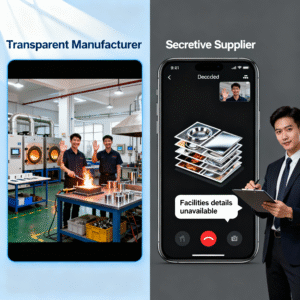
Red Flag #2: A Lack of Factory Transparency
A proud manufacturer is eager to show off their workshop.
Pride in their craft, their team, and their equipment is a sign of a healthy, legitimate operation.
When a supplier is evasive, they are hiding something critical from you.
Evasiveness often means you’re dealing with a trading company with no direct control over production or a factory with substandard conditions—risks your brand cannot afford to take.
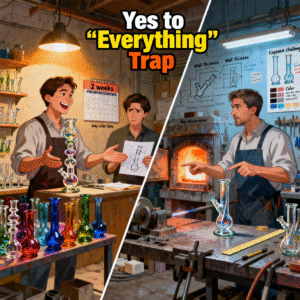
Red Flag #3: The “Yes to Everything” Trap
The most dangerous suppliers are often the ones who seem perfect.
They agree to every request without hesitation—your complex design, your tight timeline, your specific material needs.
But this “siren’s song” of easy compliance often leads to disaster.
Experienced manufacturers know that glass production has inherent limitations.
A responsible partner will engage in a technical dialogue, not just agree blindly.
Promises that should make you wary:
- Agreeing to complex percolator designs without discussing wall thickness or potential stress points.
- Promising unrealistic lead times that ignore proper annealing cycles for custom, hand-blown work.
- Accepting any and all color combinations without explaining potential technical challenges.
A partner who is honest about limitations isn’t being difficult; they are being professional.
Their job is to bring your vision to life successfully, which sometimes means advising against a feature that would compromise the final product’s integrity.
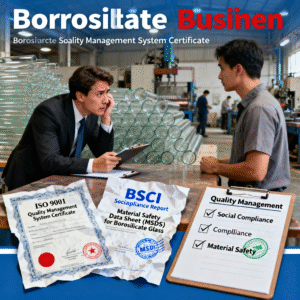
Red Flag #4: Missing or Vague Quality & Compliance Certs
Certifications are the bedrock of trust.
They are objective, third-party proof that a manufacturer adheres to international standards for quality, safety, and ethical practices.
When a supplier can’t or won’t provide them, they are admitting to a fundamental gap in their operational integrity.
Your Manufacturer Verification Checklist:
Quality Management: Do they have current ISO 9001 certification for their quality management systems?
Social Compliance: Can they provide a report from an auditor like BSCI (Business Social Compliance Initiative), proving ethical workplace standards?
Material Safety: Can they provide Material Safety Data Sheets (MSDS) or Certificates of Analysis for their borosilicate glass, proving it’s free from lead or other contaminants?
Asking for these documents isn’t about paperwork; it’s about protecting your brand from the devastating liability of selling an unsafe product.
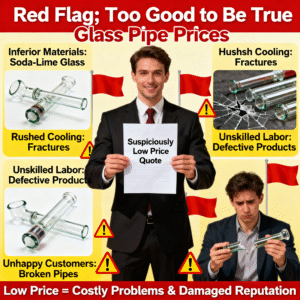
Red Flag #5: A Price That Is Too Good to Be True
An impossibly low price isn’t a bargain; it’s a warning. Premium borosilicate glass, skilled glass artisans, and proper annealing equipment all have baseline costs.
A quote that is significantly below the market rate is a mathematical certainty that corners are being cut.
The Hidden Costs of a Low Price:
Inferior Materials: Using cheap soda-lime glass instead of durable borosilicate.
Failed Quality Control: Rushed cooling processes that lead to internal stress fractures and breakage.
Unskilled Labor: Untrained workers attempting complex techniques, resulting in high defect rates.
Damaged Reputation: Customers receiving products that crack or break during normal use.
Ultimately, the money you “save” upfront will be paid many times over in returns, warranty claims, and the loss of customer trust.
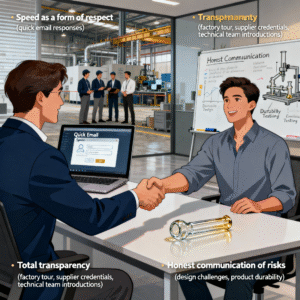
The Bridge: From Avoiding Failure to Finding a True Partner
Recognizing these red flags is the first step.
The next is learning to identify the positive indicators that define a true partnership.
After years in this industry, I’ve learned that it boils down to a few core principles.
I’ve had to learn these lessons the hard way, by dealing with partners who disappeared the moment a problem arose.
Exceptional manufacturers separate themselves by actively demonstrating these values:
- Speed as a Form of Respect: They respond to inquiries within hours, not days.They understand that your timeline is critical and that delays on their end create bottlenecks for your entire business.
- Total Transparency: They go beyond the factory tour. They proactively share material supplier credentials, are honest about production capacity during peak seasons, and connect you directly with their technical teams.
- Honest Communication of Risks: A true partner won’t just take an order; they’ll analyze it.They will proactively identify design challenges and suggest modifications to improve durability, even if it means a more complex conversation upfront.This honesty builds the long-term trust needed to scale a brand.
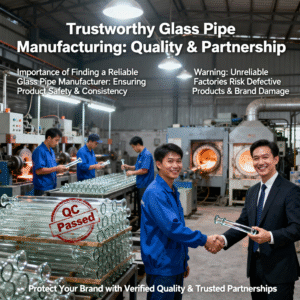
Conclusion: From Vulnerability to Visionary Control
When you master the ability to decode communication patterns, demand transparency, and analyze a quote for what it truly represents, the power dynamic shifts.
You are no longer a passive buyer hoping for the best but a strategic partner evaluator in control of your brand’s destiny.
Your designs embody your creative vision and entrepreneurial spirit.
Choosing the right manufacturing partner is one of the most critical decisions you will make, as it becomes the foundation upon which exceptional customer experiences are built.
By seeking a partner who is genuinely invested in your success, you’re not just securing production capacity;
you’re building a competitive advantage that will allow your brand to thrive for years to come.
Frequently Asked Questions (FAQ)
Q: What is the very first step to vetting a potential manufacturer?
A: The very first step, before you even request a quote, is to test their communication.
Send them an introductory email with specific, open-ended questions about their process.
Ask things like, “Can you describe your quality control process for a new product?” or “Tell me about a time you handled a design challenge.”
A passionate and professional partner will respond promptly and thoroughly.
A slow, vague, or generic copy-paste answer is your first and clearest sign of their internal management and how much they will value your time and business.
Q: Is a trading company always a red flag?
A: Not necessarily, but it requires a different level of caution.
Reputable trading companies can be good for sourcing standard, off-the-shelf products. However, if you are a brand founder with a unique vision that requires customization, collaboration, and direct oversight, working through a middleman introduces significant risks.
You lose direct communication with the engineers, have no control over the production line, and it can be difficult to verify the true source of materials.
For true partnership and brand protection, working directly with the manufacturer is almost always the superior choice.
Q: How can I verify a company’s certifications are authentic?
A: This is a critical step. First, always request a clear, high-resolution copy of the certificate, not just a logo on their website.
Most official certifications, like BSCI or ISO, have public databases.
You can visit the issuing body’s official website and use the certificate number to verify its status.
Pay close attention to three things: the company name on the certificate must exactly match your supplier, the scope of certification should be relevant to your product, and the certificate must be currently valid and not expired.
