
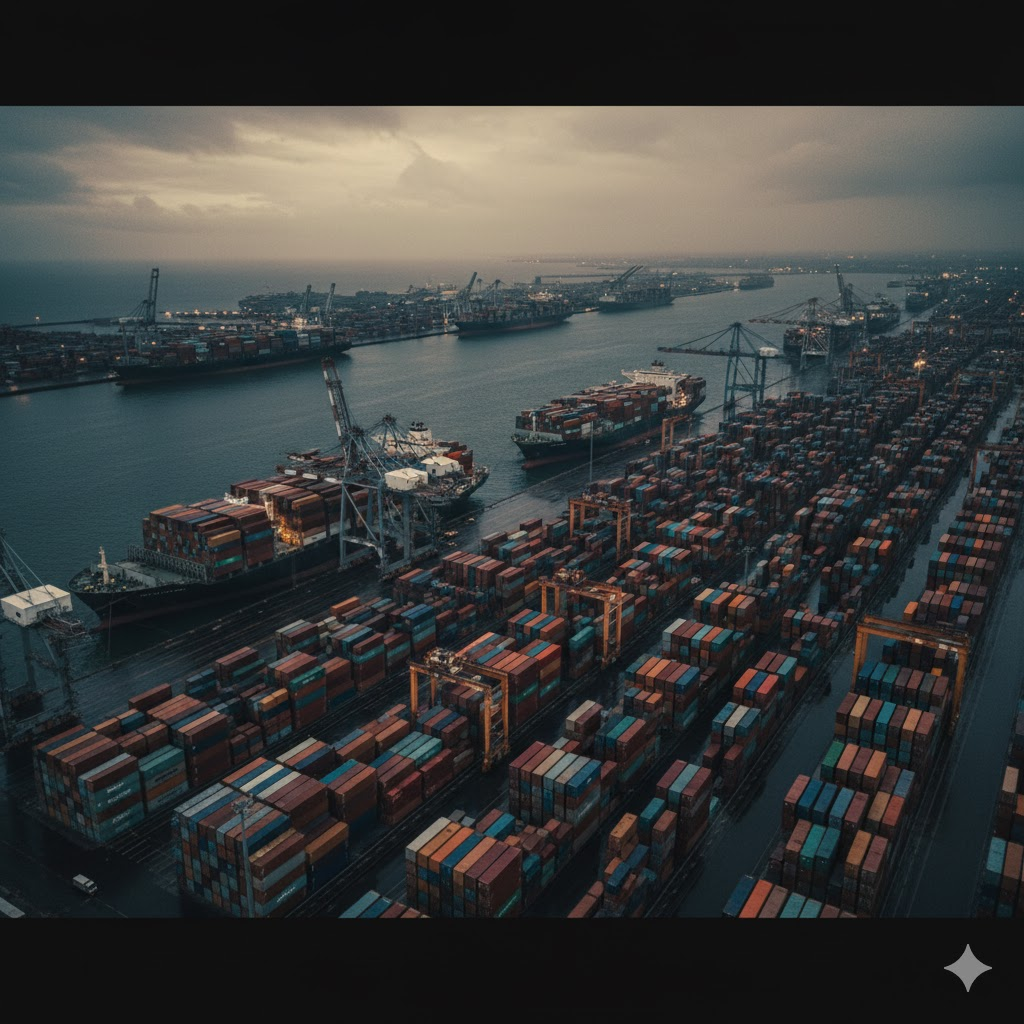
This is a story about real-world supply chain problem solving.
It’s about a partner we’ll call “Brand X.”
And more importantly, it’s a story about what happens when a supply chain doesn’t just bend, but breaks.
Brand X was preparing for their most important product launch of the year.
This new line of glass pipes wasn’t just another SKU; it was their holiday season centerpiece, the culmination of a year’s design and marketing efforts.
Their entire initial inventory—thousands of units representing a massive investment—was on the water.
Then, they got the call.
Due to a critical documentation error by their previous supplier, their entire shipment was seized and indefinitely detained at port.
Their launch date was weeks away. Their marketing budget was spent.
Their brand reputation, all of it, was hanging by a thread.
This was the exact moment they called us.

The Challenge: A Product Launch on the Brink of Collapse
When the call came in, the client wasn’t just concerned.
They were in a state of controlled panic.
We quickly learned the full scope of the disaster.
This was the definition of a high-stakes supply chain problem solving scenario.
The Impending Deadline
The client’s crisis was twofold.
First, the financial catastrophe.
This was their Q4 holiday inventory.
Every single day the product was not on shelves meant an exponential loss of revenue and a complete waste of their pre-launch ad spend.
The calendar was their enemy.
The Trapped Cargo
Second, the logistical nightmare.
Their cargo—multiple containers of high-value, fragile glass products—was “trapped in customs.”
This is a vague and terrifying phrase for any importer.
It meant the goods were in a black hole, accumulating storage fees and demurrage charges daily, with no clear path to release.
They were facing the total loss of their inventory.
The Supplier’s Silence
The worst part? The vendor responsible for the error had vanished.
This is the core pain point we hear about so often. When Brand X needed answers, their “supplier” offered only silence and excuses.
They pointed fingers at the freight forwarder, who pointed at customs, who pointed back at the supplier.
Brand X was isolated and abandoned, left to solve an international supply chain problem solving crisis alone.
Our Solution: A ‘Rescue Team’ for Supply Chain Problem Solving
A supplier sends invoices.
A partner takes ownership.
Brand X’s problem became our problem the second we answered the phone.
Our response wasn’t “what do you want us to do?” It was “here is what we are doing.” This is the core of our approach.
Step 1: Immediate Triage and Full Assessment
Within two hours of the initial call, we assembled an emergency logistics pod.
This team immediately leveraged our high-level contacts at our trusted freight forwarding network—the kind of relationships built over years, not contracts.
This is the first, critical step in effective supply chain problem solving.
Instead of just “checking a tracking number,” our agent was on the phone with the local port authority and our customs brokerage partner to get the real, on-the-ground story.
Step 2: Formulating Multi-Pronged Contingencies
We never bet on a single solution.
By day’s end, we had developed three distinct, viable rescue plans.
This multi-pronged approach is key to our supply chain problem solving philosophy.
We don’t just find an answer; we find the best answer.
- Plan A: The Diplomatic Solution. We would deploy our customs broker to aggressively work on correcting the paperwork. This was the cheapest option, but the timeline was uncertain.
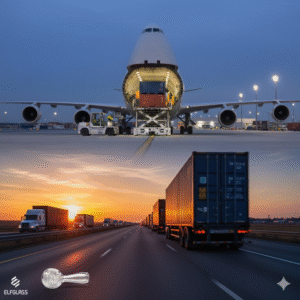
- Plan B: The “Split-Launch” Solution. We would petition to have the shipment split. A small, critical portion (about 15% of the inventory) would be immediately air-freighted to them at our own expense. This would ensure they could meet their launch date, capture initial sales, and satisfy their retail partners, buying us time to free the rest.
- Plan C: The “Reroute” Solution. The most complex option: attempt to have the entire shipment trans-loaded onto a new vessel and rerouted to a different, more accommodating port (a complex process we detail in our
A Guide to International Shipping...), then trucked overland.
Step 3: Transparent Communication and Decisive Execution
We presented all three plans to Brand X with full transparency: best-case and worst-case timelines, all-in costs, and our official recommendation.
This level of transparency is core to our supply chain problem solving process.
There was no finger-pointing. Just solutions.
Brand X, no longer feeling isolated, made a clear-headed decision.
We would immediately execute Plan B to save the launch, while simultaneously working on Plan A.
Our team handled the rest.
We managed the split, booked the air cargo, and began the daily, grinding work of fixing the customs issue.
We sent our client a single, consolidated progress report every single day.
They went from a state of panic to a state of control.

The Bridge: This Was More Than a Logistical Fix
We want to pause this manufacturing case study for a moment to explain why we operate this way.
This story is not just about logistics.
It is the living embodiment of our core philosophy (which we also explored in Why We Say "No"): “Empathy before Engineering.”
We understood the client’s panic.
We felt the weight of their holiday launch.
Our loyalty was not to a purchase order number; it was to their commercial success.
This is our supply chain problem solving philosophy in action.
We took responsibility for a problem we did not create because it was standing in the way of our partner’s success.
This is the fundamental difference between a vendor and a partner.
A vendor sees a “shipping problem.” A partner sees a “brand crisis.”
This supplier partnership story is about what happens when your manufacturer acts as a true guardian of your business.
The Result: Crisis Averted, Trust Forged for Life
The outcome was a success, born from a disaster and built on effective supply chain problem solving.
The air-freighted “Plan B” cargo arrived at Brand X’s warehouse with just 72 hours to spare.
They made their launch date. The initial product sold out, and the marketing buzz was overwhelmingly positive.
Meanwhile, our logistics team, after a grueling two-week battle, successfully freed the rest of the ocean cargo.
What could have been a company-ending catastrophe became a minor (and managed) cost of doing business.
But the most important result was not the salvaged cargo.
It was the new relationship.
Brand X found a manufacturing partner they could trust for life. As their CEO told us later:
“In our darkest moment, Elfglass didn’t ask us ‘what should we do?’ They told us, ‘we have three options.'”
Conclusion: Is Your Supplier Part of the Problem, or Part of the Solution?
Supply chain problems are inevitable.
Customs will make errors.
Ships will be delayed.
A partner’s true test is not whether problems will happen, but how they respond when they do—it’s how they approach supply chain problem solving.
When your back is against the wall and your launch is on the line, you need more than a supplier.
You need a problem-solver. You need a guardian.
So, ask yourself: is your current supplier part of your problem, or part of your solution?
Facing your own supply chain problem solving challenges? You don’t have to solve them alone. Partner with a team that’s built to be your guardian.
