
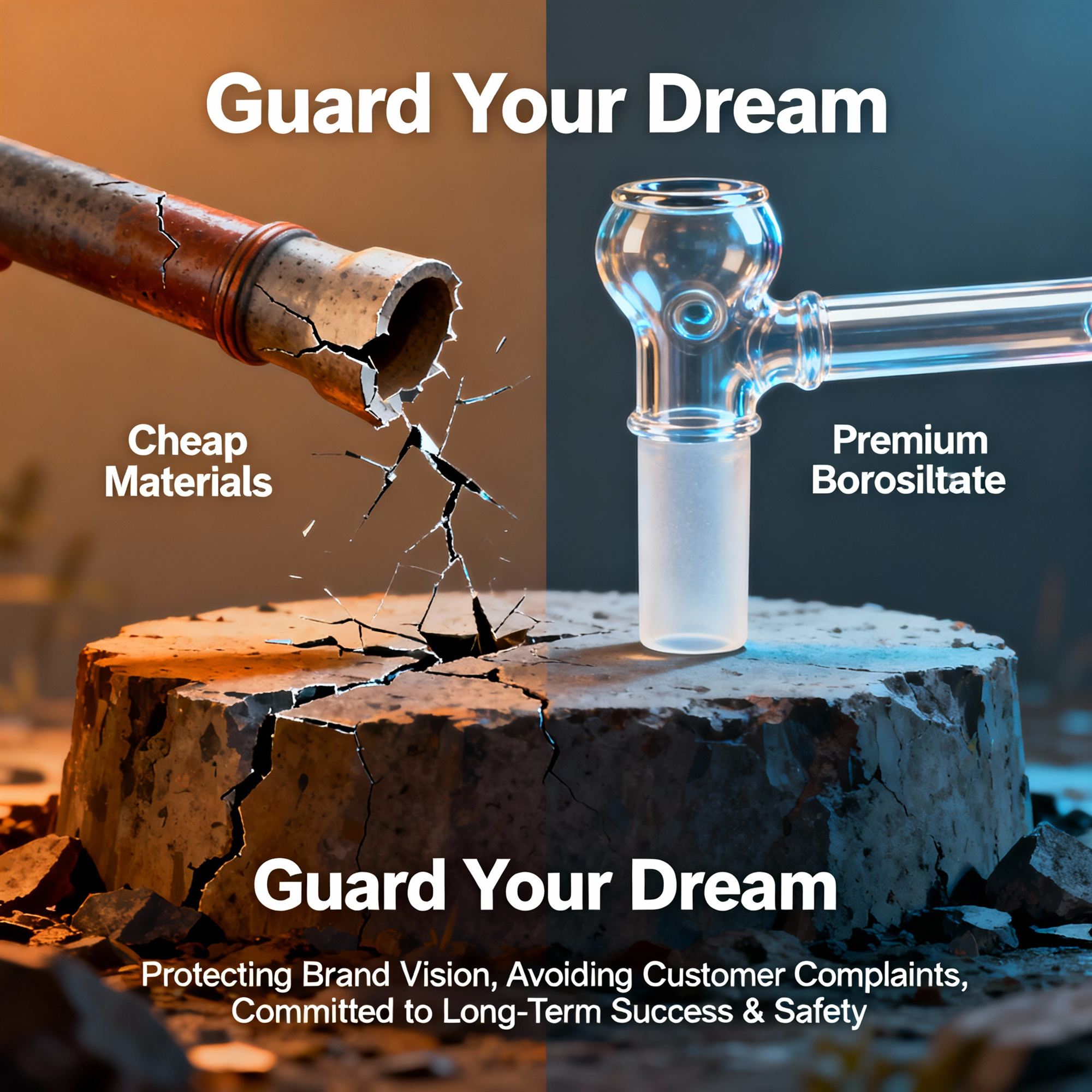
Borosilicate glass is the industry-standard material for quality glass pipes, and every reputable manufacturer claims to use it. But “claims to use it” and “actually uses it” are different things. For wholesale buyers, verifying that your supplier’s glass is genuinely borosilicate—not cheaper soda-lime glass marketed as borosilicate—is a critical quality control step that most buyers skip until a batch cracks under thermal stress.
This guide explains what borosilicate glass is, why it matters for smoking pipes, and the specific tests and documentation you can request to verify the material before and after your order ships.
Key Takeaways
- Borosilicate glass contains at least 7-13% boron trioxide (B₂O₃), which gives it a low coefficient of thermal expansion (3.3 x 10⁻⁶/°C) compared to soda-lime glass (8.5-9.5 x 10⁻⁶/°C).
- The most reliable verification methods are lab-based: XRF spectroscopy and flame emission testing. Field tests (thermal shock, refractive index) are indicative but not definitive.
- A Material Safety Data Sheet (MSDS) from your supplier is a starting point, not proof—request third-party lab analysis for orders above $5,000.
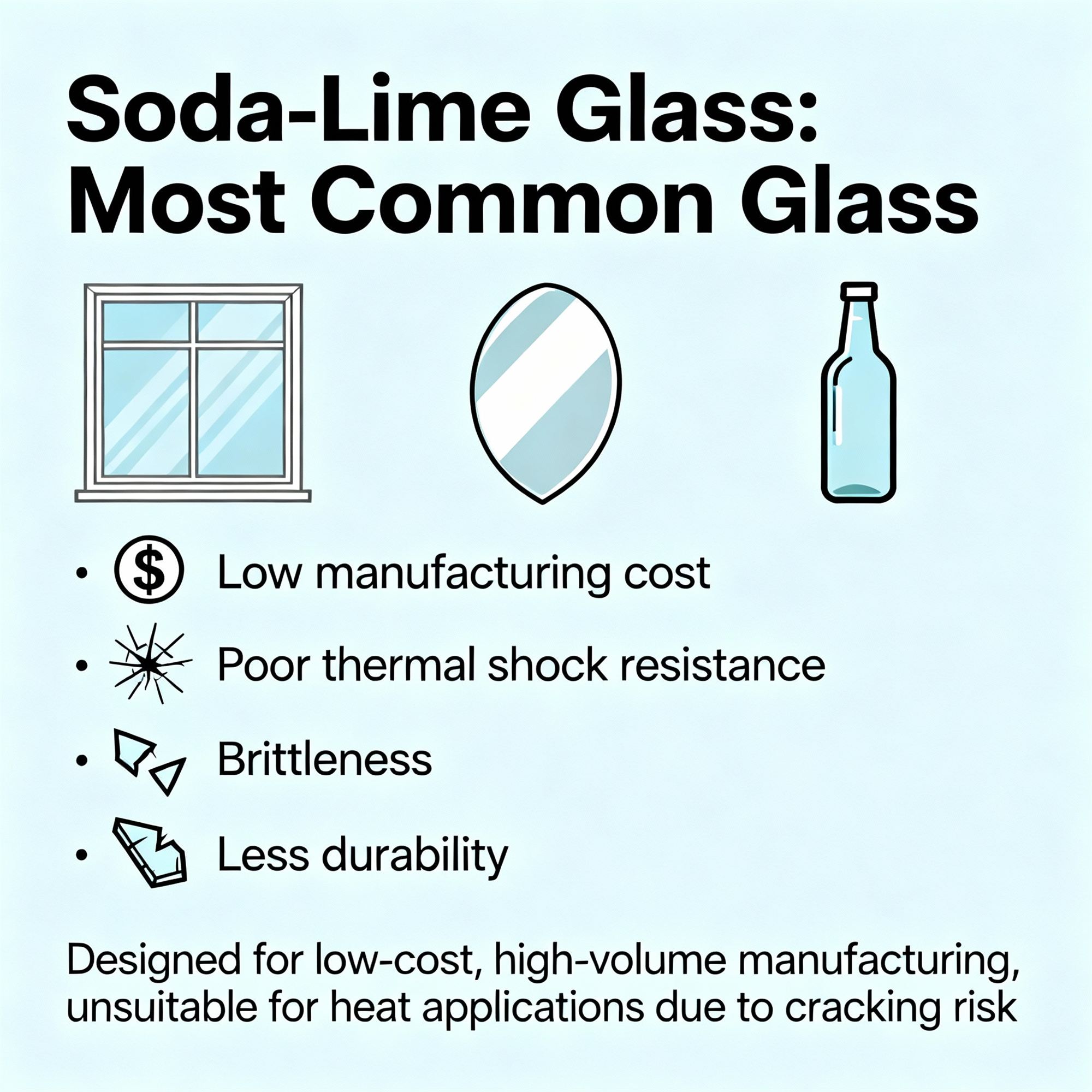
- Soda-lime glass is not dangerous for smoking pipes, but it cracks more easily under thermal stress and has a lower perceived quality.
- Price is a signal: if a supplier’s borosilicate pipes are priced close to competitors’ soda-lime pipes, the material claim is suspect.
Why Borosilicate Glass Matters for Pipes
Borosilicate glass was developed in the 1890s by German glassmaker Otto Schott for laboratory use. Its defining property is a low coefficient of thermal expansion (CTE), meaning it expands and contracts less when heated or cooled compared to ordinary soda-lime glass.
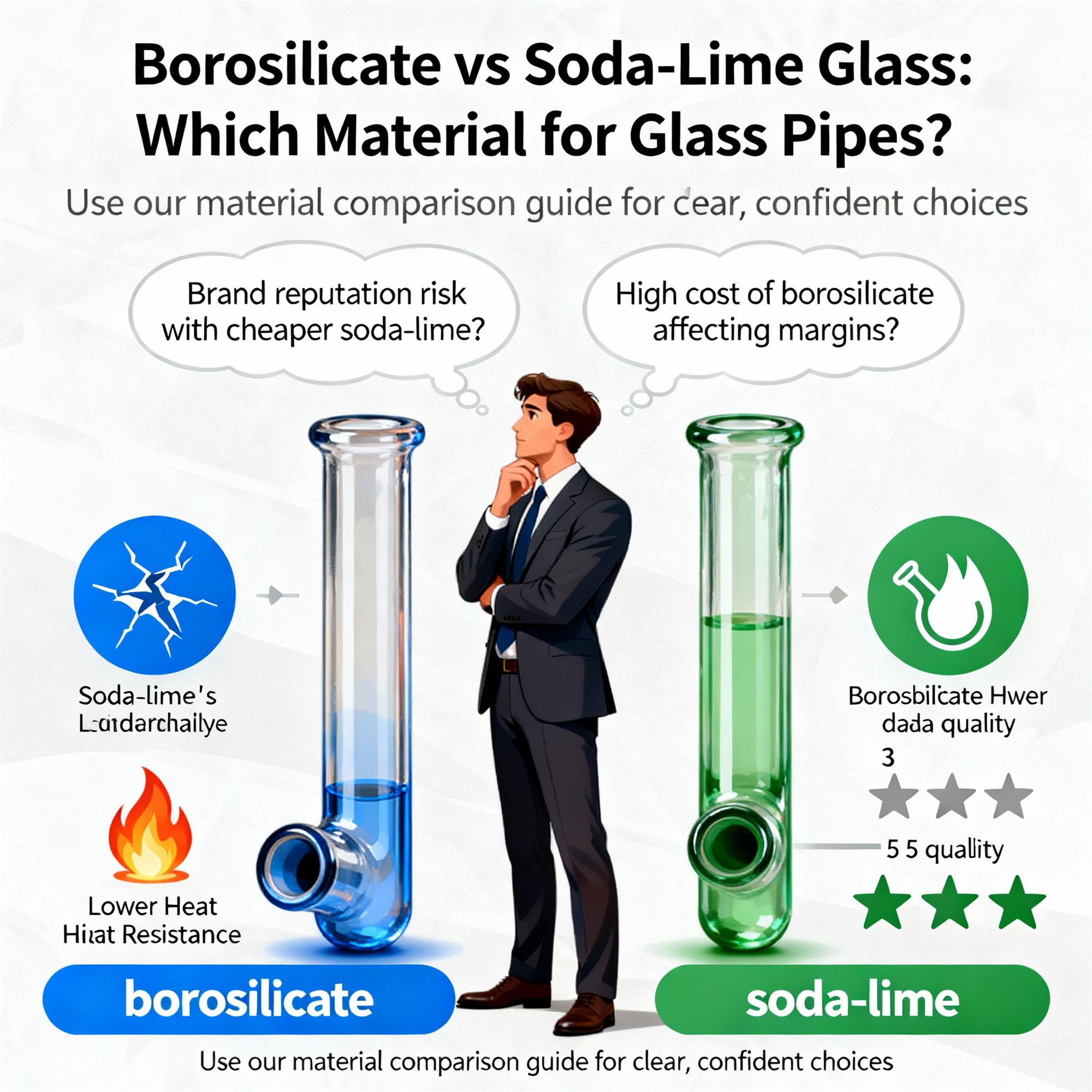
For glass smoking pipes, this matters because:
- Thermal shock resistance. A borosilicate pipe can withstand the temperature differential between a butane lighter flame (~1,400°C at the tip) and room-temperature glass without cracking. Soda-lime glass, with its higher CTE, is more likely to develop stress fractures when one area heats rapidly while adjacent areas remain cool.
- Chemical inertness. Borosilicate glass does not react with acidic or alkaline substances. For a smoking pipe, this means no leaching of glass components into the smoke stream, regardless of what is being combusted or vaporized.
- Clarity and workability. Borosilicate glass maintains its clarity at high temperatures, allowing glassblowers to see internal features (percolators, diffusers) during production. This results in more precise craftsmanship. It also accepts colorants more predictably than soda-lime glass.
Borosilicate vs. Soda-Lime: The Numbers
| Property | Borosilicate (3.3) | Soda-Lime | What It Means for Pipes |
|---|---|---|---|
| CTE (x 10⁻⁶/°C) | 3.3 | 8.5-9.5 | Borosilicate is 2.5-3x more resistant to thermal shock |
| Softening point (°C) | ~820 | ~700 | Borosilicate holds shape at higher temperatures |
| Density (g/cm³) | 2.23 | 2.50 | Borosilicate is lighter for the same volume |
| Refractive index | 1.474 | 1.520 | Slight visual difference; borosilicate appears “clearer” |
| Raw material cost | 2-3x higher | Baseline | Explains price differences between suppliers |
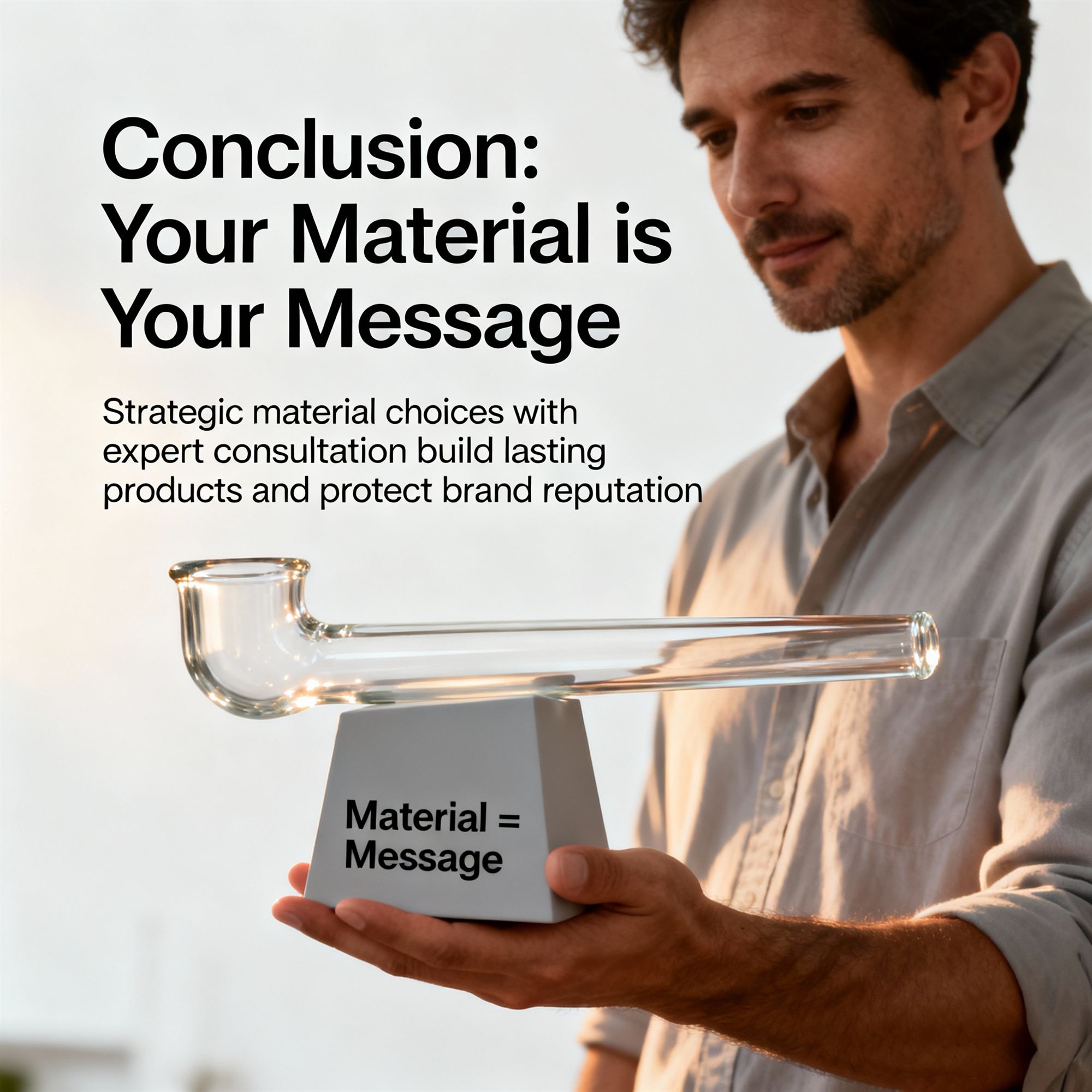
The cost difference is the key motivator for misrepresentation. Borosilicate glass raw materials cost 2-3 times more than soda-lime. A factory that substitutes soda-lime while charging borosilicate prices captures a significant margin— at the buyer’s expense when pipes crack in the field.
Verification Methods: From Quick Checks to Lab Analysis
There is no single “field test” that definitively identifies borosilicate glass. Verification exists on a spectrum from quick (but inconclusive) to definitive (but expensive).
Level 1: Documentation Review (Do This for Every Order)
Request the following from your supplier before placing an order:
- Material Safety Data Sheet (MSDS) for the glass compound used. The MSDS should list boron trioxide (B₂O₃) as a component at 7-13% concentration. If boron trioxide is absent or listed below 5%, the glass is not borosilicate.
- Supplier certification stating the glass type (e.g., “3.3 borosilicate” or “5.0 borosilicate”). Borosilicate 3.3 is the standard for laboratory and premium pipe glass. Borosilicate 5.0 is a lower-grade variant with slightly higher CTE.
- Third-party test report from a lab like SGS, Intertek, or Bureau Veritas. For orders above $5,000, this is worth the $100-200 cost.
An MSDS alone is not proof—a factory can fabricate an MSDS. But a missing or incomplete MSDS is a strong negative signal. If your supplier cannot provide one, treat the material claim as unverified.
Level 2: Physical Field Tests (Indicative, Not Definitive)
These tests can be performed on a sample from your order. They are suggestive but not conclusive:
- Thermal shock test. Heat one area of the glass with a butane lighter for 15 seconds, then immediately run cold water over the heated area. Borosilicate glass should survive this without cracking. Soda-lime glass may crack or shatter. Note: some high-quality soda-lime glass also survives this test if the piece is thin, so passing does not guarantee borosilicate.
- Weight comparison. Borosilicate glass (density 2.23 g/cm³) is about 10% lighter than soda-lime glass (2.50 g/cm³) for the same volume. If you have a known borosilicate reference piece of similar size, compare weights. A noticeably heavier piece may be soda-lime.
- Refractive index test. Using a refractometer (available for $50-100 on Amazon), measure the refractive index of the glass surface. Borosilicate reads approximately 1.474; soda-lime reads approximately 1.520. The difference is small but measurable. This test requires a flat surface on the glass piece.
Level 3: Laboratory Analysis (Definitive)
For conclusive verification, send a sample to a materials testing laboratory:
- XRF (X-ray Fluorescence) spectroscopy. This non-destructive test identifies the elemental composition of the glass surface. It directly measures boron, silicon, sodium, calcium, and other elements. A boron content consistent with 7-13% B₂O₃ confirms borosilicate. Cost: $50-150 per sample.
- Flame emission spectroscopy. The sample is dissolved and analyzed for sodium, potassium, calcium, and boron content. More precise than XRF but destructive. Cost: $80-200 per sample.
- CTE measurement. A dilatometer directly measures the coefficient of thermal expansion. A CTE of 3.3 x 10⁻⁶/°C confirms borosilicate 3.3. This is the gold standard but also the most expensive test ($200-400). It requires a precisely cut sample.
For wholesale buyers, XRF spectroscopy offers the best balance of cost, speed, and reliability. Many testing labs (SGS, Intertek) offer XRF as a standalone service with 3-5 day turnaround.
Red Flags That the Glass May Not Be Borosilicate
Even without lab testing, certain signals suggest your supplier may be using soda-lime glass:
- Price too low. If a supplier’s “borosilicate” pipes are priced within 10-20% of known soda-lime competitors, the material claim is suspect. Genuine borosilicate raw material costs 2-3x more. The finished product should reflect this.
- Weight feels heavy. Pick up the pipe. If it feels noticeably heavier than a known borosilicate piece of similar size, it may be soda-lime.
- Thermal cracking under normal use. If end users report cracks from normal lighter use (not extreme abuse), the glass may have a higher CTE consistent with soda-lime.
- Supplier cannot provide MSDS. A legitimate borosilicate supplier has an MSDS for their glass compound. Inability to provide one suggests they do not know their own material source.
- Vague material descriptions. “High-quality glass,” “premium glass,” or “heat-resistant glass” are not material specifications. Ask for the specific glass type (3.3 borosilicate) and the B₂O₃ content percentage.
Need a Supplier Who Proves Its Borosilicate?
Elfglass documents every production run with material certificates, low-coefficient borosilicate verification and pre-production samples, so you can confirm the glass before you commit. Send your verification checklist and get a quote within 12 hours.
MOQ from 100 pieces | BSCI / WRAP / ISO 9001 | NDA before every project
Building Material Verification Into Your Sourcing Process
For wholesale buyers establishing a long-term relationship with a glass pipe manufacturer, material verification should be part of the initial qualification process—not an afterthought when problems arise.
- During supplier evaluation: Request MSDS and glass type certification from every prospective supplier. Compare responses. Suppliers who provide complete documentation promptly are demonstrating transparency.
- Before first order: Send a sample from the supplier’s existing production to an XRF lab for independent verification. Cost: $50-150. This confirms the material before you commit to a large order.
- For every order: Include material specification as a contractual requirement. “All glass components shall be borosilicate 3.3 with B₂O₃ content of 7-13%. Seller shall provide MSDS with each shipment. Buyer reserves the right to conduct independent material testing.”
- For custom OEM orders: Verify that the glass compound used for your custom design matches the specification. Custom colors may use different base compounds—confirm borosilicate content extends to colored variants.
A manufacturer like Elfglass, which holds ISO 9001 certification and maintains documented production processes, already tracks material specifications as part of their quality management system. Requesting documentation from such a factory is routine; requesting it from a less organized supplier may reveal gaps.
Frequently Asked Questions
What is the difference between borosilicate 3.3 and borosilicate 5.0?
Borosilicate 3.3 has a coefficient of thermal expansion (CTE) of 3.3 x 10⁻⁶/°C and is the standard for laboratory glassware and premium smoking pipes. Borosilicate 5.0 has a CTE of 5.0 x 10⁻⁶/°C, making it less resistant to thermal shock. It is sometimes used in budget glass products. For smoking pipes, 3.3 is the preferred grade.
Can I test borosilicate glass at home without a lab?
You can perform indicative tests (thermal shock, weight comparison, refractive index with a handheld refractometer), but none are definitive. The thermal shock test (heat with lighter, then cold water) is the most practical field check—borosilicate should survive, soda-lime may crack—but some high-quality soda-lime also passes. Only XRF spectroscopy or CTE measurement in a lab provides definitive verification.
Is soda-lime glass dangerous for smoking pipes?
Soda-lime glass is chemically inert and safe for smoking use. The concern is not safety but durability: soda-lime glass is more prone to thermal shock cracking, which can cause sudden breakage during use. It also has a lower perceived quality, which affects retail pricing and customer satisfaction.
How much more does borosilicate glass cost than soda-lime?
Borosilicate raw materials cost 2-3 times more than soda-lime glass. For finished glass pipes, the price difference varies by complexity but typically results in a 30-80% higher wholesale price for borosilicate pieces compared to equivalent soda-lime pieces from the same region.
What documentation should I request from my supplier?
At minimum: a Material Safety Data Sheet (MSDS) listing B₂O₃ content at 7-13%, and a supplier certification stating the glass type (3.3 borosilicate). For orders above $5,000, add a third-party XRF test report from SGS, Intertek, or Bureau Veritas.
Ready to Start Your Custom Glass Pipe Project?
Get a free quote within 24 hours. MOQ from 100 pieces. NDA-protected design consultation.
About the Author
Ava Zeng is the founder of Elfglass, a Shenzhen-based borosilicate glass pipe manufacturer serving B2B brands worldwide. Every guide on this site is grounded in her production-floor experience— the annealing lines, QC checkpoints, and export orders behind each claim.
Before you commit to a supplier, read her founder’s story and trust promise, and the guide to vetting a reliable glass pipe manufacturer— the same red-flag checklist Elfglass applies to its own suppliers.
Have questions about borosilicate glass verification for your next order? Contact our team for guidance tailored to your market.
