

New retail smoke shop owners often face a deceptively simple question: what products should fill the shelves for the first time? The answer determines cash flow velocity, customer return rates, and whether the store develops a reputation as a destination or a pass-through. Building the right product mix— the proportional allocation of water pipes, hand pipes, dab rigs, and accessories— is a wholesale purchasing decision that shapes the business from day one.
This guide provides a practical framework for building a balanced glass pipe product mix, based on what works for new retailers entering the market in 2026. The ratios and category logic here apply whether you are stocking a physical smoke shop, an online retail operation, or a hybrid of both.

Why Product Mix Balance Matters More Than Volume
A store that stocks 200 water pipes and 20 hand pipes has a volume problem in reverse— too much capital concentrated in one category. Water pipes move slower than hand pipes at lower price points, and the shelf space allocated to each category should reflect its turnover rate and margin contribution.
The product mix decision also affects how customers perceive the store. A well-curated selection that covers multiple categories and price points signals expertise and reliability. A store stacked with one product type at the expense of others signals a lack of market understanding. For retailers entering the wholesale water pipe market, this balance is especially critical because water pipes carry higher unit costs and slower turnover than smaller items.
The Four-Category Framework
Glass pipe retail inventory falls into four primary categories. Each serves a different customer need and price sensitivity band.
Category 1: Water Pipes (Bongs)
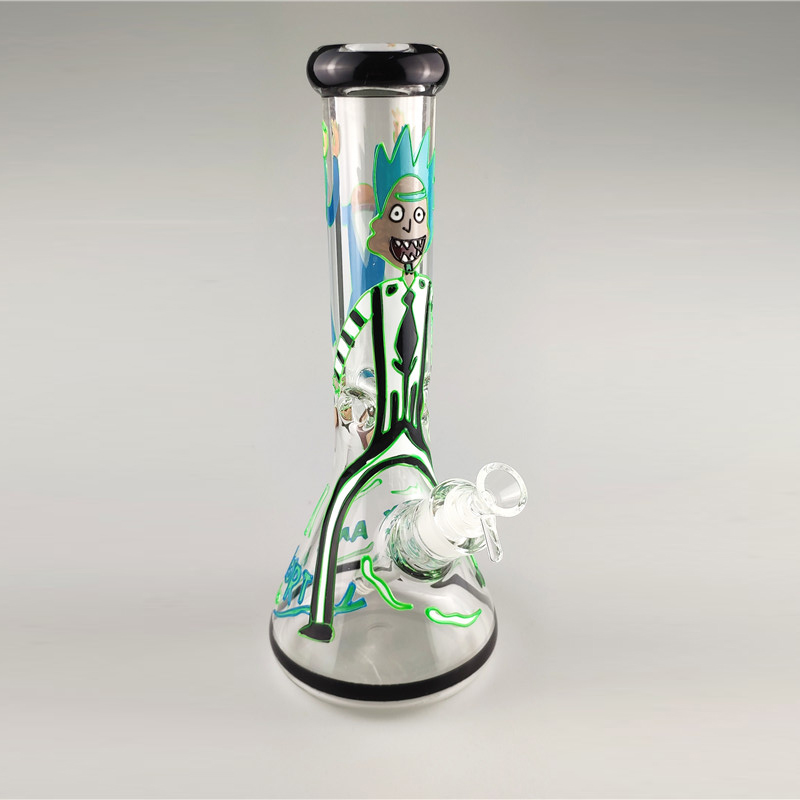
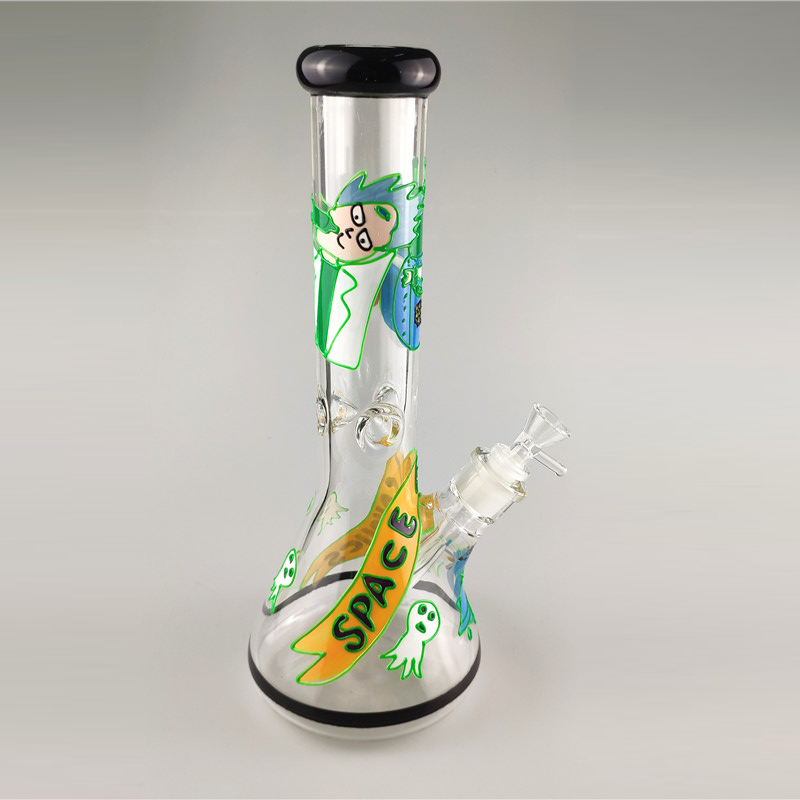
Water pipes are the high-ticket anchor of any glass pipe retail operation. They carry the highest per-unit revenue and the strongest margin potential, but they also require the most shelf space and move more slowly than smaller items.
For a new retailer, a recommended starting allocation is 30–35% of total SKU count dedicated to water pipes. This should include a mix of beaker bases, straight tubes, and recycler styles across two or three size ranges (mini, mid, and full-size). Avoid stocking only large, expensive pieces— the mini and mid-range water pipes (8–12 inches) typically have faster turnover because they are more accessible to first-time buyers.
Category 2: Hand Pipes
Hand pipes are the highest-volume category by unit count. They are affordable, impulse-friendly, and appeal to the broadest customer base. A new retailer should allocate 30–35% of SKUs to hand pipes, with emphasis on variety— different shapes (spoon, sherlock, steamroller), colors, and price points.
The key to hand pipe profitability is turnover. Because individual unit margins are lower than water pipes, the category must move consistently. Stocking 15–20 different hand pipe SKUs gives customers enough variety to find something they like without overwhelming them with choice. When sourcing wholesale hand pipes, prioritize color diversity and unique designs that differentiate your selection from competing stores.
Category 3: Dab Rigs
Dab rigs occupy a specialized but growing segment. They appeal to concentrate users who value flavor preservation and efficient consumption. The category carries higher per-unit margins than hand pipes but lower volume.
Allocate 15–20% of SKUs to dab rigs. Focus on e-nail compatible rigs and a few entry-level options for customers exploring concentrates for the first time. The wholesale dab rig market has expanded significantly, and retailers who stock a curated selection capture customers who might otherwise buy online.
Category 4: Parts and Accessories
Accessories— downstems, bowls, bangers, slides, cleaning supplies, and replacement parts— are the highest-margin category by percentage. They also drive repeat visits, since customers return when parts break or wear out.
Allocate 15–20% of SKUs to parts and accessories. This category requires minimal shelf space per SKU and carries strong margins. Wholesale glass pipe parts and accessories should include universal-fit items that serve the widest range of products already in your inventory.
Price Point Distribution Within Each Category
Within each category, distribute SKUs across three price tiers:
| Price Tier | SKU Allocation | Role |
|---|---|---|
| Entry (budget-friendly) | 40% | Attract new customers, drive trial |
| Mid-range | 40% | Core revenue, best margin-to-volume ratio |
| Premium (heady/high-end) | 20% | Anchor pieces, brand positioning, aspirational purchases |
The 40/40/20 split ensures that your store is accessible to budget-conscious buyers while still offering premium options that elevate the brand. The premium tier may move slowly, but its presence affects how customers perceive the mid-range products— a $120 hand pipe makes the $45 option feel like a smart purchase rather than a compromise.
Adjusting the Mix for Your Market
The framework above is a starting point. Actual allocation should shift based on your specific market conditions:
- College town: Increase hand pipe allocation to 40%, reduce water pipes to 25%. Budget tier expands to 50%.
- Affluent urban area: Increase premium tier to 30%. Dab rigs may grow to 25% of SKUs.
- Tourist area: Emphasize visually striking pieces and novelty items. Entry tier expands.
- Online-only: Broader SKU range is viable since shelf space is not a constraint. Consider 25% more SKUs overall.
Retailers entering specific markets should also consider regional preferences. For example, USA retailers should review USA-specific market insights before finalizing their initial order.
Building Your First Glass Pipe Product Mix?
Elfglass helps new retailers balance water pipes, hand pipes, dab rigs and accessories across entry, mid and premium tiers within a single 100-piece MOQ. Send your category breakdown and get a quote within 12 hours.
MOQ from 100 pieces | BSCI / WRAP / ISO 9001 | NDA before every project
First Order vs Reorder Strategy
Your first wholesale order should be conservative. Order 100 units per SKU design (the standard MOQ for most manufacturers) and use the initial sell-through data to guide reorders. The retailers who over-order on their first purchase often end up with dead stock in underperforming categories while running out of fast-moving items.
For the reorder cycle, shift allocation toward categories that demonstrated the fastest turnover in the first 60 days. If hand pipes sold through in 3 weeks but water pipes took 10 weeks, increase hand pipe SKU count and reduce water pipe variety until the sales patterns stabilize.
When you are ready to discuss your initial product mix with a manufacturer, reach out with your category breakdown and target quantities. A supplier who understands your product mix strategy can recommend complementary pieces and flag potential issues with your allocation before you commit to a full order.
Mix Mistakes That Trap Cash: The Over-Allocation Traps
The framework above describes the right mix; these are the ways it goes wrong in practice, and the cash consequence of each. Every trap is a deviation from the four-category and price-tier ratios — recognizing the symptom early is what keeps a first order from becoming dead stock.
| Trap | Symptom | Cash Consequence | Correction |
|---|---|---|---|
| Over-weighting water pipes | Capital concentrated in the slowest-turning, highest-unit-cost category | Cash tied up for 10-week sell-through while fast movers stock out | Hold water pipes to 30–35% of SKUs; lean on mini and mid sizes (8–12 in) for turnover |
| Too much premium tier | Aspirational pieces that anchor perception but never sell | High-cost inventory aging on the shelf | Keep premium at ~20% — enough to halo the mid-range, not enough to trap cash |
| Under-stocking parts and accessories | Smallest shelf footprint skipped to fund bigger pieces | Lost the highest-margin-percentage category and the repeat visits it drives | Protect the 15–20% accessory allocation; universal-fit items serve the whole floor |
| Too many SKUs in one category | Variety for its own sake; thin velocity per SKU | Choice paralysis and spread-out cash across slow movers | Cap hand pipes at 15–20 SKUs; depth in winners beats breadth in also-rans |
| Ignoring the local market | A college town stocked like an affluent boutique | Budget buyers find nothing; premium sits unsold | Shift the ratios to the market — more hand pipes and entry tier where the customers are |
From SKU Mix to Shelf Space to Order Units
A category’s share of SKUs is not its share of shelf space, and neither is its share of your capital. Translating the framework into a floor plan and a first order is where most new retailers stall. Work through these three conversions before you send quantities to a supplier.
- Convert SKU % to shelf space by footprint. Water pipes may be ~30% of SKUs but need the most linear shelf and the deepest fixtures; parts are ~15–20% of SKUs yet fit a small counter case. Allocate physical space by footprint per SKU, not by SKU count.
- Convert SKU count to first-order units at the MOQ. With a standard 100-unit MOQ per design and a 40–60 SKU starting range, your first order is conservative by design — 100 per SKU, not 500. Order depth only where you have sell-through evidence.
- Convert the mix to capital allocation. Weight your budget by unit cost × quantity, not by SKU count. The water-pipe category will absorb the largest share of cash even at a similar SKU count — plan the remaining categories so they are not starved.
- Hold the premium anchor even though it turns slowly. A $120 hand pipe makes the $45 option feel like a smart buy. Its job is perception, not velocity — do not cut it just because it moves last.
- Set the 60-day review before the order arrives. Decide now which turnover signal triggers a reorder shift (e.g., hand pipes selling through in 3 weeks vs water pipes in 10), so the first reorder is a decision, not a reaction.
Key Takeaways
- Balance four categories: water pipes (30–35%), hand pipes (30–35%), dab rigs (15–20%), and accessories (15–20%)
- Within each category, distribute across three price tiers: 40% entry, 40% mid-range, 20% premium
- Adjust the mix based on your specific market— college towns favor budget hand pipes, affluent areas favor premium rigs
- First orders should be conservative at 100 units per SKU; let sell-through data guide reorders
- Accessories carry the highest margin percentage and drive repeat customer visits
Frequently Asked Questions
What is the ideal product mix for a new smoke shop?
A balanced starting point allocates 30–35% of SKUs each to water pipes and hand pipes, 15–20% to dab rigs, and 15–20% to parts and accessories. Adjust based on your local market demographics and initial sell-through data.
How many SKUs should a new glass pipe retailer start with?
Most new retailers start with 40–60 SKUs across all categories. This provides enough variety to serve different customer preferences without overcommitting capital to slow-moving inventory.
Which glass pipe category has the highest profit margin?
Parts and accessories carry the highest margin percentage (often 60–70%), followed by dab rigs (50–60%), water pipes (40–55%), and hand pipes (35–50%). However, hand pipes generate the highest total margin dollars due to faster turnover.
Should I stock more expensive or cheaper glass pipes initially?
Use a 40/40/20 split across entry, mid-range, and premium price tiers. The entry tier drives trial, the mid-range generates core revenue, and the premium tier positions your store as a serious destination.
Ready to Start Your Custom Glass Pipe Project?
Get a free quote within 24 hours. MOQ from 100 pieces. NDA-protected design consultation.
About the Author
Ava Zeng is the founder of Elfglass, a Shenzhen-based borosilicate glass pipe manufacturer serving B2B brands worldwide. Every guide on this site is grounded in her production-floor experience— the annealing lines, QC checkpoints, and export orders behind each claim.
Before you commit to a supplier, read her founder’s story and trust promise, and the guide to vetting a reliable glass pipe manufacturer— the same red-flag checklist Elfglass applies to its own suppliers.
