
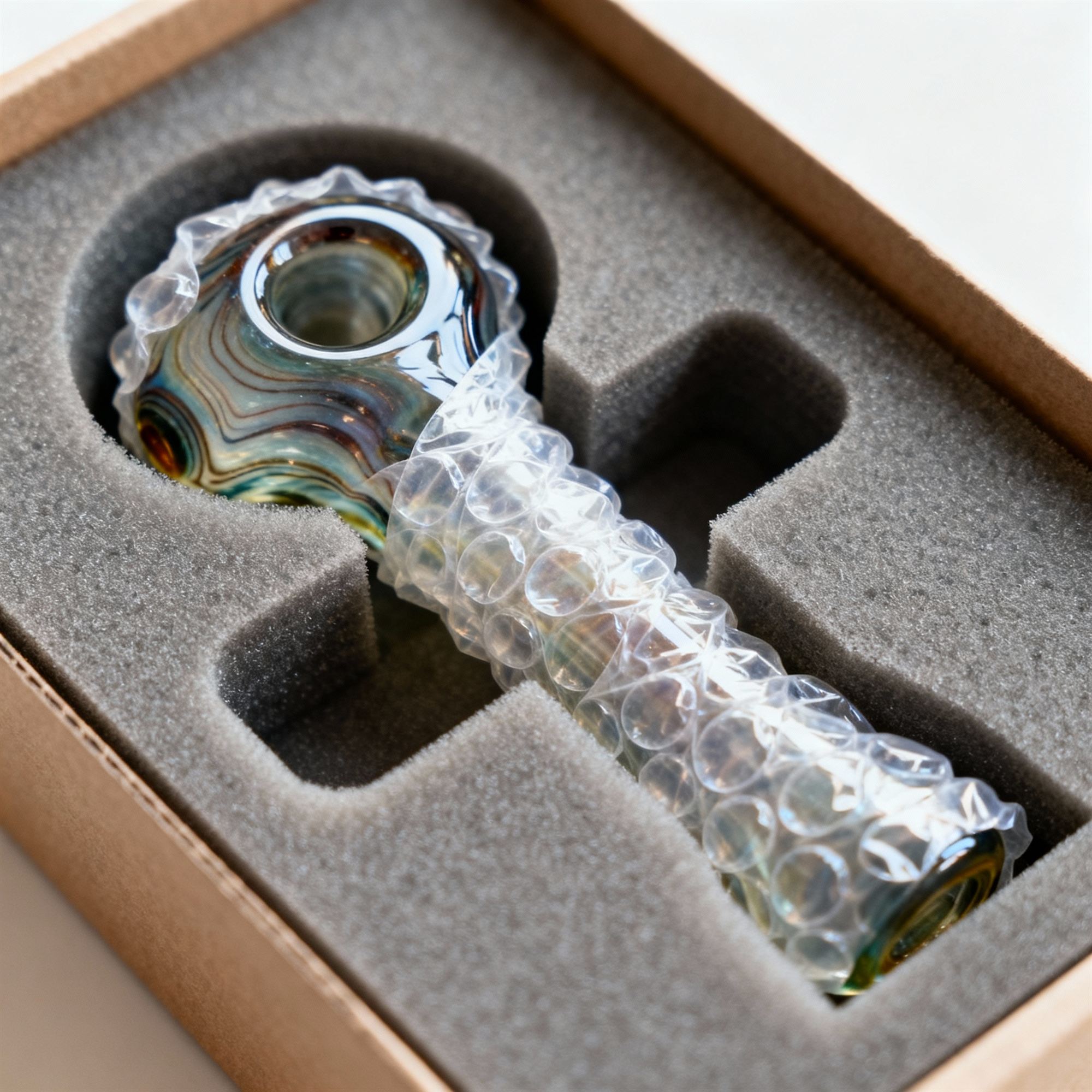
Child-resistant packaging is one of those regulatory requirements that wholesale buyers discover late in the process—usually after their first order has arrived and the packaging fails compliance. In the glass pipe industry, where products are sold alongside lighters, grinders, and other accessories, the packaging rules vary significantly by country and sometimes by state or province within a country.
This guide maps the child-resistant packaging requirements across the major markets for glass pipes: the United States, Canada, the United Kingdom, Australia, and the European Union. It covers what the law requires, what qualifies as child-resistant, and how to work with your manufacturer to ensure compliant packaging before your order ships.
Key Takeaways
- The US requires child-resistant packaging for smoking accessories in certain states, but there is no federal mandate specifically for glass pipes.
- Canada’s Consumer Chemicals and Containers Regulations require child-resistant packaging for certain tobacco accessories under specific conditions.
- Australia’s Poisons Standard mandates child-resistant packaging for products associated with tobacco use in some states.
- Child-resistant does not mean child-proof—certified packaging is tested to allow 85% of adults to open it within a set time.
- Exit bags, push-and-turn vials, and zip-lock pouches with squeeze-and-pull mechanisms are the most common CR options for glass pipes.
United States: A Patchwork of State Laws
At the federal level, the US Consumer Product Safety Commission (CPSC) does not specifically mandate child-resistant packaging for glass smoking pipes. The Poison Prevention Packaging Act (PPPA) of 1970 targets specific substances—pharmaceuticals, household chemicals, and certain consumer products—but does not enumerate glass pipes as a covered category.
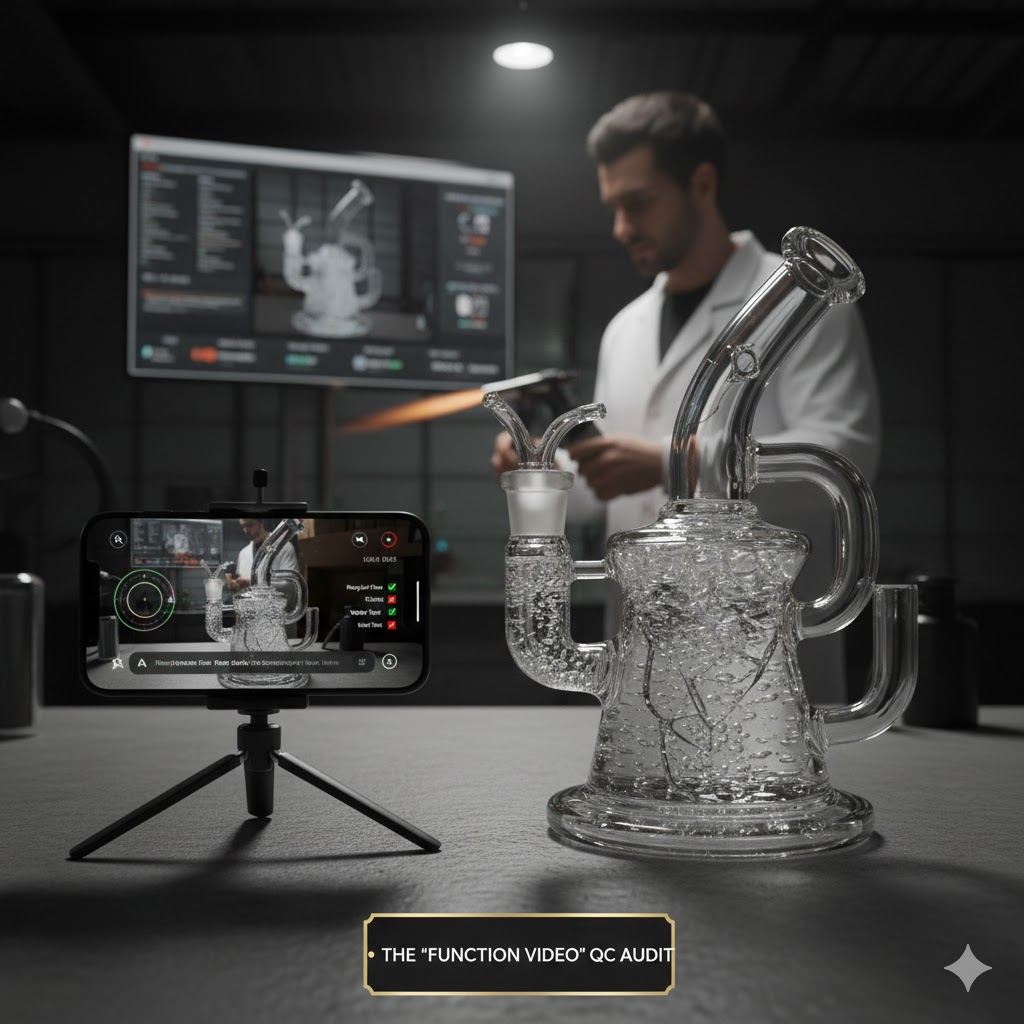
However, several states have enacted their own requirements:
| State | Requirement | Details |
|---|---|---|
| California | Prop 65 + local ordinances | Some counties require CR packaging for products sold in head shops. Enforcement varies by jurisdiction. |
| New York | Public Health Law §1399-cc | Requires child-resistant packaging for tobacco smoking accessories sold in retail establishments. Applies to pipes, rolling papers, and related products. |
| Massachusetts | 105 CMR 660 | CR packaging required for tobacco products and accessories. Specific testing standards reference ASTM D3475. |
| Colorado | CRS 25-35-101 | Following cannabis legalization, CR packaging requirements expanded to include cannabis accessories. Glass pipes sold for cannabis use must comply. |
The practical implication for wholesale buyers: if you sell into multiple US states, you need packaging that meets the strictest standard among your target markets. New York and Colorado currently have the most explicit requirements for glass pipe packaging.
Canada: Federal Requirements Under CCCTR
Canada’s Consumer Chemicals and Containers Regulations, 2001 (CCCTR) under the Canada Consumer Product Safety Act set federal requirements for child-resistant packaging. While glass pipes themselves are not classified as chemical containers, the regulations extend to certain products sold alongside pipes.
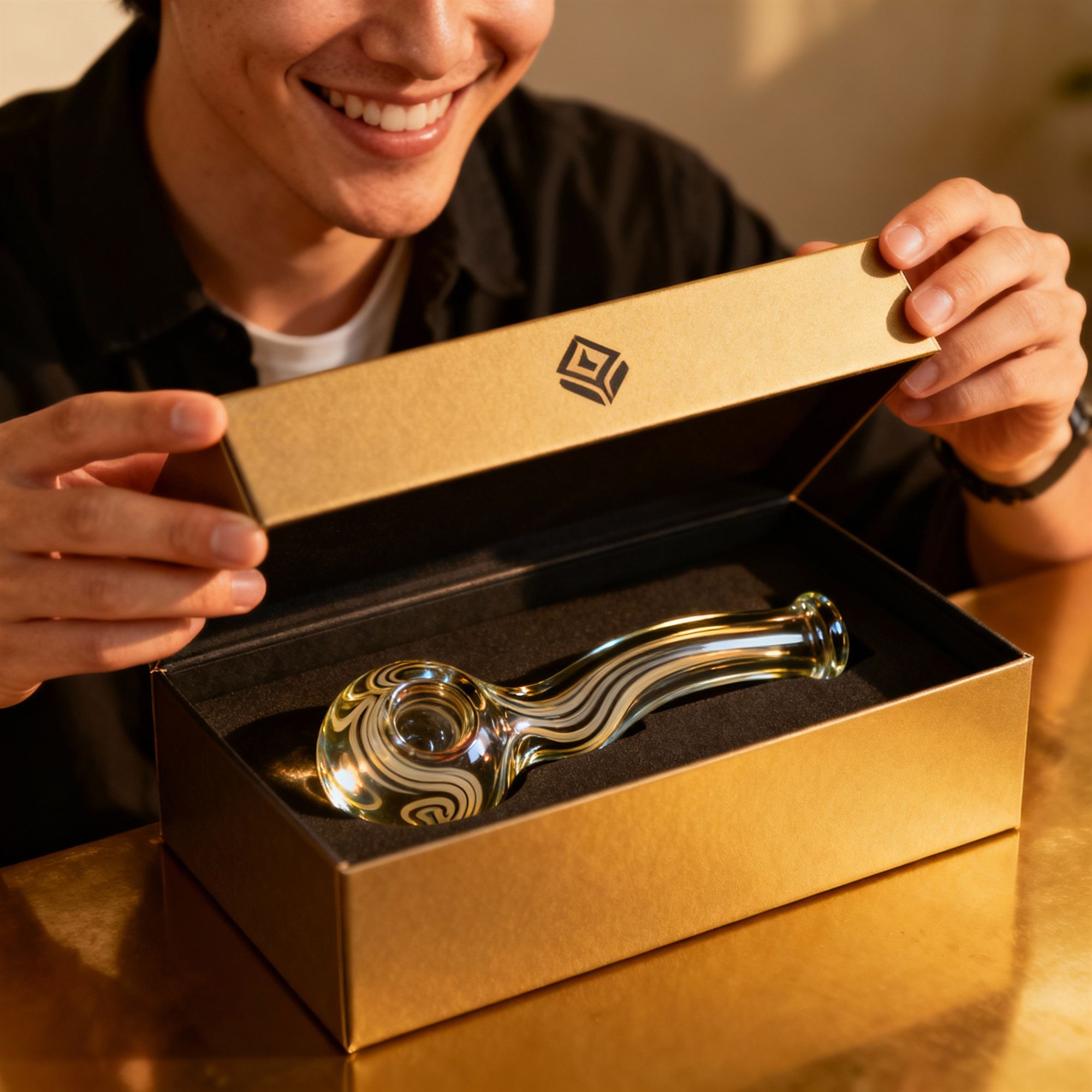
For glass pipes specifically, Health Canada does not mandate CR packaging at the federal level. However, if your product is marketed or sold as a cannabis accessory in provinces where cannabis is legal (Canada-wide since 2018), provincial regulations may apply. Ontario, British Columbia, and Alberta each have their own cannabis retail packaging rules that can extend to accessories.
The safest approach for the Canadian market: use CR packaging for all glass pipe products, regardless of the specific provincial requirement. This ensures compliance across all provinces and simplifies your packaging supply chain.
Australia: The Poisons Standard and State Enforcement
Australia’s packaging requirements for smoking accessories derive from the Poisons Standard (Standard for the Uniform Scheduling of Medicines and Poisons, or SUSMP). While the Standard primarily targets scheduled substances, several Australian states have extended CR packaging requirements to smoking accessories sold in retail settings.
Key considerations for the Australian market:
- Victoria and New South Wales have the strictest enforcement of CR packaging for head shop products.
- CR testing in Australia follows AS 1928 (Australian Standard for child-resistant packaging), which is broadly aligned with ISO 8317 internationally.
- If your glass pipe ships with any non-glass component (e.g., a silicone sleeve or cleaning solution), that component may independently trigger CR packaging requirements.
For Australian market buyers, confirm with your local compliance consultant whether your specific product category requires CR packaging in your target state before finalizing your packaging specification.
United Kingdom and EU: General Product Safety
The UK and EU do not have specific child-resistant packaging mandates for glass smoking pipes. The General Product Safety Regulations (UK) and the General Product Safety Directive (EU 2001/95/EC, replaced by Regulation 2023/988 as of December 2024) require that all consumer products be “safe” under normal and reasonably foreseeable conditions of use.
For glass pipes, this means:
- The product itself must not present unreasonable risks (e.g., sharp edges, lead in glass).
- Packaging must not create suffocation hazards for children.
- If the product is sold in a way that could attract children (e.g., colorful designs, candy-like shapes), additional caution is warranted.
While CR packaging is not legally required for glass pipes in the UK/EU, some retailers voluntarily adopt it as a best practice—particularly for products sold online where the end consumer cannot inspect the product before purchase.
What “Child-Resistant” Actually Means: Testing Standards
Child-resistant packaging is not the same as child-proof. The international standard ISO 8317 defines the testing protocol:
- Child panel test: A group of 200 children aged 41-51 months attempts to open the package. No more than 15% (i.e., no more than 30 children) may open it within a specified time. This certifies the package as child-resistant.
- Adult panel test: A group of 100 adults aged 18-64 (including 25 aged 60+) must be able to open and properly re-close the package. At least 90% must succeed in opening it, and at least 90% must succeed in re-closing it.
This dual test ensures that CR packaging is difficult for young children but manageable for the vast majority of adults. If a supplier claims their packaging is “child-resistant” without referencing ISO 8317 or a national equivalent (ASTM D3475 in the US, AS 1928 in Australia), ask for the test certificate.
CR Packaging Options for Glass Pipes
Several packaging formats meet child-resistant standards and work well for glass pipes:
| Format | Best For | CR Mechanism | Approximate Cost per Unit |
|---|---|---|---|
| Push-and-turn vial | Small hand pipes, one-hitters | Push down and rotate cap simultaneously | $0.30-0.60 |
| Exit bag (CR zip pouch) | Medium pipes, dab rigs | Squeeze two sides while pulling zipper | $0.15-0.35 |
| CR slider box | Premium pieces, gift sets | Hidden latch requiring simultaneous press-and-slide | $0.80-1.50 |
| CR tube (paperboard) | Sherlock pipes, straight tubes | Twist-to-open cap with internal detent | $0.40-0.75 |
The exit bag is the most cost-effective option for high-volume wholesale orders and works well for most hand pipes and smaller water pipes. Push-and-turn vials are preferred for premium single-piece packaging. CR slider boxes serve the gift market where presentation matters alongside compliance.
Need Child-Resistant Packaging Built Into Your Order?
Elfglass sources ISO 8317-tested CR exit bags, push-and-turn vials and slider boxes through established packaging partners and quotes them inside your MOQ-100 order—so your glass pipes arrive compliant for the US, Canada, UK and Australia from day one. Send your target market and get a quote within 12 hours.
MOQ from 100 pieces | BSCI / WRAP / ISO 9001 | NDA before every project
Working With Your Manufacturer on CR Packaging
When ordering wholesale glass pipes, include your CR packaging specification in your initial inquiry—not as an afterthought. Here is what to communicate to your factory:
- Target market(s): Specify which countries or states you sell into. The factory can then recommend CR formats that meet those specific standards.
- Product dimensions: CR packaging must accommodate the product with enough clearance to prevent damage but not so much that the product shifts and defeats the CR mechanism.
- Volume: CR packaging is typically sourced separately from the glass production. Minimum order quantities for custom CR packaging range from 500-1,000 units per format. For smaller orders, stock CR formats (standard sizes) are more practical.
- Branding: CR packaging can be custom-printed with your logo and product information, but custom printing adds 2-3 weeks to the packaging lead time. Stock formats with sticker labels are faster for initial orders.
A manufacturer experienced in export—like Elfglass, which ships to the US, UK, Australia, and Canada—will have established relationships with CR packaging suppliers and can source compliant packaging as part of your order. For custom OEM projects, integrate the CR packaging specification into the product development timeline to avoid delays.
Frequently Asked Questions
Is child-resistant packaging legally required for glass pipes in the US?
There is no federal mandate for CR packaging specifically for glass smoking pipes in the US. However, several states—notably New York, Colorado, Massachusetts, and parts of California—have state-level requirements. If you sell into multiple states, use CR packaging that meets the strictest applicable standard.
What is the difference between child-resistant and child-proof packaging?
Child-resistant packaging is tested to ISO 8317 standards: no more than 15% of children aged 41-51 months can open it, while at least 90% of adults can. “Child-proof” implies absolute prevention, which no packaging achieves. The industry term is “child-resistant,” not “child-proof.”
How much does child-resistant packaging add to per-unit costs?
CR exit bags add approximately $0.15-0.35 per unit; push-and-turn vials add $0.30-0.60; CR slider boxes add $0.80-1.50. For wholesale orders of 100+ units, the packaging cost increase is typically 5-15% of the total per-unit cost including the glass product.
Can my factory source child-resistant packaging for me?
Most export-experienced glass pipe manufacturers can source CR packaging through their supply chain partners. Specify your target market, product dimensions, and volume when placing your order so the factory can quote CR packaging alongside the glass products.
Does CR packaging need to be re-certified for each product?
CR packaging certification applies to the packaging format itself, not the product inside. Once a specific vial, bag, or box format passes ISO 8317 testing, it can be used for any product that fits within its dimensions. However, if you change the packaging format or size, new testing may be required.
Ready to Start Your Custom Glass Pipe Project?
Get a free quote within 24 hours. MOQ from 100 pieces. NDA-protected design consultation.
About the Author
Ava Zeng is the founder of Elfglass, a Shenzhen-based borosilicate glass pipe manufacturer serving B2B brands worldwide. Every guide on this site is grounded in her production-floor experience— the annealing lines, QC checkpoints, and export orders behind each claim.
Before you commit to a supplier, read her founder’s story and trust promise, and the guide to vetting a reliable glass pipe manufacturer— the same red-flag checklist Elfglass applies to its own suppliers.
