Turning a sketch into a production-ready glass pipe prototype takes 7-15 days and costs $150-800 depending on complexity. For B2B buyers developing custom product lines, this prototyping phase is where concepts either prove manufacturable or reveal hidden engineering challenges that delay launches by months. Understanding the prototyping process—what’s possible, what costs what, and where the pitfalls hide—lets you budget accurately and avoid the false starts that burn through development capital.
This guide walks through every stage of custom glass pipe prototyping: from initial concept validation through 3D modeling, glass blowing trials, fit testing, and final production samples. Whether you’re a brand owner launching a signature collection or a distributor developing exclusive SKUs, this roadmap shows you how to move from idea to shippable sample with minimal wasted iterations.
Key Takeaways
- Simple spoon prototypes cost $150-300 and take 7-10 days; complex recyclers with multiple percolators cost $500-800 and take 12-15 days
- 3D modeling before glass blowing reduces iteration cycles by 60%—always start with a CAD model for pieces over $300 prototype cost
- Production samples (pre-shipment) must match approved prototypes within 2mm tolerance on dimensions and ±5% on weight
- Most prototyping failures occur at joint connections (14mm/18mm ground joints) and percolator alignment—specify these clearly in your brief
- Budget for 2-3 prototype iterations on complex pieces; simple designs often approve on the first sample
The Prototyping Workflow: From Brief to Box
Stage 1: Concept Brief and Feasibility Review (Days 1-2)
Every prototype starts with a written brief. This doesn’t need to be a formal engineering document—a clear email with sketches, reference images, and functional requirements works. Your manufacturer should respond within 48 hours with a feasibility assessment covering:
- Manufacturability: Can this piece be blown in borosilicate glass with standard techniques? Are there undercuts, internal angles, or wall thicknesses that exceed glass blowing limits?
- Tooling requirements: Does the design require custom molds (for press pieces) or can it be free-blown? Mold costs add $200-500 but reduce per-unit cost for runs over 500 pieces.
- Joint specifications: 14mm or 18mm ground joints, male or female, at what angle? Misaligned joints are the #1 prototype rejection reason.
- Estimated cost and timeline: Based on complexity, the manufacturer quotes prototype cost (typically 3-5x production unit cost) and lead time.
Red flag: If your manufacturer skips feasibility review and immediately quotes a price, they’re not evaluating whether your design works—they’re just blowing glass and hoping it fits. Insist on a written feasibility response before authorizing the prototype.
Stage 2: 3D Modeling and Design Validation (Days 3-5)
For pieces with complex geometry—recyclers, multi-chamber percolators, or ergonomic grips—3D modeling before glass blowing saves time and money. A CAD model lets you:
| Validation Point | What You Check | Why It Matters |
|---|---|---|
| Overall proportions | Length, height, chamber size relative to joint diameter | Prevents “looks different in glass” surprises |
| Joint alignment | Angle and position of ground joints | Catches misalignment before glass is blown |
| Wall thickness | Minimum 2mm for borosilicate, 3mm for stress points | Prevents cracking during annealing or use |
| Percolator function | Slit width, honeycomb hole diameter, showerhead coverage | Ensures diffusion performance matches design intent |
| Ergonomics | Mouthpiece comfort, grip balance, pour angle | Validates user experience before committing to glass |
3D modeling costs $50-150 per design but reduces physical prototype iterations from 2-3 down to 1-2. For simple spoons or straight tubes, skip the 3D model and go directly to glass. For anything with bends, chambers, or multiple percolators, the model pays for itself in avoided rework.
Stage 3: Glass Blowing and First Prototype (Days 6-10)
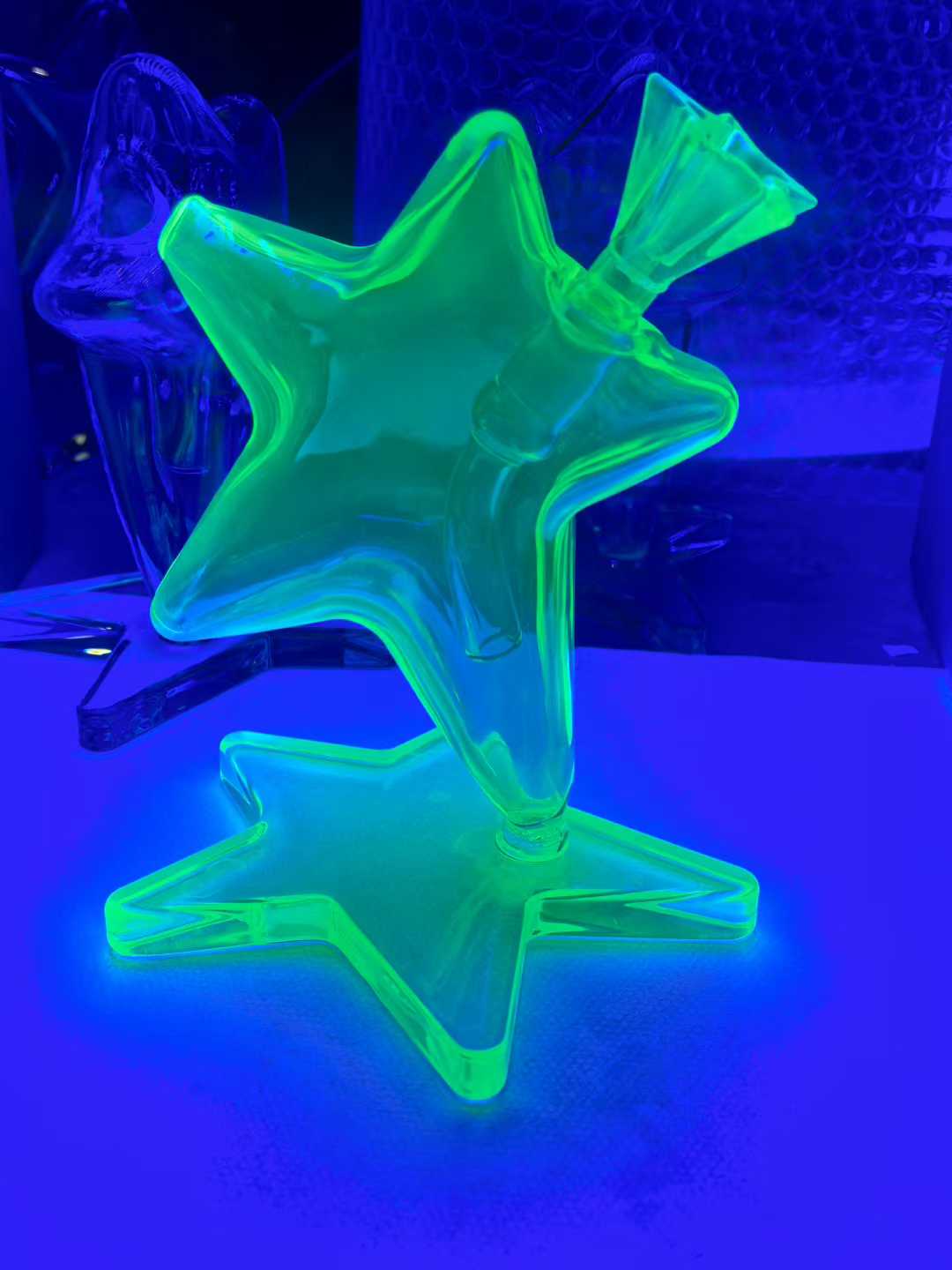
Once the design is validated (via 3D model or direct from sketch), the glass blower creates the first physical prototype. This stage varies by complexity:
- Simple spoons and straight tubes: 1-2 hours of blowing time, ready for annealing same day
- Water pipes with single percolator: 3-4 hours, requiring multiple glass-to-glass joints
- Recyclers and complex pieces: 6-10 hours over 2 days, with intermediate annealing to prevent stress fractures
After blowing, the piece enters the annealing oven at 560°C and cools slowly over 8-12 hours to relieve internal stress. Rushing annealing (or skipping it) produces pieces that pass visual inspection but crack during first use—a catastrophic failure that only shows up in the customer’s hands.
Your manufacturer should ship the prototype within 24 hours of annealing completion. Inspect immediately upon arrival:
- Check joint fit with a downstem—should seat firmly without wobble
- Run water through the piece and check for leaks at all joints
- Inspect percolator slits/holes for even water distribution
- Weigh the piece and compare to target weight (±10% is acceptable for prototypes)
- Measure critical dimensions with calipers (joint diameter, overall length, chamber height)
Stage 4: Feedback and Iteration (Days 11-15)
First prototypes rarely match the brief perfectly. Common revision requests include:
- Joint angle off by 5-10 degrees (piece doesn’t sit level when assembled)
- Percolator diffusion too aggressive (drag too tight) or too loose (insufficient filtration)
- Wall thickness uneven (thin spots visible under bright light)
- Color placement or gradient not matching reference image
- Ergonomic issues (mouthpiece too close to joint, grip awkward)
Send your manufacturer a clear revision list with photos or annotated images showing the issue. Most revisions take 3-5 days and cost 50-70% of the original prototype fee. Budget for one revision on simple pieces, two revisions on complex designs.
After 2-3 iterations, you should receive an approved prototype that matches your specifications. This approved sample becomes the production reference—every piece in your order must match it within tolerance. Contact our prototyping team to review samples and tolerance data before you commit.
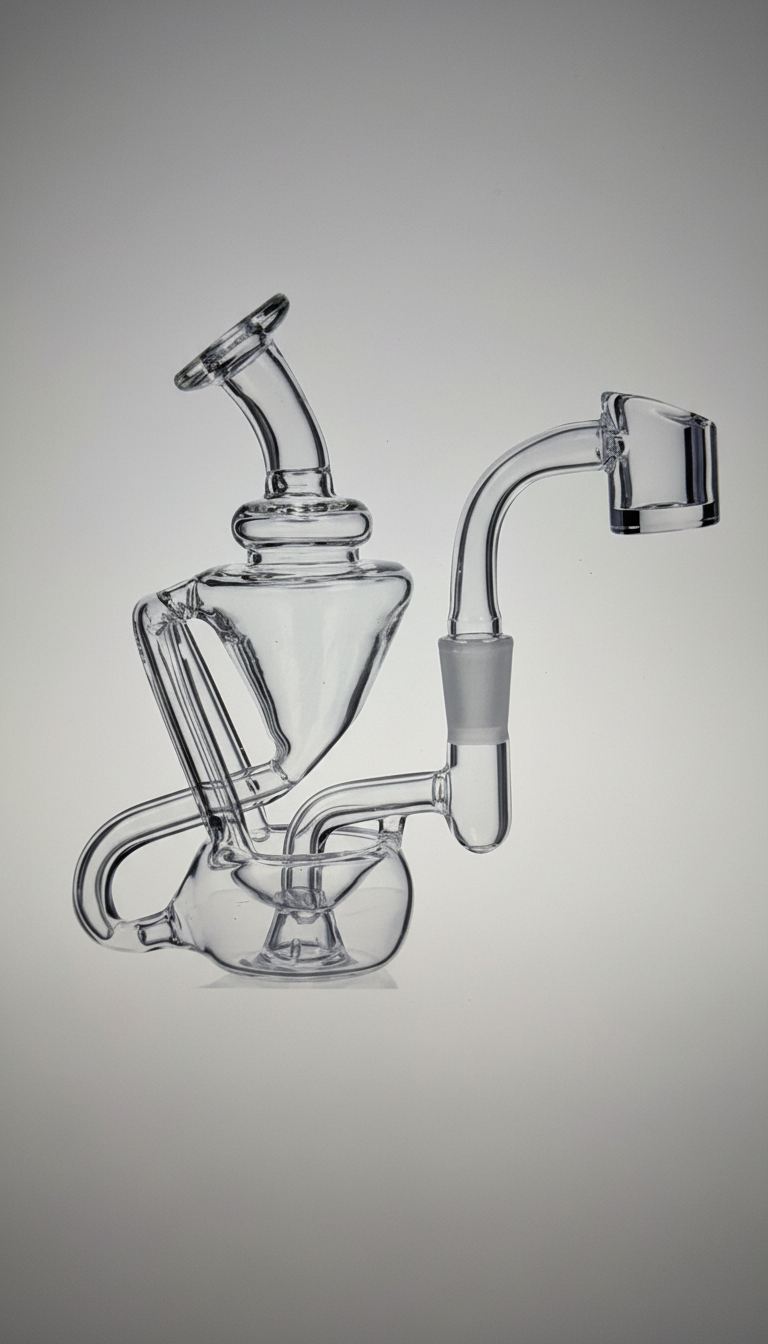
Prototyping Costs: What You Actually Pay
Cost Breakdown by Complexity
Prototype pricing reflects the glass blower’s time, material waste, and risk of breakage during development. Here’s what to expect:
| Piece Type | Prototype Cost | Production Unit Cost (500+ MOQ) | Typical Iterations |
|---|---|---|---|
| Spoon pipe | $150-250 | $3-6 | 1-2 |
| Straight tube water pipe | $200-350 | $8-15 | 1-2 |
| Beaker water pipe with downperc | $300-500 | $12-22 | 2-3 |
| Recycler with dual chambers | $500-800 | $20-35 | 2-3 |
| Complex art piece with color work | $600-1,200 | $30-60 | 3-4 |
Prototype costs are non-refundable but credited toward your first production order if you proceed within 90 days. This incentivizes manufacturers to invest time in feasibility review—they only profit if you move to production.
Hidden Costs to Budget For
Beyond the quoted prototype fee, budget for:
- Shipping: $40-80 for express courier (DHL/FedEx) from China to USA/EU. Prototype shipments are small but fragile—insure for full value.
- Customs duties: 4.5% duty plus VAT for EU, duty-free under $800 for USA (de minimis threshold).
- 3D modeling: $50-150 if not included in prototype quote. Some manufacturers include this; others charge separately.
- Mold costs: $200-500 for press pieces or complex shapes requiring custom molds. Amortized over 500+ units, this adds $0.40-1.00 per piece.
- Revision shipping: Each iteration requires another express shipment. Budget $150-250 total shipping for a 3-iteration prototype cycle.
Turning a Custom Glass Pipe Concept Into Production?
Elfglass runs your brief through a written feasibility review, 3D CAD validation and a hand-blown prototype in 7 to 15 days, so you approve a production-ready sample before bulk. Send your concept and get a quote within 12 hours.
MOQ from 100 pieces | BSCI / WRAP / ISO 9001 | NDA before every project
Production Samples: The Final Gate Before Bulk
What Is a Production Sample?
A production sample (also called a pre-shipment sample or PP sample) is pulled from your actual production run—not a separate prototype batch. This sample proves that the factory can reproduce your approved prototype at production quality and speed.
Request 3-5 production samples from the first 10% of your order The same approval gate applies to every piece in our wholesale hand pipes collection.. Inspect these samples against the approved prototype:
- Dimensions within 2mm tolerance on all critical measurements
- Weight within ±5% of prototype weight
- Joint fit identical to prototype—no wobble, no excessive tightness
- Percolator function matches prototype (same drag resistance, same diffusion pattern)
- Color and finish match approved sample (request a signed/dated reference sample to avoid “this looks different” disputes)
Approving Production Samples
Once production samples pass inspection, approve them in writing and authorize the factory to complete the full order. This approval is your contract that the remaining 90% of the order will match the approved samples. If bulk production deviates significantly, you have grounds to reject the shipment and demand rework or refund.
Keep one approved production sample sealed and labeled with the order number, approval date, and your signature. This becomes the arbitration reference if quality disputes arise later.
Common Prototyping Pitfalls and How to Avoid Them
Pitfall 1: Vague Briefs Lead to Expensive Iterations
A brief that says “make a recycler like this photo” without specifying joint size, percolator type, or overall dimensions guarantees at least one wasted iteration. Be explicit:
- Joint: 14mm male, 30° angle
- Percolator: Dual honeycomb, 10mm diameter, 2mm slit width
- Overall length: 280mm ±5mm
- Chamber height: 120mm minimum
- Wall thickness: 3mm minimum at stress points
The more specific your brief, the fewer iterations you need. Specificity costs nothing; vagueness costs $300 per failed prototype.
Pitfall 2: Skipping Feasibility Review
If your design includes undercuts, internal angles less than 45°, or wall thickness below 2mm, it may not be manufacturable in borosilicate glass. A feasibility review catches these issues before you pay for a prototype that can’t be blown. Always request written feasibility confirmation before authorizing prototype costs.
Pitfall 3: Ignoring Joint Specifications
Ground joints (14mm/18mm male/female) are the most common failure point in glass pipe prototypes. If your brief doesn’t specify joint size, angle, and gender, the glass blower will guess—and their guess may not match your downstem or bowl. Always include joint specs in your brief, and verify joint fit when the prototype arrives.
Frequently Asked Questions
How long does glass pipe prototyping take?
Simple spoons and straight tubes take 7-10 days from brief to shipped prototype. Complex recyclers with multiple percolators take 12-15 days. Budget an additional 3-5 days per revision iteration. Most designs require 1-3 iterations before approval.
How much does a custom glass pipe prototype cost?
Prototype costs range from $150-250 for simple spoons to $500-800 for complex recyclers. Art pieces with color work can reach $1,200. Prototype fees are typically credited toward your first production order if you proceed within 90 days.
Can I skip the prototype and go straight to production?
For simple spoons or straight tubes with no custom features, you can approve production from reference photos. For anything with custom percolators, unique joints, or complex geometry, always prototype first. Skipping prototyping on complex pieces risks receiving 500 units that don’t fit together or function as intended.
What tolerance should I expect between prototype and production?
Production pieces should match approved prototypes within 2mm on critical dimensions and ±5% on weight. Joint fit should be identical—no wobble, no excessive tightness. If production deviates beyond these tolerances, request rework or reject the shipment.
Ready to Start Your Custom Glass Pipe Project?
Get a free quote within 24 hours. MOQ from 100 pieces. NDA-protected design consultation.
About the Author
Ava Zeng is the founder of Elfglass, a Shenzhen-based borosilicate glass pipe manufacturer serving B2B brands worldwide. Every guide on this site is grounded in her production-floor experience— the annealing lines, QC checkpoints, and export orders behind each claim.
Before you commit to a supplier, read her founder’s story and trust promise, and the guide to vetting a reliable glass pipe manufacturer— the same red-flag checklist Elfglass applies to its own suppliers.
