
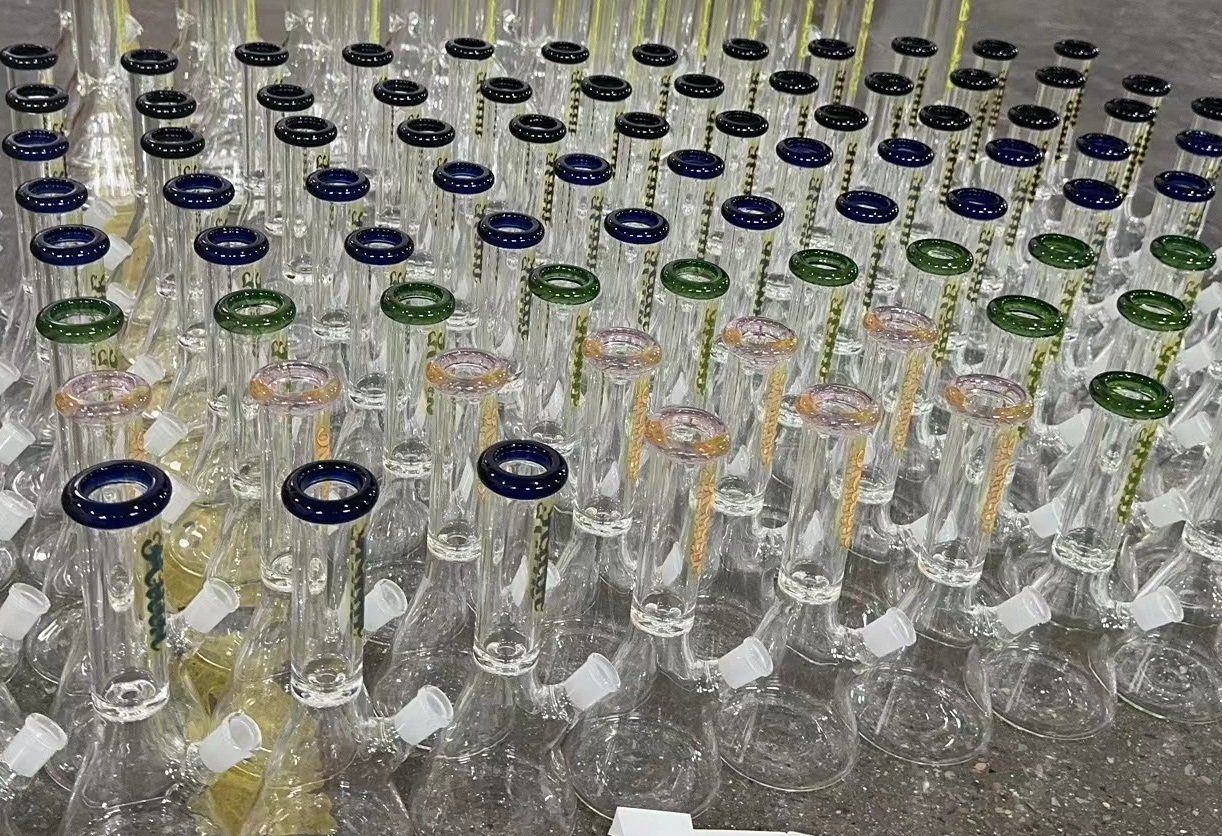
Dropshipping glass pipes sounds straightforward—list products online, collect orders, and have a supplier ship directly to your customers. In practice, glass is one of the most logistically demanding categories to fulfill this way. Breakage rates, packaging costs, customs paperwork, and delivery speed all compound into margins that vanish if the model is not designed carefully.
This guide walks through the operational realities of dropshipping glass smoking pipes and water pipes from a wholesale manufacturer in China. Whether you run an e-commerce brand, a smoke shop without storage space, or a subscription box, you will find the cost structures, packaging standards, and supplier requirements that determine whether glass dropshipping is profitable or a liability.
Key Takeaways
- Glass dropshipping margins depend on packaging cost—budget $1.50–$4.00 per unit for breakage-proof packaging
- Breakage rates above 3% signal a packaging or carrier problem that must be fixed before scaling
- Shipping times from China average 7–15 days by express; plan customer expectations accordingly
- Not all wholesale suppliers support single-unit fulfillment—confirm dropshipping capability before committing
- Custom packaging and branded inserts are possible at 100-unit MOQs, even for dropshipped orders
How Glass Pipe Dropshipping Works
The Basic Model
In a glass pipe dropshipping arrangement, the retailer lists products on their online store at retail markup. When a customer places an order, the retailer forwards the order details to the wholesale supplier or manufacturer, who packs and ships the glass product directly to the end consumer. The retailer never handles inventory, which eliminates warehousing costs and unsold stock risk.
For glass products specifically, this model is attractive because the items are high-margin, visually appealing for online marketing, and lightweight enough for affordable express shipping. However, the fragility of borosilicate glass introduces complications that do not exist for silicone or metal accessories.
Who Dropshipping Suits Best
The model works best for retailers who have strong online traffic but limited storage space—new e-commerce brands testing product-market fit, smoke shops expanding their online presence, or social media sellers running Instagram and TikTok storefronts. If you already have warehouse space and staff, holding stock directly usually delivers better per-unit economics.
For retailers ready to hold inventory, our wholesale parts and accessories program offers lower per-unit pricing with standard bulk shipping.
True Cost Breakdown of Dropshipping Glass Pipes
Understanding the full landed cost is the difference between a profitable dropshipping operation and one that bleeds money on every order. Here is what each component actually costs:
| Cost Component | Range (USD) | Notes |
|---|---|---|
| Product unit cost | $1.50–$12.00 | Depends on type: hand pipes at the low end, complex percolator water pipes at the high end |
| Packaging materials | $1.50–$4.00 | Bubble wrap + corrugated box + void fill; custom branded boxes cost more |
| Domestic China shipping to carrier | $0.50–$1.50 | Factory to express pickup point |
| International express shipping | $5.00–$15.00 | DHL/FedEx/UPS; varies by weight and destination country |
| Payment processing | 2.9% + $0.30 | Stripe, PayPal, or Shopify Payments standard rate |
| Breakage reserve | 3–5% of product cost | Set aside per order to cover inevitable replacements |
For a typical hand pipe retailing at $24.99, total fulfillment cost lands around $12–$18, leaving a gross margin of $7–$13 before marketing and overhead. Water pipes with higher retail prices ($49–$89) offer better absolute margins but carry higher breakage risk during transit.
Packaging Standards for Glass Dropshipping
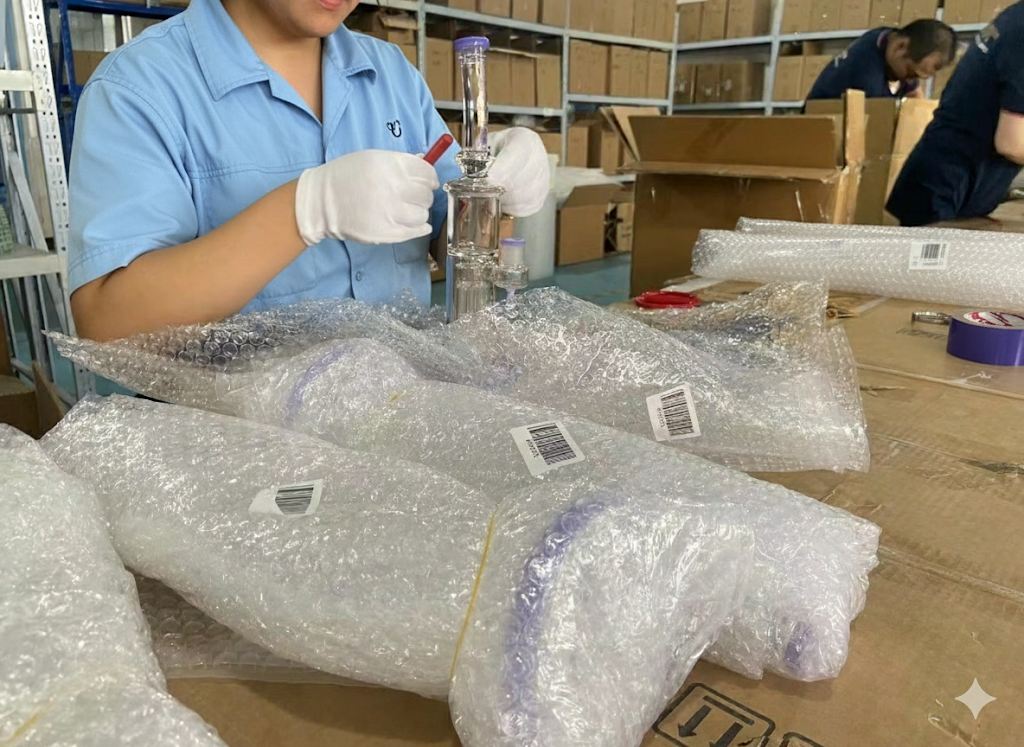
Packaging is the single most important variable in glass dropshipping success. A package that survives warehouse shelving but cracks in a delivery truck’s cargo hold is a failed package—regardless of how it looked leaving the factory.
Three-Layer Protection Standard
Every glass pipe shipment should follow a three-layer protection system:
- Inner wrap: Bubble wrap (minimum 2 layers for hand pipes, 3–4 layers for water pipes) secured with tape to prevent shifting inside the box
- Structural buffer: Corrugated cardboard sleeve or molded pulp insert that prevents the wrapped product from contacting the outer box walls
- Outer carton: Double-wall corrugated box sized so the product cannot move more than 1 cm in any direction when void fill is packed
Custom Packaging for Dropshippers
Many dropshippers assume custom packaging requires large minimum orders. In reality, branded boxes and printed inserts can be produced at the same 100-unit MOQ as the products themselves. The key is coordinating the packaging run with the product order so both arrive at the fulfillment stage together.
Retailers building a brand should explore custom branding options that include logo-printed boxes, tissue paper, and thank-you cards—all of which ship flat and add minimal weight.
Shipping Speed and Carrier Selection
Customer expectations for delivery speed vary dramatically by market. US customers increasingly expect delivery within 5–10 days; UK and EU buyers tolerate 10–15 days; Australian customers may accept 15–20 days for international orders from China.
| Carrier | Transit Time to US | Transit Time to UK | Cost Range |
|---|---|---|---|
| DHL Express | 3–5 days | 3–5 days | $10–$18 |
| FedEx International | 3–6 days | 4–6 days | $11–$20 |
| UPS Worldwide | 4–7 days | 4–7 days | $10–$19 |
| ePacket / Yanwen | 10–20 days | 15–25 days | $3–$7 |
| China Post Registered | 15–30 days | 20–35 days | $2–$5 |
For glass products, express carriers are strongly recommended. Slower economy services involve more handoffs, longer time on conveyor systems, and greater exposure to temperature extremes—all of which increase breakage probability. The $5–$10 premium on express shipping pays for itself in reduced replacement costs and better customer reviews.
Breakage Management and Replacement Policy
Even with perfect packaging, glass breakage during shipping is never zero. The industry benchmark for well-packaged glass pipe shipments is a breakage rate below 2%. Rates above 3% indicate a packaging, carrier, or routing problem that needs immediate investigation.
Setting a Breakage Reserve
Build a 3–5% breakage reserve into your pricing model. If your average order value is $30 and your breakage rate is 2%, you lose $0.60 per order in replacements. Pricing your products to absorb this cost—rather than treating each breakage as a surprise—keeps margins predictable.
Documenting Claims
Require customers to photograph damaged items and packaging within 48 hours of delivery. This documentation serves two purposes: it validates legitimate claims for supplier reimbursement, and it reveals patterns (e.g., a specific carrier route causing disproportionate damage) that can be corrected operationally.
Understanding common failure modes helps—our guide on glass packaging methods ranked by protection level details which approaches perform best for different product types. Talk to our logistics team about packaging standards for dropshipped orders.
Looking for a Manufacturer That Actually Supports Dropshipping?
Elfglass handles per-order fulfillment, three-layer protective packaging validated below a 2% breakage rate, correct HS 7013.28 documentation and your own DHL/FedEx/UPS account—so you can dropship glass without stocking it. Send your catalog and get a quote within 12 hours.
MOQ from 100 pieces | BSCI / WRAP / ISO 9001 | NDA before every project
Finding a Supplier That Supports Dropshipping

Not every glass pipe manufacturer is set up for dropshipping. The model requires the supplier to handle individual order processing, variable shipping destinations, and customer-facing packaging—all of which differ from standard bulk wholesale operations.
What to Ask Potential Suppliers
- Can you ship individual units to retail customers with my branding on the packaging?
- What is your per-unit packaging cost for single-item shipments?
- Do you offer blind shipping (no supplier branding or invoices in the package)?
- What is your average processing time from order receipt to carrier pickup?
- How do you handle breakage claims—replacement shipment or credit?
- Can you integrate with my order management system via API or spreadsheet upload?
Red Flags in Supplier Conversations
A supplier who promises zero breakage is either lying or has never shipped glass at scale. A supplier who cannot explain their packaging process in detail likely uses generic wrapping that will not survive international express transit. And a supplier who insists on large minimum orders for dropshipping—say, 500 units upfront—may not understand the model or may be testing whether you will commit to inventory you cannot move.
For retailers evaluating manufacturers, our import guide for glass pipes covers the full supplier vetting process from factory audit to first order.
Scaling From Dropshipping to Inventory
Dropshipping is an excellent starting model, but most successful glass pipe brands transition to holding inventory within 6–12 months. The economics shift decisively once monthly volume exceeds 200 orders: per-unit shipping costs drop 30–40% through bulk freight, packaging costs decrease with larger print runs, and delivery times improve because products are already in the destination country.
The transition does not have to be sudden. Many retailers use a hybrid model—dropshipping slow-moving SKUs while stocking bestsellers locally. This approach preserves the testing flexibility of dropshipping while capturing margin improvements on proven products.
When you are ready to move beyond dropshipping, explore our wholesale hand pipes and wholesale water pipes collections, where bulk pricing starts at 100 units per design with a 30% deposit and 70% before shipment.
Frequently Asked Questions
Is dropshipping glass pipes profitable?
Yes, but margins are tighter than non-fragile products. Expect 35–50% gross margins on hand pipes and 40–55% on water pipes after accounting for packaging and express shipping costs. Profitability depends on maintaining breakage rates below 3% and keeping fulfillment costs visible in your pricing model.
What is the minimum order for glass pipe dropshipping?
Most manufacturers require a 100-unit minimum order per design for custom branding and packaging. Without custom branding, some suppliers offer per-order fulfillment with no minimum—though per-unit costs will be higher than bulk pricing.
How do I handle customs for dropshipped glass pipes?
Each shipment needs a commercial invoice with accurate HS codes (typically 7013.28 for glass smoking pipes). Express carriers like DHL and FedEx handle customs clearance on your behalf, but you must provide correct product descriptions and declared values. Under-declaring values risks seizure and penalties.
Can I use my own shipping account for dropshipped orders?
Yes. Many manufacturers support third-party shipping accounts (DHL, FedEx, UPS). You provide your account number, and the factory bills shipping directly to you. This gives you visibility into actual shipping costs and lets you negotiate carrier rates independently.
Ready to Start Your Custom Glass Pipe Project?
Get a free quote within 24 hours. MOQ from 100 pieces. NDA-protected design consultation.
About the Author
Ava Zeng is the founder of Elfglass, a Shenzhen-based borosilicate glass pipe manufacturer serving B2B brands worldwide. Every guide on this site is grounded in her production-floor experience— the annealing lines, QC checkpoints, and export orders behind each claim.
Before you commit to a supplier, read her founder’s story and trust promise, and the guide to vetting a reliable glass pipe manufacturer— the same red-flag checklist Elfglass applies to its own suppliers.
