
Not all wholesale glass pipes are created equal, and buyers who cannot distinguish between quality grades leave themselves exposed to inconsistent inventory, higher return rates, and damaged supplier relationships. Unlike electronics or textiles, the glass pipe industry does not have a single universal grading standard— but experienced buyers and manufacturers operate with well-understood classification systems that separate premium production from seconds.
This guide explains how glass pipe quality grades work in practice, what criteria define each tier, and how buyers should specify quality expectations in their purchase orders to avoid receiving stock that does not meet their retail standards.

Why Glass Pipe Grading Matters for Wholesale Buyers
When a retailer orders 200 wholesale water pipes and receives a mix of clean, retail-ready pieces alongside items with visible tool marks, uneven walls, or misaligned joints, the problem is not just aesthetic. Graded-down pieces increase customer returns, erode brand trust, and create dead stock that ties up shelf space.
Quality grading gives buyers a shared vocabulary with their supplier. Instead of saying “I want good quality”— which means different things to different factories— a buyer who specifies Grade A with defined tolerance ranges gets predictable results order after order.
The Three-Tier Grading System Used in Glass Pipe Wholesale
Most established glass pipe manufacturers, including Elfglass, classify production output into three tiers. Understanding these tiers is essential whether you are sourcing wholesale hand pipes, water pipes, or dab rigs.
Grade A: Retail-Ready Production
Grade A glass pipes meet the highest visual and structural standards. These pieces have no visible tool marks, consistent wall thickness within manufacturing tolerances, clean joints with no cracks or chips, and smooth finishes free of bubbles or stone marks.
Specific criteria for Grade A typically include:
- Wall thickness variation within 0.5mm of specification
- No visible bubbles, stones, or inclusions in the glass body
- Joint alignment within 2 degrees of perpendicular
- Annealing completed to stress-relief standards— no polarized-light stress patterns
- Surface finish consistent with the specified type (glossy, frosted, or matte)
- Logo application (if applicable) correctly positioned and fully adhered
Grade A is the standard tier for retail display. When a customer picks up a pipe in a smoke shop, this is the quality level that justifies full retail pricing.
Grade B: Functional Seconds
Grade B pieces are fully functional but carry minor cosmetic imperfections that prevent them from meeting Grade A standards. These might include small bubbles that do not affect structural integrity, slight color variations from the target shade, or minor surface marks from the manufacturing process.
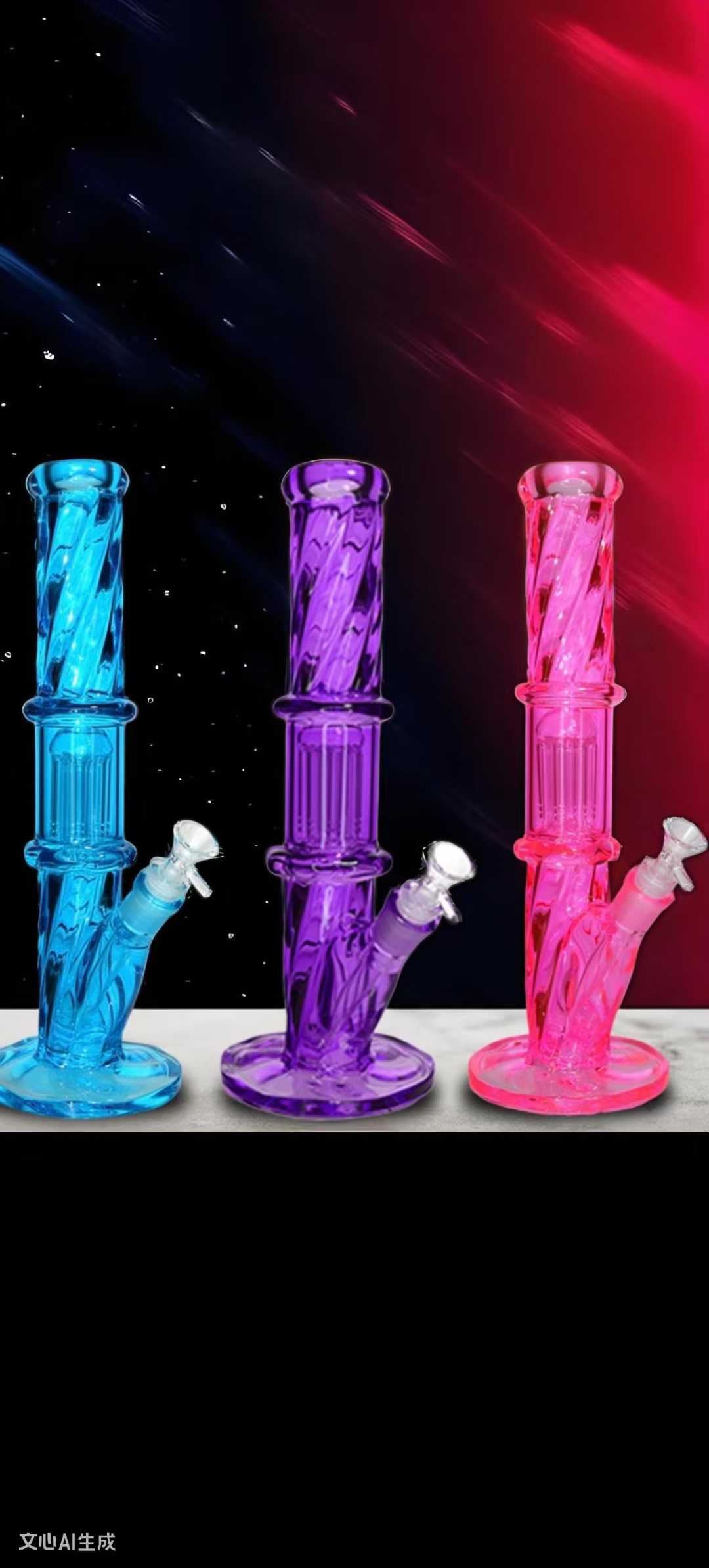
Grade B glass pipes are commonly sold through discount channels, outlet sections, or as promotional items. They are not defective— they simply do not meet the visual standard required for premium retail placement. The price differential between Grade A and Grade B is typically 15–30%, reflecting the cosmetic rather than structural nature of the imperfections.
Grade C: Factory Seconds and Overrun
Grade C covers pieces with more significant cosmetic issues or minor functional deviations. These might include noticeable color inconsistency, slightly off-spec dimensions, or surface defects that are visible but do not compromise the piece’s usability.
Grade C stock is typically sold at deep discounts for promotional use, event giveaways, or markets where price is the primary purchase driver. Some buyers use Grade C pieces for sampling— sending them to potential customers as quality indicators before placing larger Grade A orders.
Quality Criteria That Define Each Grade
The grading system rests on several measurable criteria. Understanding these criteria helps buyers write specifications that eliminate ambiguity.
Visual Inspection Standards
The most immediate differentiator between grades is visual appearance under standard retail lighting. Inspectors examine each piece at arm’s length under neutral white light (4000–5000K) and classify based on visible defects:
| Defect Type | Grade A Tolerance | Grade B Tolerance | Grade C |
|---|---|---|---|
| Bubbles in glass body | None visible | 1–2 small (<1mm) allowed | Multiple or larger |
| Tool marks | None | Faint, non-abrasive | Visible |
| Color consistency | Within Pantone match | Slight shade variation | Noticeable deviation |
| Surface finish | Uniform across piece | Minor inconsistency | Patchy or uneven |
| Joint fit | Snug, no wobble | Acceptable with grommet | Requires rework |
Structural and Dimensional Checks
Beyond appearance, structural checks ensure the pipe will perform reliably. These include joint thread verification (for threaded connections), wall thickness measurement with calipers, weight verification against spec, and annealing quality assessment. A piece can look perfect but fail structurally if the annealing cycle was rushed— this is why quality documentation like Certificates of Conformance matters.
Functional Testing
For water pipes and dab rigs, functional testing includes water-tightness verification, downstem fit verification, and airflow resistance assessment. A Grade A water pipe must hold water without any seepage at the joints and draw smoothly without obstruction.
Need a Supplier Who Grades Honestly?
Elfglass classifies every production run into Grade A, B and C against written tolerances, with photo-documented inspection and pre-production samples as your quality baseline. Send your grade spec and get a quote within 12 hours.
MOQ from 100 pieces | BSCI / WRAP / ISO 9001 | NDA before every project
How to Specify Quality Grades in Your Purchase Order
The most common mistake new wholesale buyers make is leaving quality expectations vague. A purchase order that says “200 water pipes, good quality” invites disputes. Instead, specify the grade and reference the criteria:
- State the grade explicitly: “Grade A retail-ready, per inspection criteria in Appendix B”
- Define acceptable defect rates: “Maximum 2% cosmetic defects per batch, measured by AQL 2.5”
- Reference physical samples: “Quality must match approved pre-production sample #2026-0847”
- Specify inspection timing: “Pre-shipment inspection at factory, 7 days before ship date”
When you contact a glass pipe supplier with these specifics, you signal that you understand the production process and expect professional-grade output. Suppliers respond differently to informed buyers— the quality of communication and accountability improves measurably.
Pre-Production Samples as the Quality Baseline
The most reliable way to establish quality expectations is through a pre-production sample. This sample becomes the physical reference point for the entire order. Both buyer and supplier keep a copy, and the production batch is measured against it during final inspection.
A well-executed sample approval process typically takes 1–3 days from request to delivery for standard designs. Custom designs with unique colors or features may take slightly longer. The key is that neither side begins mass production until the sample is signed off— this prevents the expensive scenario of producing 500 pieces that do not match the buyer’s expectations.
Third-Party Inspection vs Factory Self-Grading
Some buyers hire third-party inspection services to verify grades before shipment. This adds cost (typically $200–$400 per inspection visit) but provides an independent assessment. For orders above $5,000, third-party inspection is generally worth the investment.
For smaller orders, factory self-grading with a detailed inspection report is usually sufficient. The report should include photographs of random samples from the batch, measurement data for key dimensions, and a clear pass/fail assessment against the agreed criteria.
Grade-to-Channel and Price Mapping
Each grade is described above, but the commercial question a buyer actually faces is: where does each grade sell, and what price position does it carry? This table maps the three tiers to their natural retail channels so you can decide which grade fits which part of your lineup — and price each accordingly.
| Grade | Natural Retail Channel | Price Position vs Grade A | Markup Headroom | Best-Fit Buyer |
|---|---|---|---|---|
| Grade A | Premium retail display, flagship stores, brand storefronts | Full retail — the reference price | Highest — customers pay for flawless presentation | Brands competing on image and repeat retail sell-through |
| Grade B | Discount channels, outlet sections, promotions | Typically 15–30% below Grade A | Medium — value-led but still fully functional | Buyers with a price-sensitive segment or a clearance line |
| Grade C | Event giveaways, deep-discount bins, sampling programs | Deep discount to Grade A | Low per unit — value is in volume and promotion | Buyers using stock for promos or as pre-order quality samples |
Resolving a Grade-Mismatch Dispute
The clearest specification means nothing if you do not know what to do when the delivered grade does not match it. Grade disputes are won or lost in the first few days after the carton opens, while the evidence is intact and the claim window is open. Follow this sequence to protect your position — and your relationship with the supplier.
- Isolate the batch before it mixes with stock. Keep the delivered cartons and any packing material. Once pieces are shelved or sold, proving what arrived becomes almost impossible.
- Photograph representative defects against the signed sample. Shoot the flaw and the approved pre-production sample side by side so the gap between agreed and delivered grade is visible, not just asserted.
- Quantify the defect rate. Count affected units against the lot size and express it as a percentage versus the AQL you wrote into the PO. “Some are bad” is an opinion; “6% exceed the AQL 2.5 accept number” is a claim.
- Notify the supplier inside the agreed window. Reference the PO number, the grade clause, and the signed sample. Most disputes fail on late notice, not on merit.
- Propose a specific remediation. Offer the supplier clear options — credit, re-sort to Grade A, replacement, or return — rather than an open-ended complaint. It moves the conversation toward a fix.
- Escalate to third-party inspection only if you are at an impasse. An independent report breaks a stalemate, but it costs time and money, so reserve it for a real disagreement over the facts.
- Document the outcome for the next order. Record what failed and how it was resolved, then tighten the spec or the sample reference so the same gap does not recur.
Key Takeaways
- Glass pipe quality follows a three-tier system: Grade A (retail-ready), Grade B (functional seconds), Grade C (factory seconds)
- Grade criteria include visual appearance, dimensional accuracy, structural integrity, and functional testing
- Always specify quality grades explicitly in purchase orders— never use vague language like “good quality”
- Pre-production samples establish the physical quality baseline for the entire order
- Third-party inspection adds cost but provides independent verification for large orders
- Clear quality specifications protect both buyer and supplier from disputes
Frequently Asked Questions
What is the difference between Grade A and Grade B glass pipes?
Grade A pipes are retail-ready with no visible defects, consistent finishes, and precise dimensions. Grade B pipes are fully functional but have minor cosmetic imperfections like small bubbles or slight color variations— typically sold at a 15–30% discount.
Is there an official industry standard for glass pipe grading?
No universal standard exists, but most established manufacturers use a three-tier system (A/B/C). Buyers should define their own grading criteria in purchase orders and reference approved pre-production samples as the physical baseline.
How can I verify that a supplier’s Grade A matches my expectations?
Request a pre-production sample and approve it before mass production begins. The signed-off sample becomes the reference standard. For large orders, consider hiring a third-party inspection service to verify the batch against the sample.
Should I accept Grade B stock to save money?
Grade B works for discount channels, promotions, or markets where price matters more than appearance. For premium retail display where customers handle and inspect pieces closely, Grade A is the standard that justifies full retail pricing.
Ready to Start Your Custom Glass Pipe Project?
Get a free quote within 24 hours. MOQ from 100 pieces. NDA-protected design consultation.
About the Author
Ava Zeng is the founder of Elfglass, a Shenzhen-based borosilicate glass pipe manufacturer serving B2B brands worldwide. Every guide on this site is grounded in her production-floor experience— the annealing lines, QC checkpoints, and export orders behind each claim.
Before you commit to a supplier, read her founder’s story and trust promise, and the guide to vetting a reliable glass pipe manufacturer— the same red-flag checklist Elfglass applies to its own suppliers.
