

Glass pipe returns cost wholesalers and retailers far more than the replacement product. Between reverse logistics, reshipping, customer service time, and the reputational hit from negative reviews, a single return on a $30 hand pipe can cost $15–$25 in total handling expense. For wholesale buyers managing bulk orders, understanding return rate drivers—and how to prevent them—is a direct lever on profitability.
This guide breaks down the root causes of glass pipe returns, the industry benchmarks you should measure against, and the operational changes that reduce return rates from problematic levels to manageable ones. Whether you are a retailer receiving customer returns or a brand owner managing warranty claims, the framework in this guide applies.

Key Takeaways
- The average glass pipe return rate across retail channels is 4–8%, with breakage accounting for 60–70% of all returns
- Return rates above 10% almost always indicate a packaging or carrier problem, not a product quality issue
- The top three return causes are: shipping breakage, incorrect product description, and joint size mismatch
- Pre-shipment photo documentation and arrival inspection protocols reduce disputed claims by 40–60%
- Working with manufacturers who provide pre-shipment inspection reports cuts return rates roughly in half
The True Cost of a Glass Pipe Return
Before analyzing causes, it is worth quantifying what a return actually costs. The visible cost—the replacement product or refund—is only part of the total:
| Cost Component | Typical Range | Notes |
|---|---|---|
| Product replacement or refund | $5–$50 | Depends on product type and retail price |
| Return shipping (if customer ships back) | $5–$12 | Often absorbed by the seller |
| Reshipping replacement | $5–$15 | Express shipping for customer goodwill |
| Customer service time | $3–$8 | 15–30 minutes of staff time at $12–$16/hour |
| Lost future revenue | $20–$100+ | Customer who returns once is 40% less likely to reorder |
| Negative review impact | Difficult to quantify | One 1-star review can deter 5–10 potential customers |
For a $30 hand pipe, the total cost of a single return ranges from $38–$100 when all factors are included. At a 6% return rate, that means $2.28–$6.00 of every $30 sale is consumed by returns—eating directly into the margin.
Root Causes of Glass Pipe Returns
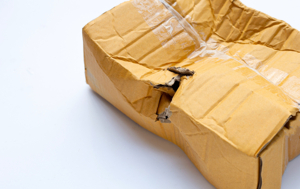
1. Shipping Breakage (60–70% of returns)
The dominant cause of glass pipe returns is damage during transit. This includes breakage during international shipping, domestic last-mile delivery, and warehouse handling. Common failure patterns:
- Cracked joints or downstem openings—caused by impact on the thinnest parts of the glass
- Shattered bases—resulting from drops onto hard surfaces
- Chipped rims and mouthpieces—caused by pieces knocking against each other inside insufficiently separated packaging
Breakage returns are almost entirely preventable with proper packaging. The fact that they remain the top cause suggests many sellers are underinvesting in packaging relative to the cost of returns.
2. Incorrect Product Description (15–20% of returns)
Customers return glass pipes that look different from the product photo or description. Common mismatches:
- Color discrepancy—the product appears a different shade in person than in the online photo
- Size mismatch—the pipe is larger or smaller than the customer expected from the photo
- Feature mismatch—the perc type, joint size, or wall thickness differs from the listing
These returns are a content problem, not a product problem. Accurate photography with size references, detailed specifications, and honest color representation eliminate this category almost entirely.
3. Joint Size Mismatch (5–10% of returns)
Customers order replacement bowls, downstems, or bangers that do not fit their existing piece because the joint size (10mm, 14mm, or 18mm) was not clearly specified. This is particularly common for accessories and parts.
4. Quality Defects (3–5% of returns)
Genuine manufacturing defects—uneven walls, poorly seated joints, rough edges, or annealing stress marks—account for a small but important share of returns. These reflect quality control failures at the factory level and are the most damaging to long-term buyer-supplier relationships.
Industry Benchmarks: What Return Rate Is Acceptable?
| Return Rate | Assessment | Action Required |
|---|---|---|
| Below 3% | Excellent | Maintain current processes; investigate any single return for preventable causes |
| 3–6% | Acceptable | Normal for glass products; track by cause category and address the top contributor |
| 6–10% | Concerning | Root cause analysis needed; likely a packaging or carrier issue |
| Above 10% | Critical | Stop and diagnose—either packaging is inadequate, carrier is mishandling, or product quality is inconsistent |
For context, the overall e-commerce return rate across all product categories is approximately 16–20%. Glass products should perform significantly better than this average because the purchase is more considered and the buyer is typically more informed. A glass pipe return rate above 10% is a clear signal that something in the fulfillment chain is broken.
Cutting Returns on Your Glass Pipe Orders?
Elfglass prevents the top cause of returns—transit breakage—with validated drop-tested packaging and photo-documented QC on every carton before it ships. Send your packaging spec and get a quote within 12 hours.
MOQ from 100 pieces | BSCI / WRAP / ISO 9001 | NDA before every project
Prevention Framework: Reducing Returns at Every Stage
Pre-Shipment: Factory Quality Control
The most cost-effective return prevention happens before the product leaves the factory. Request these from your manufacturer:
- Pre-shipment inspection report with photos of each production batch
- Joint size verification on every piece (caliper measurement documented)
- Annealing quality check—polarized light inspection for stress marks
- Dimensional tolerance documentation (±1mm on height, ±0.5mm on joint diameter)
For a systematic approach to evaluating samples before committing to bulk orders, see our sample evaluation guide.
In Transit: Packaging and Carrier Selection
Packaging investment directly reduces breakage returns. The ROI calculation is straightforward: spending an extra $1.50 per unit on packaging prevents a $40+ return at even a 4% breakage rate. Specific packaging requirements: Ask our QC team for the packaging spec sheet used on our wholesale shipments.
- Individual bubble wrap (minimum 2 layers for hand pipes, 4 layers for water pipes)
- Corrugated dividers between pieces in multi-item boxes
- Double-wall outer carton with no more than 2 cm of void space on any side
- “Fragile” and “This Side Up” markings on all faces of the outer carton
For detailed packaging standards, refer to our glass packaging methods ranked by protection level.
At Receipt: Arrival Inspection Protocol
When you receive a wholesale order, inspect before distributing to customers or listing online:
- Photograph the outer carton condition before opening—documents carrier handling
- Open and inspect each piece for cracks, chips, and joint integrity
- Document any damage with photos within 24 hours for supplier claim
- Separate damaged pieces immediately to prevent accidental shipment to customers
At Sale: Accurate Product Listings
For retailers selling online, invest in accurate product presentation:
- Photograph each piece against a ruler or coin for scale
- State joint size, wall thickness, and overall dimensions in the listing
- Use natural lighting that represents color accurately—avoid heavy filters
- Include multiple angles: front, side, base, and joint close-up
Working With Your Supplier to Reduce Returns
The manufacturer relationship is the highest-leverage point for return reduction. Suppliers who invest in quality documentation and transparent communication consistently deliver lower return rates. Key signals of a quality-focused supplier:
- They provide pre-shipment photos without being asked
- They acknowledge and replace genuine defects without dispute
- They can explain their annealing process and QC checkpoints
- They offer to customize packaging to your specifications
- They maintain batch records that allow traceability
Suppliers who cannot provide these basics are likely contributing to your return rate rather than helping reduce it. For guidance on vetting manufacturers, see our guide to finding a reliable glass pipe manufacturer.
Ready to work with a manufacturer that prioritizes quality and reduces your return rate? Elfglass provides pre-shipment inspection reports, individual piece photography, and custom packaging options on every order. Explore our wholesale water pipes and wholesale hand pipes collections to start with quality-tested inventory.
Frequently Asked Questions
What is a normal return rate for glass pipes?
A normal return rate for glass pipes is 3–6%, with breakage during shipping being the dominant cause. Rates below 3% indicate excellent packaging and carrier selection. Rates above 10% require immediate investigation into packaging, carrier handling, or product quality.
How do I reduce breakage-related returns?
Invest in packaging: individual bubble wrap (2–4 layers depending on piece size), corrugated dividers, and double-wall outer cartons. The additional $1–$3 per unit in packaging cost prevents $40+ in return handling costs. Also audit your carrier—some services handle parcels more carefully than others.
Should I offer free replacements for breakage?
Yes, for breakage that occurs during shipping to the customer. Free replacement builds trust and generates positive reviews. The cost is justified when balanced against the lifetime value of a repeat customer. For breakage during wholesale transit to you (the retailer), claim against the supplier with photographic documentation.
What documentation should I require from my supplier?
At minimum: pre-shipment inspection photos, joint size measurements, and batch identification. For higher-volume relationships, add dimensional tolerance reports, annealing quality checks, and individual piece photography. This documentation protects both parties in the event of a dispute.
Ready to Start Your Custom Glass Pipe Project?
Get a free quote within 24 hours. MOQ from 100 pieces. NDA-protected design consultation.
About the Author
Ava Zeng is the founder of Elfglass, a Shenzhen-based borosilicate glass pipe manufacturer serving B2B brands worldwide. Every guide on this site is grounded in her production-floor experience— the annealing lines, QC checkpoints, and export orders behind each claim.
Before you commit to a supplier, read her founder’s story and trust promise, and the guide to vetting a reliable glass pipe manufacturer— the same red-flag checklist Elfglass applies to its own suppliers.
