
A glass water pipe that tips over during use is more than an inconvenience—it shatters, spills hot water, and potentially injures the user. Base stability is one of the most overlooked design factors in glass water pipes, yet it directly affects safety, customer satisfaction, and return rates for retailers.
This guide examines the engineering principles behind water pipe stability: why certain base designs resist tipping while others do not, how height-to-base ratios determine the tipping threshold, and what wholesale buyers should check before placing an order. If you stock or plan to stock glass water pipes, understanding these fundamentals will reduce breakage complaints and build customer trust.
Key Takeaways
- Beaker bases and flat-bottom designs offer the highest tipping resistance; round-bottom pipes require a stand
- The center of gravity should fall within the base footprint when the pipe is filled with water
- Height-to-base diameter ratios above 4:1 significantly increase tipping risk
- Thicker glass at the base adds weight and lowers the center of gravity—improving stability without changing the footprint
- Retailers should test every new SKU with water filled before listing it for sale
Why Base Design Matters More Than Most Buyers Realize
The Physics of Tipping
A water pipe tips when an external force—bumping it, pulling on the hose, or simply setting it down unevenly—shifts the center of gravity past the edge of the base footprint. Once the center of gravity crosses that boundary, gravity completes the fall. The pipe rotates around the base edge and hits the surface.
Three variables determine how much force is needed to reach that tipping point:
- Base width: Wider bases require more lateral force to tip
- Center of gravity height: Lower centers of gravity are harder to tip
- Total mass: Heavier pipes resist tipping better, but the relationship is secondary to geometry
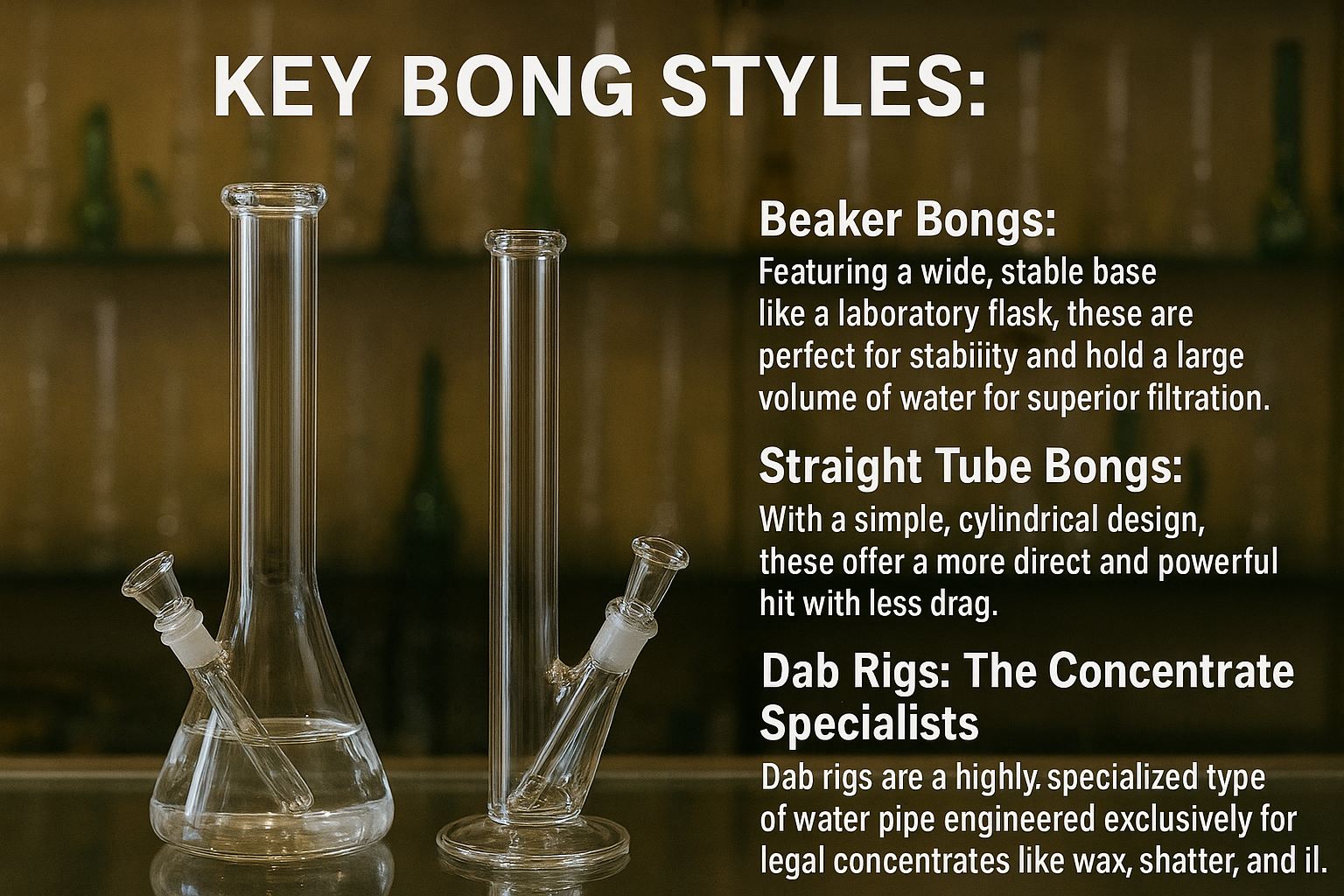
A tall, narrow straight-tube bong with a small base is inherently unstable. A shorter beaker bong with a wide triangular footprint is inherently stable. The difference is not about quality—it is about geometry.
Real-World Consequences for Retailers
Unstable pipes cause three types of losses for retailers: direct breakage claims from customers, reputational damage from negative reviews, and wasted staff time processing returns. A single shattered 14-inch water pipe can cost $50–$80 in replacement and shipping—far more than the effort of checking stability before purchase.
Base Types Ranked by Stability

| Base Type | Stability Rating | Typical Use | Risk Notes |
|---|---|---|---|
| Beaker (triangular flare) | Excellent | Water pipes 10–18 inches | Wide footprint; stable even when tall. Best all-around choice |
| Flat round disc | Good | Mid-size water pipes 8–14 inches | Stable if diameter exceeds 100mm; smaller diameters risk tipping |
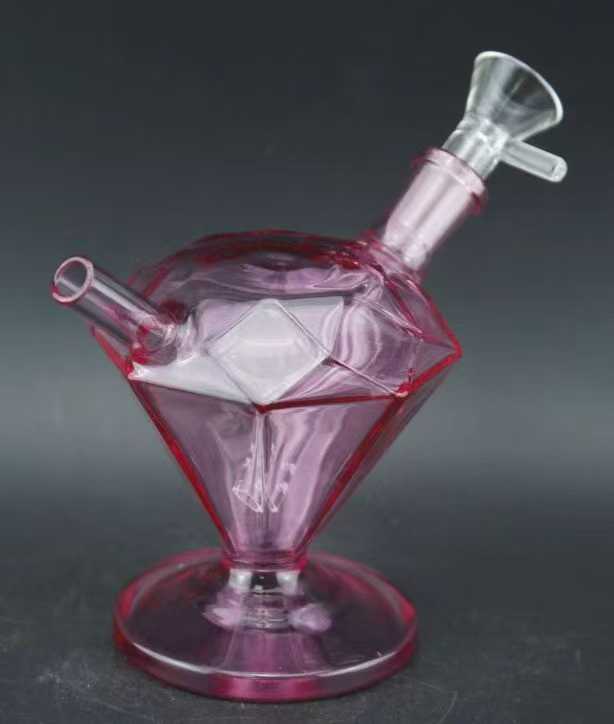
| Conical base | Moderate | Designer and recycler pipes | Narrower contact patch; acceptable for shorter pipes, risky above 12 inches |
| Straight tube (no flare) | Poor | Budget and compact pipes | Minimal footprint; tips easily. Only viable under 8 inches or with weighted base |
| Round bottom (no flat surface) | Requires stand | Heady pieces and scientific rigs | Cannot stand unaided; must ship with or recommend a compatible stand |
For wholesale buyers selecting a product mix, beaker bases should dominate the water pipe selection. They are the most forgiving design for end users and generate the fewest breakage complaints.
Height-to-Base Ratio: The Number That Predicts Tipping
The single most predictive metric for water pipe stability is the ratio of total height to base diameter. Here is how the ratio translates to real-world behavior:
| Height:Base Ratio | Stability | Guidance |
|---|---|---|
| 2:1 or lower | Very stable | Safe for all users including those with limited dexterity |
| 3:1 | Stable | Acceptable for most designs; minor bumps will not topple |
| 4:1 | Marginal | Tips with moderate lateral force; add weight to base or reduce height |
| 5:1 or higher | Unstable | High tipping risk; redesign needed or include warning with stand |
Example: a 14-inch water pipe with a 120mm beaker base has a ratio of roughly 3:1 (14 inches ≈ 356mm ÷ 120mm ≈ 3.0). This is stable. The same pipe on an 80mm flat base has a ratio of 4.5:1—tipping risk is significantly higher.
Design Features That Improve Stability
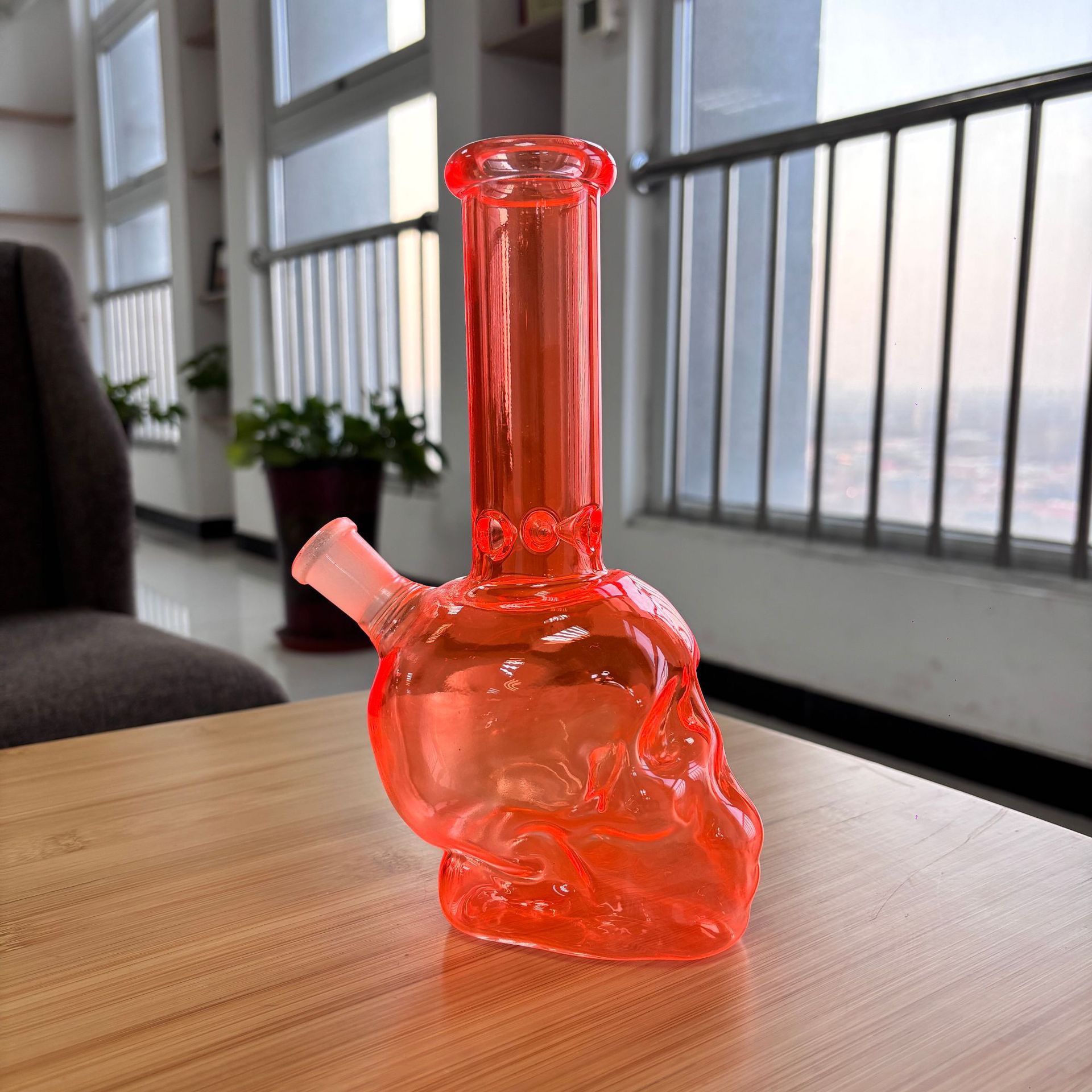
Beyond base geometry, several design choices affect whether a water pipe stays upright during normal use:
Weighted Base Rings
Some manufacturers add a thick glass ring around the base perimeter. This serves two purposes: it increases the total mass at the lowest point (lowering the center of gravity), and it provides a visual cue of quality. A visibly thick base communicates durability to the buyer before they even pick up the piece. Ask our engineers about weighted-base options when you request water pipe samples.
Ice Pinch Weight Distribution
Pipes with ice catchers (notch-style pinches inside the neck) add weight high in the structure when ice is loaded. This raises the center of gravity and makes the pipe more top-heavy. Designers should compensate by widening the base or keeping the overall height moderate when ice pinches are included.
Reinforced Joint Collars
The joint where the downstem or bowl piece inserts is a stress concentration point. A reinforced collar—thicker glass around the joint opening—does not directly affect tipping, but it prevents the most common breakage pattern when a tip does occur. Pipes that survive a minor tip without breaking are significantly more valuable to retailers.
Stocking Water Pipes That Stay Upright?
Elfglass tests every water pipe design for base stability and height-to-base ratio before it enters the catalog, and reinforces joint collars against the most common tip-breakage pattern—so your shelves carry beakers that survive real retail use. Send your product mix and get a quote within 12 hours.
MOQ from 100 pieces | BSCI / WRAP / ISO 9001 | NDA before every project
What Wholesale Buyers Should Test
Before committing to a bulk order of any new water pipe design, perform these three checks:
- Fill test: Fill the pipe with water to normal operating level. Gently push the top from the side with one finger. The pipe should resist tipping with at least 2–3 Newtons of force (roughly the weight of a 200–300g object pressing sideways). If it tips with a light touch, it will tip during customer use.
- Downstem removal test: Pull the bowl piece or downstem out while the pipe is on a flat surface. The action of removing a friction-fit downstem creates upward and lateral force. If the pipe lifts or shifts, the base is too light relative to the joint friction.
- Surface angle test: Place the pipe on a surface tilted 5 degrees (a small wedge under one side). A stable pipe should remain standing. If it slides or tips, the base contact is insufficient.
These tests take less than two minutes per sample and prevent the vast majority of field breakage complaints. For a systematic approach to evaluating samples, see our guide to evaluating glass pipe samples.
Stability and Your Product Mix
Retailers who stock a range of water pipe styles should think about stability as part of the product mix strategy. Not every pipe needs to be a beaker—but the mix should be weighted toward stable designs, with taller or narrower pieces positioned as display items or sold with explicit handling guidance.
A recommended mix for a smoke shop or online retailer:
- 60% beaker-base water pipes (8–14 inches) — your volume sellers, lowest return rate
- 20% flat-base or disc-base mid-size pipes — variety for customers who prefer a different look
- 15% recycler or conical-base rigs — for experienced users who understand handling
- 5% straight-tube or round-bottom pieces — display items or specialty sales with clear care instructions
This distribution balances visual variety with operational safety. The 60% beaker allocation ensures that the majority of your revenue comes from the most forgiving design, while the remaining 40% offers differentiation without excessive breakage risk.
For retailers expanding their water pipe selection, explore our wholesale water pipes collection, where every design is tested for base stability before entering the catalog. MOQ starts at 100 units per design with OEM customization available.
Frequently Asked Questions
Which glass water pipe base is most stable?
Beaker bases are the most stable design for glass water pipes. The wide triangular flare creates a large footprint that resists tipping from lateral force. Flat round bases are the second most stable when the diameter exceeds 100mm.
Why does my water pipe keep tipping over?
Most tipping is caused by a height-to-base ratio that is too aggressive. If the pipe is tall relative to its base width, it will tip easily. Adding weight to the base (a heavier downstem or a glass weight) can help, but the most effective fix is choosing a pipe with a wider base design.
Do thicker glass bases prevent tipping?
Thicker glass at the base adds mass at the lowest point, which lowers the center of gravity and makes the pipe harder to tip. However, thickness alone cannot compensate for a fundamentally narrow base. The best stability comes from combining a wide footprint with adequate glass thickness.
Should I avoid tall water pipes for retail?
Not avoid—but stock them selectively. Tall pipes (16 inches and above) sell well as display pieces and for customers who specifically want that aesthetic. Just ensure they have proportionally wide bases, and consider adding handling cards to the packaging that advise careful placement.
Ready to Start Your Custom Glass Pipe Project?
Get a free quote within 24 hours. MOQ from 100 pieces. NDA-protected design consultation.
About the Author
Ava Zeng is the founder of Elfglass, a Shenzhen-based borosilicate glass pipe manufacturer serving B2B brands worldwide. Every guide on this site is grounded in her production-floor experience— the annealing lines, QC checkpoints, and export orders behind each claim.
Before you commit to a supplier, read her founder’s story and trust promise, and the guide to vetting a reliable glass pipe manufacturer— the same red-flag checklist Elfglass applies to its own suppliers.
