
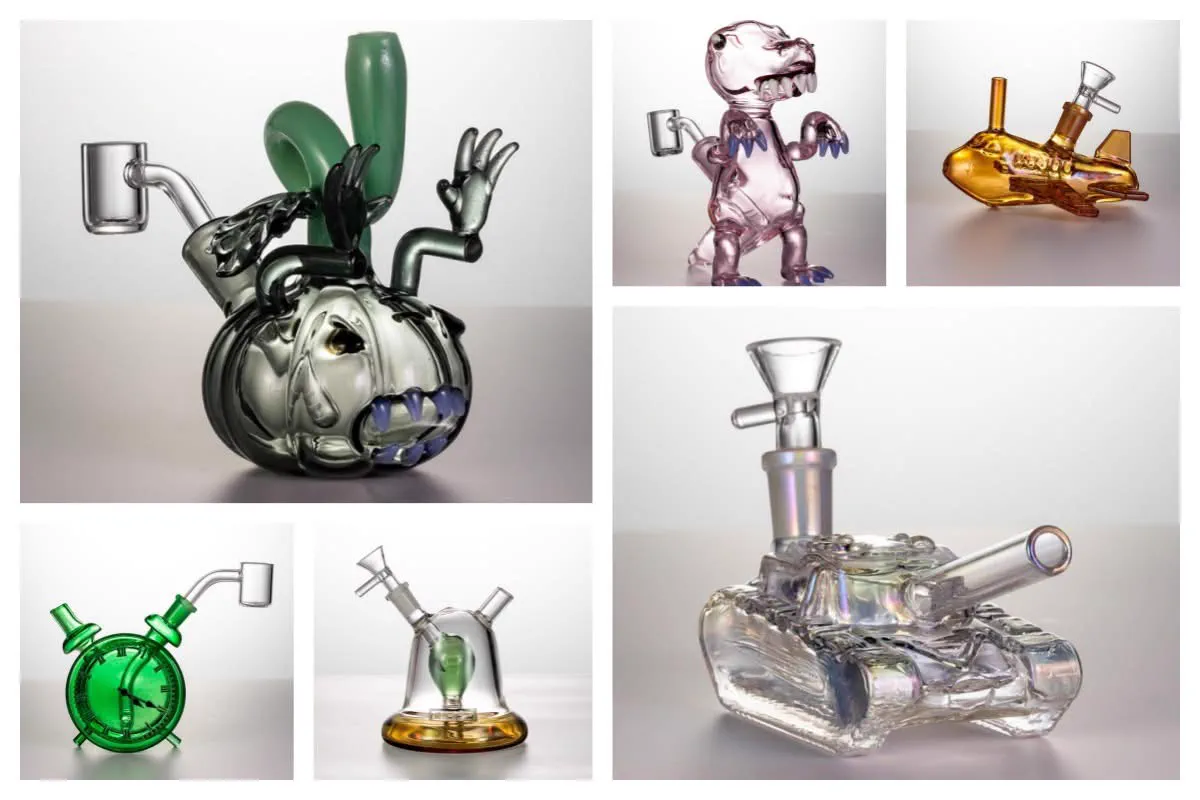
The Question Every Wholesale Buyer Eventually Asks
At some point in every glass pipe sourcing conversation, the buyer asks: should I source handmade or machine-made? The answer is not as simple as “handmade is better” or “machine-made is cheaper.” Both production methods have legitimate use cases in a wholesale catalog, and the right choice depends on the product category, the price point, and the order volume.
This guide breaks down the real differences between handmade and machine-made glass pipes — not the marketing version, but the manufacturing reality. By the end, you will know which products benefit from hand craftsmanship, which benefit from automation, and how to spec the right production method for your wholesale order.
How Handmade Glass Pipes Are Made
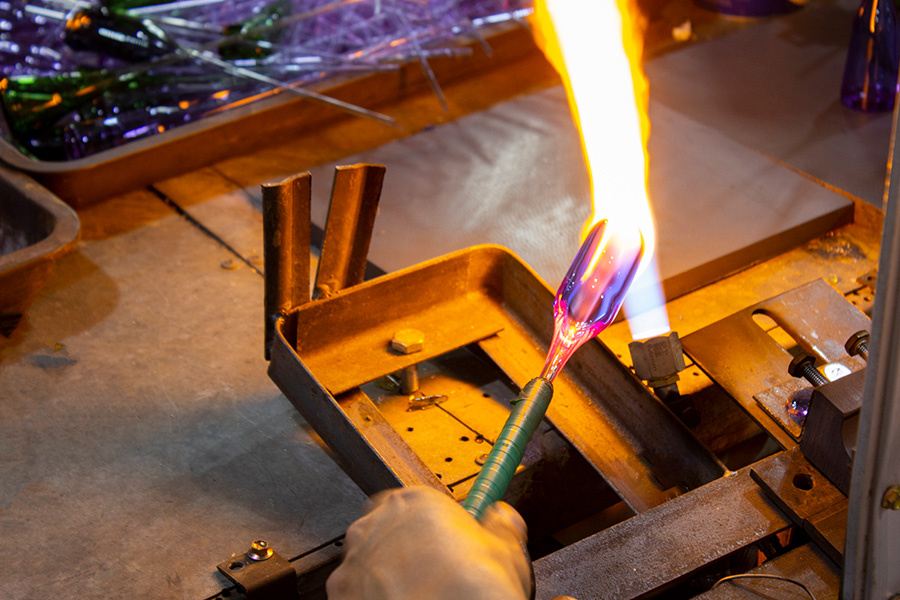
Handmade glass pipes are shaped by a glassblower using a torch or furnace. The artisan heats borosilicate glass rods or tubes until they are pliable, then shapes them by blowing, pulling, twisting, and cutting. Every step is controlled by human hands and eyes.
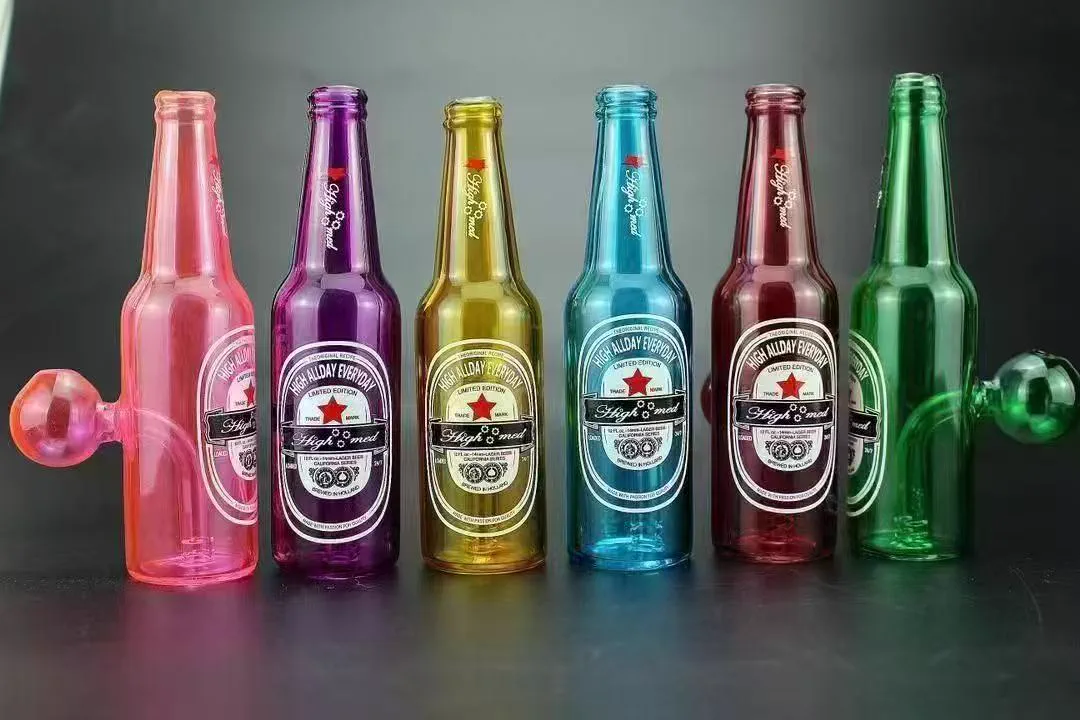
The process is inherently variable. Two handmade pipes from the same artisan will have slight differences in wall thickness, symmetry, and weight. This is not a defect — it is the nature of the process. For heady glass and art pieces, this variation is the selling point. For production wholesale orders, it is a quality control challenge.
Handmade production is labor-intensive. A skilled glassblower can produce 20 to 40 simple hand pipes in an 8-hour shift, depending on complexity. Complex pieces — recycler bongs, multi-perc water pipes, or artistic heady work — may take a full day for a single unit.
How Machine-Made Glass Pipes Are Made
Machine-made glass pipes are produced using automated or semi-automated equipment. The most common methods are:
- Lathe work: Glass tubing is mounted on a lathe that rotates it while a torch heats specific areas. The machine controls rotation speed, torch position, and heating time. An operator may assist with loading and unloading, but the shaping is machine-controlled.
- Press molding: Molten glass is pressed into a mold to form a specific shape. Used primarily for bowls, downstem caps, and other small components.
- Automated tube bending: CNC-controlled torches bend glass tubing to precise angles and dimensions. Used for straight tubes, beaker bases, and percolator components.
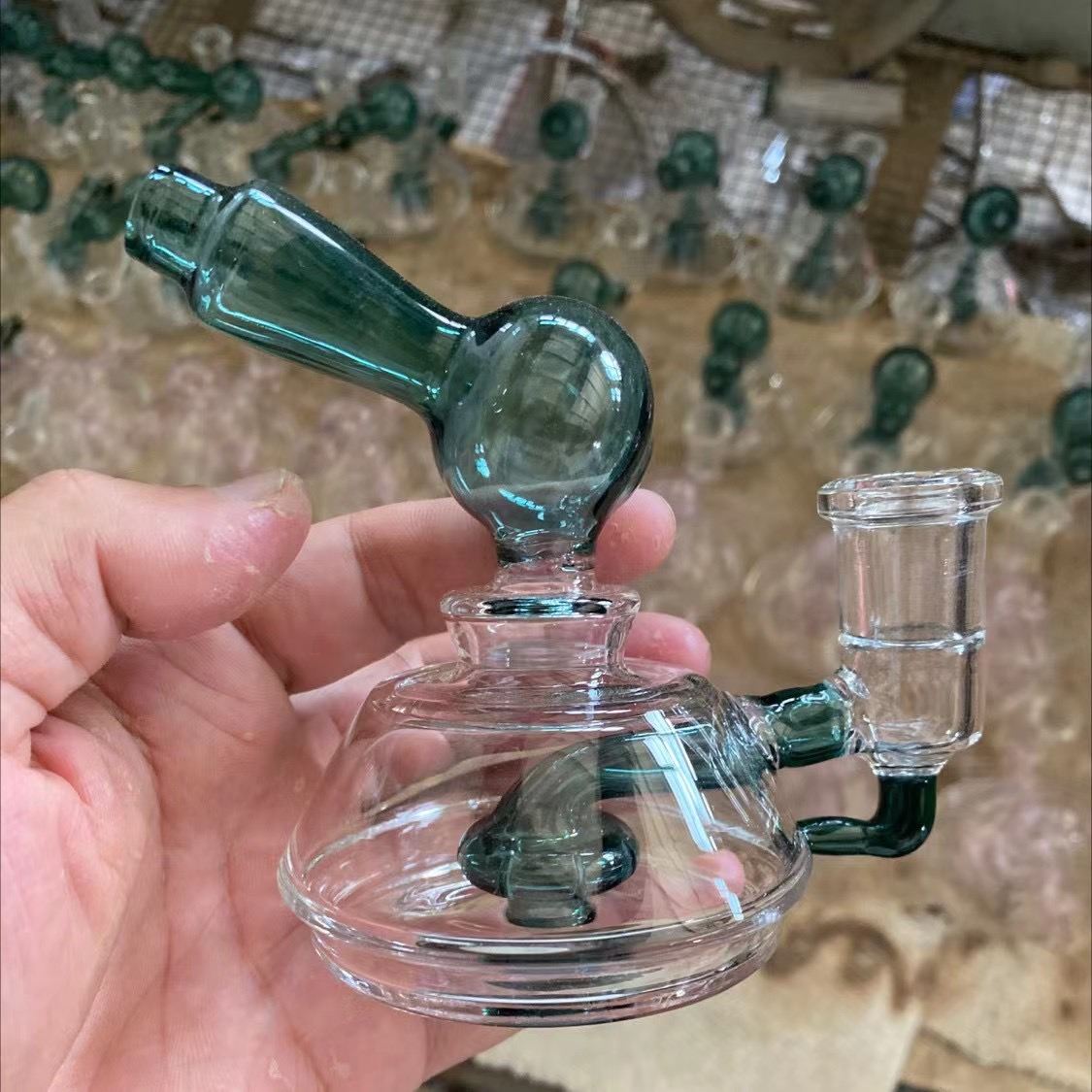
Machine production is consistent. Every unit comes off the line with the same dimensions, the same wall thickness, and the same weight. The trade-off is that machine-made pieces lack the organic character of handmade work. They are precise, uniform, and — depending on the product — either exactly what you want or exactly what you do not.
Quality Comparison: Where Each Method Wins
| Quality Factor | Handmade | Machine-Made | Why It Matters |
|---|---|---|---|
| Dimensional consistency | ±1-2mm variation | ±0.3mm tolerance | Joint fit, assembly compatibility |
| Wall thickness uniformity | Variable (depends on artisan skill) | Consistent across batch | Durability, weight perception |
| Surface finish | Organic, may show tool marks | Smooth, uniform | Aesthetics, branding perception |
| Complexity of design | Unlimited (artisan can improvise) | Limited by tooling and programming | Custom shapes, artistic detail |
| Production speed | 20-40 simple pieces per day per artisan | 200-500+ pieces per day per machine | Lead time, order volume |
| Cost per unit (at 500+ qty) | $2.50 – $8.00+ | $0.80 – $3.00 | Wholesale margin |
| Minimum order quantity | 50-100 feasible | 200-500 practical (setup cost amortization) | First-order budget |
The critical insight: neither method is universally better. A high-end heady bong should be handmade. A production run of 2,000 spoon pipes for a US smoke shop chain should be machine-made. The mistake is choosing based on ideology rather than the product’s actual requirements.
Which Products Suit Each Method
Handmade Is the Right Choice When:
- The product is an art piece or limited edition (heady glass, color-work, sculptural elements)
- The design includes complex internal percolators that cannot be assembled from machine-made components
- The order volume is low (under 100 pieces) and the design is too complex for tooling
- The brand positioning emphasizes artisan craftsmanship and uniqueness
- Each piece is expected to be slightly different (this is a feature, not a bug)
Machine-Made Is the Right Choice When:
- The product is a standard shape (spoon pipes, beaker bongs, straight tubes, basic dab rigs)
- Order volume is 500+ units of the same design
- Tight dimensional tolerances are required (e.g., joints that must fit standardized accessories)
- The price point requires production efficiency (wholesale spoon pipes at $2-3 retail need machine production)
- Consistency across the batch is more important than individual character
The Hybrid Approach: Most Wholesale Orders Use Both
In practice, most wholesale glass pipe orders involve a combination of handmade and machine-made production. A typical example:
A buyer orders 1,000 beaker bongs with a matrix percolator. The beaker base and straight tube are machine-made on a lathe — consistent wall thickness, precise joint angles, identical height across all 1,000 units. The matrix percolator is hand-assembled from machine-cut glass discs. The final assembly — joining the tube, base, and perc — is done by hand because the alignment requires visual judgment that machines cannot yet replicate at this price point.
At Elfglass, this hybrid approach is standard. The factory uses CNC equipment for tube cutting, bending, and joint forming, then hands the piece to an artisan for percolator assembly, decorative elements, and final finishing. The result is a product with machine-level consistency in critical dimensions and handmade-level quality in the details that customers actually see and touch.
How to Evaluate a Supplier’s Production Method
When a supplier tells you their pipes are “handmade” or “machine-made,” ask follow-up questions. The reality is almost always more nuanced than the marketing claim.
Questions to ask:
- Which steps are handmade and which are machine-assisted? A fully handmade pipe from raw glass rod is a different product than a machine-cut tube that is hand-assembled.
- What is the dimensional tolerance? If the supplier claims handmade, ±2mm is expected. If they claim machine-made, ±0.5mm should be achievable.
- Can I see production photos or visit the factory? A supplier with real manufacturing capability will welcome this. A trading company reselling factory output may not have clear answers.
- What is the consistency rate across a batch? Ask for 5 random samples from a production lot and measure the weight and dimensions. If they vary by more than the stated tolerance, the process is not in control.
Elfglass maintains production documentation for every order, including photos at each production stage. This is standard practice for BSCI and ISO 9001 certified factories, and it gives buyers visibility into whether the production method matches the specification.
Deciding Between Handmade and Machine-Made Glass?
Elfglass hand-blows premium borosilicate pieces and machine-forms high-volume parts, then tells you honestly which method fits each SKU—so you get craftsmanship where it matters and cost where it counts. Send your product list and get a quote within 12 hours.
MOQ from 100 pieces | BSCI / WRAP / ISO 9001 | NDA before every project
Cost Implications for Wholesale Buyers
The cost difference between handmade and machine-made is significant at volume, but the gap narrows at lower quantities because of setup costs.
| Order Quantity | Handmade Unit Cost | Machine-Made Unit Cost | Notes |
|---|---|---|---|
| 100 pieces | $3.00 – $6.00 | $2.50 – $4.00 | Machine setup cost amortized over small qty narrows the gap |
| 500 pieces | $2.50 – $5.00 | $1.20 – $2.50 | Machine cost advantage becomes significant |
| 2,000 pieces | $2.00 – $4.50 | $0.80 – $1.80 | Machine production dominates at scale |
| 5,000+ pieces | $2.00 – $4.00 | $0.60 – $1.50 | Handmade cannot compete on cost at this volume |
For a new brand ordering its first 100-200 pieces, the cost difference may be small enough that the decision should be based on quality and design requirements rather than price. For established brands ordering 1,000+ pieces per quarter, machine production (or hybrid production) is almost always the economically rational choice for standard shapes.
Making the Right Choice for Your Brand
The decision between handmade and machine-made is not a one-time choice. It is a product-by-product decision based on the design, the volume, the price point, and the brand positioning. Most successful wholesale glass brands use a mix:
- Machine-made for high-volume staples (spoon pipes, basic beakers, straight tubes, standard dab rigs)
- Handmade for premium pieces, limited editions, and complex designs that justify the craftsmanship
- Hybrid for the middle range — machine precision on critical dimensions, hand finishing on visible surfaces
Contact Elfglass to discuss the production method that fits your product catalog. The team can provide cost comparisons for your specific designs at your target order quantities, with honest recommendations on where handmade adds value and where machine production delivers better results.
Frequently Asked Questions
Are handmade glass pipes better than machine-made?
Neither is universally better. Handmade pipes offer unique character and unlimited design complexity, making them ideal for art pieces and limited editions. Machine-made pipes offer dimensional consistency and lower cost at volume, making them ideal for production staples like spoon pipes and beaker bongs. Most wholesale catalogs use a mix of both.
What is the cost difference between handmade and machine-made glass pipes?
At 100 pieces, the difference is small ($3-6 handmade vs $2.50-4 machine-made). At 2,000 pieces, machine-made drops to $0.80-1.80 per unit while handmade stays at $2-4.50. The gap widens with volume because machine setup costs are amortized over more units while handmade labor costs remain linear.
Can a factory produce both handmade and machine-made pipes?
Yes. Most established glass pipe factories, including Elfglass, operate both hand-blowing stations and CNC/lathe equipment. The hybrid approach — machine precision on critical dimensions with hand finishing on visible surfaces — is standard for mid-range wholesale products.
How do I verify whether a supplier’s pipes are truly handmade?
Ask which specific production steps are handmade vs machine-assisted, request production photos or a factory visit, and measure 5 random samples from a batch. If dimensions vary by more than ±1.5mm across pieces, the shaping is likely handmade. If they are within ±0.3mm, machines are involved in the forming process.
About the Author
Ava Zeng is the founder of Elfglass, a Shenzhen-based borosilicate glass pipe manufacturer serving B2B brands worldwide. Every guide on this site is grounded in her production-floor experience— the annealing lines, QC checkpoints, and export orders behind each claim.
Before you commit to a supplier, read her founder’s story and trust promise, and the guide to vetting a reliable glass pipe manufacturer— the same red-flag checklist Elfglass applies to its own suppliers.
Ready to Source Custom Glass Pipes?
Get a free quote within 24 hours. MOQ from 100 pieces. NDA-protected design consultation.
