
Imagine you are a wholesale buyer.
You open an email from a new brand, excited to see what they have to offer.
You click the attachment, and… it’s a spreadsheet. Just rows and rows of SKUs, dimensions, and prices.
Technically, it’s accurate. Emotionally, it’s dead on arrival.
This is the first mistake many new founders make when they try to build a product catalog.
They view it as an inventory list—a functional document to show what is in stock.
But in the competitive world of smoking accessories, where design and “vibe” are everything, a spreadsheet doesn’t sell.
A great product catalog is not a list; it is a sales tool.
It is your brand’s silent ambassador. It should guide the buyer through a journey, turning a skeptical “maybe” into a confident “yes.”
At Elfglass, we believe that manufacturing is just the first step.
As your Technical Partner, we want to help you sell what we build together.
Here is our strategic guide on how to build a product catalog that transforms a simple list into a best-selling story.

Step 1: Define Your Story Before You Build a Product Catalog
Before you add a single product to your layout, you must define the lens through which you view the industry.
A catalog without a theme is just a garage sale—a random assortment of items.
Ask yourself: What is the story of this collection?
-
The Scientific Purist: Is your brand about clean lines, thick borosilicate glass, and laboratory-grade filtration? Then your catalog should feel like a medical journal.
-
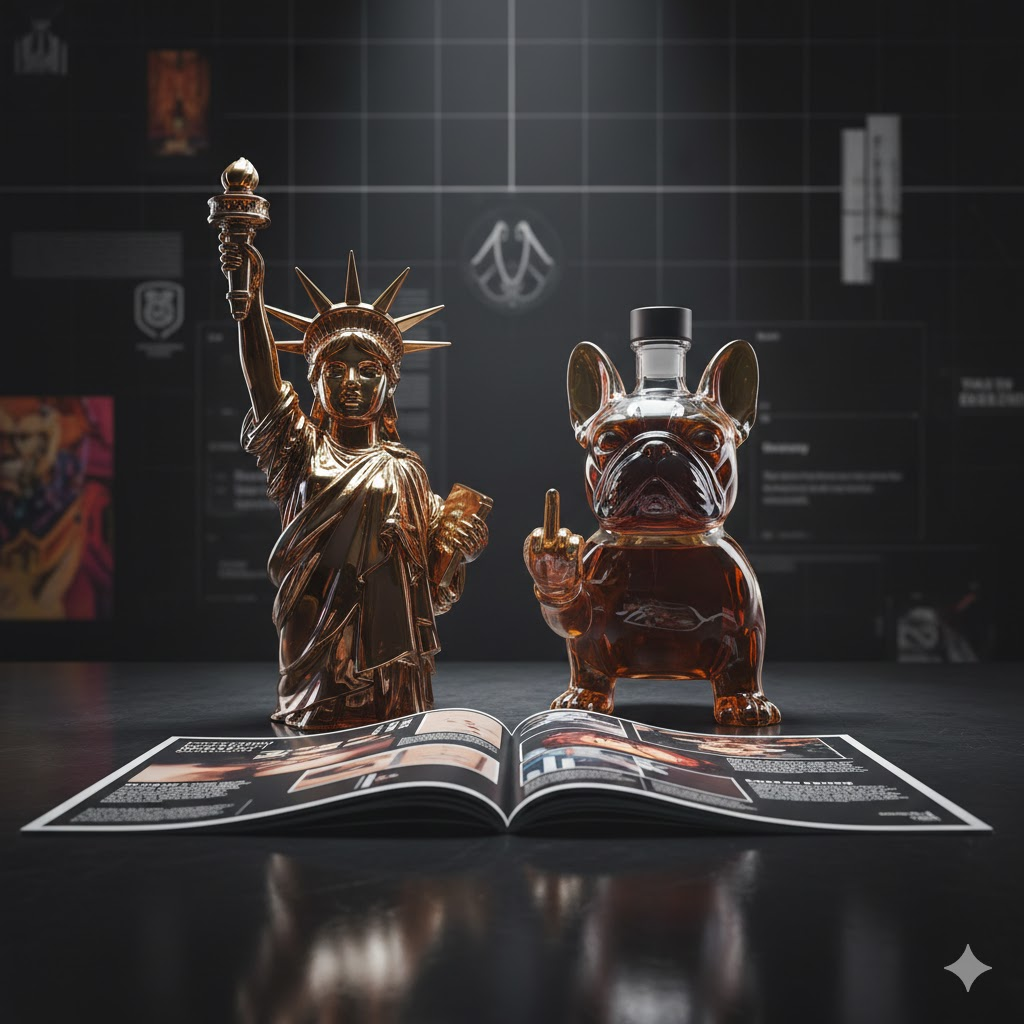
The Counter-Culture Artist: Is your brand about heady glass, vibrant colors, and rebellion? Then your catalog should feel like an art zine.
-
The Eco-Conscious Modernist: Are you focused on sustainability? Your catalog should breathe with white space and earthy textures.
This “Editorial Lens” acts as a filter.
When you decide to build a product catalog, ask: Does this product fit the story? If you are a “Scientific Purist” brand, that cheap silicone pipe does not belong.
It dilutes your story.
Step 2: Architecting the Collection — The “Hero” Strategy
A compelling narrative needs a protagonist.
In retail merchandising, we call this the Hero Product.
A common mistake is giving every product equal real estate.
Instead, structure your catalog like a movie cast:
1. Core Hero Products (The Stars)
These are your flagship pieces.
Maybe it’s that custom-molded recycler we engineered together.
-
Catalog Strategy: Give these products a full page. Use “cinematic” photography that highlights the curves and thickness of the glass.
2. Supporting Cast Products (The Volume Drivers)
These are the bread-and-butter items—the standard spoons and bubblers.
-
Catalog Strategy: Group these smartly (e.g., “The Classic Hand Pipe Collection”). Show them in family groups to encourage bulk buying.
3. High-Margin Accessories (The Upsells)
Never underestimate accessories like grinders or ash catchers.
-
Catalog Strategy: Don’t bury these. Use Cross-Merchandising. Place the ash catcher next to the Hero Bong it fits.
Step 3: Directing the Scene — Visuals and Copy
Now that you have your structure, you need to execute the details.
High-Quality Visuals are the Foundation
In the glass industry, trust is visual.
Buyers need to “feel” the weight and clarity of the glass.
-
Lighting is Key: Use backlighting to define the edges.
-
Context Matters: A white background is necessary for specs, but lifestyle shots create desire.
(For inspiration, browse top-tier examples on design platforms like Behance to see how pros structure visuals.)

Write Descriptions That Evoke Emotion
Don’t just list specs. Sell the experience.
-
Bad Copy: “12-inch glass bong. Blue. 5mm thick.”
-
Good Copy: “Built for the daily driver. Standing a sturdy 12 inches with 5mm thick walls, this piece offers a reassuring weight in the hand.”
Clear Specs & Pricing
Remember “Jack,” the pragmatic buyer. He needs a standardized data block:
-
SKU Number: For easy ordering.
-
MSRP: Show the profit margin immediately.
-
Wholesale Price: Tiered pricing (e.g., 10+ units vs 50+ units).
The Bridge: From Product List to Strategic Partner
Why does a manufacturer care about your catalog?
Because at Elfglass, our philosophy is simple: Your Success is Our Only True Metric.
We don’t just want to ship you a container of glass; we want you to sell that container so you can order another one.
This philosophy aligns perfectly with our comprehensive guide on wholesale glass pipes sourcing, where we discuss that sourcing is just the beginning.
That is the difference between a transactional factory and a Technical Partner.
When you work with Elfglass:
-
We Provide the Assets: We can provide 3D renders of your designs before production finishes, helping you build a product catalog early.
-
We Help Curate: We advise on which “Supporting Cast” items complement your custom “Hero” piece.
-
We Protect the Vision: We ensure the physical product matches the beauty of your catalog with 0.01mm precision.
Conclusion: Your Catalog is Your Storybook
A catalog is more than a PDF. It is a declaration of who you are.
Are you the discount bin, or are you the curated gallery?
By treating your catalog as a storytelling device, you transform from a commodity vendor into a brand partner. You have the vision. We have the forge.
Your catalog is your brand’s storybook. Let us help you write a bestseller. [Talk to an Elfglass brand strategist] about curating and manufacturing your next collection today.
Frequently Asked Questions (FAQ)
Q1: How many products should my first catalog include?
A1: Quality over quantity. A focused catalog with 5-10 cohesive products often performs better than a confusing list of 50 random items.
Q2: Should I use a digital or printed catalog?
A2: Both. A digital PDF is essential for email, but a high-quality printed catalog sent to key retailers creates a powerful physical touchpoint.
Q3: How do I write engaging product descriptions?
A3: Focus on benefits. Instead of just saying “borosilicate glass,” explain that it “withstands high heat and thermal shock for durability”.
