

Most importers default to Germany and the UK when entering the European glass pipe market—and for good reason. Germany is Europe’s largest head shop market by volume, and the UK’s post-Brexit regulatory framework is well-documented. But this focus leaves massive opportunity on the table. France, the Netherlands, Spain, Italy, and the Nordic countries collectively represent over 200 million potential consumers, with regulatory pathways that are straightforward once understood.
This guide maps the import requirements, demand patterns, and compliance frameworks for European markets beyond the usual UK-Germany corridor. Whether you’re expanding an existing European supply chain or entering the continent for the first time, these country-specific insights help you avoid the compliance surprises that sink shipments at customs.

Key Takeaways
- EU member states follow REACH chemical safety regulations, but enforcement intensity varies by country—Netherlands and Germany audit most aggressively
- France requires French-language labeling for all consumer goods; non-compliance triggers customs holds averaging 15 business days
- The Netherlands serves as Europe’s primary logistics hub—Rotterdam handles 40% of container traffic entering the EU
- Spain and Italy have rapidly growing head shop markets but require CE marking for any piece marketed with “health” or “safety” claims
- Nordic countries (Sweden, Norway, Denmark) enforce strict PAH limits on silicone components—test before shipping
EU-Wide Regulatory Framework: REACH and Beyond
REACH Compliance for Glass and Silicone
The EU’s REACH regulation (Registration, Evaluation, Authorization and Restriction of Chemicals) applies to all consumer goods entering the European Economic Area. For glass pipes, this primarily concerns:
- Lead and cadmium content in colored glass—EU limit is 0.5 mg/dm² for food-contact surfaces; glass pipes used for consumption must comply
- PAH (polycyclic aromatic hydrocarbons) in silicone components—REACH Annex XVII restricts benzo[a]pyrene to 1 mg/kg in consumer products
- Nickel release from metal downstems and accessories—EN 1811:2011 sets the limit at 0.5 μg/cm²/week for skin-contact items
Most borosilicate glass from established Chinese manufacturers already complies with REACH limits. The risk lies in colored glass accessories, silicone gaskets, and metal components sourced from suppliers without EU market experience. Request REACH test reports from your supplier before placing bulk orders.
CE Marking: When It Applies and When It Doesn’t
Glass pipes sold as smoking accessories do not require CE marking under current EU directives. However, if you market a piece with health or safety claims—”heat-resistant,” “medical-grade glass,” “lab-quality borosilicate”—you enter regulated territory. CE marking becomes mandatory if the product is presented as having safety properties that can be tested against harmonized standards.
The practical rule: market glass pipes as lifestyle/accessory products, not safety products. Avoid claims like “safe glass” or “heat-proof” in EU-facing marketing materials. State factual specifications (e.g., “borosilicate glass, 500°C melting point”) without implying certified safety performance.
Importing Glass Pipes Across the Wider EU?
Elfglass supplies REACH-compliant borosilicate pieces with country-specific labeling — including French Toubon Law wording — and EORI-ready export documents for every EU market. Send your destination list and get a quote within 12 hours.
MOQ from 100 pieces | BSCI / WRAP / ISO 9001 | NDA before every project
Country-Specific Requirements
France: Language Laws and Customs Rigor
France’s Toubon Law (Loi Toubon, 1994) mandates French-language labeling for all consumer goods sold in France. This applies to product packaging, instruction sheets, and any marketing materials included in the shipment. English-only packaging triggers customs holds that average 15 business days to resolve.
For glass pipe imports, this means:
- Product packaging must include French text describing the product
- Any included instruction cards or safety information must be in French
- Wholesale invoices and packing lists should include French translations
France’s DGCCRF (consumer protection agency) conducts random market surveillance. Non-compliant products found on retail shelves face mandatory recall, and the importer—not the retailer—bears liability. Budget 5-8% additional cost for French-compliant packaging if France is a primary market.
The Netherlands: Logistics Gateway
The Netherlands is Europe’s primary import gateway. Rotterdam port handles 14.5 million TEUs annually, and Schiphol Airport is Europe’s fourth-largest cargo hub. Most European glass pipe importers establish their first EU foothold in the Netherlands for three reasons:
| Advantage | Detail | Impact |
|---|---|---|
| Customs efficiency | Dutch customs (Douane) processes containers in 2-3 days vs. 5-7 days in Germany | Faster inventory turnover |
| Fiscal representation | Non-EU companies can appoint a Dutch fiscal representative to handle VAT without establishing a legal entity | Lower setup cost for EU market entry |
| Logistics infrastructure | Daily barge connections to Germany, Belgium, France; overnight trucking to most EU capitals | Ship to NL, distribute pan-EU within 48 hours |
The Dutch market itself is smaller (17 million people) but densely packed with head shops and smoke shops, particularly in Amsterdam, Rotterdam, and Utrecht. The Dutch tolerate cannabis paraphernalia under their gedoogbeleid (tolerance policy), making the regulatory environment permissive for glass pipe sales.
Spain and Italy: Growing Markets with Bureaucratic Friction
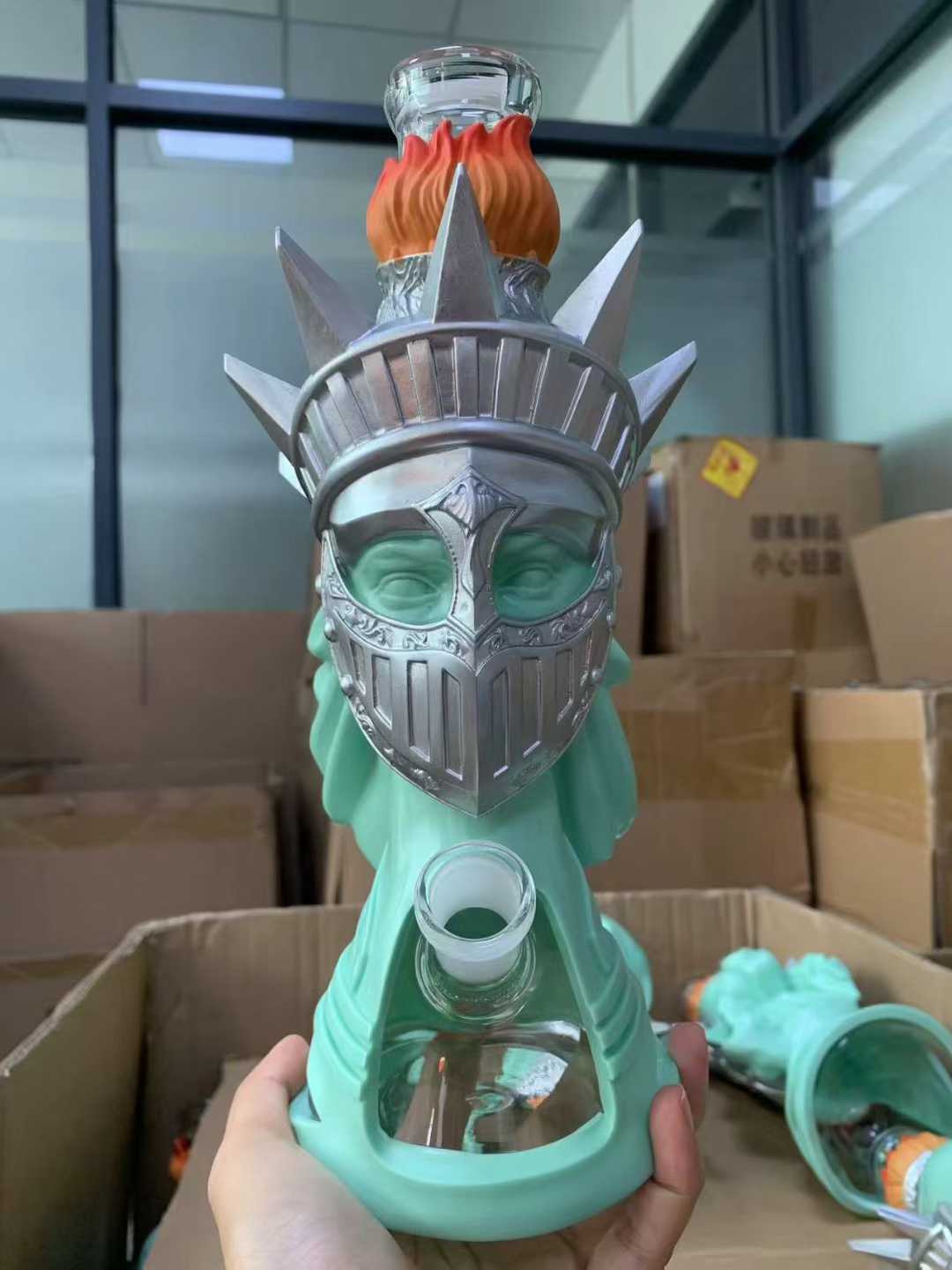
Spain and Italy each have 40-60 million consumers and rapidly growing head shop cultures Start with the wholesale water pipes collection — a core category for Southern European head shops., particularly in Barcelona, Madrid, Milan, and Rome. However, both markets present bureaucratic challenges:
Spain: Import VAT is 21%, and customs clearance requires an EORI number (Economic Operators Registration and Identification). Spanish customs (Aduanas) is known for inconsistent classification of glass pipes—some officers classify them as “household glassware” (6.5% duty), others as “tobacco accessories” (4.5% duty). Work with a Spanish customs broker who has experience with smoking accessories to ensure consistent classification.
Italy: Italy requires Italian-language labeling similar to France’s Toubon Law. Additionally, Italy’s Agenzia delle Dogane imposes strict documentation requirements for non-EU importers. You’ll need a fiscal representative in Italy or an EU-established importer of record. Budget 10-15 days for customs clearance on first shipments; subsequent shipments with established relationships clear in 5-7 days.
Nordic Countries: PAH Scrutiny and High Margins
Sweden, Norway, and Denmark represent high-margin markets with discerning consumers willing to pay premium prices for quality glass. However, Nordic environmental agencies enforce strict PAH (polycyclic aromatic hydrocarbon) limits on consumer products, particularly items with skin contact.
For glass pipes with silicone mouthpieces, grips, or cases, Nordic markets require PAH testing per REACH Annex XVII Entry 50. Benzo[a]pyrene must be below 1 mg/kg, and total PAH8 must be below 10 mg/kg. Test each silicone component batch before shipping to Nordic countries. The cost is $150-300 per test, but a failed shipment costs 10x more in return freight and customs penalties.
Nordic consumers also prioritize sustainability. Highlight borosilicate glass’s recyclability, minimize plastic packaging, and consider carbon-neutral shipping options—these factors influence purchasing decisions more than in Southern European markets.
Logistics and Shipping Routes
Sea Freight: The Cost-Effective Route
For wholesale orders over 100 kg, sea freight is the default choice. Transit times from Shenzhen to major European ports: Request a freight quote from our export desk for your first European order.
| Destination Port | Transit Time | Typical Duty Rate | VAT Rate |
|---|---|---|---|
| Rotterdam (NL) | 28-32 days | 4.5% (tobacco accessories) | 21% |
| Hamburg (DE) | 30-35 days | 4.5% | 19% |
| Le Havre (FR) | 32-37 days | 4.5% | 20% |
| Valencia (ES) | 30-35 days | 4.5-6.5% (variable classification) | 21% |
| Genoa (IT) | 33-38 days | 4.5% | 22% |
Ship FCL (full container load) for orders over 15 CBM; LCL (less than container load) for smaller shipments. FCL reduces handling damage risk since your pallets stay sealed from origin to destination.
Air Freight: Speed for High-Value Orders
For urgent restocking or high-value art pieces, air freight from Shenzhen to Europe takes 3-5 days door-to-door. Cost is 4-6x sea freight per kg, but for premium pieces ($50+ unit value), the speed advantage outweighs cost. Air freight also avoids the container consolidation delays that plague LCL sea shipments during peak season (August-October).
Use air freight for:
- Emergency restocking of fast-selling SKUs
- Art pieces and limited editions with high unit value
- Sample shipments for new product launches
- Orders under 50 kg where sea freight minimums don’t apply
VAT and Tax Considerations
EU VAT Registration Thresholds
If you store inventory in an EU country (even in a bonded warehouse), you trigger VAT registration requirements in that country. The common workaround is to use the Netherlands as your EU entry point, register for Dutch VAT, and use the EU’s OSS (One-Stop Shop) system to account for VAT on sales to other EU countries.
For non-EU importers, the process is:
- Appoint a fiscal representative in the Netherlands (cost: €1,500-3,000/year)
- Obtain a Dutch VAT number through the representative
- Import goods under your Dutch VAT number (pay import VAT at customs)
- Use OSS to report and remit VAT on sales to other EU countries at their local rates
This structure lets you serve the entire EU market without registering for VAT in every country where you have customers. The fiscal representative handles compliance and filing, shielding you from penalties due to procedural errors.
UK Post-Brexit: Separate Regulatory Track
Since January 1, 2021, the UK is no longer part of the EU customs union or VAT system. Shipping to the UK requires:
- A separate UK EORI number (GB EORI)
- UK VAT registration if you store inventory in the UK
- Customs declarations for each shipment (not just intra-EU dispatch notes)
- Potential rules-of-origin documentation if claiming preferential duty rates
For most glass pipe importers, the UK remains a distinct market requiring separate logistics planning. Ship directly from China to UK ports (Felixstowe, Southampton) rather than routing through EU hubs, since post-Brexit customs checks add 3-5 days to EU-to-UK transit.
Frequently Asked Questions
Do I need CE marking to sell glass pipes in Europe?
No, glass pipes sold as smoking accessories do not require CE marking. However, if you market products with health or safety claims (“heat-resistant,” “medical-grade”), CE marking may become mandatory. Market glass pipes as lifestyle products and state factual specifications without implying certified safety performance.
What is REACH and how does it affect glass pipe imports?
REACH is the EU’s chemical safety regulation. For glass pipes, it primarily concerns lead/cadmium limits in colored glass (0.5 mg/dm²), PAH limits in silicone components (1 mg/kg benzo[a]pyrene), and nickel release from metal parts (0.5 μg/cm²/week). Most established Chinese manufacturers already comply, but request test reports before bulk orders.
Which European country is best for first-time glass pipe importers?
The Netherlands offers the smoothest entry: fast customs clearance (2-3 days), fiscal representative options for non-EU companies, and excellent pan-EU distribution infrastructure. Rotterdam port handles 40% of EU container traffic, and Dutch customs have experience with smoking accessory imports.
How long does customs clearance take in different European countries?
Netherlands: 2-3 days. Germany: 5-7 days. France: 5-10 days (longer if French labeling is missing). Spain: 5-15 days (variable classification). Italy: 10-15 days for first shipments, 5-7 days thereafter. Nordic countries: 3-5 days with complete documentation.
Ready to Start Your Custom Glass Pipe Project?
Get a free quote within 24 hours. MOQ from 100 pieces. NDA-protected design consultation.
About the Author
Ava Zeng is the founder of Elfglass, a Shenzhen-based borosilicate glass pipe manufacturer serving B2B brands worldwide. Every guide on this site is grounded in her production-floor experience— the annealing lines, QC checkpoints, and export orders behind each claim.
Before you commit to a supplier, read her founder’s story and trust promise, and the guide to vetting a reliable glass pipe manufacturer— the same red-flag checklist Elfglass applies to its own suppliers.
