
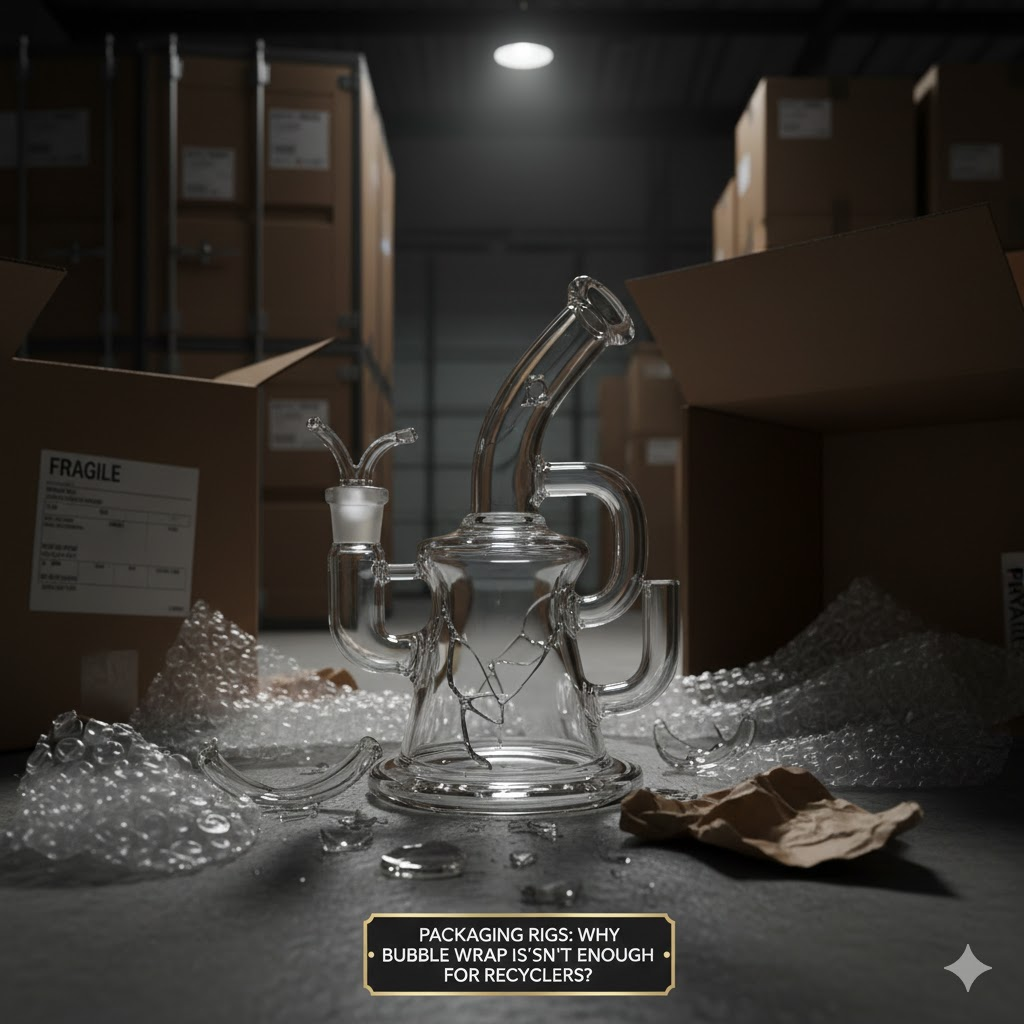
Shipping Safety determines the net margin on every borosilicate shipment, especially since carriers routinely deny liability for glass breakage.
Relying on standard bubble wrap invites “checkerboarding”—fatal compression gaps that allow complex recyclers to shatter against container walls.
This brief details the packaging for glass pipes protocols required to eliminate transit loss.
We analyze the ISTA-grade testing standards and our proprietary Elf-Guard air column suspension system, ensuring your inventory arrives as sellable units rather than unsalvageable shards.
The “Elf-Guard” Air Column System
Bubble wrap is for amateurs. For complex borosilicate geometries, we use Air Column Suspension.
Why Bubble Wrap Fails Standard bubble wrap is static.
Under the weight of other boxes, the bubbles pop or compress, leaving the glass joint directly touching the box wall.
One impact, and it cracks.
How Air Columns Work Our “Elf-Guard” system uses independent, inflatable air chambers that wrap 360 degrees around the rig.
-
Suspension: The glass effectively “floats” in a cushion of air, never touching the cardboard.
-
Isolation: If one column is punctured, the others remain inflated (unlike bubble wrap which loses integrity).
-
Joint Protection: The rigid air pressure locks the 10mm joint in place, preventing vibration stress.
The Outer Defense: 275-lb Burst Strength
Effective packaging for glass pipes isn’t just about the inner wrap; it’s about the crush resistance of the carton.
The “32 ECT” Standard We do not use standard “moving boxes.”
We mandate Double-Wall Corrugated Cardboard with a specific density:
-
32 ECT (Edge Crush Test): Ensures the box can be stacked on a pallet without buckling under vertical weight.
-
275-lb Burst Strength: Prevents punctures from forklifts or other sharp objects in the carrier’s hub.
A recycler packed in a single-wall box is a gamble. A recycler in a 32 ECT double-wall box is an investment.
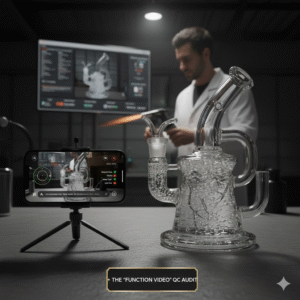
The “Function Video” QC Audit
Before we even seal the box, we validate that the rig is worth shipping.
A mandatory video audit proving internal hydraulics ensures you aren’t paying shipping costs for defective glass.
The Pre-Balance Payment Protocol Most factories send a few photos and ask for money. We provide high-definition video evidence of your specific production run.
-
Vortex Verification: Confirms the water cycles continuously.
-
Drain Efficiency: Visual proof that the return tubes clear water fast enough to prevent splashback.
Turn Sketches Into Profitable Borosilicate Reality Scale your brand with scientifically annealed glass that maximizes durability.
Turn Sketches Into Profitable Borosilicate Reality
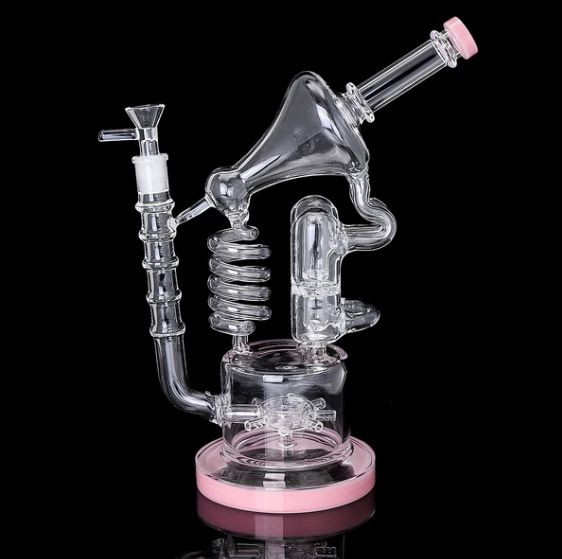
Final Thoughts on Shipping Safety
While generic bubble wrap offers lower upfront costs, it fails to protect the complex 10mm joints of a recycler.
Adopting the Elf-Guard protocol is the only reliable way to eliminate breakage and protect your bottom line.
Your dealer reputation depends on delivering intact, sellable inventory.
Don’t guess on survival rates—validate the packaging for glass pipes engineering before you commit capital.
Frequently Asked Questions
How do industry standards mitigate shipping breakage for borosilicate rigs?
“Fragile” stickers are useless in modern logistics hubs.
We rely on physics, not labels. We adhere to ISTA protocols using double-wall corrugated boxes with 275-lb burst strength.
Inside, our proprietary Elf-Guard system (air column bags or custom foam) completely immobilizes the rig.
The glass effectively “floats” in the center of the cartridge, creating a buffer zone that prevents any contact with the outer box walls.
Why is die-cut foam superior to standard bubble wrap?
Bubble wrap settles and compresses during transit, creating gaps where glass can vibrate against heavier components—a failure mode we call “checkerboarding.”
Custom die-cut PE foam or fixed air columns are engineered to the rig’s exact millimeter geometry.
This eliminates vibration and arrests movement specifically at the weak points (joints and mouthpieces), creating a static lock that soft wrap cannot achieve.
Does the annealing process affect shipping safety?
Yes. Glass with high internal stress acts like a ticking time bomb; it can “self-shatter” purely from the temperature drop in an airplane cargo hold.
We anneal every rig at 1050°F (565°C) for 8-12 hours.
This slow-cooling cycle acts as a molecular reset, ensuring the borosilicate structure is stable enough to withstand thermal shock and physical impact during international transport.
What happens if breakage occurs during transit?
Most carriers deny liability for glass, so we manage the risk for you.
Following our AQL 2.5 QC standards, we maintain a breakage rate below 2%.
If an accident happens, we don’t argue with the courier.
We simply issue a credit or include free replacement units in your next shipment to ensure your margin relies on sales, not insurance claims.
