
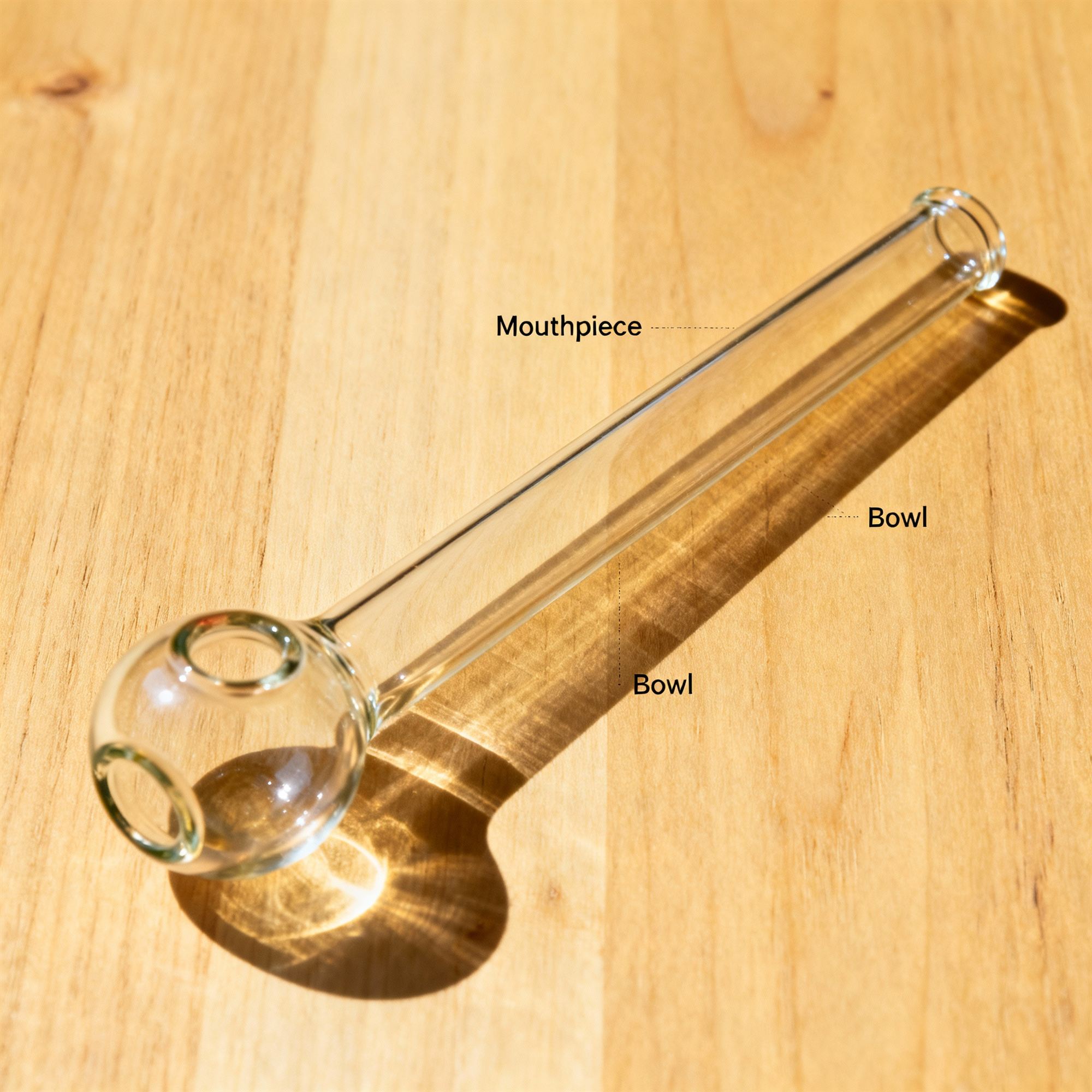
The Display Problem That Costs Smoke Shops Money
Glass pipes are the highest-margin product category in most smoke shops. They are also the most fragile, the most visually diverse, and the hardest to merchandise effectively. A shop that stacks pipes on a shelf the way it stacks rolling paper boxes is leaving money on the table — and breaking product in the process.
This guide covers wholesale glass pipe display solutions: the display types that work for different retail environments, how to spec displays for your store or your clients’ stores, and where to source them as part of a broader brand merchandising strategy.
Why Display Matters More for Glass Than for Other Categories

Unlike rolling papers or vape cartridges, glass pipes are a visual purchase. Customers browse, compare shapes and colors, and make decisions based on aesthetics as much as function. A pipe displayed flat on a shelf looks nothing like a pipe displayed upright with lighting behind it. The same $8 wholesale spoon pipe can look like a $5 item or a $20 item depending entirely on how it is presented.
For wholesale buyers who sell to retail shops, providing display solutions as part of the wholesale package increases sell-through rates and builds retailer loyalty. A buyer who receives product plus a branded display insert has everything needed to put the product in front of customers. A buyer who receives product in a cardboard box has to figure out the merchandising themselves.
Types of Glass Pipe Displays for Retail
Countertop Display Cases
The most common format for smoke shops and headshops. A glass-fronted countertop case with adjustable shelving, typically 60-120cm wide. Products are displayed behind locked glass, visible but not touchable. Staff retrieve items for customers.
Best for: High-value pieces ($20+ retail), shops with limited floor space, high-theft areas.
Wholesale display specs: Acrylic or glass shelving with LED strip lighting, adjustable shelf heights to accommodate different pipe sizes (hand pipes need 10-15cm height, water pipes need 25-40cm). Black or white backing panels are standard — avoid wood grain or colored panels that compete with the product.
Open Shelving with Acrylic Risers
Open shelves with tiered acrylic risers that elevate each row so customers can see all products without reaching. This format works for mid-range pieces ($10-25 retail) where the shop wants customers to handle the product before purchasing.
Best for: Shops where hands-on browsing drives sales, mid-range product lines, stores with security staff or low theft rates.
Wholesale display specs: Clear acrylic risers in 5cm height increments, non-slip pads on each shelf to prevent sliding, individual product slots (not open shelves) to prevent pieces from knocking together.
Wall-Mounted Display Panels
Pegboard or slatwall panels with custom hooks and shelves for displaying pipes vertically. This format maximizes wall space and creates a “gallery” effect that works well for colorful or artistic pieces.
Best for: Shops with limited counter space, stores that want to create a visual feature wall, hand pipe collections with diverse colors and shapes.
Wholesale display specs: Slatwall panels with clear acrylic shelves (not wire hooks, which can chip glass), individual product slots sized to the pipe dimensions, integrated LED lighting on each shelf level.
Branded Floor Displays (Freestanding)
Freestanding display units that a brand provides to a retail shop as part of a wholesale order. These are typically used by established brands that have enough SKU variety to fill a dedicated display and want in-store brand presence.
Best for: Brands with 20+ SKUs placing orders with multiple retail accounts, distributors who want to control merchandising presentation.
Wholesale display specs: Compact footprint (60x40cm), lightweight materials (corrugated cardboard with printed wrap for temporary displays, acrylic or metal for permanent), branded header card with logo and key selling points.
Display Accessories That Increase Sell-Through
Beyond the display structure itself, several accessories improve how glass pipes are presented and sold:
| Accessory | Purpose | Wholesale Cost | Impact |
|---|---|---|---|
| LED strip lighting (per shelf) | Illuminates glass color and detail | $3-8 per strip | High — transforms product appearance |
| Individual acrylic product holders | Keeps pieces upright and separated | $0.50-2.00 each | High — prevents damage, improves presentation |
| Price tag holders (clear acrylic) | Displays price without adhesive on glass | $0.10-0.30 each | Medium — professional appearance |
| Product info cards | Explains features, materials, perc type | $0.05-0.15 each | Medium — educates customer, reduces staff questions |
| Anti-theft security tags | Deters shoplifting of high-value pieces | $0.30-0.80 each | High for high-value items |
Building a Display-Ready Glass Pipe Program?
Elfglass pairs every wholesale order with retail-ready display guidance and protective presentation packaging, so your pipes merchandise beautifully and sell through faster. Send your display spec and get a quote within 12 hours.
MOQ from 100 pieces | BSCI / WRAP / ISO 9001 | NDA before every project
Sourcing Displays as Part of a Wholesale Order
Most glass pipe factories do not manufacture display units in-house, but they can source them as part of a complete order. At Elfglass, display solutions are coordinated alongside the glass production so that the display dimensions match the product dimensions exactly — something that rarely happens when displays are sourced separately.
When ordering displays with your glass, provide the following information:
- Product dimensions (height, width, depth) for each SKU that will be displayed
- Number of SKUs per display unit
- Display type preference (countertop case, open shelf, wall panel, or floor stand)
- Branding requirements (logo placement, color scheme, header card content)
- Quantity of display units needed
Display MOQs are typically low because the components are standard sizes that can be configured for different products. Acrylic risers and holders can be ordered in quantities of 100+. Branded floor displays typically require 10-20 units minimum (one per retail account).
Display Considerations for Online Retailers
Not all glass pipe sales happen in physical stores. For online retailers, the “display” is the product photography. The same principles apply: lighting, background, and presentation determine whether a pipe looks like a $5 item or a $25 item.
If you are a wholesale buyer who also sells online, invest in product photography that matches the in-store display quality. A white background with diffused lighting and a 45-degree angle is the standard for e-commerce glass photography. Some suppliers provide product photography as part of the order, which saves the buyer from having to shoot every SKU individually.
Building a Display-Ready Wholesale Program
For brands that sell through retail accounts, building a display-ready wholesale program means every product ships with everything the retailer needs to put it on display:
- Product in protective individual packaging (foam insert or bubble sleeve)
- Product info card with name, materials, dimensions, and key features
- Price tag holder (retailer fills in the price)
- Display unit (if the brand provides dedicated merchandising)
- Planogram guide showing recommended display layout
This level of merchandising support is what separates a commodity supplier from a brand partner. Retailers will reorder from the supplier who makes their job easier — and a display-ready shipment means the retailer can put new product on the floor in five minutes instead of thirty.
Contact Elfglass to discuss display solutions for your wholesale glass pipe program. Whether you need acrylic holders for a countertop case or a branded floor display for your retail accounts, the team can spec and source the complete package alongside your glass order.
Display Format Decision Matrix
The four formats above are each described in turn; lined up in one table, the right choice becomes a match between your floor space, your price tier, and your theft exposure. Use this as a quick spec sheet when you brief a retailer or plan your own shop layout.
| Format | Footprint | Security | Ideal Retail Tier | Best For |
|---|---|---|---|---|
| Countertop glass case | Small — sits on an existing counter (60–120cm wide) | High — locked, staff-retrieved | $20+ high-value pieces | Limited floor space, high-theft areas, premium stock |
| Open shelving + acrylic risers | Medium — wall or gondola run | Low — hands-on, needs staff or low theft | $10–25 mid-range | Shops where handling drives the sale |
| Wall-mounted slatwall panel | Vertical — uses wall, not floor | Medium — out of easy reach, can add holders | Mixed — great for colorful hand pipes | Stores building a gallery feature wall |
| Branded floor display | Larger — freestanding (~60×40cm base) | Low–medium — open but dedicated | Full brand range across tiers | Brands with 20+ SKUs placing with multiple accounts |
Planogram Basics: Arranging Glass So It Sells
Choosing the display format is only half the merchandising job — how the pieces are arranged inside it decides what sells. A planogram is the deliberate layout behind a display that looks effortless. Apply these principles whether you are stocking your own shop or shipping a display-ready program to a retailer.
- Color-block by family. Group pieces by colorway or style rather than scattering them, so the display reads as a collection from across the room.
- Put heroes at eye level. The highest-margin or signature pieces go in the natural sight line; impulse and entry items sit below, premium statement pieces above.
- Leave finger space. Individual holders or gaps between pieces prevent chipping and let a customer lift one without knocking its neighbor.
- Angle lighting to avoid glare. LED strips should graze the glass from behind or below to bring out color; front-on light just reflects off the surface.
- Group by function. Keep hand pipes, water pipes, and dab rigs in distinct zones so a buyer with one intent can scan quickly.
- Face fast-movers at reach height. The SKUs that turn quickest belong where staff and customers can grab them without stretching.
- Refresh with the season. Rotate the layout and feature pieces on the same seasonal cycle you use for stock, so regulars always see something new.
Frequently Asked Questions
What is the best display type for glass pipes in a smoke shop?
Countertop glass display cases are the most common and secure option for smoke shops. They protect high-value pieces while keeping them visible. For mid-range products where customers want to handle the glass, open shelving with acrylic risers and individual product slots works well. Wall-mounted slatwall panels are ideal for stores with limited counter space.
Can I order custom display units with my glass pipe wholesale order?
Yes. Many manufacturers can source display units as part of a complete order. You need to provide product dimensions, number of SKUs per display, display type preference, branding requirements, and quantity needed. Acrylic holders and risers can be ordered in quantities of 100+, while branded floor displays typically require 10-20 unit minimums.
How does display quality affect glass pipe sales?
Glass pipes are a visual purchase. The same wholesale pipe can appear to be worth $5 or $20 depending on presentation. LED lighting, individual acrylic holders, clean backgrounds, and product info cards all increase perceived value and sell-through rates. A display-ready wholesale shipment also reduces the time retailers spend setting up new product.
About the Author
Ava Zeng is the founder of Elfglass, a Shenzhen-based borosilicate glass pipe manufacturer serving B2B brands worldwide. Every guide on this site is grounded in her production-floor experience— the annealing lines, QC checkpoints, and export orders behind each claim.
Before you commit to a supplier, read her founder’s story and trust promise, and the guide to vetting a reliable glass pipe manufacturer— the same red-flag checklist Elfglass applies to its own suppliers.
Ready to Source Custom Glass Pipes?
Get a free quote within 24 hours. MOQ from 100 pieces. NDA-protected design consultation.
