
Key Takeaways
- Draw physics differ fundamentally: Steamrollers pull air straight through an open end, creating faster, less restricted airflow; spoons draw through a carb hole with chamber buffering, producing smoother, cooler hits.
- Flavor retention favors spoons: The spoon’s enclosed bowl and carb-controlled airflow preserve terpenes better than the steamroller’s direct-through design.
- Manufacturing complexity is similar: Both shapes use comparable borosilicate tubing and lampworking techniques; steamrollers require slightly less glass due to simpler geometry.
- Retail positioning matters: Steamrollers appeal to concentrate users seeking intensity; spoons serve traditional flower smokers prioritizing flavor and control.
- Wholesale pricing parity: At equivalent wall thickness (5mm standard), both shapes land in the $8-15 FOB range for 100-unit MOQs from Shenzhen manufacturers.
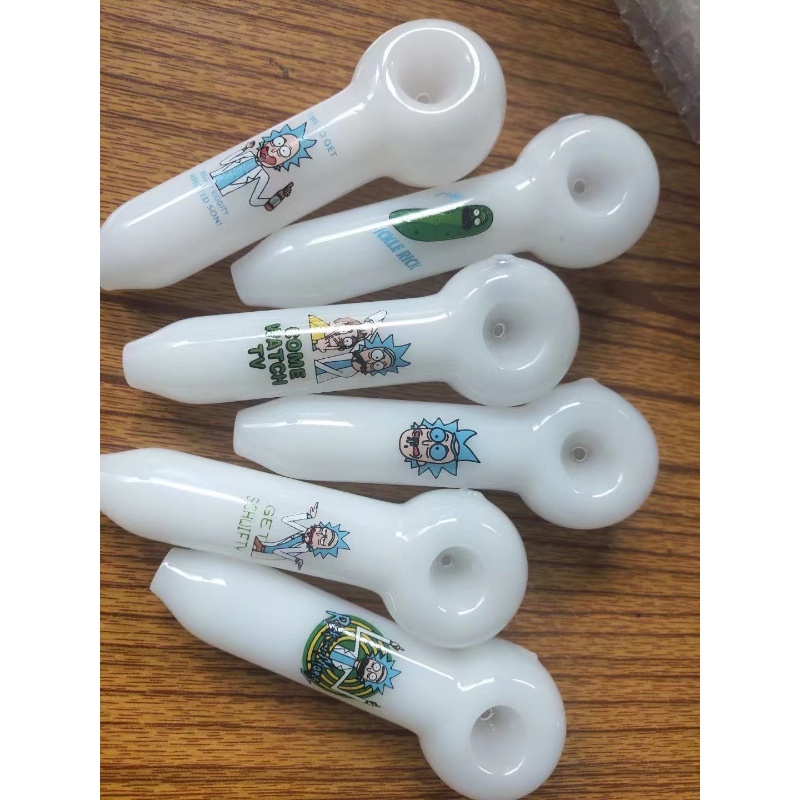
The steamroller versus spoon debate isn’t about which shape is “better”—it’s about matching draw physics to your customer’s consumption method and preference profile. Understanding the mechanical differences lets you stock the right ratio for your market. Hand pipes like these are shaped at the torch using lampworking, a glass-forming technique in which solid glass rods are melted and shaped over a flame (lampworking reference).
Draw Physics: How Airflow Differs Between Shapes
A spoon pipe features a rounded bowl, a side-mounted carburetor (carb) hole, and a mouthpiece. When the user covers the carb and lights the bowl, smoke accumulates in the chamber. Releasing the carb introduces fresh air, pushing the accumulated smoke into the mouth in a single, controlled hit. The chamber acts as a buffer, allowing some cooling and particulate settling before inhalation.
A steamroller pipe is a straight or slightly curved tube with a bowl on top and both ends open. The user covers one end (the “back”) while lighting, then removes their finger to inhale. Air flows directly through the tube, pulling smoke in a linear path with minimal chamber volume. This creates a faster, more intense draw with less filtration.
| Feature | Spoon Pipe | Steamroller Pipe |
|---|---|---|
| Airflow path | Bowl → chamber → carb release → mouthpiece | Bowl → straight tube → open end |
| Chamber volume | Moderate (enclosed bowl area) | Minimal (tube interior only) |
| Draw resistance | Low to moderate (carb controls flow) | Very low (direct-through design) |
| Hit character | Smooth, buffered, controllable | Fast, intense, immediate |
| Cooling effect | Moderate (chamber allows heat dissipation) | Minimal (rapid transit) |
The key takeaway: spoons prioritize control, steamrollers prioritize speed. Your customers’ consumption habits determine which they’ll reach for daily.
Flavor Retention: Why Spoons Win for Flower
For dry herb smoking, flavor preservation is a primary purchase driver. The spoon pipe’s design excels here for three reasons:
- Enclosed combustion chamber: The bowl sits recessed, allowing even burning without excessive oxygen exposure. This reduces terpene volatilization compared to the steamroller’s exposed bowl-on-tube design.
- Carb-controlled dilution: Users can modulate fresh air intake precisely, avoiding over-dilution of flavor compounds. Steamrollers, by contrast, introduce unfiltered ambient air the moment the back end is uncovered.
- Particulate settling: The spoon’s chamber gives ash and particulates a chance to drop out before reaching the mouthpiece, resulting in cleaner-tasting hits.
Steamrollers, meanwhile, excel with concentrates. The direct airflow path minimizes surface contact, preserving the volatile aromatics of dabs and waxes that would otherwise stick to chamber walls. This is why many concentrate-focused brands favor steamroller shapes in their product lines.
Stock the Glass Pipes Your Customers Actually Buy
Elfglass produces the full wholesale catalog, from hand pipes and sherlocks to dab rigs, percolator bongs, and accessories, in proven best-selling specs. Tell us your market and we will recommend a catalog mix with pricing.
MOQ from 100 pieces | BSCI / WRAP / ISO 9001 | NDA before every project
Manufacturing Complexity and Cost Comparison
From a production standpoint, both shapes are entry-level lampworked items. Neither requires percolators, complex joins, or multi-part assembly. Here’s how they compare on the factory floor:
| Factor | Spoon Pipe | Steamroller Pipe |
|---|---|---|
| Glass weight | ~80-120g (5mm wall, standard size) | ~60-100g (5mm wall, equivalent length) |
| Lampwork time | 8-12 minutes (bowl shaping + carb drilling) | 6-10 minutes (simple tube + bowl attachment) |
| Breakage risk | Moderate (carb hole is stress point) | Low (no thin sections) |
| QC failure rate | ~3-5% (carb alignment issues) | ~2-4% (straightforward geometry) |
| FOB cost @ 100 MOQ | $8-15 USD | $7-13 USD |
The steamroller’s slight cost advantage comes from reduced glass weight and faster production time. However, the difference is marginal—both shapes remain among the most affordable SKUs in any wholesale catalog. For retailers building a starter inventory, stocking both ensures coverage of both consumption preferences without significant margin impact.

Retail Positioning: Which Shape Sells to Whom
Understanding your customer base determines the optimal spoon-to-steamroller ratio in your inventory:
Spoon Pipes: The Traditionalist’s Choice
Spoons dominate among flower smokers who value ritual and flavor. They’re the go-to for:
- First-time buyers learning proper technique (carb control teaches airflow management)
- Connoisseurs who appreciate nuanced terpene profiles
- Customers transitioning from rolling papers seeking reusable convenience
- Gift buyers (spoons are recognizable, non-intimidating shapes)
Steamroller Pipes: The Concentrate Enthusiast’s Tool
Steamrollers attract a different demographic:
- Dab users seeking a quick, intense hit without rig complexity
- Budget-conscious shoppers wanting maximum efficiency per gram
- Experienced smokers who prefer raw, unfiltered flavor
- Travelers needing compact, durable pieces (fewer protruding parts to break)
Recommended starting ratio: 60% spoons / 40% steamrollers for general head shops; 40/60 for concentrate-focused dispensaries. Adjust based on local consumption trends—observe which shape moves faster in your first 30 days and rebalance accordingly.
Design Variations Within Each Shape
Both categories offer room for differentiation beyond the basic form:
Spoon Pipe Variants
- Classic spoon: Rounded bowl, side carb, smooth finish
- Hammer spoon: Flat bottom for stability, angular aesthetic
- Glitter/fumed spoon: Silver or gold fuming inside the chamber for visual appeal
- Mini spoon: Pocket-sized (2-3 inches) for discreet carry
- Heavy spoon: 7-9mm wall thickness for premium feel
Steamroller Pipe Variants
- Straight steamroller: Uniform diameter tube, simplest form
- Tapered steamroller: Wider mouthpiece end for easier inhalation
- Curved steamroller: Gentle arc for ergonomic handling
- Multi-bowl steamroller: Two bowls for shared sessions (niche novelty)
- Textured steamroller: Ribbed or dimpled exterior for grip
Elfglass produces all variants in 5mm borosilicate as standard, with custom colors and fuming available at 200-piece MOQs. See our wholesale hand pipes catalog for current stock designs and minimum order quantities.
Quality Control: What to Inspect Before Accepting Stock
Regardless of shape, incoming wholesale lots should pass these checks:
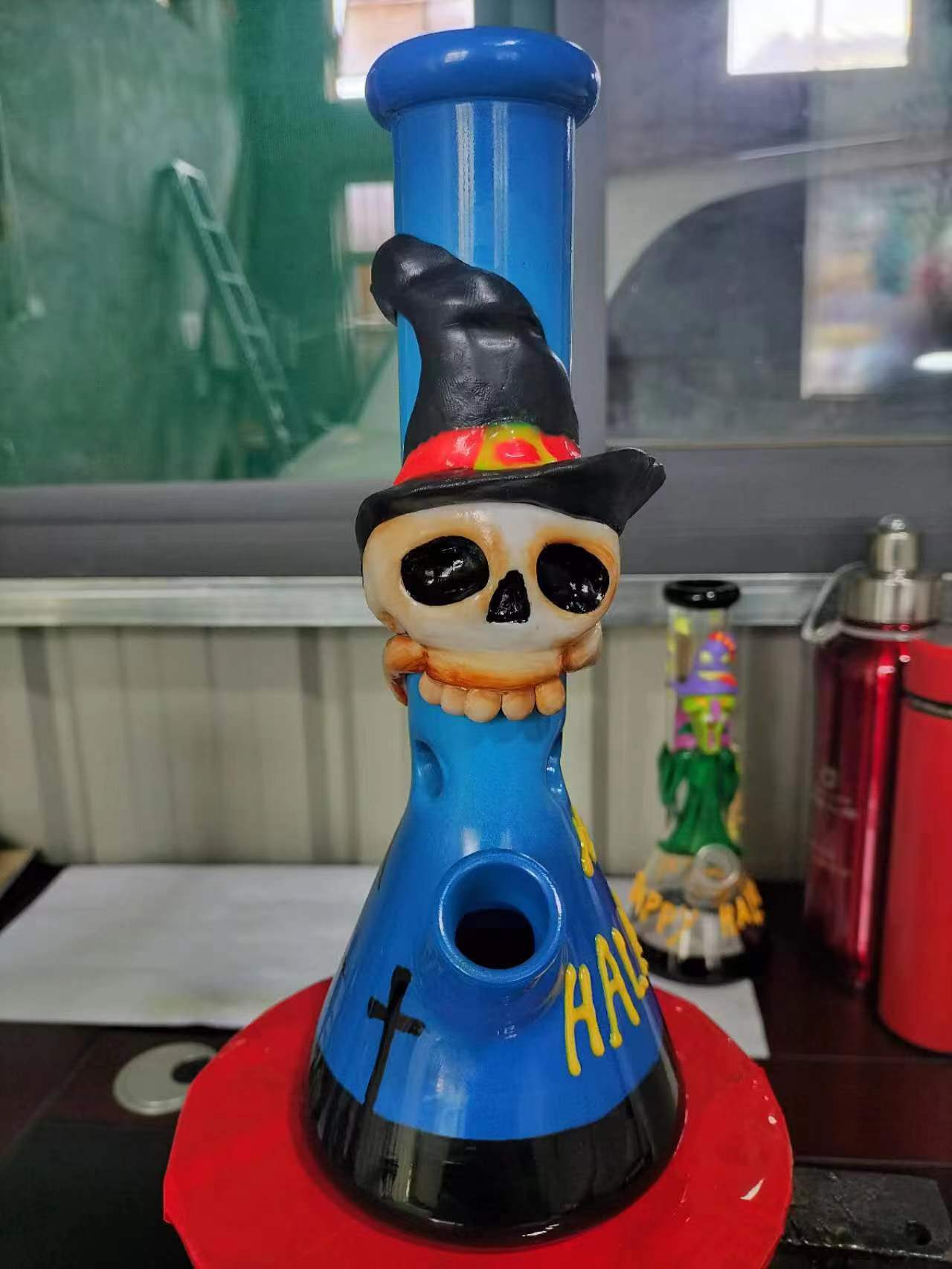
- Wall thickness consistency: Use calipers to verify 5mm ±0.5mm across random samples. Thin spots indicate rushed production and increase breakage risk.
- Carb hole alignment (spoons): The carb should sit cleanly on the bowl’s side, not too close to the mouthpiece or bowl rim. Misaligned carbs cause awkward thumb positioning.
- Open-end smoothness (steamrollers): Both tube ends must be fire-polished smooth. Sharp edges indicate incomplete annealing and pose user safety risks.
- Bowl depth: Bowls should be deep enough to hold a meaningful amount of material (at least 0.1g for spoons, 0.05g for steamrollers). Shallow bowls frustrate users.
- Annealing quality: Tap pieces gently—they should produce a clear ring, not a dull thud. Dull sounds indicate internal stress and predict future cracking.
Elfglass applies these same checkpoints during production. Every lot ships with a QC report documenting sample measurements and pass rates. Learn more about our inspection process in our manufacturing process overview.
Stocking both shapes covers the full demand spectrum: spoons for first-time buyers and flower-focused customers, steamrollers for experienced users who want a faster, heavier hit. If you are deciding which mix fits your shop, send us your target quantity and customer profile — contact our team or message us on WhatsApp, and we will reply with pricing, MOQ options, and lead times within 24 hours.
Frequently Asked Questions
Which is easier to clean: spoon or steamroller?
Steamrollers win on cleaning ease. Their straight-through design allows pipe cleaners and brushes to pass completely through the tube. Spoons require angled cleaning tools or soaking due to the enclosed chamber. For retailers serving customers who prioritize low maintenance, steamrollers are the practical choice.
Can steamrollers be used for flower?
Yes, but with trade-offs. Steamrollers work with dry herb, though the fast airflow can cause uneven burning if the user inhales too aggressively. Covering the back end partially (rather than fully) helps moderate the draw. For dedicated flower smokers, spoons remain the superior design.
Do steamrollers waste more material?
No—both shapes are efficient when used correctly. Steamrollers may combust material slightly faster due to increased oxygen flow, but skilled users compensate by controlling their inhale speed. Material waste depends more on user technique than pipe shape.
What’s the ideal length for each shape?
Spoons typically range 3-5 inches; steamrollers run 4-6 inches. Longer pieces provide more cooling but sacrifice portability. For wholesale inventory, stock 4-inch spoons and 5-inch steamrollers as your core sizes—they satisfy most users without excessive glass weight driving up costs.
Are there durability differences between the two?
Steamrollers are marginally more durable due to their simpler geometry and lack of a carb hole (a structural weak point in spoons). However, both shapes benefit significantly from 5mm+ wall thickness. Avoid sub-4mm pieces regardless of shape—they chip and crack under normal use.
About the Author
Ava Zeng is the founder of Elfglass, a Shenzhen-based borosilicate glass pipe manufacturer serving B2B brands worldwide. Every guide on this site is grounded in her production-floor experience— the annealing lines, QC checkpoints, and export orders behind each claim.
Before you commit to a supplier, read her founder’s story and trust promise, and the guide to vetting a reliable glass pipe manufacturer— the same red-flag checklist Elfglass applies to its own suppliers.

Ready to Source Custom Glass Pipes?
Get a free quote within 24 hours. MOQ from 100 pieces. NDA-protected design consultation.
