
Sustainability is no longer a marketing buzzword reserved for consumer-facing brands. Wholesale buyers of glass pipes are now fielding questions from their own retail partners: Is the factory energy-efficient? Does the packaging biodegrade? Can you prove the glass is recyclable?
The glass smoking pipe industry occupies an unusual position in the sustainability conversation. Borosilicate glass is inert, recyclable, and made from abundant raw materials—yet the manufacturing process consumes significant energy, and the supply chain spans international shipping routes. This guide separates the genuine sustainability levers from the greenwashing, giving wholesale buyers a framework to evaluate their factory’s environmental claims.
Key Takeaways
- Borosilicate glass is fully recyclable and chemically inert, but recycling rates depend on local infrastructure—not factory claims.
- The largest environmental impact in glass pipe manufacturing is furnace energy consumption, not raw material extraction.
- Lead-free and cadmium-free glass is both a safety and sustainability requirement; ask for written certification, not verbal assurances.
- Packaging choices (recycled cardboard vs. foam inserts) often have a larger carbon footprint than the glass itself.
- A factory’s willingness to share energy data is a stronger signal than any eco-label on a marketing brochure.
What Makes Glass Pipe Manufacturing Sustainable—or Not
Glass pipe production involves three environmental impact stages: raw material preparation, melting and forming, and finishing and packaging.
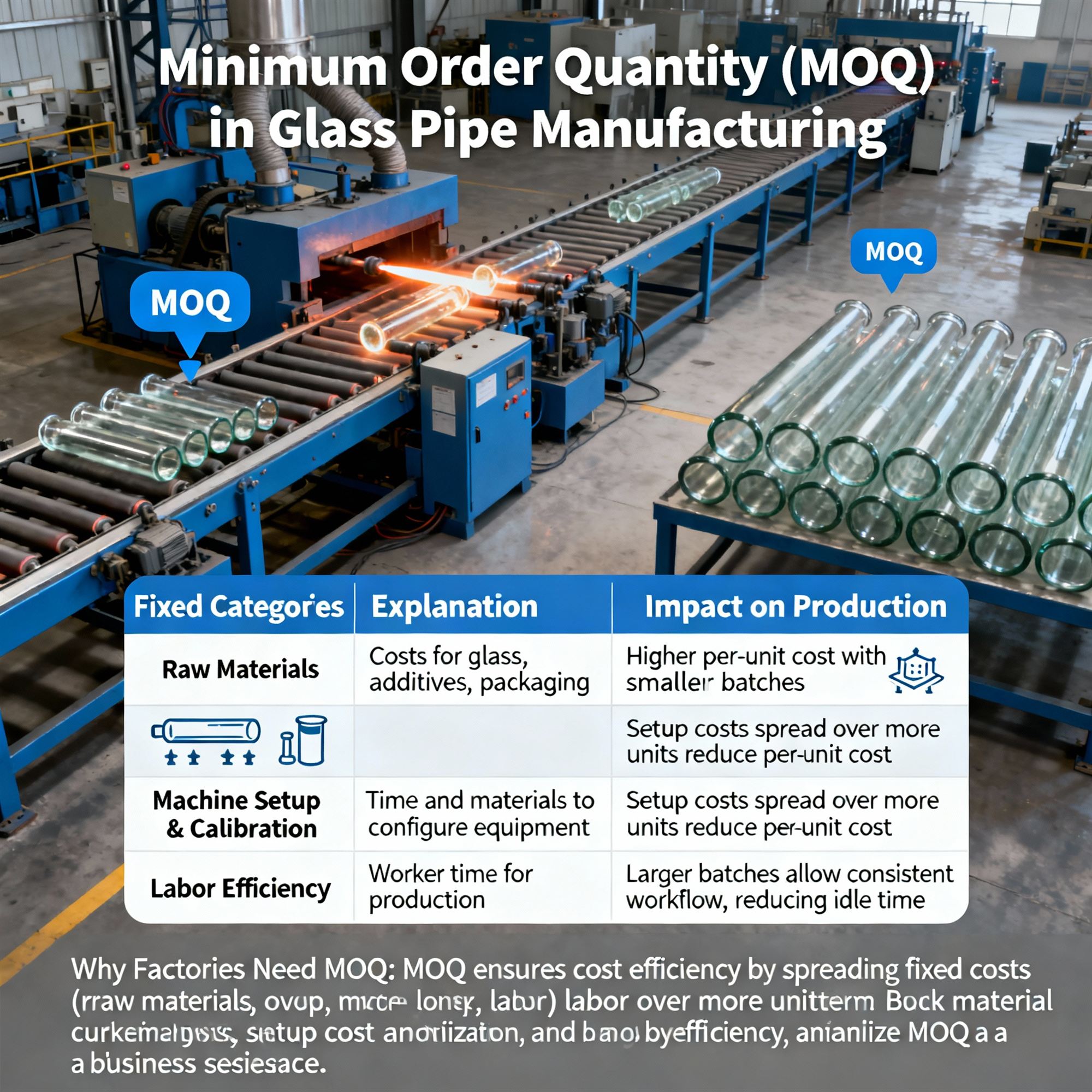
Raw Materials: Sand, Soda Ash, and Boron Trioxide
Borosilicate glass is composed primarily of silica sand (about 80%), boron trioxide (about 13%), and soda ash (about 4%), with smaller amounts of aluminum oxide and other oxides. Silica sand is the most mined mineral on Earth and is abundant. Boron trioxide is derived from borate deposits, primarily from Turkey and the United States.
The raw material stage has a relatively low environmental footprint. The concern is not resource depletion but rather the mining practices of the sand supplier. Few glass pipe factories can trace their sand source back to the mine. If sustainability is a priority for your brand, ask your supplier whether their silica sand comes from certified operations.
Melting: The Energy-Intensive Core
Glass melting occurs at temperatures between 1,600°C and 1,700°C for borosilicate glass. This is the single largest energy consumer in the production process. A typical glass pipe factory with 20 workers and a 1,000 sqm facility—like Elfglass in Shenzhen—operates gas-fired or electric furnaces that run continuously during production shifts.
The sustainability question here is: what type of energy powers the furnace? Natural gas furnaces emit CO₂ directly. Electric furnaces shift the emissions to the power grid—cleaner in regions with high renewable energy penetration (like southern China, which benefits from hydroelectric capacity in Yunnan and Guangdong), dirtier in coal-heavy grids.
Few factories publish their energy consumption per unit. A buyer asking “what is your kWh per kilogram of melted glass?” will immediately separate factories that track their impact from those that do not.
Finishing: Annealing, Polishing, and Waste
After forming, glass pipes pass through an annealing lehr (oven) that slowly cools them to relieve internal stress. This second heating stage consumes additional energy but is non-negotiable—skipping annealing leads to brittle glass that cracks during use.
Waste generation in glass pipe manufacturing comes from three sources:
- Cullet (broken glass): Typically 5-15% of production volume. Most factories recycle cullet back into the furnace, reducing both raw material consumption and melting energy (cullet melts at a lower temperature than virgin materials).
- Graphite mold wear: Hand-blown pipes use graphite molds that degrade over time. Spent graphite is non-hazardous but not easily recyclable.
- Colored glass runoff: When switching between colored glass batches, purging material is wasted. Factories producing many custom colors generate more waste than those running long production runs of clear glass.
The Packaging Problem: Often Bigger Than the Glass
For small wholesale orders—say, 100 units of a custom hand pipe—the packaging footprint can exceed the manufacturing footprint. Here is why:
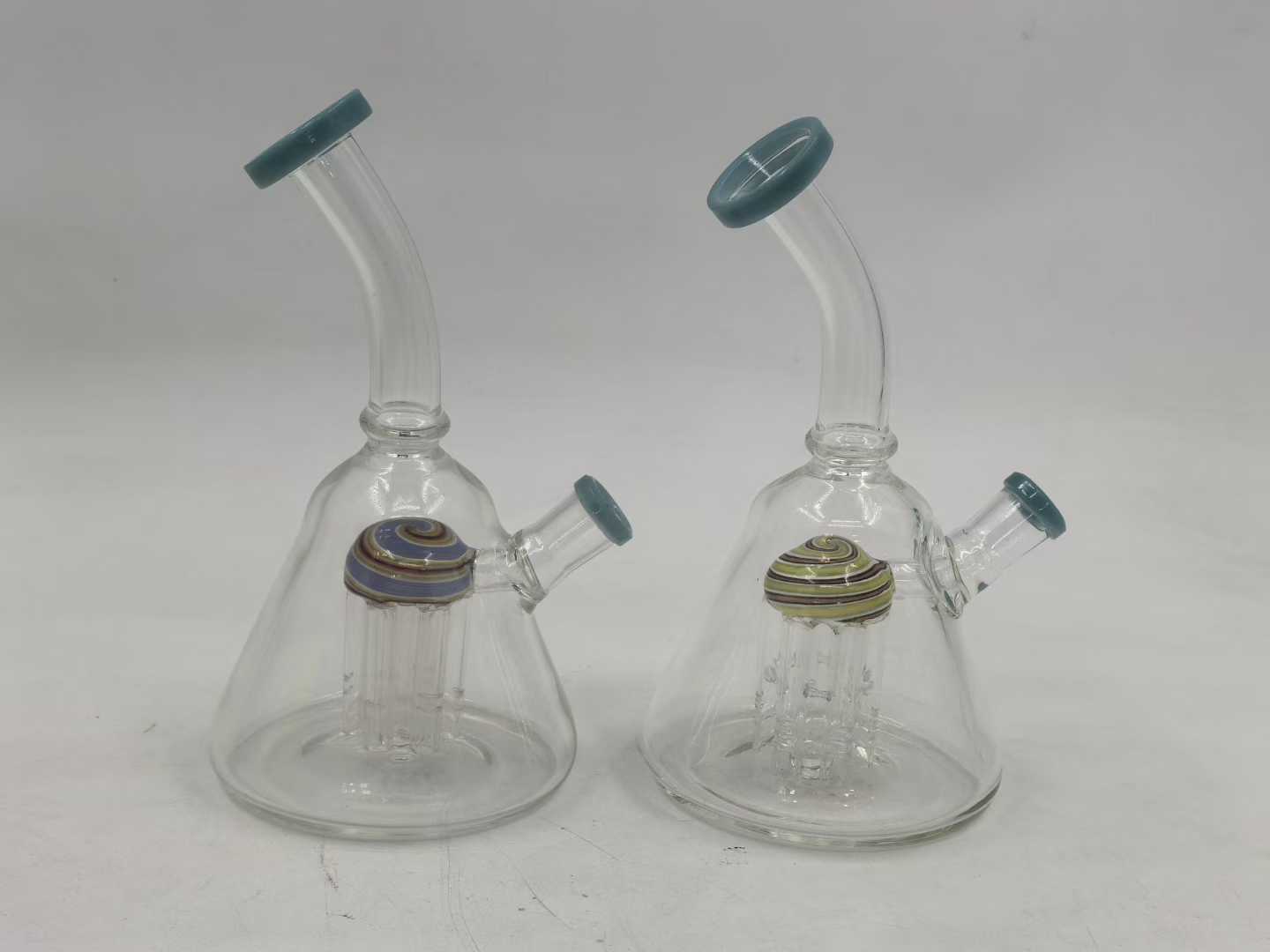
Standard glass pipe packaging involves individual foam inserts, bubble wrap, a printed box, and an outer shipping carton. The foam and bubble wrap are petroleum-based plastics that persist in landfills for centuries. The printed box, if coated with UV varnish or laminated, becomes non-recyclable in most municipal systems.
Buyers who want to reduce packaging waste should ask their factory about:
- Molded pulp inserts instead of foam. Made from recycled paper, these are biodegradable and provide equivalent shock protection.
- Uncoated kraft boxes instead of UV-coated or laminated options. Recyclable in standard paper streams.
- Reduced void fill. A well-designed carton that fits the product snugly eliminates the need for bubble wrap entirely.
- Consolidated shipping. Fewer, larger cartons reduce total cardboard usage per unit.
These changes typically add 3-8% to packaging cost but can reduce the carbon footprint of your shipment by 20-30% on the packaging side.
What Buyers Should Ask Their Factory: A Sustainability Checklist
Before accepting a factory’s “eco-friendly” claim, request specific documentation. Here are the questions that separate genuine sustainability from marketing:
| Question | What a Good Answer Looks Like | Red Flag |
|---|---|---|
| What type of furnace do you use, and what is its energy source? | Specific furnace model, natural gas or electric, with approximate kWh/kg data | “We use energy-efficient equipment” with no specifics |
| Do you recycle cullet back into production? | Yes, with a percentage estimate (5-15% is typical) | “We minimize waste” without a process description |
| Are your colored glass compounds lead-free and cadmium-free? | Written certification or third-party test report | Verbal assurance or “all our glass is safe” |
| Can you provide packaging options with reduced plastic? | Yes—molded pulp, uncoated kraft, or honeycomb paper alternatives | “We only use standard packaging” |
| Do you track energy consumption per production batch? | Yes, with records available for audit | No tracking system in place |
| What percentage of your raw materials come from certified suppliers? | Specific percentage with supplier names or certifications | “We source from trusted suppliers” |
A factory that tracks and shares this data—like Elfglass, which maintains documented production processes and holds ISO 9001 certification—is demonstrating the operational discipline that sustainability requires. Factories that cannot answer these questions are not necessarily unsustainable; they simply have not been asked to measure before.
Recyclability: The Glass Advantage
One area where glass pipes have an unambiguous sustainability advantage is end-of-life recyclability. Borosilicate glass can be recycled indefinitely without loss of quality. Unlike plastic, which degrades with each recycling cycle, glass maintains its structural and chemical properties.
However, there is a practical limitation: borosilicate glass has a different melting point than soda-lime glass (the type used in bottles and jars). Most municipal recycling streams accept soda-lime glass but not borosilicate. A broken Pyrex baking dish, for example, is not accepted in curbside recycling in most US cities because its higher melting point contaminates the soda-lime batch.
This means that while glass pipes are technically recyclable, the actual recycling rate depends on specialized facilities that accept borosilicate. Brands that want to close the loop should research whether their target market has borosilicate-accepting recycling infrastructure—or consider a take-back program.
Want a Factory That Can Back Its Sustainability Claims?
Elfglass tracks energy per kilogram of melted glass, recycles cullet back into production and ships in molded-pulp packaging, and shares the ISO 9001-documented data behind every claim—so your eco positioning survives scrutiny. Send your sustainability checklist and get a quote within 12 hours.
MOQ from 100 pieces | BSCI / WRAP / ISO 9001 | NDA before every project
Sustainability as a Wholesale Differentiator
For wholesale buyers, sustainability is increasingly a product differentiation tool. Retailers in the US, UK, and Australia report growing demand from consumers who ask about material sourcing and packaging. A wholesale buyer who can demonstrate that their factory meets specific sustainability criteria has a competitive edge over buyers who cannot.
The key is specificity. “Our factory is eco-friendly” means nothing without data. “Our factory uses electric furnaces powered by Guangdong’s hydroelectric grid, recycles 12% cullet back into production, and ships in molded pulp packaging” tells a verifiable story.
If you are exploring custom designs or exclusive molds, sustainability considerations should be part of the initial specification. Custom colors may require different pigment compounds; custom packaging shapes affect material efficiency. Build these conversations into your OEM process from day one.
Frequently Asked Questions
Is borosilicate glass recyclable?
Yes, borosilicate glass is technically recyclable indefinitely without quality loss. However, most municipal recycling streams accept only soda-lime glass. Borosilicate requires specialized recycling facilities due to its higher melting point (approximately 1,650°C vs. 1,500°C for soda-lime).
What is the biggest environmental impact in glass pipe manufacturing?
Furnace energy consumption during the melting stage is the largest environmental impact, accounting for approximately 60-70% of total production energy. The type of energy source (natural gas, electric, coal) determines the carbon intensity of this stage.
How can I verify a factory’s sustainability claims?
Request specific data: energy consumption per kilogram of melted glass, cullet recycling percentage, written certification for lead-free and cadmium-free compounds, and packaging material specifications. Factories that track and share these metrics demonstrate genuine commitment.
Does sustainable packaging significantly increase costs?
Molded pulp inserts and uncoated kraft boxes typically add 3-8% to packaging costs compared to foam and UV-coated alternatives. The trade-off is a 20-30% reduction in packaging carbon footprint and improved brand positioning with environmentally conscious retailers.
Are colored glass pipes less sustainable than clear glass?
Colored glass production generates more waste during color-changeover purging and may use pigment compounds that require additional compliance documentation (such as REACH in the EU). However, the base glass composition remains the same. The sustainability difference is primarily in material efficiency, not environmental toxicity. Contact our team to discuss sustainable sourcing options for your market.
Ready to Start Your Custom Glass Pipe Project?
Get a free quote within 24 hours. MOQ from 100 pieces. NDA-protected design consultation.
About the Author
Ava Zeng is the founder of Elfglass, a Shenzhen-based borosilicate glass pipe manufacturer serving B2B brands worldwide. Every guide on this site is grounded in her production-floor experience— the annealing lines, QC checkpoints, and export orders behind each claim.
Before you commit to a supplier, read her founder’s story and trust promise, and the guide to vetting a reliable glass pipe manufacturer— the same red-flag checklist Elfglass applies to its own suppliers.
