
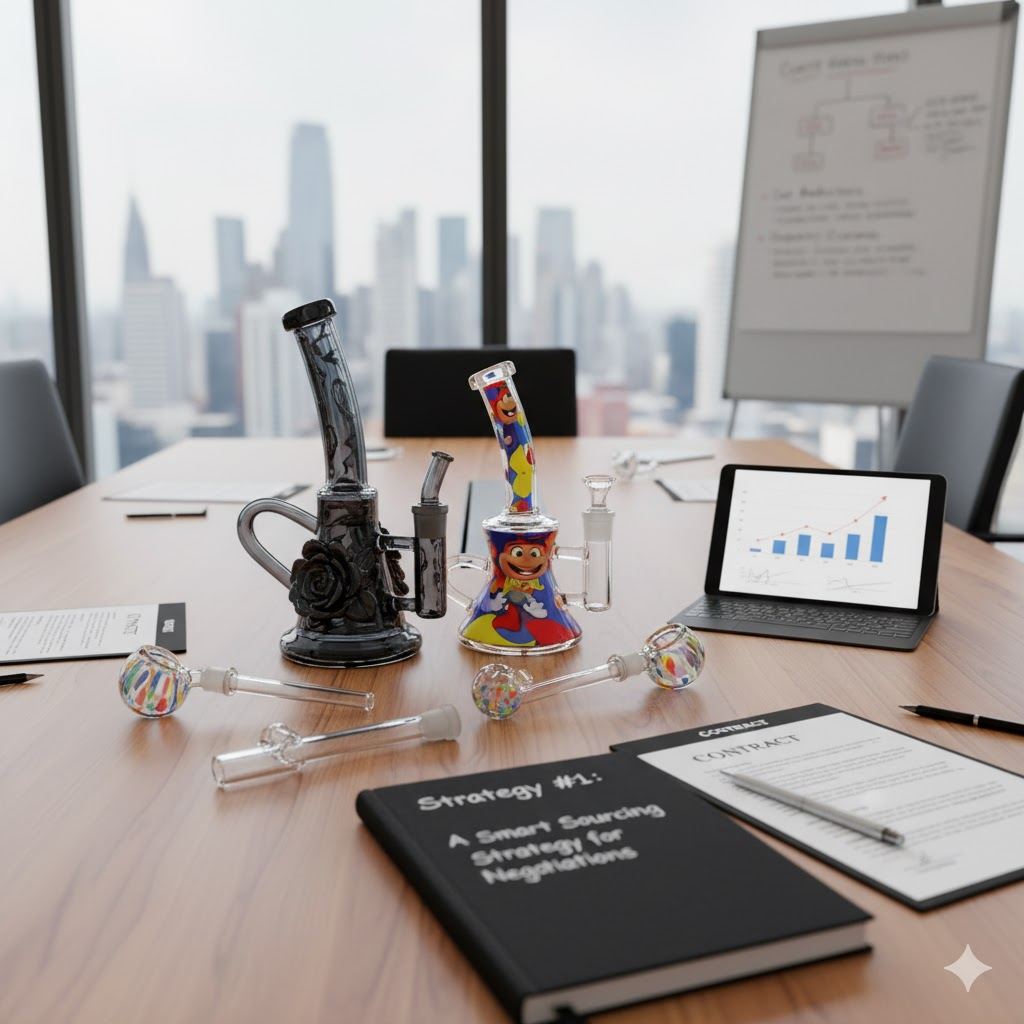
You have probably stood in a convention center aisle, brochure in hand, scanning a wall of glass displays while wondering whether the supplier across the table is the right one. Or maybe you are sitting at your desk at midnight, comparing factory websites across twelve browser tabs, trying to figure out which one will actually answer your email. Both paths lead to the same destination — a container of borosilicate glass pipes heading to your warehouse — but the journey, the cost, and the risks are very different.
The glass pipe industry has grown around two parallel sourcing channels. Trade shows like MJBIZ, Vape Expo, and Inter Tabac draw hundreds of manufacturers under one roof, offering handshakes, samples you can hold, and the kind of instant rapport that a video call rarely replicates. Online sourcing, by contrast, lets you reach factories directly from your office, compare specifications side by side, and move at the speed of email rather than the speed of an annual event calendar.
Neither channel is inherently better. The right choice depends on your order volume, your timeline, how much product inspection matters before you commit, and how you prefer to build supplier relationships. This guide breaks down both paths across eight dimensions that actually affect your bottom line, so you can decide where to spend your next sourcing dollar.
The Real Cost of Each Path
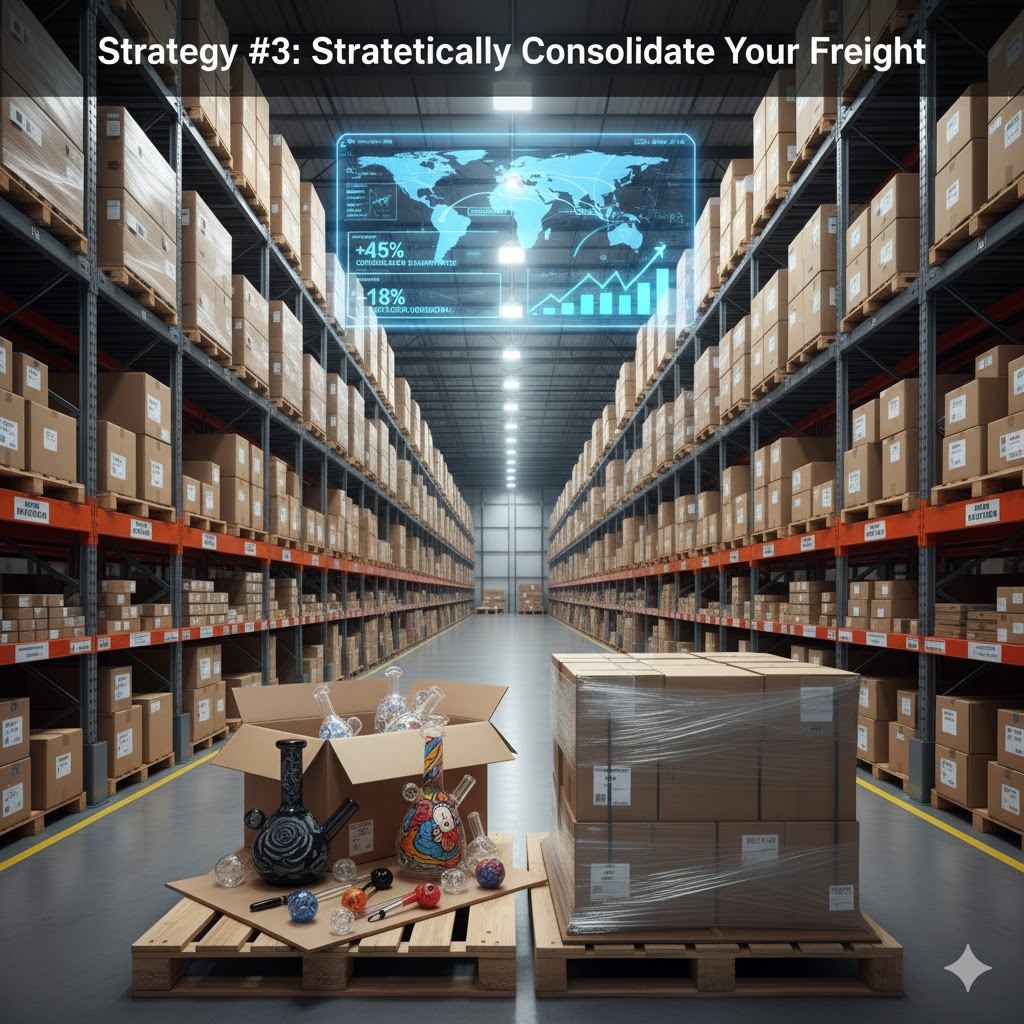
Cost is where the comparison usually starts, and where most buyers get it wrong — because they only count the obvious line items. A trade show booth costs a manufacturer anywhere from a few thousand to tens of thousands of dollars per event, and that expense gets baked into the unit prices they quote on the show floor. When you walk away from a booth with a quoted price, you are partially funding their travel, hotel, shipping samples, and booth rental. That does not make the price unfair — it simply means the cost structure is different from what you would see online.
Online sourcing eliminates the trade show overhead entirely. A factory like Elfglass, operating out of a 1000-square-meter facility in Shenzhen since 2010, can respond to inquiries and send quotes without the markup layer that exhibition participation requires. The quote comes back within 12 hours, not after you wait three months for the next expo season.
But here is what most cost comparisons miss: trade shows save money on sampling and inspection travel. If you were to fly to Shenzhen to visit factories independently, your airfare, hotel, and local transport would likely exceed the cost of meeting those same factories at a regional trade show. The question is whether you need that in-person touch at all. For buyers who have already learned how to source water pipes from China through online channels, the travel savings often make digital-first sourcing the cheaper option overall.
Time Investment — From First Contact to First Shipment
Time is the hidden cost that rarely appears in spreadsheets. Trade shows operate on an annual or semi-annual cycle. If you miss the spring expo, you might wait six months for the next opportunity to meet suppliers face to face. Once you do meet, the actual ordering process still takes weeks — you need to finalize specs, arrange sampling, approve production, and coordinate shipping. The handshake accelerates trust, but it does not compress the manufacturing calendar.
Online sourcing collapses the front end of that timeline dramatically. There is no waiting for an event. You send an inquiry today, get a response within 12 hours, receive samples in 1-3 days, and begin production within 7-12 days for orders of 100 pieces or more. A factory with a monthly capacity of 10,000 pieces can slot your order into the next available production window without the lag of a post-show backlog, where dozens of buyers who all met at the same booth are competing for the same production slots.
The trade-off is that online sourcing requires more upfront diligence. You cannot walk up to a booth and inspect the product in person. You need to follow a structured sourcing process — verify certifications, request samples, and conduct video factory tours. That research takes time, but it happens on your schedule, not the event calendar’s.
Relationship Building in Two Different Rooms
There is something irreplaceable about sitting across from a factory owner, turning a glass dab rig over in your hands, and reading the person’s body language when you ask about their annealing process. Trade shows create the conditions for fast trust — shared physical space, mutual eye contact, the social pressure of a public booth. For first-time buyers who have never imported from China, that face-to-face meeting can reduce the anxiety of sending a large wire transfer overseas.
But relationships built in a two-day expo often stay shallow. You exchange cards, take a group photo, and then communicate through sporadic emails until the next show. Real supplier relationships — the kind where a factory prioritizes your rush order or flags a quality issue before it ships — are built through consistent communication over months, not through a single handshake.
Ava Zeng, the founder of Elfglass, puts it this way: “What kills a great idea is never the technology, but the communication gap and a lack of empathy.” That gap shows up at trade shows too, where the noise and rush of the event floor make it hard to have the kind of detailed technical conversation that prevents production mistakes. Online channels, with their threaded email conversations and shared documents, actually create a better paper trail for the specifics that matter — custom dimensions, color matching, packaging requirements.
Elfglass signs an NDA before every project, a practice that protects both parties and signals seriousness regardless of whether the relationship started at a booth or through a website contact form. The mechanism of trust is different, but the outcome — a supplier who understands your brand and guards your designs — is achievable either way.
Product Inspection — Hands-On vs High-Resolution Photos
This is the dimension where trade shows hold their strongest advantage. At a booth, you can feel the weight of a glass water pipe, check the joint fitment, inspect the percolator diffusion, and look for stress points near the welds. For buyers who lack experience evaluating borosilicate glass, that tactile feedback is invaluable.
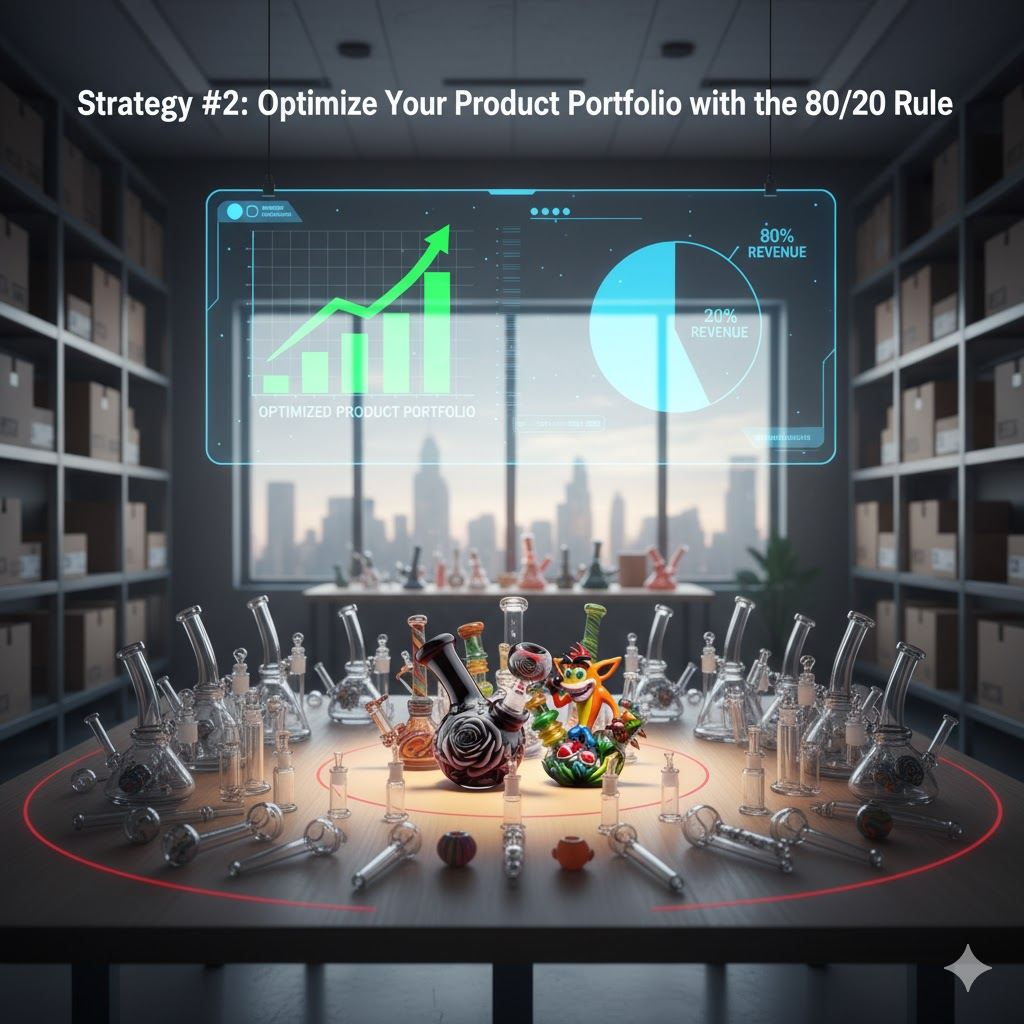
Online sourcing compensates with a different kind of inspection rigor. A well-run factory provides high-resolution product photography, video walkthroughs of the production line, and third-party certification documents. Elfglass holds BSCI, WRAP, and ISO 9001 certifications — credentials that are verifiable regardless of whether you met the team at a trade show or through their website. You can also hire a third-party inspection service to visit the factory on your behalf, which costs a few hundred dollars but gives you an unbiased quality report.
The practical difference narrows further when you consider that trade show samples are often cherry-picked — the best pieces from the production line, not the average output. When you order online and request a pre-production sample, you see exactly what the batch will look like, because that sample comes from the same line that will produce your order. If you are sourcing wholesale water pipes in volume, that consistency matters more than a single impressive piece you handled at a booth.
Sample Handling — Speed and Iteration
Samples are where sourcing decisions get made or broken. At a trade show, you can collect samples immediately — walk up to a booth, pick a piece off the display, and put it in your bag. The instant gratification is real. But those show-floor samples come with a catch: they are generic catalog pieces, not customized to your specifications. If your brand needs a specific wall thickness, a custom downstem length, or a particular color tint, the booth sample tells you very little.
Online sampling is slower to start but more precise in outcome. Elfglass produces custom samples in 1-3 days — fast enough that you can iterate through two or three design revisions in the time it takes to recover from jet lag after a trade show trip. Each sample is made to your exact spec sheet, so the piece that arrives in your mailbox is a true preview of production quality, not a showroom highlight.
This matters especially for buyers exploring wholesale dab rigs or wholesale hand pipes, where small design differences — a banger angle, a carb cap fit, a pipe bowl depth — directly affect end-user satisfaction. The ability to request, receive, and revise samples quickly through online channels often produces a better final product than grabbing a generic piece off a trade show table.
Negotiation Dynamics — Face-to-Face vs Inbox
Negotiation at a trade show has a social texture that email cannot replicate. You can gauge a supplier’s flexibility by their facial expression when you mention your target price. You can leverage competing booth offers in real time. The compressed timeline of an expo — you are only here for two days — creates urgency that pushes both sides toward agreement.
But urgency is a double-edged sword. Deals made under time pressure at trade shows often skip the careful review of terms that prevents disputes later. Payment terms, warranty conditions, defect thresholds, and shipping responsibilities get glossed over because everyone wants to “lock it in” before the show ends. Those details are where real money is lost or saved.
Online negotiation moves slower, and that slowness is actually an advantage. You have time to compare quotes from multiple factories, consult with your team, and negotiate each term deliberately. Standard payment structures — like T/T with 30 percent deposit and 70 percent before shipment — are transparent and documented in writing before any production begins. There is no ambiguity about what was agreed, because the entire negotiation lives in an email thread that both parties can reference.
The total cost of importing involves more than unit price — it includes tooling fees, mold costs, shipping method, and customs duties. Online channels give you the space to break down each component and negotiate individually, rather than accepting a bundled quote handed to you on a show floor.
Risk Profile — What Can Go Wrong
Every sourcing channel carries risk, but the risk profiles are different. Trade show risks include: committing to a supplier based on a polished booth presentation rather than verified production capability; losing touch with the contact after the show ends; and paying inflated prices that reflect the supplier’s exhibition costs. There is also the risk of information asymmetry — you see their best work for two days, but you do not see their factory floor, their QC process, or how they handle the 99 days between shows.
Online sourcing risks are different but manageable. The primary risk is choosing a supplier based on their website alone, without independent verification. This is where certifications become critical — BSCI, WRAP, and ISO 9001 are audited by third parties, not self-reported. A factory that maintains these certifications has already submitted to external scrutiny of its production practices, labor conditions, and quality management systems.
Other online risks include communication delays across time zones and the inability to physically inspect goods before shipment. Both are solvable: messaging tools and clear response-time commitments (like a 12-hour quote turnaround) keep communication flowing, and pre-shipment inspection services or video quality checks bridge the physical distance. The key is building a verification process into your sourcing workflow rather than relying on a single in-person impression.
A Side-by-Side Comparison
| Dimension | Trade Shows | Online Sourcing |
|---|---|---|
| Initial contact speed | Event-dependent (1-2 times per year) | Same day; quote within 12 hours |
| Sample customization | Generic catalog pieces | Custom specs; 1-3 day turnaround |
| Production lead time | Same (7-12 days) but delayed by post-show backlog | 7-12 days for 100+ pieces; no backlog queue |
| Price transparency | Bundled quotes; overhead included | Itemized; easy multi-supplier comparison |
| MOQ flexibility | Often higher to justify show investment | 100 pieces per design/SKU |
| Relationship depth | Fast initial trust; shallow follow-through | Slower start; deeper over sustained communication |
| Inspection method | Hands-on at booth (cherry-picked samples) | Photos, video, certifications, third-party audit |
| Payment terms clarity | Often rushed; verbal agreements | Written; e.g., T/T 30% deposit, 70% before shipment |
| Monthly capacity visibility | Hard to verify on show floor | Documented (e.g., 10,000 pieces/month) |
| Best for | First-time importers; tactile product categories | Repeat orders; custom designs; cost-conscious buyers |
Sourcing Glass Pipes for the First Time?
Elfglass gives online buyers the confidence of a trade show floor—live video factory tours, photo-documented samples in 1 to 3 days and a 100-piece MOQ—without the flight. Send your sourcing brief and get a quote within 12 hours.
MOQ from 100 pieces | BSCI / WRAP / ISO 9001 | NDA before every project
When to Use Each Approach
Trade shows make the most sense when you are new to importing and need the confidence that comes from touching the product and meeting the people. They also work well for established buyers who use the event to check in with existing suppliers, scout new trends, and maintain industry relationships. If your primary markets are the USA, UK, Australia, or Canada — where Elfglass has built its client base — you will find suppliers serving these corridors at most major international trade shows.
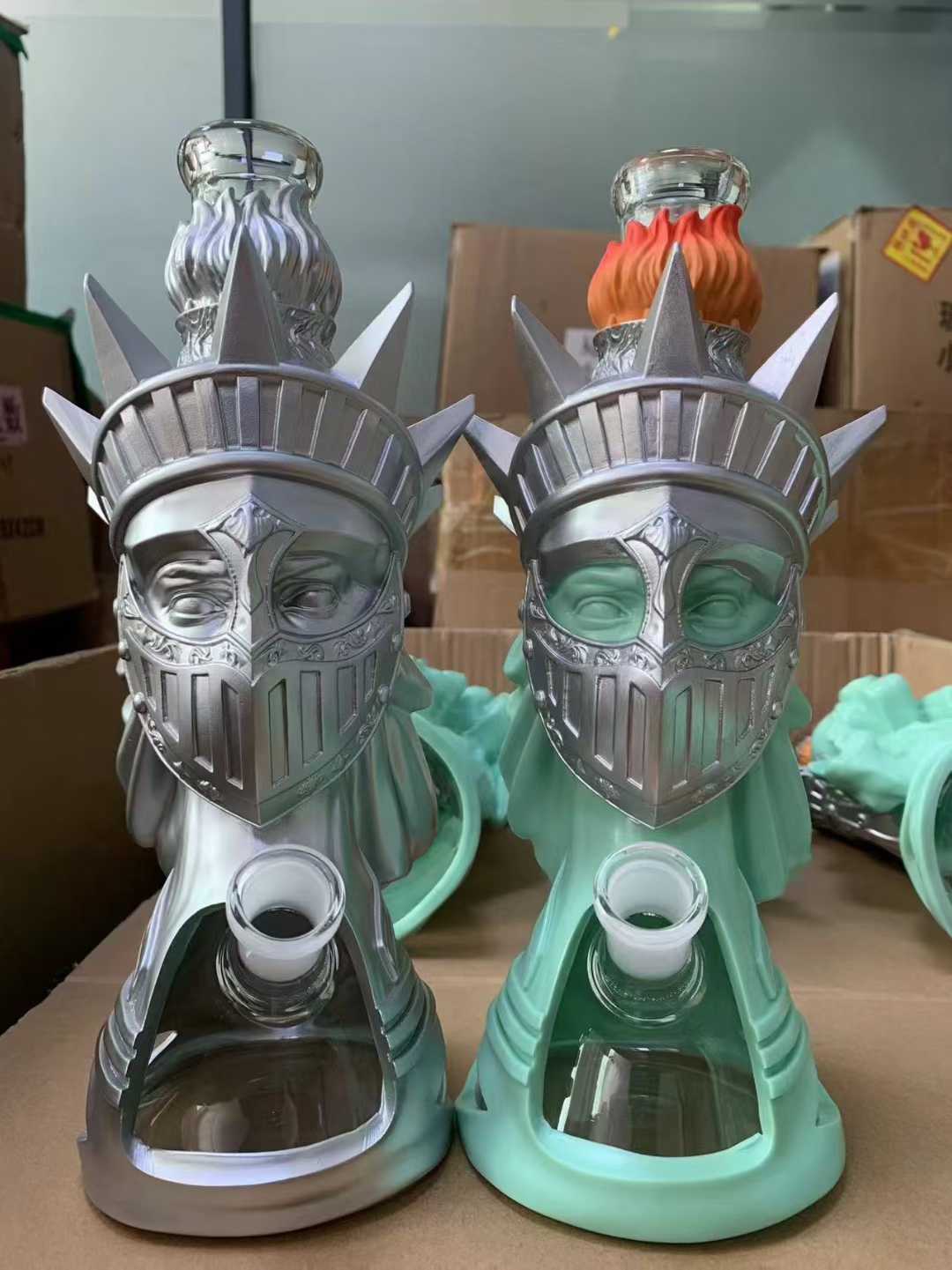
Online sourcing is the stronger choice when you need speed, customization, and cost efficiency. If you already understand your product specifications and have a clear idea of the quality standards you require, there is little reason to wait for a trade show calendar. A direct factory relationship, built through consistent communication and verified through certifications and samples, will serve you better over the long term than a series of annual booth meetings.
Many successful buyers use a hybrid approach: they attend one major trade show per year to maintain industry connections and spot emerging trends, but place their regular orders through online channels with factories they have vetted thoroughly. This gives them the best of both worlds — the industry awareness that trade shows provide, and the operational efficiency that direct digital sourcing delivers.

Frequently Asked Questions
Are glass pipe trade shows still worth attending in 2026?
Trade shows remain useful for first-time buyers who want hands-on product evaluation and face-to-face supplier meetings. However, for repeat buyers who already know their specifications, online sourcing offers faster turnaround, lower costs, and more customization flexibility. Many buyers now use a hybrid model — one show per year for networking, with regular orders placed through direct factory channels.
How do I verify a glass pipe supplier I found online?
Start by checking for third-party certifications like BSCI, WRAP, and ISO 9001, which confirm that an independent auditor has reviewed the factory’s operations. Request a sample before placing a bulk order. Ask for a video factory tour or hire a third-party inspection service. A reliable supplier will also sign an NDA before discussing custom designs and respond to quote requests within 12 hours.
What is the typical MOQ when sourcing glass pipes from a factory?
Most Shenzhen-based borosilicate glass factories set their minimum order quantity at 100 pieces per design or SKU. This MOQ balances production efficiency with the flexibility that B2B brands need to test multiple designs. Trade show suppliers may quote higher minimums to justify their exhibition investment, so always compare the terms carefully.
How long does it take to receive custom glass pipe samples?
From a direct factory channel, custom samples typically take 1-3 days to produce, plus shipping time. This is faster than trade show samples, which are usually generic catalog pieces that do not reflect your custom specifications. With online sourcing, you can iterate through multiple sample revisions in the time between two trade show events.
Can I negotiate better prices online than at a trade show?
Online sourcing often yields more transparent pricing because you can compare itemized quotes from multiple factories without the time pressure of a show floor. Trade show prices may include overhead costs from booth rental and travel. Online channels also give you space to negotiate each cost component — tooling, shipping, payment terms — individually rather than accepting a bundled quote.
Ready to explore direct factory sourcing? Contact Elfglass to discuss your project, request a quote, or start a sample order. You can also reach the team via WhatsApp through the contact page for a response within 12 hours.
Ready to Start Your Custom Glass Pipe Project?
Get a free quote within 24 hours. MOQ from 100 pieces. NDA-protected design consultation.
About the Author
Ava Zeng is the founder of Elfglass, a Shenzhen-based borosilicate glass pipe manufacturer serving B2B brands worldwide. Every guide on this site is grounded in her production-floor experience— the annealing lines, QC checkpoints, and export orders behind each claim.
Before you commit to a supplier, read her founder’s story and trust promise, and the guide to vetting a reliable glass pipe manufacturer— the same red-flag checklist Elfglass applies to its own suppliers.
