
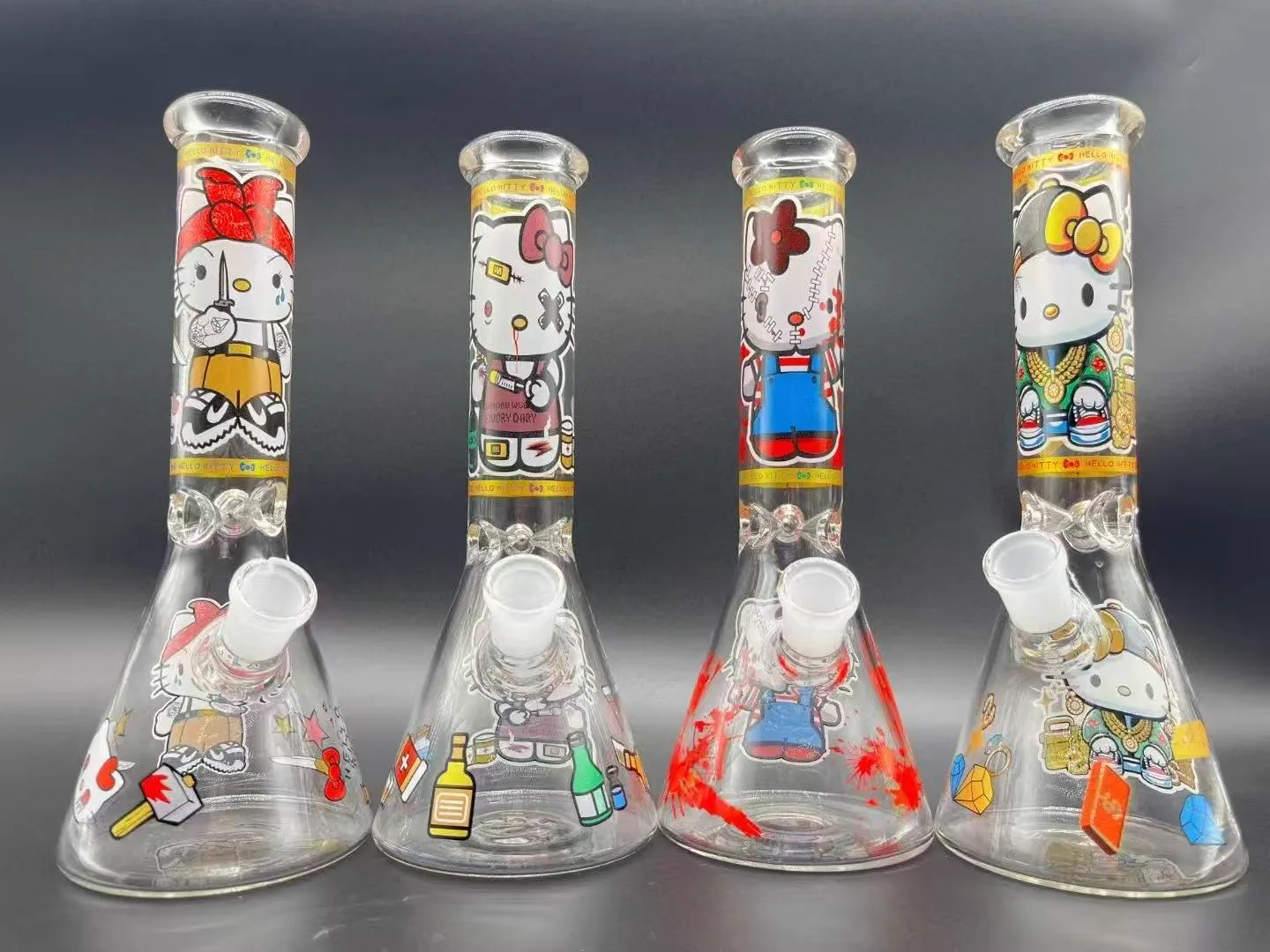
Every customer who buys flower walks out needing a grinder. It is not an upsell or an impulse add-on. It is the first tool a smoker reaches for, and it wears out. Teeth dull, threads strip, and finishes fade. That cycle creates the kind of repeat demand that keeps a smoke shop’s accessory case profitable year after year.
Yet when most retail buyers stock grinders, they grab an assortment from a distributor catalog without much thought about materials, size mix, or margin structure. The result is a display case full of 40mm acrylic units that nobody wants and zero 55mm four-piece aluminum grinders that sell out every week.
This guide breaks down what smoke shop buyers actually need to know before placing a wholesale herb grinder order: which materials carry the best margins, which sizes and piece counts move fastest, how custom branding works, and what to verify before you commit to a supplier. Everything here comes from 16 years of manufacturing these products at Elfglass.
Key Takeaways
- Grinders are a universal, repeat-purchase accessory — every flower customer needs one, and they wear out over time.
- Anodized aluminum in the 50-60mm range is the best-selling configuration for most smoke shops, balancing margin and demand.
- Four-piece grinders with kief catchers retail for 30-50% more than two-piece models at minimal extra manufacturing cost.
- Mid-range aluminum grinders bought at $4-10 wholesale typically sell for $15-30, delivering 200-300% markup.
- Custom logo engraving and color matching are available through OEM programs with exclusive molds and NDA protection.
- Elfglass requires just 100 pieces per design per SKU, with samples ready in 1-3 days and production in 7-12 days.
Table of Contents
Why Grinders Belong in Every Smoke Shop
Think about what happens when a customer buys an eighth of flower. They need something to break it down before packing a bowl or rolling. A grinder is not optional equipment. It is the first purchase a new smoker makes after their initial flower buy, and it is the accessory they replace most often.
That universal demand sets grinders apart from other smoke shop accessories. Rolling papers sell well, but margins are razor-thin. Lighters are commoditized to the point where price is the only differentiator. Grinders sit in a different category: high enough perceived value to support strong markups, practical enough that customers buy them without hesitation, and durable enough to feel like a quality purchase but not so durable that they never need replacing.
The repeat purchase cycle matters for your bottom line. A customer who buys a $20 aluminum grinder today will be back in six to twelve months when the teeth start wearing down or they want an upgrade. That is a faster replacement cycle than glass water pipes or hand pipes, which can last for years with proper care.
Smoke shops that stock a proper grinder assortment — multiple materials, sizes, and price points — consistently report grinders as one of their highest-turnover accessory categories. The key word is “proper.” A display of twelve identical 50mm aluminum grinders in black leaves money on the table. You need range.
Grinder Materials: Aluminum vs Steel vs Zinc vs Acrylic
Material choice drives three things at once: wholesale cost, retail price ceiling, and customer satisfaction. Get this wrong and you either stock units that sit in the case for months or sell units that generate complaints about flaking coating and stripped threads.
| Material | Wholesale Range | Typical Retail | Best For | Watch Out For |
|---|---|---|---|---|
| Anodized Aluminum | $4-10 | $15-30 | Best all-rounder; highest volume seller | Cheap anodizing can chip; verify coating thickness |
| Stainless Steel | $8-20 | $30-60 | Premium tier; medical dispensaries | Higher unit cost; heavier weight may surprise buyers |
| Zinc Alloy | $5-12 | $20-40 | Heavy-duty feel; novelty shapes | Very heavy; can feel overbuilt for daily carry |
| Acrylic | $2-5 | $8-15 | Budget tier; giveaways, bundle deals | Teeth crack; threads wear fast; low perceived value |
| Wood Exterior | $6-14 | $25-45 | Novelty; gift market; natural aesthetic | Wood can crack with humidity changes; niche demand |
Anodized aluminum dominates the market for good reason. It is lightweight, holds color well through the anodizing process, machines cleanly with sharp teeth, and sits at a price point that supports 200-300% retail markup. Most smoke shops should build 60-70% of their grinder assortment around aluminum units in the 50-60mm range.
Stainless steel earns its place in the premium slot. Customers who want a grinder that feels substantial and will last indefinitely will pay $30-60 without blinking. The wholesale cost is higher, but the retail ceiling is also higher, so your percentage margin stays strong. Stock one or two stainless options for customers who want the upgrade.
Zinc alloy fills a middle ground. It is heavier than aluminum, which some customers interpret as higher quality. Die-casting allows complex shapes that aluminum CNC machining cannot produce as cheaply. Zinc works well for novelty grinders or oversized pieces that double as counter displays.
Acrylic has its place, but keep it limited. Use acrylic units for bundle deals, promotional giveaways, or as the lowest tier in a three-option display. They crack, the teeth break off, and customers who start with acrylic upgrade quickly. That upgrade path is actually good for your business — just do not make acrylic your headline offering.
Source Wholesale Herb Grinders Direct from the Factory
Elfglass manufactures aluminum, stainless steel, and zinc alloy grinders with custom branding. MOQ starts at 100 pieces per design. Samples in 1-3 days.
Size and Piece Count: What Sells Best
Grinder diameter ranges from 40mm (pocket-sized, barely fits an eighth) to 75mm (tabletop-sized, handles an ounce). The sweet spot for most smoke shops sits between 50mm and 60mm. That range is large enough to grind a comfortable amount in a few twists, small enough to fit in a pocket, and light enough that customers do not complain about weight.
Stock a few 40mm units for customers who want maximum portability, and maybe one 65mm option for home users who grind larger quantities. But your core assortment should cluster around 50-60mm. That is where the volume sits.
| Piece Count | Structure | Retail Price Impact | Stock Recommendation |
|---|---|---|---|
| 2-Piece | Top + bottom with teeth; no collection chamber | Base price; lowest margin | 10-15% of assortment; budget buyers |
| 3-Piece | Top + grinding chamber + collection bottom | 15-25% above 2-piece pricing | 25-30% of assortment; solid middle option |
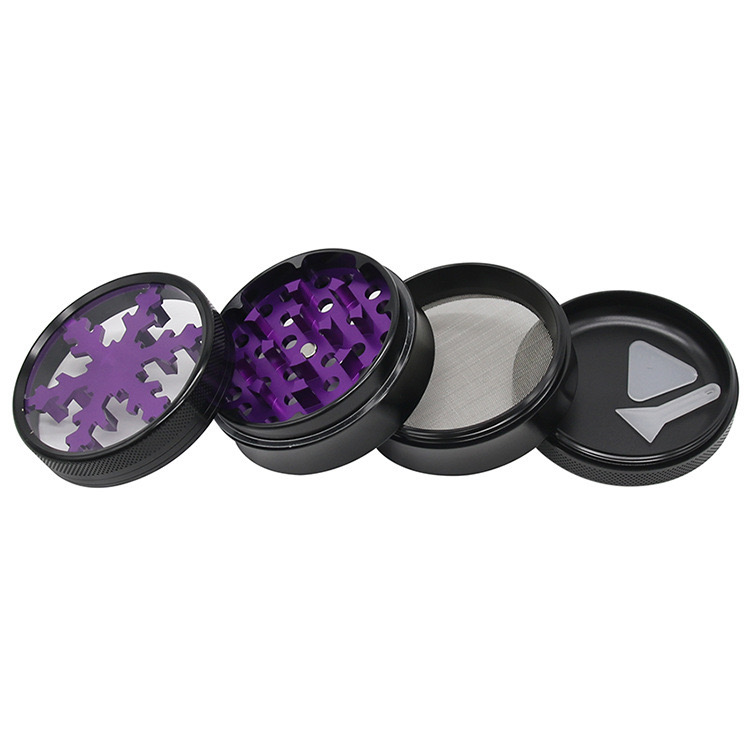
| 4-Piece | Top + grinding chamber + collection + kief catcher with screen | 30-50% above 2-piece pricing | 55-65% of assortment; highest demand and margin |
Four-piece grinders with kief catchers are where the real money sits. The kief screen adds maybe $0.50-1.00 to manufacturing cost, but it adds 30-50% to the retail price. Customers perceive a four-piece grinder as a premium product, and they are right — the additional chamber collects kief that would otherwise go to waste. That feature alone justifies a higher price tag and gives your sales staff something concrete to demonstrate at the counter.
A practical assortment for a mid-size smoke shop might look like this: three 50mm four-piece aluminum grinders in different colors, two 55mm four-piece units, one 60mm four-piece, two 50mm three-piece units for the middle price point, and one 40mm two-piece as the budget option. That gives customers nine choices across three dimensions — size, piece count, and color — without overcomplicating the display.
Stock the Glass Pipes Your Customers Actually Buy
Elfglass produces the full wholesale catalog, from hand pipes and sherlocks to dab rigs, percolator bongs, and accessories, in proven best-selling specs. Tell us your market and we will recommend a catalog mix with pricing.
MOQ from 100 pieces | BSCI / WRAP / ISO 9001 | NDA before every project
Custom Branding and Private Label
A grinder with your shop’s logo engraved on the top is not just a product. It is a walking advertisement. Every time a customer pulls it out at a friend’s house, your brand name is visible. Custom branding on grinders costs very little relative to the perceived value it creates, and it is one of the strongest private-label plays a smoke shop can make.
At Elfglass, the OEM process works like this. You provide your logo file and specify the grinder model, material, color, and size you want. We create an exclusive mold for your design — that mold is yours and will not be used for any other client. Before any files change hands, we sign an NDA to protect your design. Sampling takes 1-3 days after spec approval so you can hold the physical unit before committing to a full production run.
Custom color matching is available through the anodizing process. You can match a specific Pantone shade, create a gradient finish, or order different colors for different SKUs. Laser engraving handles logos, text, and simple graphic patterns on both metal and acrylic surfaces. For packaging, you can specify custom boxes, inserts, and branded sleeves that turn a grinder into a giftable product.
The minimum order for custom branding is the same as stock items: 100 pieces per design per SKU. That low threshold means a shop can test a private-label grinder run without tying up significant capital. Production runs 7-12 days for orders of 100+ units, and payment follows standard T/T terms: 30% deposit, 70% before shipment.
Private-label grinders also work well as loyalty rewards or membership perks. A shop that gives a branded grinder with every $100 purchase builds repeat traffic while differentiating from the shop across town selling the same generic units. Learn more about how Elfglass handles our manufacturing process from concept to delivery.
Ordering Checklist for Retailers
Before you place a wholesale herb grinder order, run through this checklist. Every item on this list has caused problems for buyers who skipped it.
1. Verify material specifications. Ask for the alloy grade. For aluminum, 6061 and 6063 are standard for quality grinders. For stainless steel, 304-grade is the benchmark. If a supplier cannot tell you the alloy, they probably do not know what they are manufacturing with.
2. Request physical samples. Photos and spec sheets do not tell you how a grinder feels in the hand. The magnet strength on a kief screen, the smoothness of the thread, the sharpness of the teeth — you need to hold the unit. Elfglass provides samples in 1-3 days after spec approval.
3. Check the teeth count and pattern. More teeth does not always mean better. A 4-tooth diamond-pattern design on a 50mm grinder produces a medium-fine grind ideal for most smoking methods. A 6-tooth design grinds faster but produces a coarser result. Know what your customers prefer.
4. Confirm thread quality. The most common failure point on any grinder is the threading where the top and bottom pieces connect. Cheap threads cross-thread, strip, or loosen over time. Ask about thread specifications and check sample units for smooth engagement.
5. Review the kief screen mesh. On four-piece grinders, the screen quality determines how well kief is collected. Stainless steel mesh screens last longer and filter more consistently than nylon or cheap wire alternatives.
6. Confirm certifications. If your market requires compliance documentation, verify that your supplier holds current certifications. Elfglass maintains BSCI, WRAP, and ISO 9001 certifications, all audited and current.
7. Understand the payment structure. Standard terms are T/T with 30% deposit and 70% balance before shipment. Any supplier asking for 100% upfront is a red flag. Any supplier offering net-60 terms to a new buyer is either desperate or running a different kind of risk.
8. Plan your size and material mix. Do not order 100 units of a single SKU unless you have data proving that specific configuration sells. A diversified mix across materials, sizes, and piece counts reduces the risk of dead stock and gives customers meaningful choices.
Conclusion
Grinders are one of the few smoke shop products that combine universal demand, strong margins, and fast replacement cycles. The buyers who treat grinders as a strategic category — not an afterthought accessory — consistently outperform shops that toss a few generic units in the corner of their display case.
The winning formula is straightforward: stock mostly anodized aluminum four-piece grinders in the 50-60mm range, add a few stainless steel options for premium buyers, keep a small acrylic selection for budget-conscious customers, and invest in custom branding to build your shop’s identity. With a 100-unit MOQ and samples in 1-3 days, there is no reason to commit to a large order before testing the product in your hands.
Elfglass has manufactured smoking accessories since 2010 from a 1,000-square-meter ISO 9001-certified facility. We offer custom molds exclusive to each client, NDA protection on every project, and a 12-hour quote response time. If you are ready to build or expand your grinder assortment, reach out to start the conversation.
Start Your Wholesale Grinder Order
100-piece MOQ. Custom branding available. Samples in 1-3 days. Get a quote within 12 hours.
Frequently Asked Questions
What type of grinder sells best in smoke shops?
50-60mm four-piece anodized aluminum grinders with kief catchers are the best-selling configuration for most smoke shops. They balance utility, perceived value, and margin. The kief catcher adds minimal manufacturing cost while justifying a 30-50% higher retail price compared to two-piece models.
What is the typical markup on wholesale grinders?
Mid-range anodized aluminum grinders bought at $4-10 wholesale typically retail for $15-30, representing a 200-300% markup. Premium stainless steel grinders purchased at $8-20 wholesale sell for $30-60, maintaining similar percentage margins. Acrylic budget grinders ($2-5 wholesale, $8-15 retail) carry the highest percentage markup but the lowest absolute profit per unit.
Can grinders be custom branded for retail?
Yes. OEM grinder programs support custom logo engraving, Pantone color matching through anodizing, and custom packaging design. At Elfglass, each client receives an exclusive mold for their design, and an NDA is signed before any project begins. The MOQ for custom branding is the same as stock items: 100 pieces per design per SKU.
What is the MOQ for wholesale grinders?
Elfglass requires 100 pieces per design per SKU. Sampling takes 1-3 days after spec approval, and production runs 7-12 days for orders of 100+ units. Payment follows T/T terms: 30% deposit at order confirmation, 70% balance before shipment.
How do I choose between aluminum, stainless steel, and zinc alloy grinders?
Anodized aluminum is the best all-rounder: lightweight, affordable, and available in any color through the anodizing process. Stainless steel is the premium option for customers who want maximum durability and a heavy, quality feel. Zinc alloy fills the middle ground with a heavier weight than aluminum and the ability to be die-cast into complex shapes. Stock mostly aluminum, add a few steel units for premium buyers, and use zinc for novelty or specialty pieces.
About the Author
Ava Zeng is the founder of Elfglass, a Shenzhen-based borosilicate glass pipe manufacturer serving B2B brands worldwide. Every guide on this site is grounded in her production-floor experience— the annealing lines, QC checkpoints, and export orders behind each claim. Herb grinder designs vary by grinder. The most common material for wholesale grinders is aluminum alloy.
Before you commit to a supplier, read her founder’s story and trust promise, and the guide to vetting a reliable glass pipe manufacturer— the same red-flag checklist Elfglass applies to its own suppliers.
Ready to Source Custom Glass Pipes?
Get a free quote within 24 hours. MOQ from 100 pieces. NDA-protected design consultation.
