Why Artists Choose Manufacturing Partners Over Solo Production
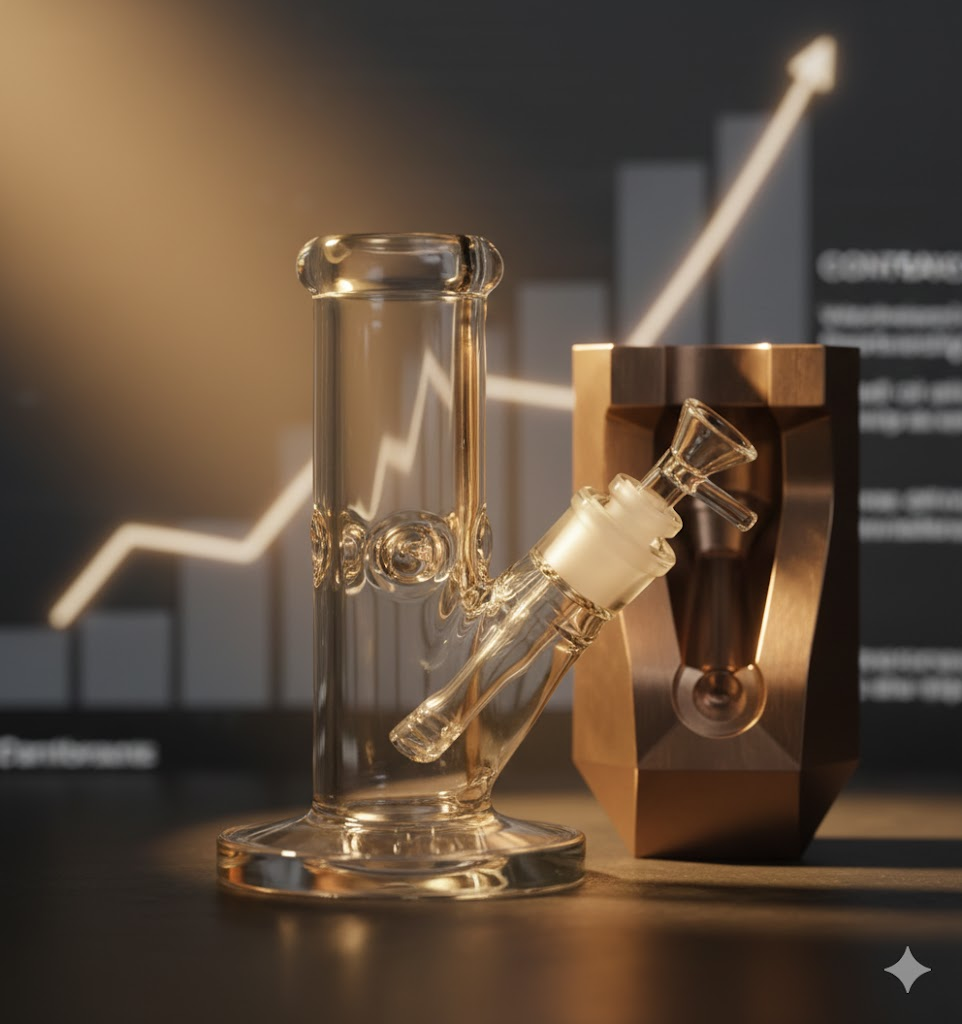
Independent glass artists face the same bottleneck every creative industry eventually confronts: demand outpaces the hours in a day. An artist who bends every piece by hand can produce perhaps 20 to 40 finished works per month, depending on complexity. When a gallery showing generates 300 inquiries, or a social media post goes viral and drives a wave of orders, the artist must choose between turning buyers away and finding a way to scale without losing the design integrity that made the work desirable in the first place.
This is where artist collaboration with a manufacturer becomes not just practical but strategically essential. The collaboration model is not about replacing the artist — it is about giving the artist’s vision a production infrastructure that can meet commercial volume while preserving the aesthetic details that define the brand. For wholesale buyers, artist-collaboration pieces carry a different kind of value: they are exclusive designs with built-in audience demand, which means faster sell-through and stronger margins than commodity shapes.
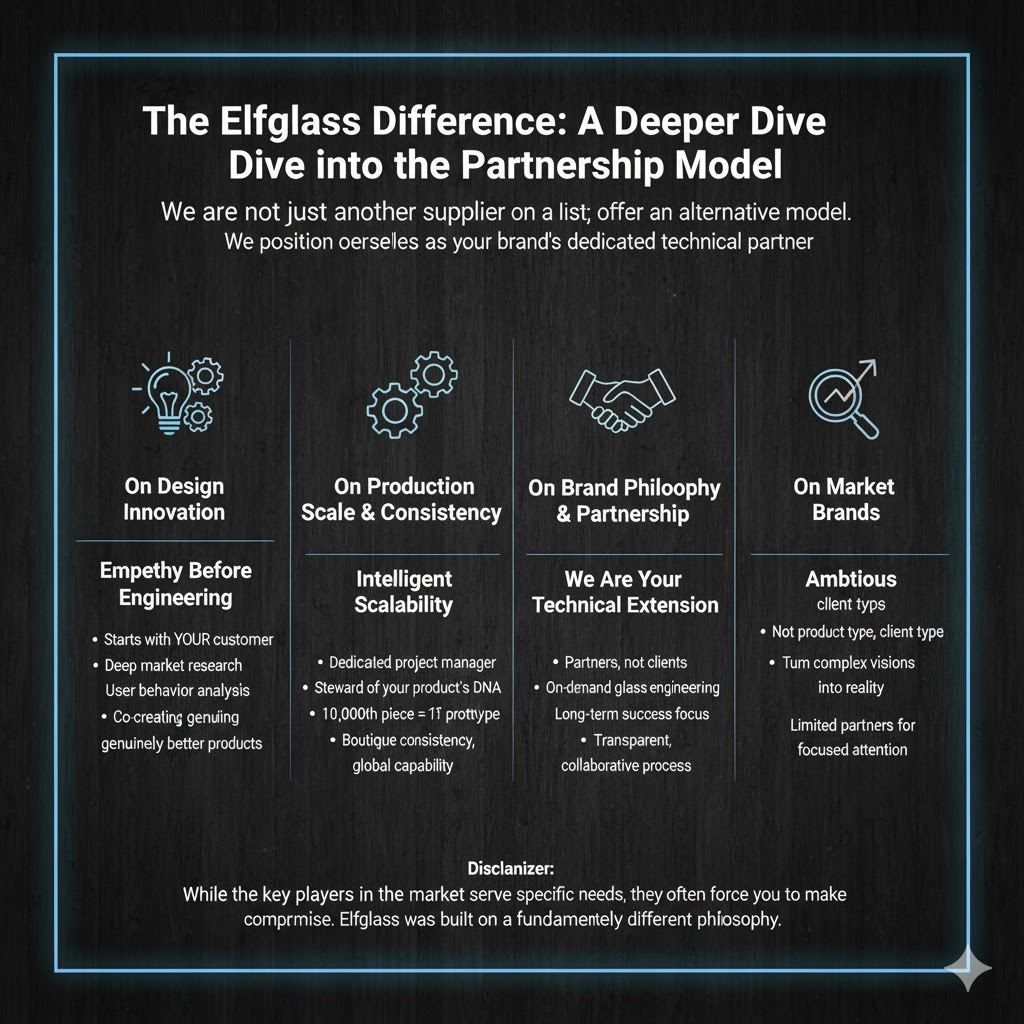
At Elfglass, the OEM/ODM process for artist collaborations follows the same production pipeline as any custom project — with additional safeguards for design protection and creative fidelity. The factory operates under a brand philosophy that positions itself as “A Manufacturer With the Soul of a Designer,” which means the production team approaches each artist’s file not as a generic spec sheet but as someone’s creative identity being entrusted to their hands.
Licensing Models: How Artist-Manufacturer Deals Are Structured
There are three common structures for artist collaborations in the glass pipe manufacturing space. The right model depends on whether the artist wants to retain ownership of the design, share revenue, or sell the design outright.
| Model | Design Ownership | Revenue Flow | Best For | Typical Duration |
|---|---|---|---|---|
| Commissioned Production | Artist retains full ownership | Artist pays manufacturer per unit; sells at own retail price | Established artists with existing customer base | Ongoing per order |
| Licensing Agreement | Artist retains ownership; manufacturer gets production license | Manufacturer pays artist royalty per unit or percentage of wholesale | Artists who want passive income without handling fulfillment | 1–3 years, renewable |
| Design Buyout | Manufacturer or buyer owns the design | Artist receives one-time fee; no ongoing royalties | Artists who need upfront capital or are testing market demand | Permanent transfer |
In the commissioned production model, the artist operates essentially as a client who happens to also be the designer. They provide the design files or physical prototype, the manufacturer produces to spec, and the artist handles all sales and distribution. This model is the most common for artists who have built a following on platforms like Instagram or Etsy and need a reliable production partner for wholesale water pipes and hand pipes.
The licensing agreement model is more complex but offers long-term advantages for both parties. The artist grants the manufacturer the right to produce and distribute the design, often with territorial exclusivity (for example, the manufacturer can sell the design in North America but not in the artist’s home market of Europe). The manufacturer benefits from having a differentiated product that cannot be commoditized by competitors, and the artist earns royalties without managing inventory or shipping. At Elfglass, the MOQ of 100 pieces per design applies to licensed designs just as it does to any custom production, which keeps the commitment manageable for both the artist and the manufacturer. Contact our team to discuss licensing your designs for production.
The design buyout is the simplest transaction but carries the most risk for the artist. A one-time payment eliminates future upside if the design becomes a bestseller. For wholesale buyers, however, buyout designs can be attractive because they offer exclusivity without ongoing royalty obligations — the piece becomes part of your catalog permanently.
Protecting the Artist’s Design: NDA and IP Framework
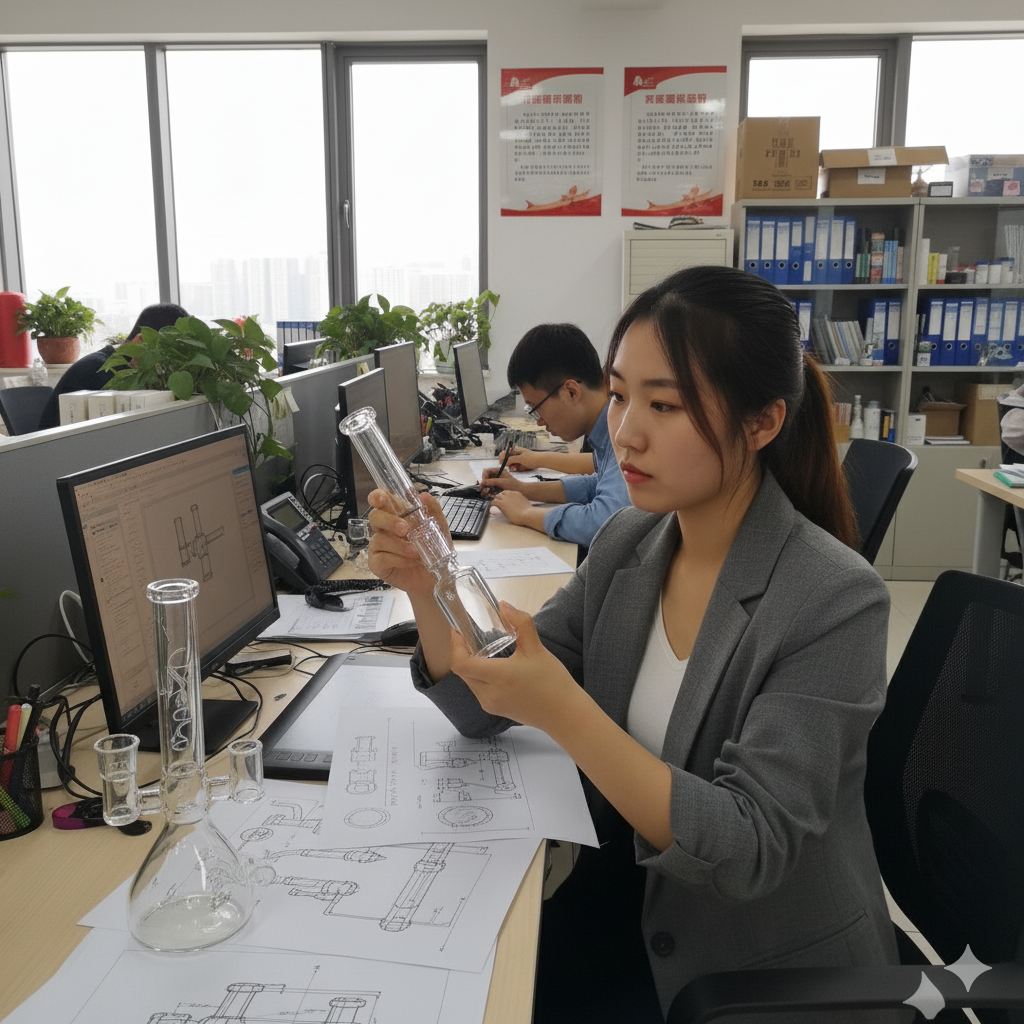
The single biggest concern artists raise when approaching a manufacturer is design theft — the fear that their original work will be copied, leaked, or produced for someone else. This concern is legitimate. In an industry where a distinctive design can define an artist’s entire brand, unauthorized reproduction is an existential threat, not an inconvenience.
The first line of protection is a non-disclosure agreement signed before any design files are shared. At Elfglass, an NDA is executed before project kickoff as standard practice. The NDA covers the design files, 3D renders, physical samples, and any derivative work produced during the collaboration. It legally binds the manufacturer from sharing, reproducing, or selling the design to any third party without the artist’s written consent.
Beyond the NDA, artists should understand the IP landscape for glass pipe designs. In most jurisdictions, the functional aspects of a pipe design (the bore diameter, the carb hole placement, the joint angle) are not protectable — they are utilitarian features. What is protectable is the ornamental expression: the specific shape, surface pattern, color combination, and artistic elements that make the design recognizable. A well-drafted licensing agreement specifies exactly which elements are licensed, in which territories, for which product categories, and for how long. Protecting collaborative work rests on intellectual property conventions that separate design authorship from manufacturing rights.
For wholesale buyers who want to carry artist-collaboration pieces, the IP framework matters because it determines your supply security. If the artist retains ownership and the manufacturer has an exclusive production license, you have a reliable supply chain as long as the license is active. If the artist sells the design outright, you own the mold and the design — but you also assume responsibility for quality control and any future modifications. Discuss the IP arrangement with your sales representative early in the process so that your purchase agreement reflects the correct ownership structure. Artist deals follow the licensing framework, where the designer retains ownership and grants production rights for a defined term and royalty structure.
The Production Workflow: From Sketch to Shipment
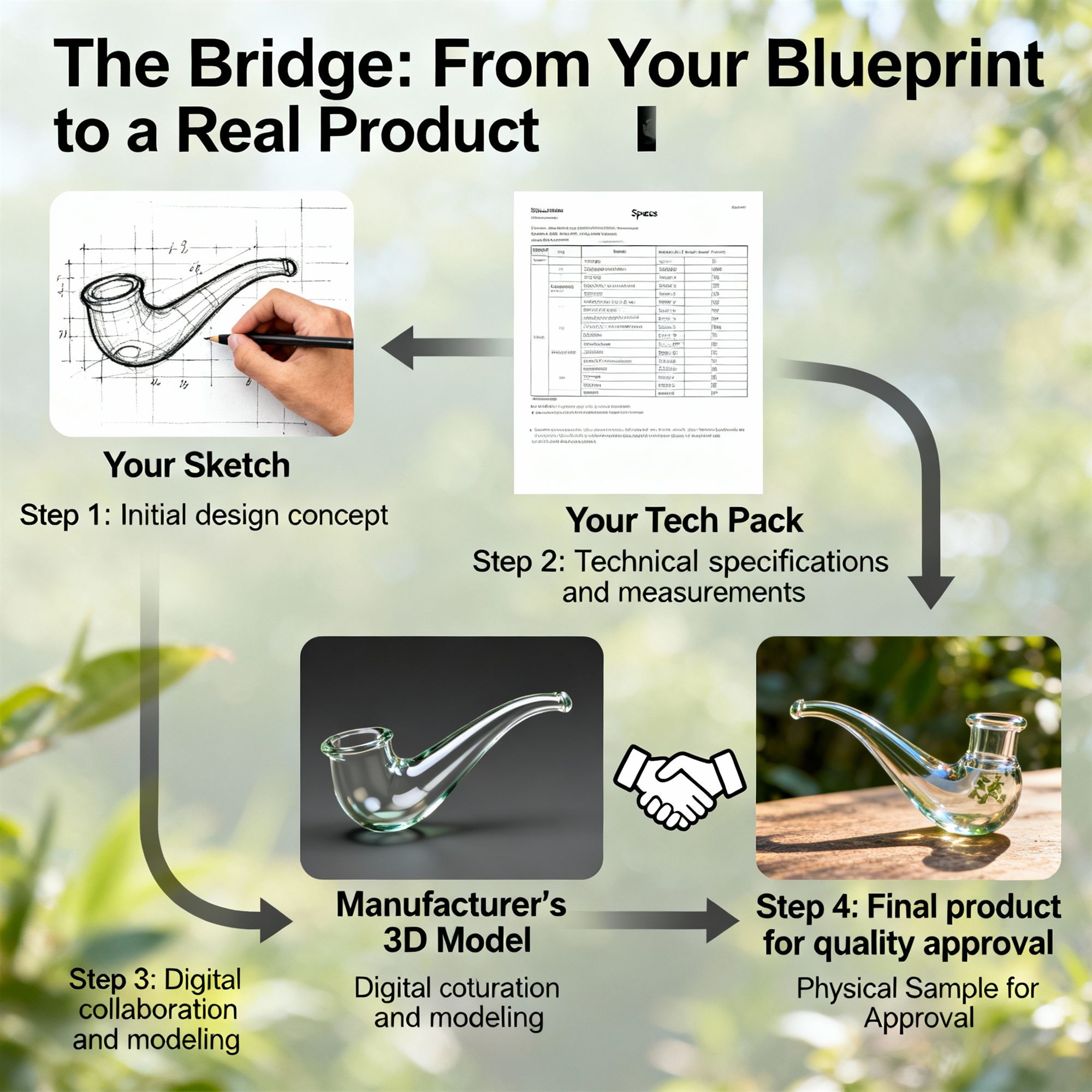
Understanding the production workflow helps artists set realistic expectations and helps wholesale buyers plan their inventory timelines. Here is how an artist collaboration typically progresses from initial concept to delivered inventory:
Phase 1: Design Submission and Review (Day 1). The artist provides design files — either detailed technical drawings, 3D CAD files, or high-resolution reference images. If the artist works from physical prototypes, those can be shipped to the factory for reverse engineering. The production team reviews the design for manufacturability: Can the shape be blown from a single piece, or does it require multi-part assembly? Are there structural vulnerabilities that would cause high breakage rates? What mold modifications are needed?
Phase 2: 3D Rendering and Approval (Day 2). The design team produces a 3D render showing exact dimensions, wall thickness, joint placement, and percolator geometry. The artist reviews the render against their original concept and approves or requests revisions. This step is critical because it is the last point where changes are inexpensive — once the mold is cut, design changes become costly.
Phase 3: Sampling (Day 3–5). A physical sample is produced from the approved render. For designs requiring a custom mold, the mold is fabricated first (adding 3 to 5 days). The sample is photographed, measured, and shipped to the artist for physical inspection. The artist checks color accuracy, surface finish, weight balance, and functional performance.
Phase 4: Bulk Production (7–12 days after sample approval). Once the artist approves the sample, bulk production begins. The factory schedules the run within its monthly capacity of 10,000 pieces. For artist collaborations, production is typically batched in runs of 100 to 500 pieces per design, depending on the artist’s distribution plan.
Phase 5: Quality Control and Shipping. Each piece undergoes visual inspection for defects — stones, bubbles, uneven walls, stress points at joints. Pieces that pass QC are packed with appropriate protection (foam inserts for complex shapes, standard dividers for simpler designs) and shipped. The entire process from design submission to shipment typically takes 3 to 5 weeks, depending on mold requirements and order volume.
Turn Your Concept Into Production-Ready Glass
Elfglass takes you from design brief and CAD/STEP files to prototyping, branding, and mold exclusivity, with your IP protected by NDA. Send us your concept and we will return a manufacturable plan and quote.
MOQ from 100 pieces | BSCI / WRAP / ISO 9001 | NDA before every project
Cost Factors: What Artists and Buyers Should Budget For
The cost of producing an artist collaboration design differs from ordering stock shapes in several ways. Understanding these cost drivers helps both artists setting their retail prices and wholesale buyers evaluating margin potential.
| Cost Component | Stock Design | Artist Collaboration | Why the Difference |
|---|---|---|---|
| Mold cost | Included (existing mold) | $50–$300+ for custom mold | Artist designs often require new molds or significant modification |
| Sampling | Existing sample available | 1–3 days production + shipping | New design requires physical prototype approval |
| Unit production cost | Standard rate | Standard to +15% | Complex shapes may require more labor time or specialized techniques |
| Design fee / royalty | None | Varies by agreement | Licensing fees or royalties are separate from production cost |
| MOQ | 100 pieces per SKU | 100 pieces per SKU | Same MOQ applies regardless of design origin |
The custom mold cost is the most significant upfront investment for a new artist collaboration. A simple mold for a hand pipe may cost $50 to $100, while a complex multi-chamber water pipe mold can exceed $300. The mold belongs to the party specified in the agreement — in most artist collaboration cases at Elfglass, custom molds are exclusive to the artist or the buyer who commissioned them. This means the manufacturer cannot use that mold for any other client.
For wholesale buyers, the key question is whether the artist collaboration piece justifies a higher retail price than your stock designs. The answer is almost always yes — artist-branded pieces carry a premium because they offer something your competitors cannot: a design with a story, a recognizable aesthetic, and a built-in audience. A stock beaker bong might retail at $60 to $90, while an artist-collaboration version of similar size and complexity could command $100 to $180, depending on the artist’s following and the design’s uniqueness.
How Wholesale Buyers Can Source Artist-Collaboration Pieces
If you are a wholesale buyer looking to carry artist-collaboration designs, there are two approaches. The first is to work directly with the manufacturer to identify artists whose designs align with your market. Many manufacturers, including Elfglass, maintain relationships with independent artists who are open to licensing their work for broader distribution. The manufacturer can facilitate the introduction, handle the production logistics, and ensure that the licensing terms protect both the artist’s interests and your supply chain security.
The second approach is to bring your own artist relationship to the manufacturer. Perhaps you have discovered an artist on Instagram whose work resonates with your customer base, or you have commissioned a local designer to create an exclusive pattern for your shop. In this case, you connect the artist with the production team, and the manufacturer handles the technical translation from artwork to producible design. The design concept translation process ensures that the aesthetic intent survives the move from digital file to physical glass.
Either approach requires clear communication about three variables: exclusivity territory (where can the design be sold), duration (how long does the license last), and minimum order commitments (how many units must you produce per period to maintain the license). These terms should be documented in a written agreement signed by all parties before production begins.
Building a Long-Term Artist Partnership
The most successful artist collaborations are not one-off projects — they are ongoing partnerships that produce new designs on a regular cadence. For wholesale buyers, this means a reliable pipeline of differentiated inventory that keeps your shelves fresh and gives customers a reason to return.
A typical long-term partnership might look like this: the artist releases two to four new designs per year, each produced in limited runs of 100 to 300 pieces. The wholesale buyer commits to purchasing a set quantity of each release, providing the artist with predictable revenue. The manufacturer benefits from repeat orders and the efficiency of an established working relationship — the artist’s design files are already formatted correctly, the mold library is growing, and the production team understands the artist’s quality expectations.
For the artist, the partnership provides something that solo production cannot: scale. An artist who can move from producing 30 pieces per month to 300 pieces per month — without sacrificing quality or creative control — can serve a much larger market, build brand recognition faster, and generate revenue that supports further creative exploration.
Key Takeaways
Artist collaborations in glass pipe manufacturing follow three main models: commissioned production (artist pays per unit), licensing (manufacturer pays royalties), and design buyout (one-time transfer). Each model has different implications for design ownership, revenue flow, and supply chain security. NDA protection and clear IP agreements are non-negotiable safeguards for both artists and wholesale buyers. The production workflow from concept to shipment typically takes 3 to 5 weeks, with custom mold costs ranging from $50 to $300+. Artist-collaboration pieces command premium retail prices because they offer exclusivity and built-in audience demand that stock designs cannot match. Long-term partnerships with regular design releases create the most value for all parties.
Frequently Asked Questions
What is the minimum order for an artist-collaboration design?
The MOQ is 100 pieces per design, the same as any custom production at Elfglass. Each size variant within a design counts as a separate SKU. This applies regardless of whether the collaboration uses a licensing model, commissioned production, or design buyout.
Who owns the mold for an artist-collaboration design?
In most cases, custom molds are exclusive to the party who commissioned the design — typically the artist or the wholesale buyer. The manufacturer cannot use that mold for any other client. This exclusivity is documented in the project agreement before production begins.
How long does it take to produce an artist-collaboration design?
From design submission to shipment, the typical timeline is 3 to 5 weeks. This includes design review (Day 1), 3D rendering (Day 2), sampling (Day 3–5), mold fabrication if needed (additional 3–5 days), and bulk production (7–12 days after sample approval).
Can I license an existing design from an artist rather than creating something new?
Yes. Many artist collaborations involve licensing existing designs that the artist has already created and tested in the market. The manufacturer reviews the design for manufacturability, produces a sample to confirm quality, and then begins production under the terms of the licensing agreement.
What protections exist against design theft during manufacturing?
A signed NDA before any design files are shared is the primary legal protection. Additionally, working with certified manufacturers (BSCI, WRAP, ISO 9001) adds a layer of accountability. At Elfglass, design confidentiality is a core part of the brand promise — the founder has stated that “What kills a great idea is never the technology, but the communication gap and a lack of empathy.”

About the Author
Ava Zeng is the founder of Elfglass, a Shenzhen-based borosilicate glass pipe manufacturer serving B2B brands worldwide. Every guide on this site is grounded in her production-floor experience— the annealing lines, QC checkpoints, and export orders behind each claim.
Before you commit to a supplier, read her founder’s story and trust promise, and the guide to vetting a reliable glass pipe manufacturer— the same red-flag checklist Elfglass applies to its own suppliers.
For buyers looking to grow beyond initial samples, this factory communication practices for design revisions guide provides detailed operational frameworks for the next stage of sourcing.
Ready to Source Custom Glass Pipes?
Get a free quote within 24 hours. MOQ from 100 pieces. NDA-protected design consultation.
