


Every experienced buyer in the glass pipe industry has lived through the same frustration: you send a revision request to your factory, wait a week, and receive a sample that misses the mark entirely. The joint angle is wrong. The percolator height is off by eight millimeters. The wall thickness does not match what you specified. Nobody made a mistake on purpose, yet time and materials have been wasted, your launch timeline has slipped, and trust between you and your manufacturing partner has eroded by another fraction. The root cause almost never involves technology or craftsmanship. It involves communication, and more specifically, the absence of a structured communication system that translates your design intent into unambiguous factory-floor instructions.
Ava Zeng, who founded Elfglass in 2010 and has spent sixteen years managing OEM and ODM glass pipe production, puts it bluntly: “What kills a great idea is never the technology, but the communication gap and a lack of empathy.” That observation was not born from a single project failure. It was distilled from thousands of revision cycles across water pipes, hand pipes, dab rigs, and accessories, serving wholesale buyers who order from a factory of 1,000 square meters and 20 employees producing 10,000 pieces per month in Shenzhen. Reducing revision rounds, protecting custom designs, and getting products to market on schedule all depend on the factory communication practices covered in this guide.
Why Revision Miscommunication Happens in Factories
Revision miscommunication in glass pipe manufacturing rarely stems from a single dramatic failure. It accumulates through small ambiguities that compound at every handoff. A buyer writes “make the downstem slightly shorter” in an email. The factory interprets “slightly” as five millimeters; the buyer meant twelve. A marked-up PDF shows a new percolator position, but the measurement reference edge is not identified, so the glass blower measures from the base instead of the joint. A color reference is described as “light cobalt” without a Pantone code, and the furnace batch comes out in a shade neither party intended. Each of these gaps is individually small. Together they produce a sample that requires another round, then another, until both sides are frustrated and the project budget has absorbed hundreds of dollars in scrapped borosilicate and lost labor hours.
The deeper structural problem is that most buyers communicate the way they talk to colleagues, not the way a factory processes instructions. Conversational language is inherently imprecise. It relies on shared context, tone, and follow-up questions. A factory floor, by contrast, operates on explicit numerical specifications, reference drawings, and physical samples. When a buyer sends a revision request formatted as a casual paragraph rather than a structured specification, the factory must guess at intent, and guessing is exactly where revision cycles multiply. Understanding this mismatch between conversational and technical communication is the first step toward eliminating it, and it informs every factory communication tip covered in this guide.
Writing Effective Revision Requests That Work
An effective revision request reads less like an email and more like a technical change order. It begins with a unique revision number and date, so both parties can track which version of the design is currently active. It identifies the specific component being modified, references the exact drawing or CAD file version, and states the change in measurable terms: “Reduce downstem length from 145 mm to 133 mm, measured from the ground glass joint seating surface to the distal tip.” That single sentence eliminates the ambiguity that would otherwise generate two or three additional sampling rounds. If the revision involves geometry that is difficult to convey in text alone, a marked-up drawing with callout arrows and dimension lines communicates the intent far more reliably than a photograph with a hand-drawn circle.
Photographs of physical samples are valuable when they accompany, rather than replace, written specifications. A photo showing a red marker line where a new diffuser slot should begin tells the glass blower exactly what the buyer sees, but without the accompanying measurement, the blower still has to estimate position. The most effective revision packages combine three elements: a written change description with numerical values, a marked-up drawing or annotated photograph, and a brief statement of the functional reason for the change. That third element, the functional reason, gives the factory context. When the blower understands that a percolator is being repositioned to improve splash resistance rather than for aesthetic preference, they can apply their own craft judgment to optimize the outcome within the new parameters.
For buyers working with Elfglass on our process page, revision requests are submitted through a standardized form that captures all of these elements in a consistent format. This eliminates the back-and-forth clarification emails that consume days from every revision cycle. The form also links each request to the project NDA and the original spec sheet, ensuring that the revision is evaluated against the agreed baseline rather than a drifting memory of what was discussed weeks earlier. A signed non-disclosure agreement, as described in standard legal references, keeps every revision file confidential before it crosses the factory boundary., and the same documentation discipline applies when you order wholesale water pipes with custom specifications
Sampling Cycles Validate Every Design Change
No revision request, however precisely written, should go directly into full production without a sampling validation step. Sampling exists precisely because glass is a hand-formed material where small variations in temperature, pulling speed, and annealing time can shift dimensions by fractions of a millimeter. At Elfglass, sampling takes one to three days, a timeframe that reflects the reality of a 20-person team that can personally inspect each piece before it leaves the bench. A sample is not a prototype in the software sense; it is a physical proof that the revision has been interpreted correctly and that the modified design remains manufacturable at the specified tolerances.
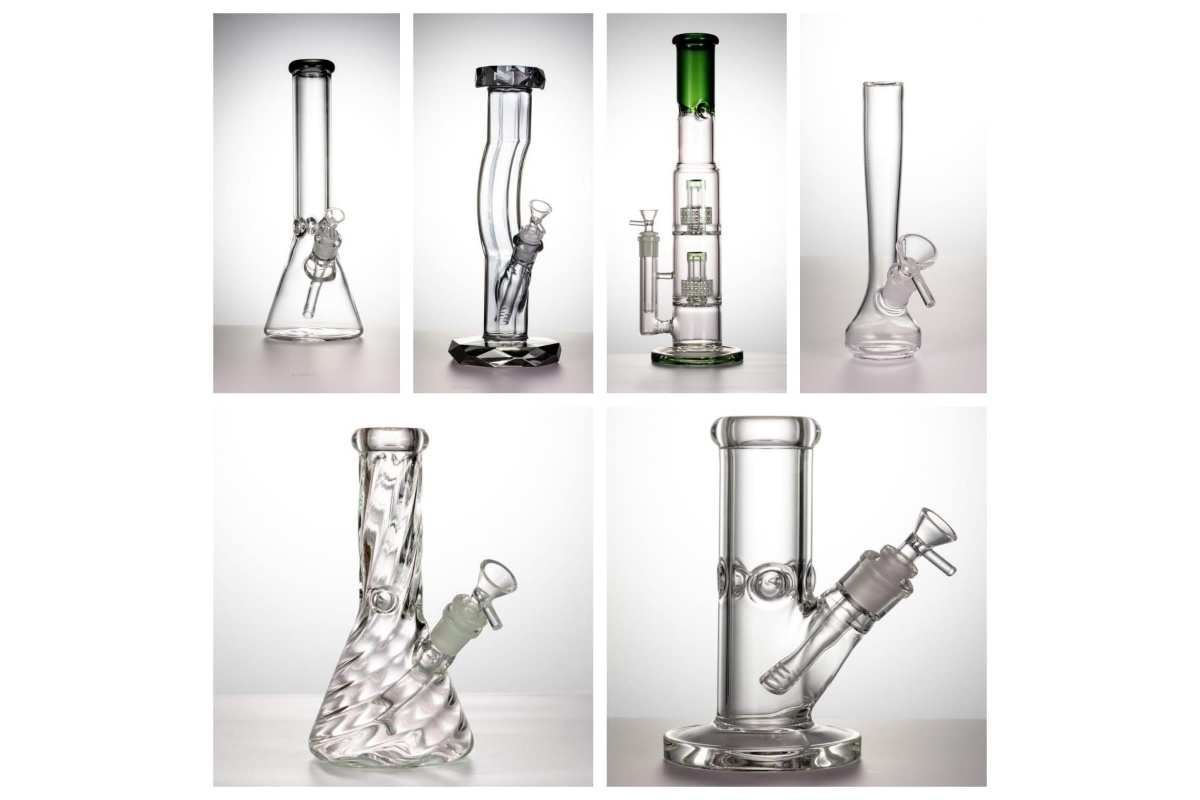
The most efficient buyers treat sampling as a structured gate rather than a casual checkpoint. They receive the sample, measure it against the revision specification with calipers rather than visual estimation, photograph the critical dimensions, and send a written confirmation or a new revision request within a defined response window. This disciplined approach typically limits a custom design to two or three sampling rounds before approval. Buyers who skip measurement and approve based on appearance alone often discover tolerance issues only after production, when correcting the problem means scrapping an entire batch. For a deeper look at how tolerance specifications interact with the sampling process, the manufacturing tolerance spec guide for glass pipes covers acceptable deviation ranges in detail.
Start a Conversation With a Real Factory Partner
You get a named contact, honest lead times, and an NDA before any OEM project. Tell us what you are building and we will reply within 12 hours with straight answers, not a sales script.
MOQ from 100 pieces | BSCI / WRAP / ISO 9001 | NDA before every project
Small Factory Teams Enable Faster Revisions
Factory size directly affects revision cycle speed, and not always in the way buyers assume. A large factory with hundreds of employees may have dedicated engineering departments, but revision requests must pass through multiple layers of management before reaching the bench blower. By the time the instruction arrives, context has been summarized, reinterpreted, and occasionally diluted. A smaller factory, such as Elfglass with its 20-person team operating across 1,000 square meters of production space, offers a fundamentally different dynamic. The person reading your revision request is often the same person who will walk it to the glass blower and stand beside them during the first sample pull. Communication channels are short, clarification happens in real time, and the feedback loop from sample to revision to resample can compress to days rather than weeks.
This structural advantage is most visible when a project involves multiple simultaneous revisions across different components. A buyer modifying a water pipe base, downstem, and bowl piece at the same time needs coordinated sampling across three interdependent parts. In a large factory, those three revisions might be handled by three different teams with limited cross-communication. In a compact team, the same group of people sees all three changes together, understands how they interact, and can produce a unified sample set for review. Buyers evaluating manufacturing partners should ask explicitly about revision workflow structure, not just about price and lead time. Understanding the difference between OEM and ODM glass pipe manufacturing also helps clarify where revision responsibility sits in each model.
Spec Sheets as Single Source of Truth
The single most effective factory communication tip any wholesale buyer can implement is maintaining a living specification sheet that serves as the authoritative reference for every revision. This document should include the complete dimensioned drawing, material specifications (borosilicate grade, wall thickness, joint type and size), surface treatment details, color references with Pantone or RGB codes, and a revision history log showing every change with its date, description, and approval status. When a new revision is requested, the spec sheet is updated first, and the updated version is what the factory works from. No scattered email threads, no voice messages, no verbal agreements made during a factory visit that were never documented.
The discipline of maintaining a single source of truth becomes especially important when custom packaging design is integrated into the product launch timeline. Packaging revisions, branding placement, and regulatory label requirements all need to align with the physical product specifications. If the glass pipe diameter changes in revision four but the packaging spec sheet still references the revision three dimensions, the custom boxes will not fit, and a separate packaging revision cycle begins. Keeping all specifications synchronized in one controlled document, with version numbers and change logs, prevents these cascading errors before they occur. Elfglass provides every client with a project spec template at the start of the engagement, and all revisions are tracked against this baseline under the protection of a signed NDA before any design details are shared.
Common Mistakes Buyers Make During Revisions

The most common mistake buyers make is sending revision requests incrementally rather than in consolidated batches. A buyer notices a joint angle issue on Monday, sends a request. On Wednesday, they notice a wall thickness concern and send another. On Friday, they realize the percolator spacing needs adjustment and send a third. Each request triggers a separate evaluation, a separate sample pull, and a separate inspection cycle at the factory. If all three concerns had been compiled into a single revision package, the factory could address them simultaneously and produce one integrated sample for approval. The difference in timeline can be five to seven working days, and the difference in material waste is significant when each sample consumes borosilicate stock and bench time.
Another frequent error is approving a sample verbally or by text message without documenting the approval against the specific revision specification. Weeks later, when production units arrive with a feature the buyer considers incorrect, the factory points to the approval record, which shows acceptance without noted deviations. Neither party is acting in bad faith, but the absence of a written approval tied to a specific spec version creates a dispute that could have been avoided with a simple email confirmation stating: “Sample revision 3 approved. All dimensions within spec sheet v3.2 tolerances. Authorization to proceed with production lot of 500 pieces.” This level of documentation protects both buyer and factory, and it becomes essential when the MOQ is 100 pieces per design and production runs of 7 to 12 days are at stake.
A third mistake involves neglecting to consider how a revision affects downstream processes. Changing the outer diameter of a downstem may require a corresponding change in the joint receiver of the base piece. Modifying the height of a dab rig may affect its center of gravity and therefore its stability on a flat surface. Buyers who think about each revision in isolation, rather than as a modification to an integrated system, tend to trigger additional rounds that could have been anticipated. The factory communication tips outlined here all point toward the same principle: precision in documentation, consolidation of requests, and systematic validation at every stage. If you are ready to establish a structured revision workflow with a certified manufacturing partner, reach out to the Elfglass team to discuss your project requirements.
For a detailed comparison, see our guide on first OEM project timeline.
Frequently Asked Questions About Factory Communication and Revisions
How Many Revision Rounds Should Projects Require?
With structured communication practices and a responsive factory partner, most custom glass pipe projects reach production approval within two to three sampling rounds. The first sample validates the baseline design. The second addresses specific revisions identified during first-sample inspection. A third round, when needed, typically fine-tunes tolerances or surface finish details. Projects that exceed four or five rounds almost always trace back to communication breakdowns rather than manufacturing limitations. The factory communication tips in this article, from structured revision requests to consolidated change batches, are designed to keep your project within that efficient two-to-three-round window.
Should Revisions Be Protected Under NDA?
Yes, without exception. Every custom design revision contains proprietary information about your product concept, target market positioning, and differentiation strategy. At Elfglass, an NDA is executed before any project begins, and all revision documentation, including marked-up drawings, spec sheets, and sample photographs, falls under that agreement. Custom molds are built exclusively for each client and are never reused or shared. This protection gives buyers the confidence to share detailed design intent with the factory, which in turn enables the precise communication that reduces revision rounds. Without NDA protection, buyers tend to withhold details, and vague instructions produce more revisions, not fewer.
What Information Must a Revision Request Include?
A complete revision request contains five elements: a revision number and date, identification of the specific component or feature being modified, the numerical change expressed in measurable units with reference datums, a marked-up drawing or annotated photograph showing the change visually, and a brief statement of the functional reason for the modification. When all five elements are present, the factory can interpret the request without clarification emails, and the sample pull can begin immediately. Missing any of these elements introduces the possibility of misinterpretation and adds at least one additional day to the revision cycle while the factory waits for answers.
How Does Factory Size Affect Revision Speed?
Smaller factory teams, such as Elfglass with 20 employees, typically complete revision cycles faster than large factories because communication paths are shorter and decision-making is less layered. A revision request received in the morning can reach the bench blower within hours, and a sample can be pulled within one to three days. Larger factories offer higher volume capacity but introduce coordination delays as revision requests pass through multiple departments. For buyers whose competitive advantage depends on speed to market, the revision cycle time of a potential manufacturing partner should be evaluated as carefully as unit pricing. For more context, see this OEM communication in glass manufacturing.
Can Packaging Revisions Be Coordinated With Product Revisions?
Absolutely, and they should be. When product dimensions change during a revision, the corresponding packaging specification must be updated simultaneously to avoid a separate packaging revision cycle. Elfglass coordinates product and custom packaging design revisions within the same project timeline, ensuring that boxes, inserts, and labeling all reflect the current production specification. Buyers who manage product and packaging revisions separately often discover mismatches only when the finished product arrives in packaging that does not fit, creating an expensive and time-consuming secondary correction cycle.
About the Author
Ava Zeng is the founder of Elfglass, a Shenzhen-based borosilicate glass pipe manufacturer serving B2B brands worldwide. Every guide on this site is grounded in her production-floor experience— the annealing lines, QC checkpoints, and export orders behind each claim.
Before you commit to a supplier, read her founder’s story and trust promise, and the guide to vetting a reliable glass pipe manufacturer— the same red-flag checklist Elfglass applies to its own suppliers.
Revision requests follow the clarity rules in business communication practice, where one documented change per message prevents scope drift.
Ready to Source Custom Glass Pipes?
Get a free quote within 24 hours. MOQ from 100 pieces. NDA-protected design consultation.
