An honest manufacturing partner isn’t the one who agrees to everything; it’s the one with the expertise and integrity who dares to say “no.” For buyers in the glass pipes industry, this sentiment is all too familiar: “I’m tired of suppliers who promise everything but fail to deliver.” You don’t just need a supplier; you need a transparent supplier who tells you what’s feasible and helps you avoid costly mistakes. Before you shortlist any factory, run through the 7 questions to ask a glass pipe supplier — the checklist that separates transparent partners from talkers. This “no” isn’t an obstacle—it’s the first line of defense protecting your brand, your budget, and your vision.
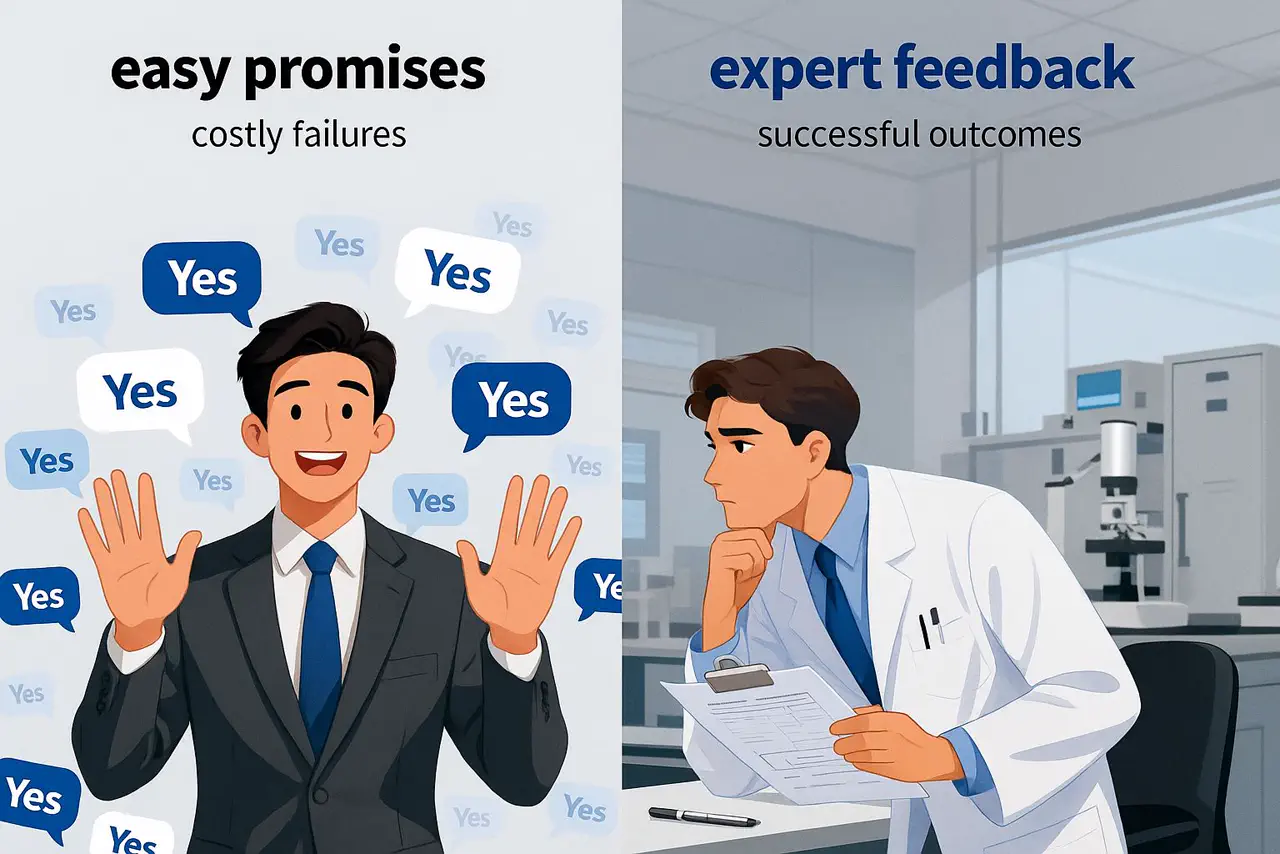
The ‘Yes’ Trap: When Easy Promises Lead to Costly Failures
Imagine you’ve just presented your exciting new product design. The first supplier you meet with eagerly agrees to every specification, every timeline, every cost target without a single question. It feels like a perfect match. But this is the classic “yes-man” trap. Believe me, we’ve seen the devastating fallout from these easy promises firsthand, and it’s a painful lesson for any brand. Suppliers who agree to everything are often the least equipped to handle challenges. They prioritize winning the contract over ensuring your success, leading to a predictable and disastrous outcome. I think the difference between a “yes-man” and a true partner lies in:
The “yes-man” path ends with you paying twice: once with your money, and again with your brand’s reputation. 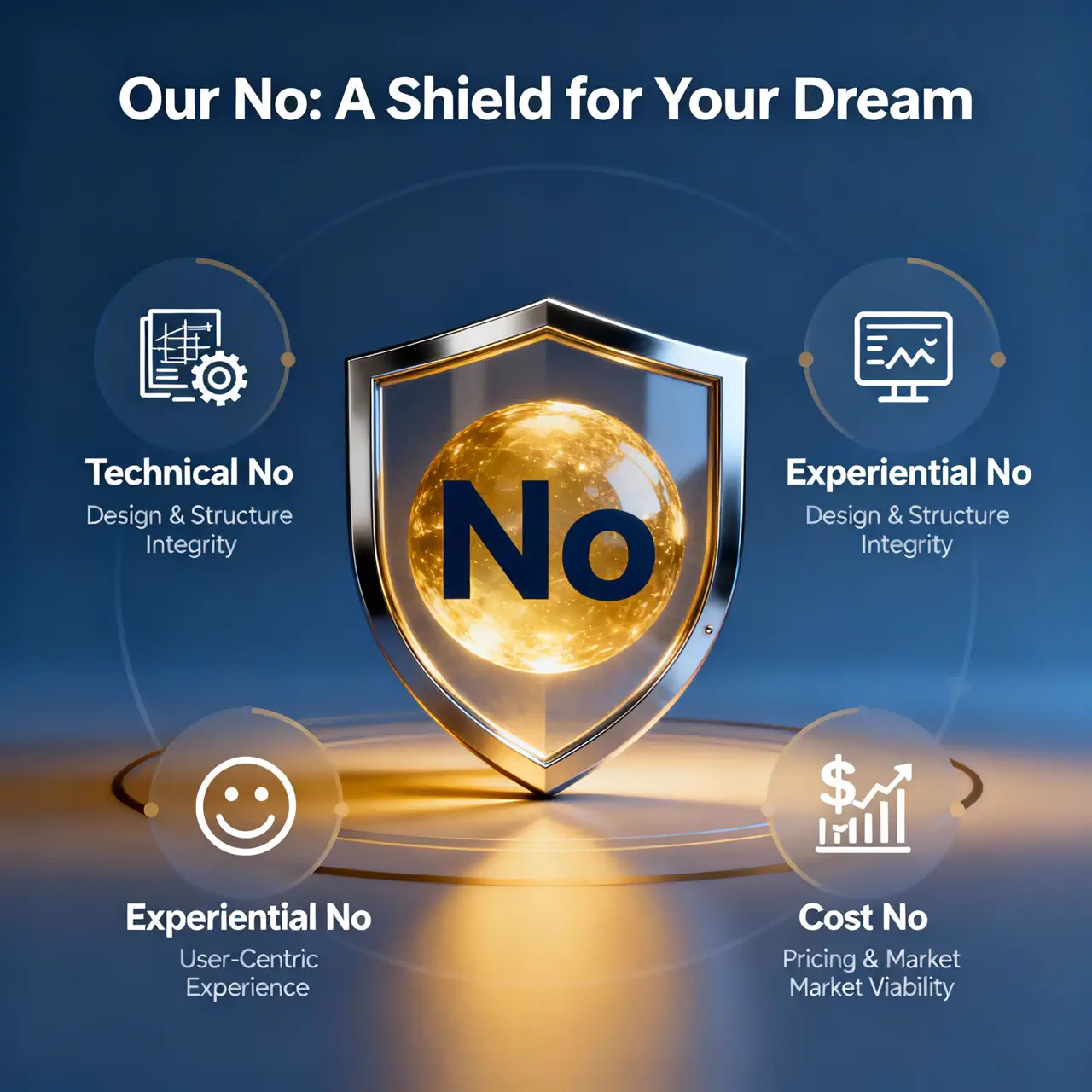
Our “No”: A Shield for Your Dream
When we say “no,” it’s never a rejection of your vision. It is a calculated, expert assessment designed to protect it. Our “no” is always followed by a detailed explanation, grounded in one of three core principles.
1. A Technical “No”
“No, this connection point is too thin and will risk breaking with long-term use.”
This feedback is designed to prevent structural failures, customer complaints, and costly warranty claims. By leveraging established principles of Design for Manufacturability (DFM), we identify these vulnerabilities early to protect your brand’s reputation for quality.
2. An Experiential “No”
“No, placing the charging port here will feel awkward and unintuitive for the user.”
We don’t just build objects; we help you create exceptional experiences. This feedback is about ensuring your product is not just functional but also a delight to use, which is key to earning positive reviews and customer loyalty.
3. A Cost “No”
“No, using this rare material will price your product out of its target market.”
Your commercial success is our success. This “no” protects your profitability. We analyze whether a product should be made at a certain price point to ensure it can compete effectively and maintain healthy margins for your business.
Start a Conversation With a Real Factory Partner
You get a named contact, honest lead times, and an NDA before any OEM project. Tell us what you are building and we will reply within 12 hours with straight answers, not a sales script.
MOQ from 100 pieces | BSCI / WRAP / ISO 9001 | NDA before every project
The Bridge: From ‘No’ to ‘How We Can…’
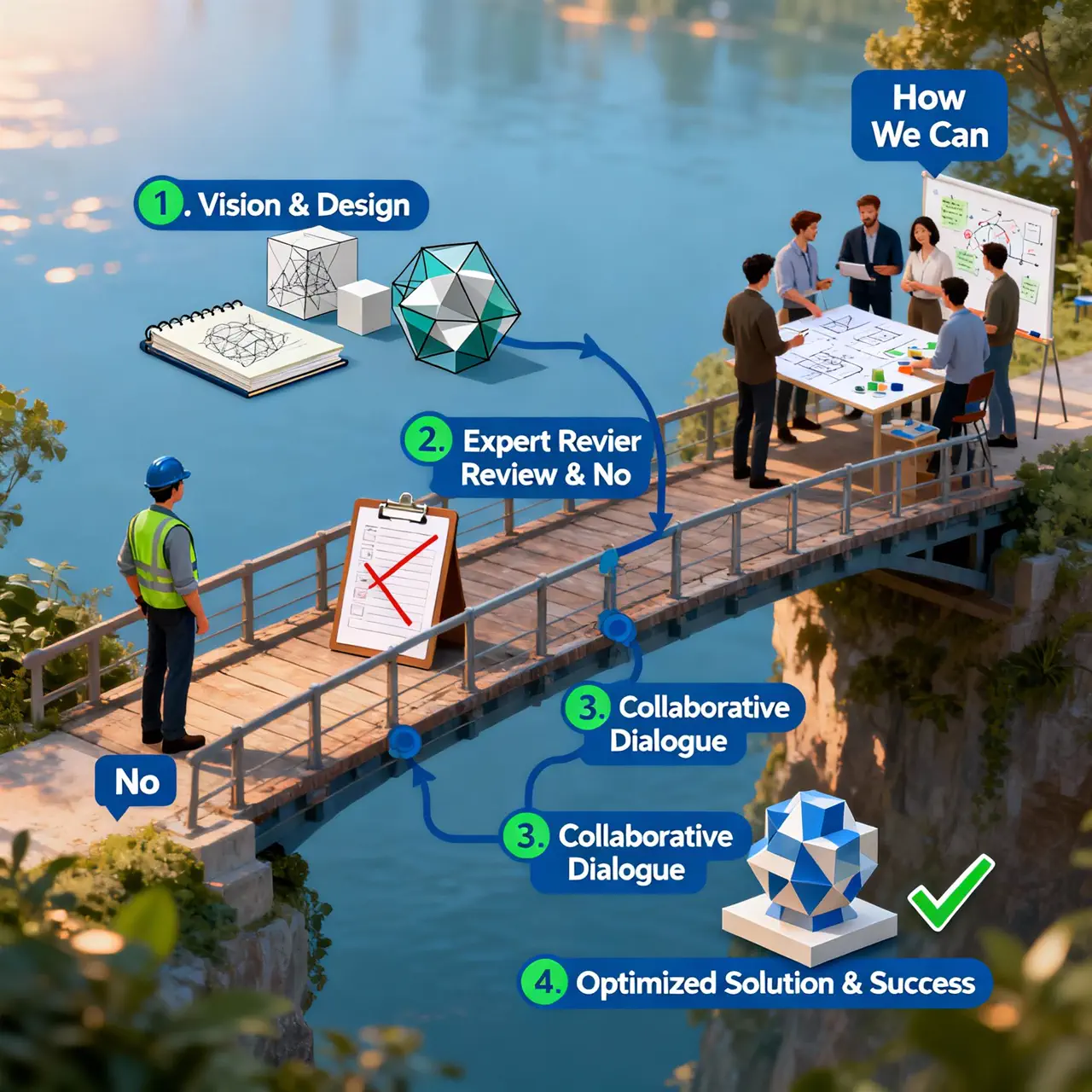
Our “no” is never the end of the conversation. Instead, it is the beginning of a collaborative dialogue that transforms us from a simple manufacturer into your technical partner. Our process isn’t a roadblock; it’s a bridge to a better outcome. Here’s what that journey looks like: Step 1: Your Vision & Design
You submit your initial concept, blueprints, and project goals.
Step 2: Expert Review & The “No”
Our engineers conduct a thorough analysis. If we identify a risk—technical, experiential, or financial—we say “no.”
Step 3: The Collaborative Dialogue (“…But Here’s How We Can”)
This is the crucial step. We explain why we’ve flagged an issue and immediately present alternative solutions, design modifications, or material suggestions that achieve your original goal more effectively. This isn’t just one long meeting; it’s a series of conversations. We refine, you give feedback, we prototype.
Step 4: The Optimized Solution & Success
We land on a final design that is innovative, manufacturable, cost-effective, and true to your vision. The result is a superior product ready for market success.
 For more context, see this OEM communication in glass manufacturing.
Inside the DFM Review: What Happens After You Send a Design
“We’ll push back if something is wrong” is easy to say and hard to verify. Here is exactly what our Design-for-Manufacturability review looks like from the moment your file lands, so you can judge any supplier against the same process.
- Files in, questions out. We read your CAD, spec sheet, and target price, then send clarifying questions before we quote — wall thickness, joint spec, intended quantity, and the feeling you want the piece to have. A supplier who quotes before asking anything is guessing.
- Manufacturability audit. Our engineers walk every glass transition looking for thin walls, sharp internal angles, and stress-concentration points that fail either in the annealing lehr or later in a customer’s hand.
- Ranked risk flags. Each issue is labeled Technical, Experiential, or Cost, with the specific failure mode explained — not just “this is a problem.”
- Alternatives, never dead ends. Every “no” ships with a concrete path to the same goal: a thicker joint with adjusted geometry, a different finish, a material substitution that holds the price point.
- A 3D model within 24 hours. You see the corrected design rendered before any glass is made, so the conversation happens on a screen instead of on a container of finished product.
- Prototype and approve. A physical sample confirms fit, feel, and function in the hand before mass production is authorized.
The whole sequence exists to move every expensive discovery as far upstream as possible. The further left a problem is caught, the cheaper it is to fix — and the “no” you hear at step two is the cheapest insurance you will ever buy.
What an Expert “No” Actually Saves You
A “no” feels like friction in the moment, so it helps to see what sits on the other side of it. Each risk we flag is a cost you never have to absorb.
| Risk We Flag | If Left Unchecked | What the “No” Prevents |
|---|---|---|
| Thin connection point | Cracks under normal daily use | Warranty claims and returns |
| Poor center of gravity | Feels cheap, tips easily on a table | Weak sell-through and bad reviews |
| Rare or costly material | Priced out of its target market | Unsold inventory and markdowns |
| Skipped or rushed annealing | Thermal-shock failure in use | Breakage, refunds, and safety complaints |
| Over-tight timeline | Rushed QC to hit the ship date | Inconsistent quality across the batch |
Notice that none of these are arguments against your vision. They are arguments against a specific, fixable detail that would have quietly undermined it. That is the entire difference between a supplier who agrees with everything and a partner who is willing to be briefly unpopular in order to keep your brand intact.
The Courage to Choose an Expert Partner
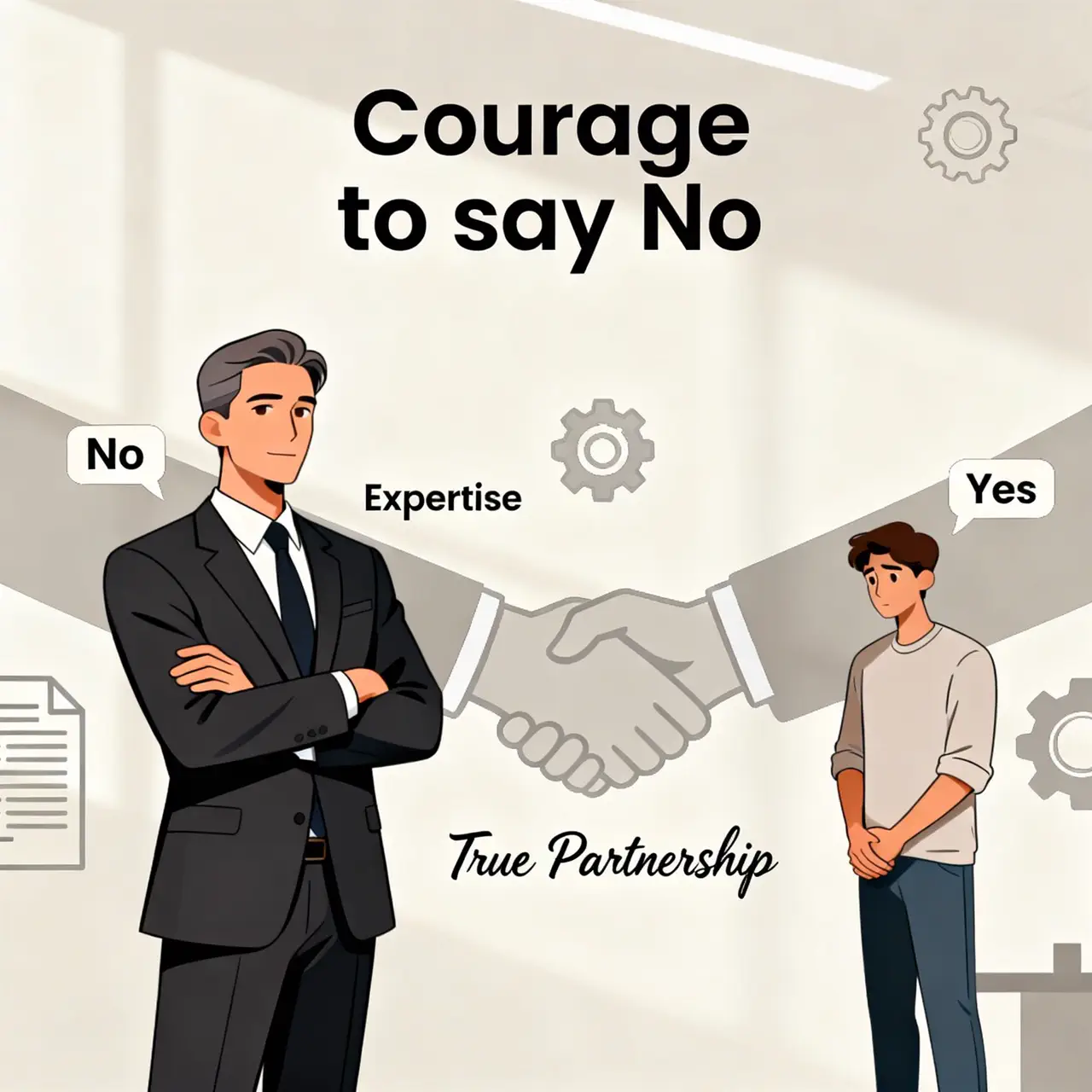
As you search for a manufacturer, we encourage you to look for the partner with the courage to say “no.” The supplier who questions your design or challenges your assumptions isn’t being difficult; they are demonstrating the expertise that will ultimately save you time, money, and stress. An expert’s “no” is infinitely more valuable than a salesperson’s “yes.” It is the ultimate sign of a true partnership—one built on trust, transparency, and a shared commitment to creating something truly excellent.
Frequently Asked Questions
Q: If you say “no” to parts of my design, what happens next? A: Our “no” is immediately followed by a collaborative session. Our engineering and design teams will present a detailed explanation of the issue and offer one or more alternative solutions to achieve your original goal in a more effective, reliable, or cost-efficient way. Q: How do you balance being candid with realizing a client’s vision? A: We focus on the intent behind your vision. Our goal is to create the successful, well-loved product you imagine, and our candid feedback is a tool to get there. We work to find a better technical path to the same destination, ensuring the final product is true to your vision and built for long-term success. Q: Is this kind of design feedback and optimization advice included in the initial quote? A: Yes, absolutely. We consider transparent consultation and Design for Manufacturability (DFM) feedback a fundamental part of our service, not a paid add-on. This upfront investment of our expertise is essential for preventing costly errors and ensuring a superior final product.
Get a Quote for Your Next Order
Looking for a manufacturing partner you can trust? Explore our water pipe and hand pipe wholesale ranges for MOQ, tiered pricing, and factory-direct lead times. Send us your product spec and target quantity — contact our factory team or message us on WhatsApp, and we will reply with pricing and lead times within 24 hours.
About the Author
Ava Zeng is the founder of Elfglass, a Shenzhen-based borosilicate glass pipe manufacturer serving B2B brands worldwide. Every guide on this site is grounded in her production-floor experience— the annealing lines, QC checkpoints, and export orders behind each claim.
Before you commit to a supplier, read her founder’s story and trust promise, and the guide to vetting a reliable glass pipe manufacturer— the same red-flag checklist Elfglass applies to its own suppliers.
Ready to Source Custom Glass Pipes?
Get a free quote within 24 hours. MOQ from 100 pieces. NDA-protected design consultation.
