
The Order That Arrived Wrong in Every Way
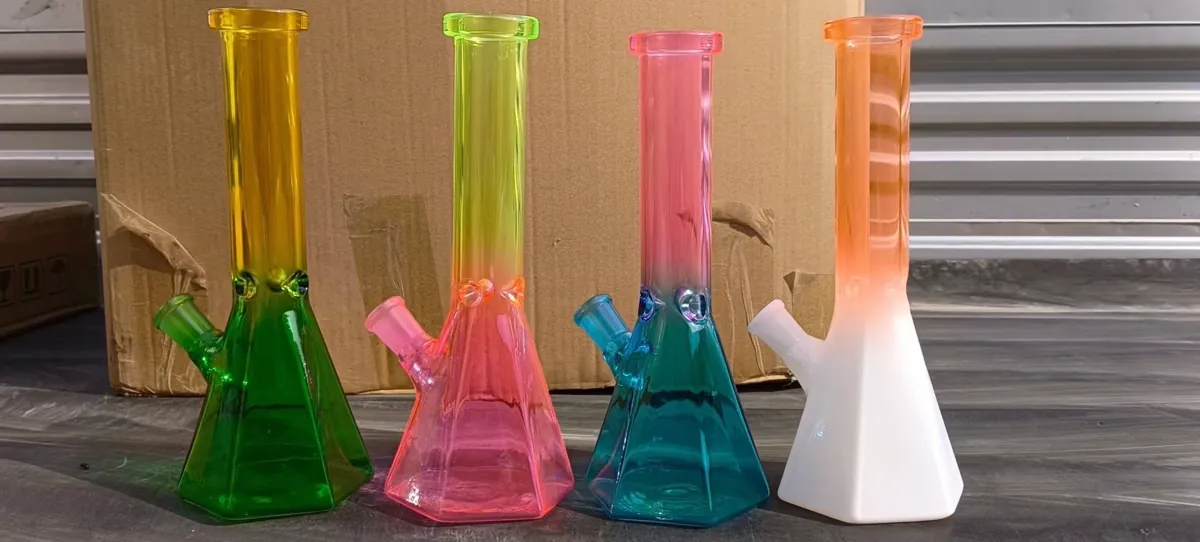
A first-time buyer in Germany places a 1,000-piece order for borosilicate hand pipes with a Chinese factory. The price is right, the samples looked good, and the communication was smooth. Six weeks later, the shipment arrives. The pipes are the wrong color — a slightly different shade of blue than approved. Twelve percent are cracked. The joint size is 14mm instead of the specified 18mm. The packaging has no German-language warning labels. And the invoice says the payment terms are net 15, not the net 60 the buyer thought was agreed.
Every one of these problems was preventable. Each one has a specific checkpoint in the sourcing process where it should have been caught — and a reason it was not caught that traces back to a common first-order mistake. After watching hundreds of first-time glass pipe buyers navigate their initial import, a pattern emerges: the mistakes are not random. They cluster into 11 categories, and nearly every first-time buyer makes at least 3 of them.
This article is the checklist that prevents those 11 mistakes. It is written for buyers placing their first wholesale glass pipe order — but it is equally useful for experienced buyers who have had a bad shipment and want to understand what went wrong in their process.
Mistake 1: Choosing a Supplier Based on Price Alone
The first message a new buyer sends to a factory is almost always: “What is your best price for [product]?” This frames the entire relationship around price — and attracts suppliers who compete on price rather than quality. The lowest-priced supplier for borosilicate hand pipes is typically the lowest-priced supplier for a reason: thinner walls, lower-grade glass, less experienced glassblowers, or inadequate annealing. The price difference between the cheapest and a mid-range supplier is often $0.50-1.00 per unit — a saving of $500-1,000 on a 1,000-piece order that can cost $5,000+ in quality problems.
The fix: Evaluate suppliers on a scorecard that weights quality (40%), communication reliability (20%), lead time consistency (20%), and price (20%). Request samples from your top 3 candidates and evaluate them using a structured inspection checklist before making a selection decision. The supplier who charges $0.75 more per unit but delivers consistent quality is cheaper than the supplier who charges less and delivers problems.
Mistake 2: Skipping the Sample Evaluation
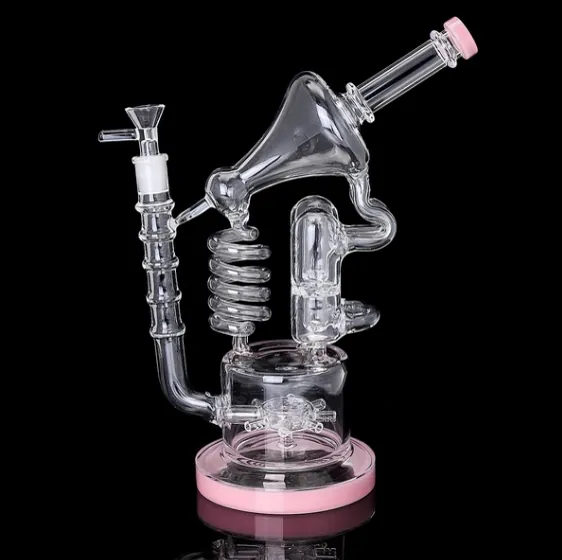
Some first-time buyers skip the sample stage entirely — either because they are eager to get started, because the supplier says “our quality is excellent, trust us,” or because they do not know what to check in a sample. This is the single highest-cost mistake in the entire sourcing process. A $100 sample evaluation prevents a $10,000 production mistake.
The fix: Always order samples before production. Request at least 3 pieces of the standard product (to check consistency), 2 pieces in your custom color, and 2 pieces with your logo. Evaluate each sample against a 14-point inspection checklist covering visual quality, dimensional accuracy, functional performance, and packaging compatibility. If you cannot evaluate samples yourself, hire a third-party inspection service ($100-300) to do it on your behalf.
Mistake 3: Not Specifying Color with Objective Standards
“Make it blue” is not a color specification. The buyer pictures cobalt blue; the factory produces sky blue. Neither is wrong — but they are not the same. Color disputes are the single most common quality complaint in glass pipe imports, and they are almost always caused by vague specification rather than factory error.
The fix: Specify color using a Pantone reference (e.g., “Pantone 2935 C”), provide an approved physical sample, state the colorant oxide system (e.g., “cobalt oxide-based”), define a delta-E tolerance (ΔE ≤ 2.0 vs approved sample), and specify the light source for visual comparison (D65 standard illuminant). This eliminates the ambiguity that causes 90% of color disputes.
Mistake 4: Ignoring Joint Size and Fit Specifications
For water pipes and pieces with joints, the joint diameter and ground joint angle must be specified precisely. Standard sizes are 10mm, 14mm, and 18mm with either 45-degree or 90-degree angles. If you do not specify, the factory will produce their default — which may not match your market’s standard. A US buyer who receives 14mm joints when the US market standard is 18mm has 1,000 pipes that do not fit the accessories their customers own.
The fix: Specify joint diameter, angle, and gender (male/female) in your procurement process. Include a tolerance (±0.5mm). Request a joint sample and test-fit it with standard accessories from your market before approving production.
Mistake 5: Not Understanding Landed Cost
A factory quotes $4.50 per pipe FOB Shanghai. The buyer calculates 1,000 × $4.50 = $4,500 and budgets accordingly. Then the freight invoice arrives ($420), the customs duty notice arrives ($270), the destination handling fee arrives ($185), and the insurance premium arrives ($14). The real cost is $5,389 — $4.50 + $0.89 in logistics = $5.39 per unit landed. The buyer’s margin calculation was based on $4.50, not $5.39, and the product is suddenly less profitable than expected.
The fix: Before placing any order, calculate the full landed cost including: FOB price + origin charges + main freight + destination charges + customs duty + insurance + any applicable tariffs or trade remedy duties. Use this landed cost — not the FOB price — for all margin and pricing calculations. A landed cost spreadsheet takes 30 minutes to build and prevents every “the shipment cost more than expected” surprise.
Avoid the First-Order Traps: Talk to Us First
From payment terms to packaging to lead times, Elfglass puts every commitment in a written quote so nothing surprises you on arrival. Get a detailed quote before you place your first order.
MOQ from 100 pieces | BSCI / WRAP / ISO 9001 | NDA before every project
Mistake 6: Agreeing to Payment Terms Without Understanding the Risk
Most first-time buyers pay 100% T/T in advance — the full amount before production begins. This gives the buyer zero leverage if the production quality is wrong. The supplier has your money; you have nothing except a promise. If the goods arrive with quality problems, the supplier has no financial incentive to make it right — they already have your payment.
The fix: Negotiate a payment split that maintains leverage: 30% deposit to start production, 70% paid after production is complete and you have received inspection photos or a third-party inspection report — but before shipment. This gives you the ability to withhold the 70% balance if quality is not acceptable. For orders above $10,000, consider a Letter of Credit (L/C) which provides bank-level payment security for both parties.
| Payment Method | Buyer Risk | When to Use |
|---|---|---|
| 100% T/T advance | Highest — no leverage after payment | Never for first orders; only for small sample fees |
| 30/70 T/T (deposit/before shipment) | Moderate — leverage maintained until 70% payment | Standard for most wholesale orders |
| 30/70 T/T (deposit/against B/L copy) | Lower — payment triggered by shipping proof | Established relationships with trusted suppliers |
| Letter of Credit (L/C) | Lowest — bank guarantees payment conditions | Orders above $10,000; new supplier relationships |
| Western Union / MoneyGram | Highest — no traceability, no protection | Never for wholesale orders |
Mistake 7: Not Requesting a Written Quality Agreement
Most first-time buyers communicate quality expectations verbally or via casual email messages: “Please make sure the quality is good.” This is not a quality agreement. It is a hope. When a dispute arises, “good quality” means different things to the buyer and the supplier — and without a written standard, there is no basis for a claim.
The fix: Before production, agree on a written quality specification that includes: approved sample reference (with photos and measurements), acceptable defect rate (e.g., “maximum 2% breakage, 0% visible cracks”), dimensional tolerances (±2mm length, ±0.5mm wall thickness), color standard (Pantone reference + delta-E tolerance), and packaging specification. Both parties sign this document. It becomes the reference point for any quality dispute.
Mistake 8: Forgetting Compliance Requirements for the Destination Market
Every market has import requirements for glass products — and they vary significantly by country. A buyer who does not research these requirements before ordering may receive goods that cannot clear customs, require expensive relabeling, or are seized at the border.
| Market | Key Requirement | Consequence of Non-Compliance |
|---|---|---|
| United States | FDA compliance if marketed for tobacco; 21 USC §863 paraphernalia considerations; proper HS classification | Goods held at customs; potential seizure if classified as paraphernalia |
| European Union | REACH compliance (SVHC list); CE marking not required for glass pipes but food-contact regulations may apply; proper customs valuation | Goods denied entry; fines for REACH violations |
| United Kingdom | UK REACH (separate from EU REACH post-Brexit); UKCA marking considerations | Same as EU but under separate regulatory framework |
| Australia | ACCC safety standards; state-level tobacco accessory regulations | Goods seized; potential product recall |
The fix: Before placing your first order, research the import requirements for your specific destination country. Check whether glass smoking products require specific labeling, testing, or certification. Consult a customs broker in your country if you are unsure. The cost of a one-hour consultation ($100-200) prevents shipment delays that cost thousands per day in storage and demurrage fees.
Mistake 9: Underestimating Packaging Requirements
Factory-default packaging is designed to protect glass during a short domestic truck ride — not during 4 weeks of ocean freight, container handling, customs inspection, and last-mile delivery. Buyers who accept factory-default packaging without specifying their requirements frequently receive shipments with 5-15% breakage rates.
The fix: Specify packaging requirements in your purchase order: individual poly bag for each pipe, foam or corrugated divider between pieces, minimum carton burst strength (350 lb for sea freight), carton weight limit (max 15 kg for manageable handling), and “FRAGILE” markings on all four sides. For high-value items, request drop-test packaging that meets ISTA 3A standards. The incremental packaging cost is $0.10-0.30 per unit — a fraction of the $3-5 replacement cost for a broken pipe.
Mistake 10: Not Planning for Lead Time Variability
A factory quotes “30 days production time.” The buyer plans to receive goods in 30 days plus 30 days shipping = 60 days. In reality, production takes 35 days (the factory had a power outage), shipping takes 38 days (port congestion), and customs clearance takes 5 days (documentation error). Total: 78 days instead of 60. The buyer has stockouts for 18 days and loses an estimated $3,000 in missed sales.
The fix: Add a 20% buffer to every quoted lead time. If the factory says 30 days, plan for 36. If shipping takes 30 days, plan for 36. Build your reorder cycle around 72 days (not 60) for a sea freight order. The buffer costs nothing in normal scenarios — but it prevents stockouts when things go wrong, which they always do at some point.
Mistake 11: Not Having an Exit Strategy for the Supplier Relationship
First-time buyers often commit to a single supplier with no plan for what happens if the relationship does not work out. Their molds are at the factory, their designs are known only to this supplier, and they have no alternative qualified. If quality deteriorates or prices increase, they are trapped — switching suppliers means starting from scratch with new samples, new mold costs, and new qualification.
The fix: From day one, maintain at least one backup supplier who has been sampled and qualified — even if you do not place orders with them. Keep your mold ownership contractual and your designs documented. Maintain relationships with 2-3 suppliers even if 80% of your volume goes to one. The cost of maintaining a backup relationship is low (occasional sample orders, annual relationship maintenance) — but it provides insurance against being trapped with a non-performing primary supplier.
Learn more about our step-by-step order process at Elfglass.
Learn more about start your first order with Elfglass today.
Placing your first glass pipe order? Elfglass guides first-time buyers through every step — from sample evaluation and quality specification to landed cost calculation and compliance documentation. Start your first order with a supplier who has helped 200+ brands through their first import.
For related reading, see our evaluating glass pipe samples before ordering for a detailed breakdown.
For related reading, see our writing a clear inquiry to a glass pipe factory for a detailed breakdown.
Ready to Start Your Custom Glass Pipe Project?
Get a free quote within 24 hours. MOQ from 100 pieces. NDA-protected design consultation.
About the Author
Ava Zeng has spent over 16 years at Elfglass working with first-time glass pipe importers across 40+ countries. She has seen every common mistake repeated hundreds of times — and developed the onboarding frameworks that prevent them. This article distills the 11 most costly and most preventable errors into a single reference guide.
Frequently Asked Questions
What is the most common mistake first-time glass pipe buyers make?
Choosing a supplier based on price alone. The lowest-priced supplier is typically the lowest-priced for a reason — thinner walls, lower-grade glass, or less experienced workers. The $0.50-1.00 per unit saving is quickly erased by quality problems, breakage, and customer returns. Evaluate suppliers on a scorecard that weights quality at 40%, not price.
How much should I budget for my first glass pipe order?
Budget for the full landed cost, not just the factory price. For a 1,000-piece order of borosilicate hand pipes from China to the US: factory cost (~$4,500) + sea freight (~$420) + customs duty (~$270) + destination charges (~$185) + insurance (~$14) = approximately $5,389 total, or $5.39 per unit landed. Always calculate landed cost before making margin decisions.
What payment terms should I use for my first order?
Use 30/70 T/T — 30% deposit to start production, 70% after production is complete and you have verified quality through photos or third-party inspection, but before shipment. Never pay 100% in advance for a first order. For orders above $10,000, consider a Letter of Credit for bank-level payment security. Never use Western Union or MoneyGram for wholesale orders.
How do I avoid receiving the wrong color glass pipes?
Specify color using objective standards: a Pantone reference, an approved physical sample, the colorant oxide system, a delta-E tolerance (ΔE ≤ 2.0), and the light source for comparison (D65). “Make it blue” is not a specification — it is an invitation for a color dispute. Every color complaint in glass pipe imports traces back to vague specification.
How long does my first glass pipe order take from order to delivery?
Plan for 70-80 days total: 5-7 days for sample production and approval, 30-35 days for production (with buffer), 30-38 days for sea freight (with buffer), and 3-5 days for customs clearance and delivery. Add 10-14 days if you need custom packaging or logo application. First-time buyers should add a 20% time buffer to every quoted lead time to account for unexpected delays.
