
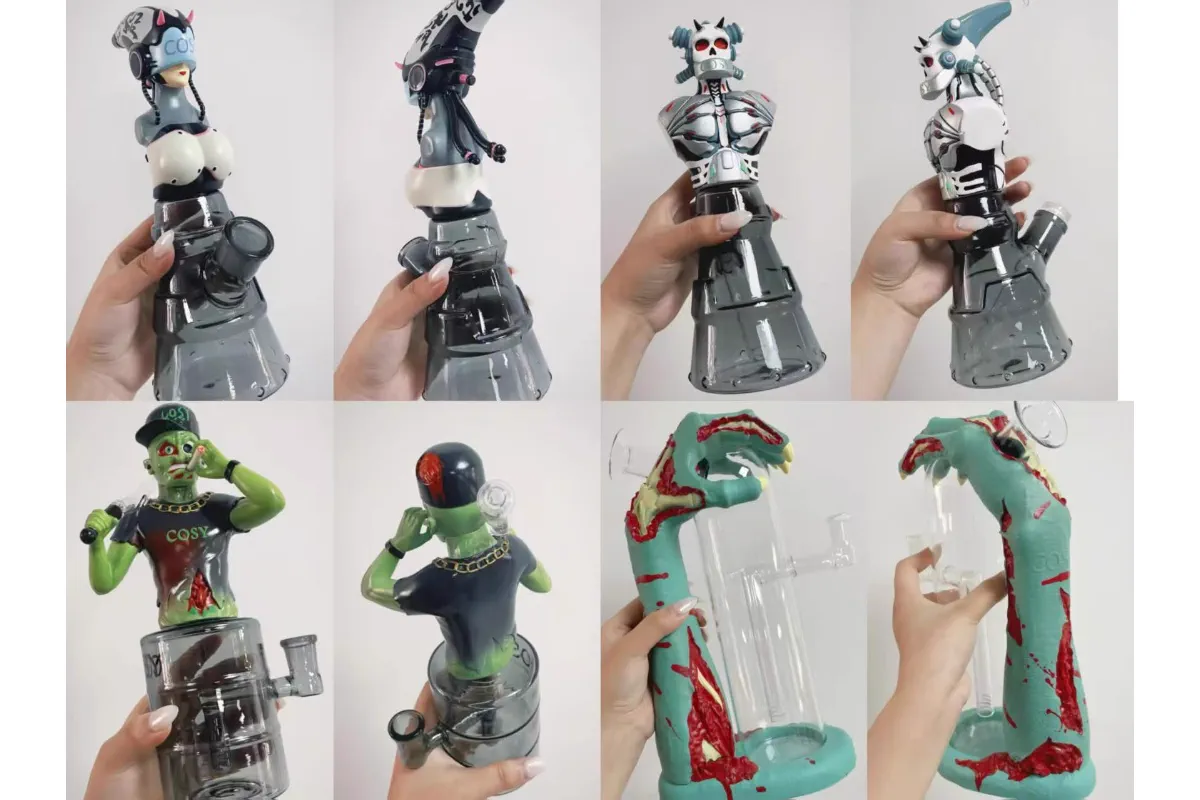
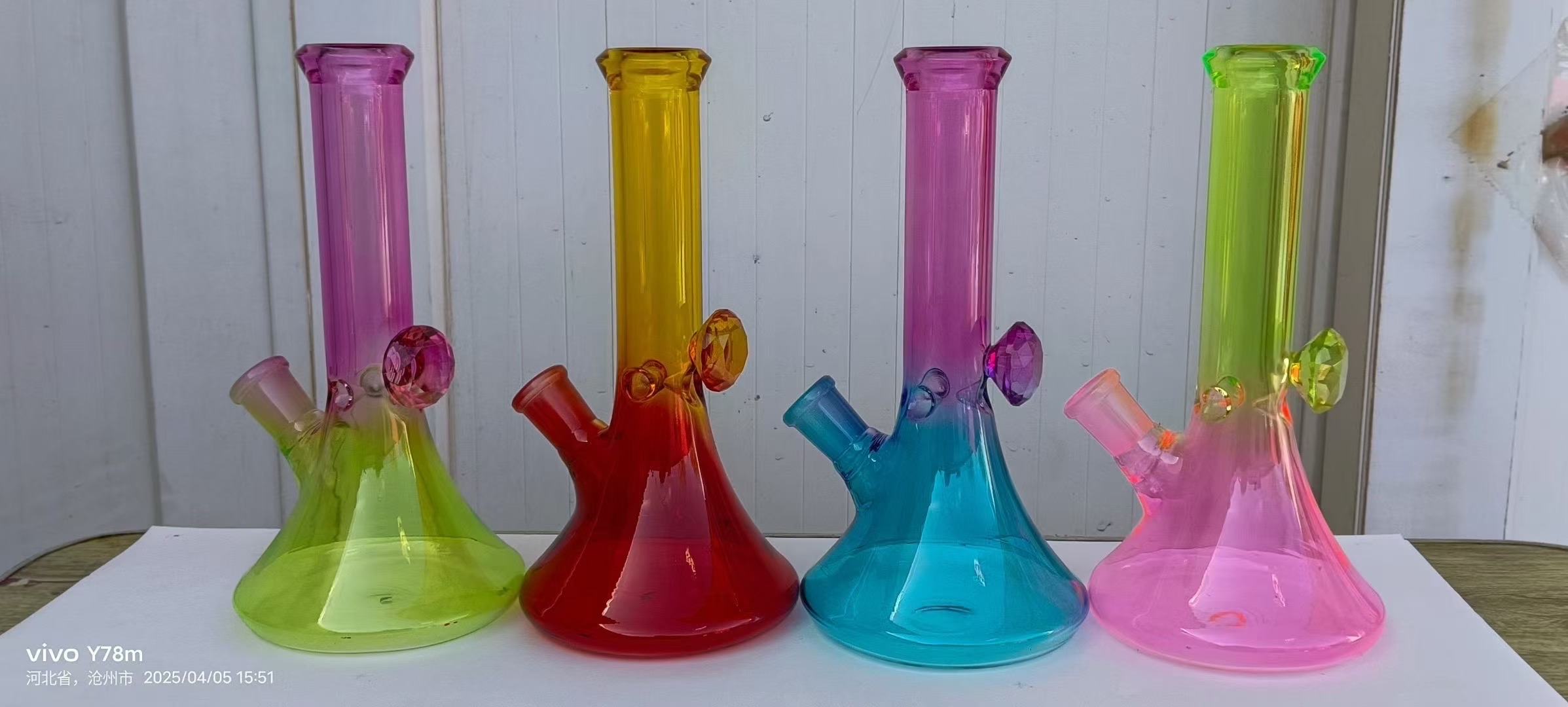
Slime green had its moment. In 2024 and early 2025, every wholesale glass pipe order seemed to include at least one SKU in that translucent neon green — the color that dominated Instagram reels and trade show booths alike. But if your 2026 catalog still leads with slime green as the hero color, you are selling last year’s trend to this year’s buyers.
The glass color market moves in cycles driven by social media aesthetics, regional preferences, and the natural rotation that happens when a color becomes too common to feel distinctive. This listicle maps the color trends shaping wholesale glass orders in 2026, based on what Elfglass is seeing across its production floor in Shenzhen, where up to 10,000 pieces per month ship to buyers in the USA, UK, Australia, and Canada.
1. Opal White: The Quiet Takeover
Opal white — a milky, semi-translucent white that diffuses light rather than blocking it — is replacing clear glass as the default base for premium hand pipes and dab rigs. Unlike opaque white, opal white lets the user see the smoke moving through the piece, which matters for the visual experience that drives social media content.
Why it sells: Opal white photographs well against any background, making it a favorite for brands building Instagram-first product lines. It pairs with any accent color for two-tone designs.
Wholesale signal: Orders for opal white base pieces increased significantly through late 2025 and continue trending upward into 2026. Brands that stocked slime green as their hero color are now requesting opal white as the new default.
2. Deep Amber: The Retro Comeback
Amber glass — the warm brown-orange that dominated vintage apothecary bottles — is back, but with a modern twist. Where vintage amber was uniform, the 2026 version features gradient effects: dark amber at the base fading to lighter honey tones at the rim.
Why it sells: Amber evokes heritage and craftsmanship, which resonates with the growing segment of buyers who position their brands as premium rather than counterculture. It also hides resin buildup better than clear glass, a practical selling point for retail customers.
Wholesale signal: Several OEM requests in Q1 2026 specified amber with gradient effects, a combination that was rare before this year.
3. Matte Black: The Permanent Staple
Matte black is not a trend — it is a staple. It has held its position in the glass color market for several years and shows no signs of fading. The appeal is straightforward: it matches any retail environment, it photographs well, and it appeals to the broadest possible customer demographic.
Why it sells: Matte black is the safe choice for buyers who want consistent sell-through across diverse customer bases. It works in head shops, dispensaries, gas stations, and online stores without looking out of place.
Wholesale signal: Matte black remains one of the most-ordered colors across all product categories. It is the color that buyers reorder consistently, even when they experiment with trend colors for limited runs.
For a deeper look at why matte finishes resonate with buyers, the hand pipes color trends analysis explores how color psychology drives purchasing decisions in the glass market.
4. Reactive Purple-Blue: The Heady Aesthetic Goes Production
Reactive glass colors — those that shift between purple and blue depending on the light angle — were once exclusive to heady glass artists. In 2026, production-grade reactive colors are appearing in wholesale orders for the first time, as factories develop techniques that make these effects reproducible at scale.
Why it sells: The color shift creates a visual hook that stops customers scrolling through product photos online. It gives mass-produced pieces a handcrafted feel that justifies a higher retail price point.
Wholesale signal: OEM requests for reactive color accents on dab rigs and water pipes are increasing. The technique is still more expensive than standard colors, but the price gap is narrowing as production methods improve.
For context on how glass colors are actually produced at the chemical level, the glass color chemistry guide explains the metal oxides and temperature variables that create each hue.
Inspect Real Production Glass Before You Commit
We ship COE 3.3 borosilicate samples in 1 to 3 days and back every order with a documented QC process and inspection report. Request a sample kit and judge the wall thickness, color, and finish yourself.
MOQ from 100 pieces | BSCI / WRAP / ISO 9001 | NDA before every project
5. Frosted Pastels: Soft Tones for Lifestyle Brands
Frosted pastel colors — soft pink, lavender, mint, and baby blue — are gaining ground among lifestyle-oriented glass brands that target a demographic beyond the traditional head shop customer. These colors work on pieces designed to sit on a coffee table or shelf, not just in a smoking setup.
Why it sells: Pastels broaden the customer base. They appeal to buyers who want glass pieces that match a home decor aesthetic rather than a stoner aesthetic. This is the color family driving the “wellness-adjacent” positioning that several emerging brands are adopting.
Wholesale signal: Orders for pastel-colored hand pipes and small water pipes are increasing from brands in the US and UK markets, particularly from companies that also sell lifestyle accessories like grinders and rolling trays.
6. Smoke Grey: The Understated Alternative
Smoke grey — a translucent, tinted grey that is darker than clear but lighter than black — is emerging as the go-to color for brands that want something different without going bold. It occupies the middle ground between the safety of clear and the dominance of black.
Why it sells: Smoke grey is versatile and gender-neutral. It works for brands that find matte black too aggressive and clear glass too plain. It also hides minor imperfections better than clear glass, reducing QC rejection rates.
Wholesale signal: Smoke grey is appearing more frequently as a secondary color option in OEM orders, used alongside a bolder primary color for two-tone pieces.
The 2026 Color Palette at a Glance: Role, Segment, and Stocking Weight
The six colors above are profiled one by one; this table lines them up so you can see at a glance which is a staple, which is a trend, and which buyer each one serves. Use it to decide the role each hue plays in your catalog before you allocate the 60–70% staple / 30–40% trend split.
| Color | Character | Best Product Category | Buyer Segment | Stocking Role |
|---|---|---|---|---|
| Opal white | Milky, semi-translucent; diffuses light, shows the smoke moving | Premium hand pipes and dab rigs | Instagram-first brands | New default base, replacing clear |
| Deep amber (gradient) | Warm heritage tone; hides resin buildup | Premium, heritage-positioned pieces | Brands positioning premium, not counterculture | Rising trend accent |
| Matte black | Universal, photographs well, matches any retail environment | All categories | Broadest demographic | Permanent staple and reorder anchor |
| Reactive purple-blue | Light-angle color shift; heady look at production scale | Dab rigs and water pipes | Online scrollers, heady aesthetics | Premium limited run (higher cost) |
| Frosted pastels | Soft pink, lavender, mint, baby blue | Lifestyle hand pipes and small water pipes | Wellness-adjacent, home-decor buyers (US/UK) | Trend for lifestyle brands |
| Smoke grey | Translucent tinted grey; gender-neutral, hides minor imperfections | Two-tone secondary color | Brands finding black too aggressive, clear too plain | Versatile accent (lowers QC rejection) |
Cost, QC, and Production Notes by Color Family
A color is not just a marketing choice — each one carries a different production cost and a different QC behavior. Knowing these before you order keeps a trend color from quietly eroding the margin it was supposed to create.
- Standard colors are your cheapest base. Clear, matte black, and amber cost the least to produce — build the 60–70% staple allocation on them.
- Reactive and custom Pantone colors carry a premium. Extra material cost and production complexity put them in the 30–40% trend bucket, not the core. The price gap is narrowing as production methods improve, but it has not closed.
- Smoke grey can lower your QC rejection rate. It hides minor imperfections better than clear glass — a practical, not just aesthetic, reason to use it as a secondary colorway.
- Deep amber hides resin buildup. A real retail selling point that reduces customer cleaning complaints, not merely a heritage look.
- Opal white must stay semi-translucent. Confirm the opal density on a sample — it should diffuse light and keep the smoke visible, not go fully opaque.
- Frosted pastels need a consistent, light etch. The degree of frost varies between factories, so approve a physical sample before committing the full run.
- Test on the trend cycle, not against it. Major shifts run 12–18 months; trial any new color at the 100-unit MOQ and track sell-through against your staples before scaling.
How to Use Color Trends in Your Wholesale Strategy
Trend colors are most valuable as limited-run differentiators, not as your entire catalog. The most successful wholesale buyers use a layered approach: stock 60 to 70 percent of inventory in proven staples (clear, matte black, smoke grey), then allocate 30 to 40 percent to trend colors that create visual interest and social media shareability.
When ordering trend colors, start with smaller quantities. A 100-unit MOQ per SKU means you can test a new color without overcommitting. If the color gains traction with your customers, reorder. If it does not, you have not tied up capital in slow-moving stock.
For buyers sourcing wholesale water pipes, consider offering the same piece in multiple colorways — a staple color plus one or two trend colors — to give retail customers choice without expanding your SKU count excessively.
If you want to discuss custom color matching for your next order, contact the Elfglass team to review Pantone references and production feasibility.
Frequently Asked Questions
How often do glass color trends change?
Major color shifts happen every 12 to 18 months, driven by social media aesthetics and regional market preferences. Staple colors like clear, black, and amber remain stable across cycles.
Can I match a specific Pantone color for my glass order?
Yes. Most OEM factories can match Pantone references for glass color, though exact matches depend on the glass type and the metal oxides available. Request a color sample before approving production.
Do trend colors cost more than standard colors?
Standard colors (clear, black, amber) are typically the least expensive. Reactive colors and custom Pantone matches carry a premium due to additional material costs and production complexity.
What is the best way to test a new color with my customers?
Order a small batch (100 units at MOQ) in the trend color alongside your staple colors. Track sell-through rate compared to your standard offerings before committing to larger quantities.
Get a Quote for Your Next Order
Building your wholesale lineup? in the 2026 color direction you stock? Explore our wholesale hand pipe collections for MOQ, tiered pricing, and factory-direct lead times. Send us your product spec and target quantity — contact our factory team or message us on WhatsApp, and we will reply with pricing and lead times within 24 hours.
About the Author
Ava Zeng is the founder of Elfglass, a Shenzhen-based borosilicate glass pipe manufacturer serving B2B brands worldwide. Every guide on this site is grounded in her production-floor experience— the annealing lines, QC checkpoints, and export orders behind each claim.
Before you commit to a supplier, read her founder’s story and trust promise, and the guide to vetting a reliable glass pipe manufacturer— the same red-flag checklist Elfglass applies to its own suppliers. Trend cycles in glass follow the same pattern described in color trends forecasting, where seasonal palettes shift based on cultural and market signals.
Ready to Source Custom Glass Pipes?
Get a free quote within 24 hours. MOQ from 100 pieces. NDA-protected design consultation.
