
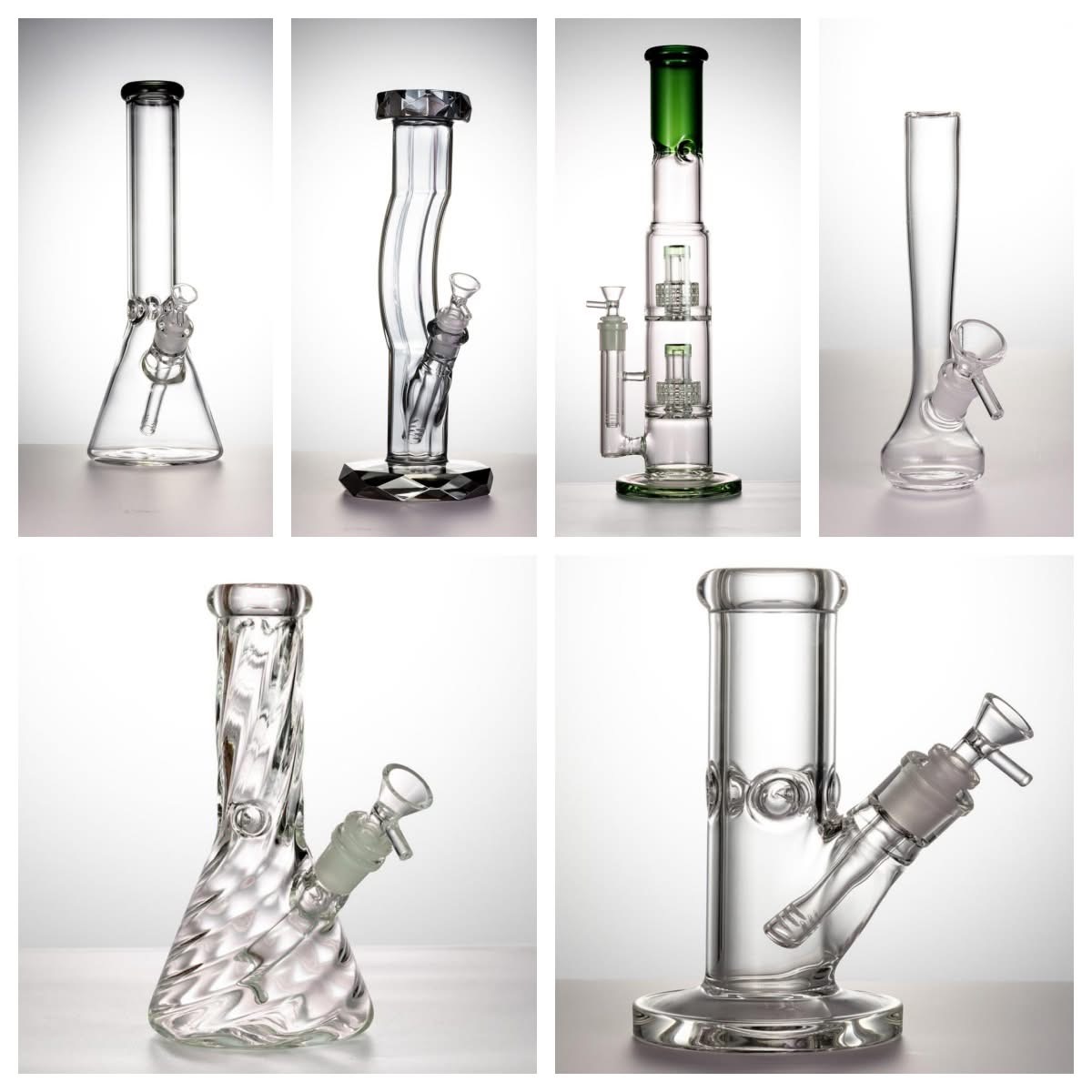
You point at a swatch on a color chart, the factory nods, and weeks later a carton of finished pieces arrives. The whole transaction looks like a design choice. It is actually a chemistry decision. The blue in a water pipe is cobalt. The green is chromium. The amber warmth is sulfur. None of these colors sit on the surface like paint: they are metal atoms locked into the glass (compared to ceramic as an alternative material) itself while it is still molten.
Understanding glass color chemistry makes you a sharper buyer. When you know why a color exists, you can ask the right questions about batch consistency, predict which finishes survive daily use, and read a quotation with better judgment. This guide walks through the three mechanisms that create color in glass, the metal oxides behind every hue on a factory chart, and what all of it means when you place a wholesale order.
Three Ways Glass Takes a Color
Pure glass, made from silica, is colorless. Every color you see on a finished piece comes from something deliberately introduced, and the something works through one of three physical mechanisms.
For more on this topic, see our guide on splash guards in water pipe design.
Ionic coloring. Metal compounds dissolve into the melt and release charged ions that absorb specific wavelengths of light. The light that passes through is the color you see. Cobalt, chromium, iron, copper and manganese all work this way. Ionic colors are distributed evenly through the entire wall of the glass, so a chip or a scratch reveals the same hue underneath. This is the dominant mechanism behind production glass colors.
Colloidal coloring. Instead of dissolving, tiny particles of a metal, gold or silver most famously, form inside the cooled glass as microscopic suspensions. Those nanoparticles scatter light in unusual ways, producing ruby reds and deep yellows that ionic chemistry cannot reach. The finished glass is technically a colloid: one solid phase dispersed inside another.
Color centers. Radiation or specific melt conditions can trap electrons in defects of the glass structure, and those defects absorb light too. This mechanism matters more in specialty optics than in consumer glassware, but it completes the picture: color can come from dissolved ions, suspended particles, or structural defects.
A fourth, practical distinction cuts across all three: body color versus surface color. Body color lives inside the glass. Surface color, printed logos, enamel coatings, fumed metallic films, sits on top and wears differently. Buyers should always know which one they are ordering, because the two behave very differently over a product’s lifetime.
The Metal-Oxide Color Chart
Coloring agents are added to the glass batch in small, carefully weighed quantities before melting. The table below covers the workhorse colorants and the colors they produce.
| Colorant | Resulting color | Mechanism | Note |
|---|---|---|---|
| Cobalt oxide (CoO) | Deep blue | Ionic | Effective at 0.025 to 0.1% of the batch; the classic Bristol blue |
| Chromium(III) oxide (Cr2O3) | Dark green | Ionic | A very powerful coloring agent |
| Iron(II) oxide (FeO) | Green tint | Ionic | The natural impurity tint of ordinary soda-lime glass |
| Iron(III) oxide (Fe2O3) | Yellow to yellow-brown | Ionic | Different oxidation state, different color |
| Manganese dioxide (MnO2) | Purple | Ionic | Also used in small doses to cancel green tints as a decolorizer |
| Copper(II) oxide (CuO) | Turquoise | Ionic | Shifts to dull red-brown as copper(I) oxide |
| Sulfur + carbon + iron salts | Amber, yellowish to almost black | Ionic | A reducing flame alone can also push a melt toward amber |
| Cadmium sulfide (CdS) | Imperial red | Ionic | With selenium: shades of yellow, orange and red |
| Gold chloride | Ruby red (cranberry) | Colloidal | Costly; a craft-production material |
| Silver compounds | Yellow to orange | Colloidal / surface | The basis of silver stain; the origin of the term stained glass |
A few of these colorants deserve a closer look, because they explain most of what you will meet on a sourcing chart.
Cobalt is the most efficient blue in the glassmaker’s toolkit. Concentrations as low as 0.025 to 0.1 percent of the batch yield a rich, deep blue, which is why cobalt glass has been prized for centuries, from Bristol blue to modern deep-blue pipes. Small dose, strong effect, excellent consistency, but cobalt is a priced metal, so deep blues carry real material cost.
Chromium produces dark green and does so aggressively: it is one of the most powerful coloring agents known in glass. Combined with iron, it is the chemistry behind the classic green bottle. Greens are among the easiest colors to reproduce batch after batch, which is one reason green and teal remain staples of high-volume lines.
Iron is the color you did not order but always get. Iron impurities give ordinary soda-lime glass its faint green edge, visible in thick sections. Factories either embrace it, as in green bottle glass, or fight it with decolorizers such as manganese dioxide, which chemically neutralizes the green tint. Manganese in larger doses flips into a colorant of its own, producing purple.
Copper illustrates the theme of the next section perfectly: one metal, two personalities. Copper(II) oxide turns glass turquoise, while copper(I) oxide produces a dull red-brown. Same element, different oxidation state, different product.
Sulfur chemistry creates the amber family. Sulfur combined with carbon and iron salts yields colors ranging from pale yellow to almost black, and a reducing combustion atmosphere in the furnace can shift a melt toward amber on its own. Amber and smoke tones in production glass usually trace back to this system.
The Same Metal, Two Colors: Oxidation States and Furnace Atmosphere
The chart above hides a subtlety that explains many a mismatched sample: the color an oxide produces depends on the chemical conditions of the melt, not just on which jar the batch operator reached for.
Metals can carry different electrical charges, called oxidation states, and each state absorbs light differently. Iron is the clearest example. Iron(II) oxide pushes glass toward green, while iron(III) oxide turns it yellow to yellow-brown. Copper behaves the same way, turquoise as Cu(II), red-brown as Cu(I). The melt’s atmosphere, meaning how much oxygen is available in the flame, decides which state dominates. A flame running fuel-rich, a reducing atmosphere, strips oxygen from the melt and stabilizes the lower states; an oxygen-rich, oxidizing flame does the opposite.
This is why amber can emerge simply from how the furnace is fired, and why two factories using the identical colorant recipe can land on slightly different shades. Flame chemistry, furnace temperature, and even melting time all nudge the equilibrium. For buyers, the practical lesson is that a color specification is really a three-part instruction: the colorant, its concentration, and the melting conditions. A sample approved under one set of conditions only stays matched if the factory keeps all three stable.
Inspect Real Production Glass Before You Commit
We ship COE 3.3 borosilicate samples in 1 to 3 days and back every order with a documented QC process and inspection report. Request a sample kit and judge the wall thickness, color, and finish yourself.
MOQ from 100 pieces | BSCI / WRAP / ISO 9001 | NDA before every project
Gold, Silver and the Colloidal Reds
The most luxurious colors in glass history come from metals that never truly dissolve. Gold ruby glass, better known as cranberry glass, gets its red from gold chloride, made by dissolving gold in aqua regia and adding it to the melt. As the glass cools, the gold forms nanoparticles suspended through the solid, and those colloids scatter light into a red that ionic colorants cannot duplicate. The finished piece is a colloid: a solid phase of gold dispersed inside the solid phase of glass.
The cost of gold confines genuine cranberry to craft production. You will not meet it in wholesale volumes, but its chemistry is worth knowing because it proves a broader point: particle size and dispersion, not just chemical identity, determine the final color.
The most famous demonstration is the Lycurgus Cup, a fourth-century Roman cage cup made of dichroic glass. Lit from behind, the cup glows red, the signature of gold salts; lit from the front, it looks green, the work of silver salts. One object, two colors, depending on the direction of light.
The mystery of these colors took centuries to crack. Neither of the seventeenth-century glassmakers credited with rediscovering gold ruby knew why their recipe worked. It took Richard Adolf Zsigmondy, awarded the Nobel Prize in Chemistry in 1925, to explain that the tiny colloids of gold were responsible for the red.

Fuming: Color Deposited From a Flame
Alongside colors melted into the batch, glasswork has a second family of color effects that live on the surface. Fuming belongs to this family. In fuming, a small amount of a metal compound, typically silver or gold, is vaporized in the flame, and the vapor condenses onto the hot glass as an ultrathin metallic film. The result is the shimmering, oil-slick iridescence associated with art glass: blues, purples and oranges from silver, warmer rose tones from gold. When a piece needs to light up after dark, the chemistry shifts from metal vapors to photoluminescent pigments; our guide to sourcing glow-in-the-dark glass breaks down how that works.
The underlying chemistry is a cousin of everything above. Silver has colored glass since at least the early 1300s, when silver stain appeared in window-making. Silver compounds, notably silver nitrate, were applied to the surface of glass and fired, producing a range of yellow-to-orange colors so reliable that the technique gave stained glass its name. Fuming performs the same trick with a torch instead of a kiln, depositing the metal from vapor rather than from a paste.
Three buyer-relevant properties follow from the surface nature of these effects. First, fumed films are thinnest where handling is heaviest, so heavily fumed areas can shift in appearance over years of use. Second, the effect is angle-dependent and flame-dependent, which makes exact batch matching harder than with body color. Third, because the color sits on the surface, QC inspection should check it under consistent lighting. If you are sourcing iridescent or fumed finishes, treat them as a distinct skill set and ask for production samples rather than trusting a swatch photo.
What Color Chemistry Means When You Place an Order
None of this chemistry is academic once a purchase order is involved. The mechanism behind your chosen color dictates three things: how consistent it can be, how it should be inspected, and how you should phrase the specification.
Specify the system, not just the shade. A deep blue achieved with cobalt body color and a blue printed coating are different products with different wear behavior and different prices. State in your brief whether you want body color, surface decoration, or a fumed finish, and for body colors, confirm the factory’s colorant recipe on the sample. The same shade can be reached by different chemistry, and only matching chemistry guarantees matching reorders.
Use samples as the chemistry checkpoint. Because oxidation state, concentration and melt conditions all influence the final hue, the approved sample is your contract. Keep it. At Elfglass, samples are ready in 1-3 days, which lets you confirm a color direction before committing volume. Production for orders of 100 pieces or more runs about 7-12 days, and every design starts at a minimum order of 100 pieces per SKU, low enough to test a color line without overstocking. The factory’s monthly capacity is 10,000 pieces, with payment by T/T: 30% deposit and the remaining 70% before shipment.
Match the color to the market data. Chemistry decides what is possible; demand decides what is worth ordering. Track which finishes are actually moving before locking a colorway into a custom mold, the same way you would validate the hand pipe color trends driving 2026 assortments. Brands that rotate colorways on a calendar 鈥?for holiday releases or summer collections 鈥?benefit from planning those runs as seasonal limited edition drops with dedicated color specs. And remember that color is only one axis of product definition: the base glass family shapes both the working properties and the palette available, a distinction covered in detail in the comparison of borosilicate versus soft glass pipes. For buyers exploring material innovation, silicone-glass hybrid combinations open up product categories that pure glass cannot achieve alone.
When your palette is locked for production, our team reviews color samples within 12 hours.
If you are still assembling the broader picture of shapes, materials and finishes, the overview of the different types of glass pipes maps the category before you commit budget to any single style.
Color decisions at scale deserve the same rigor as pricing decisions. Browse the current catalog of water pipes, hand pipes, dab rigs and accessories on the wholesale glass product pages, and ask for a color-matched sample before you buy a container. Functional add-ons such as ash catchers also benefit from color-matched glass, and our ash catcher benefits guide covers how matching the main piece keeps the entire setup visually consistent. A factory holding BSCI, WRAP and ISO 9001 certifications and operating since 2010 should be able to hand you the evidence in a sample box, and Elfglass answers quotation requests within 12 hours.
Frequently Asked Questions About Glass Color Chemistry
What metals are used to color glass?
The common ones are cobalt for deep blue, chromium for dark green, iron for greens and yellow-browns, manganese for purple, copper for turquoise or red-brown, and cadmium sulfide for reds. Gold and silver work differently: as colloidal particles they produce ruby reds and yellows rather than ionic tints.
Does body-colored glass fade over time?
Body color is locked into the glass structure, so it does not peel or wash off like paint. Some colors can shift under intense long-term UV exposure, but for ordinary retail use ionic body colors are stable. Surface decorations such as prints and fumed films are the elements to ask about when durability matters.
What is fumed glass?
Fumed glass carries an ultrathin metallic film, usually silver or gold, vaporized in a flame and deposited on the surface. The film creates iridescent blues, purples and warm tones that shift with the viewing angle. Because the color sits on the surface, it behaves differently from body color in wear and in batch matching.
Why does gold make glass red?
Gold added to the melt forms microscopic colloidal particles as the glass cools, and those nanoparticles scatter light into ruby red. The effect was unexplained for centuries until Nobel laureate Richard Zsigmondy identified the colloids in the early twentieth century.
How do factories keep the same color between batches?
By controlling three variables together: the colorant recipe and its concentration, the oxidation conditions of the flame, and the melting cycle. An approved production sample serves as the physical reference. At Elfglass, color samples are produced in 1-3 days and production runs of 100 pieces or more ship in about 7-12 days.
Get a Quote for Your Next Order
Building your wholesale lineup? from the glass chemistry to the finished piece? Explore our wholesale hand pipe collections for MOQ, tiered pricing, and factory-direct lead times. Send us your product spec and target quantity — contact our factory team or message us on WhatsApp, and we will reply with pricing and lead times within 24 hours.
About the Author
Ava Zeng is the founder of Elfglass, a Shenzhen-based borosilicate glass pipe manufacturer serving B2B brands worldwide. Every guide on this site is grounded in her production-floor experience— the annealing lines, QC checkpoints, and export orders behind each claim.
Before you commit to a supplier, read her founder’s story and trust promise, and the guide to vetting a reliable glass pipe manufacturer— the same red-flag checklist Elfglass applies to its own suppliers. For more context, see this 2026 color trends beyond slime green.
Color chemistry in glass follows the glass coloring science, where transition metals and rare-earth oxides produce specific hues under different melting conditions.
Ready to Source Custom Glass Pipes?
Get a free quote within 24 hours. MOQ from 100 pieces. NDA-protected design consultation.
