
Every Color Starts with a Grain of Metal
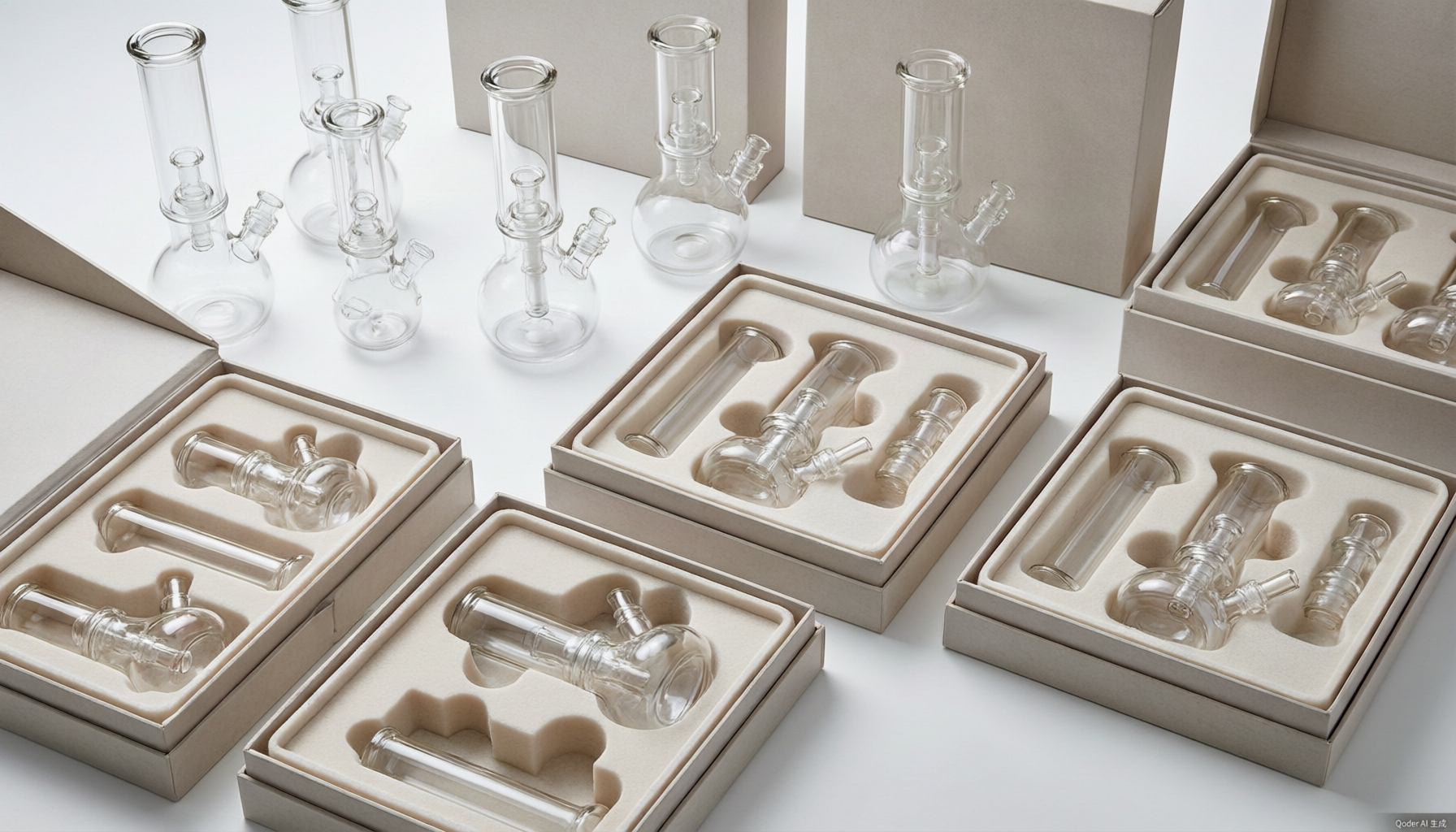
Pick up a cobalt-blue glass pipe and a selenium-red glass pipe side by side. They look like different materials entirely — one cool and deep, the other warm and vivid. Yet both owe their appearance to the same process: Glass coloring and color marking. The chemistry of glass color is not decoration. It is materials science, and understanding it changes how you evaluate every colored pipe your factory quotes.
In wholesale sourcing, color is rarely just an aesthetic choice. It affects price, lead time, minimum order quantity, and even regulatory compliance in some markets. A buyer who understands why a cobalt pipe costs more than a clear one — and why the price gap is not arbitrary — negotiates from a fundamentally different position. This article walks through the metal oxides behind every major glass pipe color, the manufacturing variables that shift shade from batch to batch, and the procurement questions you should be asking your supplier before you place a color order.
The Metal Oxide Palette: Which Element Makes Which Color
Glass in its purest form is colorless — silica sand, soda ash, and limestone melted together produce a transparent sheet. Every color you see in a finished glass pipe comes from an additive, almost always a transition-metal oxide mixed into the batch before melting. The table below maps the most common colorants used in borosilicate glass pipe manufacturing:
| Color | Primary Oxide | Typical Loading (% of batch) | Notes |
|---|---|---|---|
| Cobalt blue | CoO / Co₃O₄ | 0.02 – 0.5% | Extremely strong tinting; even 0.02% produces visible blue |
| Cranberry / ruby red | Gold chloride (AuCl₃) | 0.001 – 0.01% | Gold nanoparticles in glass matrix; most expensive colorant |
| Amber / brown | Fe₂O₃ + C (carbon) | 0.5 – 2.0% | Iron + carbon creates amber; iron alone creates green |
| Green | Fe₂O₃ / Cr₂O₃ | 0.1 – 1.0% | Iron gives bottle green; chromium gives emerald green |
| Purple / violet | MnO₂ | 0.1 – 0.5% | Manganese dioxide; also used to decolorize green glass |
| Turquoise / aqua | CuO | 0.1 – 0.5% | Copper oxide; shade shifts toward blue in oxidation furnace |
| Yellow / orange | AgCl / CdS | 0.01 – 0.1% | Silver stains produce yellow; cadmium sulfide produces deep orange |
| Black | Fe₂O₃ + CoO + MnO₂ | Combined 1-3% | Three-oxide blend; not a single pigment |
| Opal / white | SnO₂ / Na₄SiF₆ | 2 – 8% | Opacifier particles scatter light; not truly white but opaque |
Two facts from this table matter for B2B buyers. First, the loading percentages vary by orders of magnitude — cobalt tints at 0.02% while amber requires up to 2%. That means the raw-material cost per kilogram of colored glass differs dramatically between colors, and your supplier’s pricing should reflect that. Second, some colorants are dramatically more expensive per kilogram than others. Gold chloride for cranberry red can cost 100x more per gram than iron oxide for green. When a factory quotes you a 30% price premium for red pipes over clear, the gold content is the reason.
Why the Same Recipe Can Produce Two Different Shades
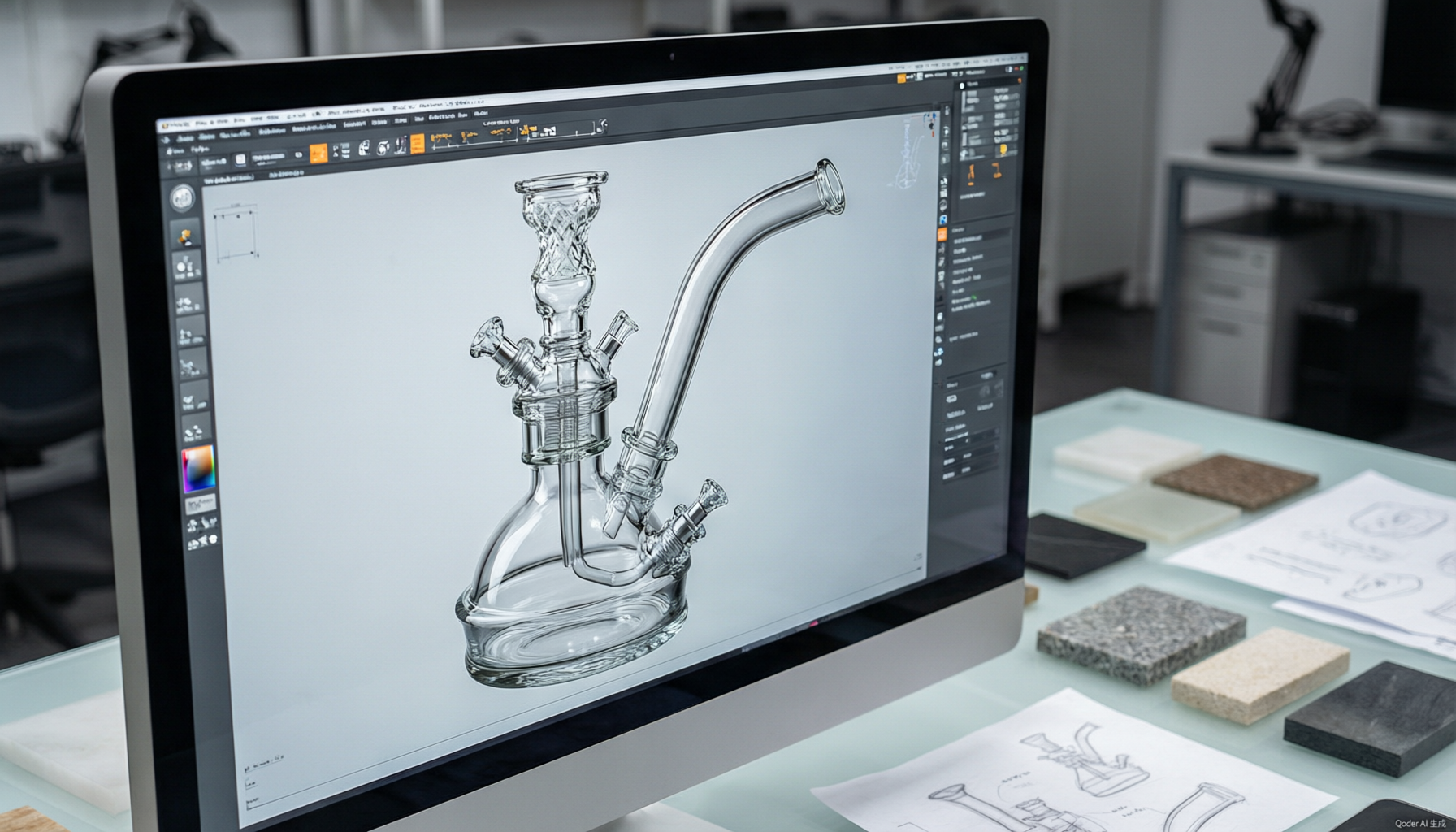
If color were simply a matter of adding the right oxide, every cobalt-blue pipe from the same factory would look identical. In practice, they do not. Three manufacturing variables shift the final shade, and buyers who have received “off-color” production runs know this acutely.
Furnace Atmosphere
The ratio of oxygen to fuel in the furnace changes the oxidation state of metal ions. Copper oxide in an oxidizing atmosphere produces turquoise Cu⁸ᾏ; in a reducing atmosphere it can produce metallic copper nanoparticles that give a completely different red. This is why factories that run both clear and colored glass in the same furnace without atmosphere control will see shade variation. When your supplier quotes colored pipes, ask whether they run dedicated color campaigns or mix colors in the same melt.
Batch Weight Tolerance
A 500-kg batch of glass with a 0.02% cobalt loading means 100 grams of CoO. If the batch weigher is off by 20 grams — well within typical manual batching tolerance — the resulting blue will be noticeably lighter or darker. Automated batching systems hold ±0.5% tolerance; manual systems can drift to ±3%. For repeat orders where color matching matters (brand-specific Pantone colors, for example), automated batching is not a luxury — it is a requirement.
Annealing Temperature and Time
After forming, glass pipes pass through an annealing lehr at 500-560 degrees Celsius to relieve internal stress. Some metal oxides, particularly selenium reds and silver stains, continue to develop color at annealing temperatures. Extending the lehr dwell time by 15 minutes can shift a pink-red toward a deeper cranberry. If your supplier changes annealing parameters — say, to increase throughput — expect color drift in the next shipment.
Color and Material Compatibility: Not All Colors Work in Borosilicate
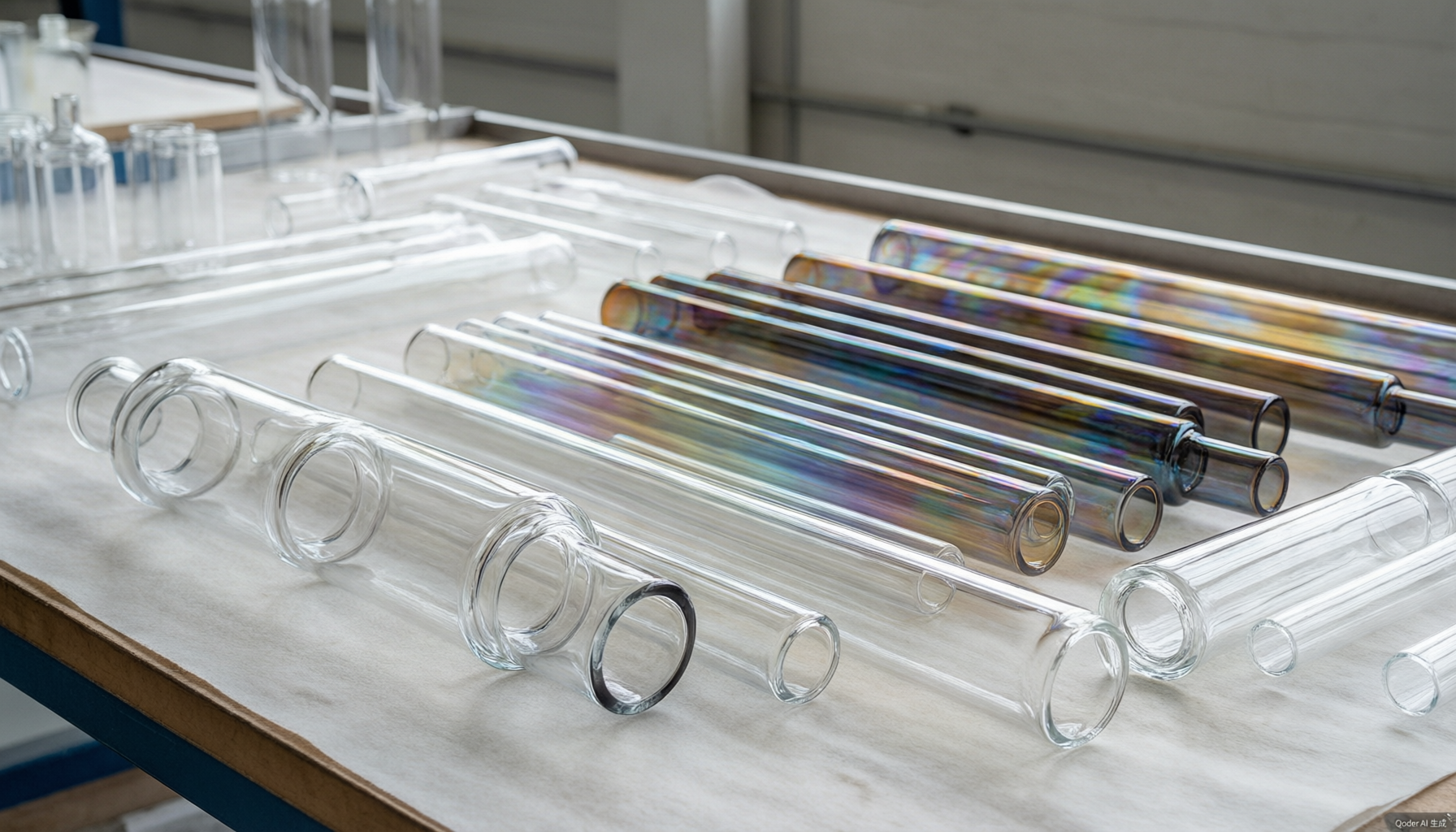
borosilicate glass, valued for its thermal shock resistance. But borosilicate glass has a narrower working range and different chemical compatibility than soda-lime glass, which constrains which colorants can be used effectively.
Cadmium sulfide, for instance, produces a brilliant orange in soda-lime glass but degrades at the higher melting temperatures required for borosilicate (1,650 degrees Celsius vs 1,500 degrees Celsius). Some factories will offer you a “custom orange” in boro that is actually a cadmium-selenium blend modified for high-temperature stability — it works, but the color is slightly more muted and the cost is higher. If a supplier quotes an unusually bright orange for borosilicate pipes, ask for the specific colorant system; it may be a lower-temperature soft glass that compromises the boro advantage.
Similarly, gold-based cranberry red was originally developed for soda-lime (Schlierbach, 1680s) and only adapted to borosilicate in the 20th century. The borosilicate version requires tighter pH control in the batch, which adds cost. This is why cranberry-red boro pipes consistently carry the highest color premium in any factory’s catalog.
UV Stability: Which Colors Fade and Which Do Not
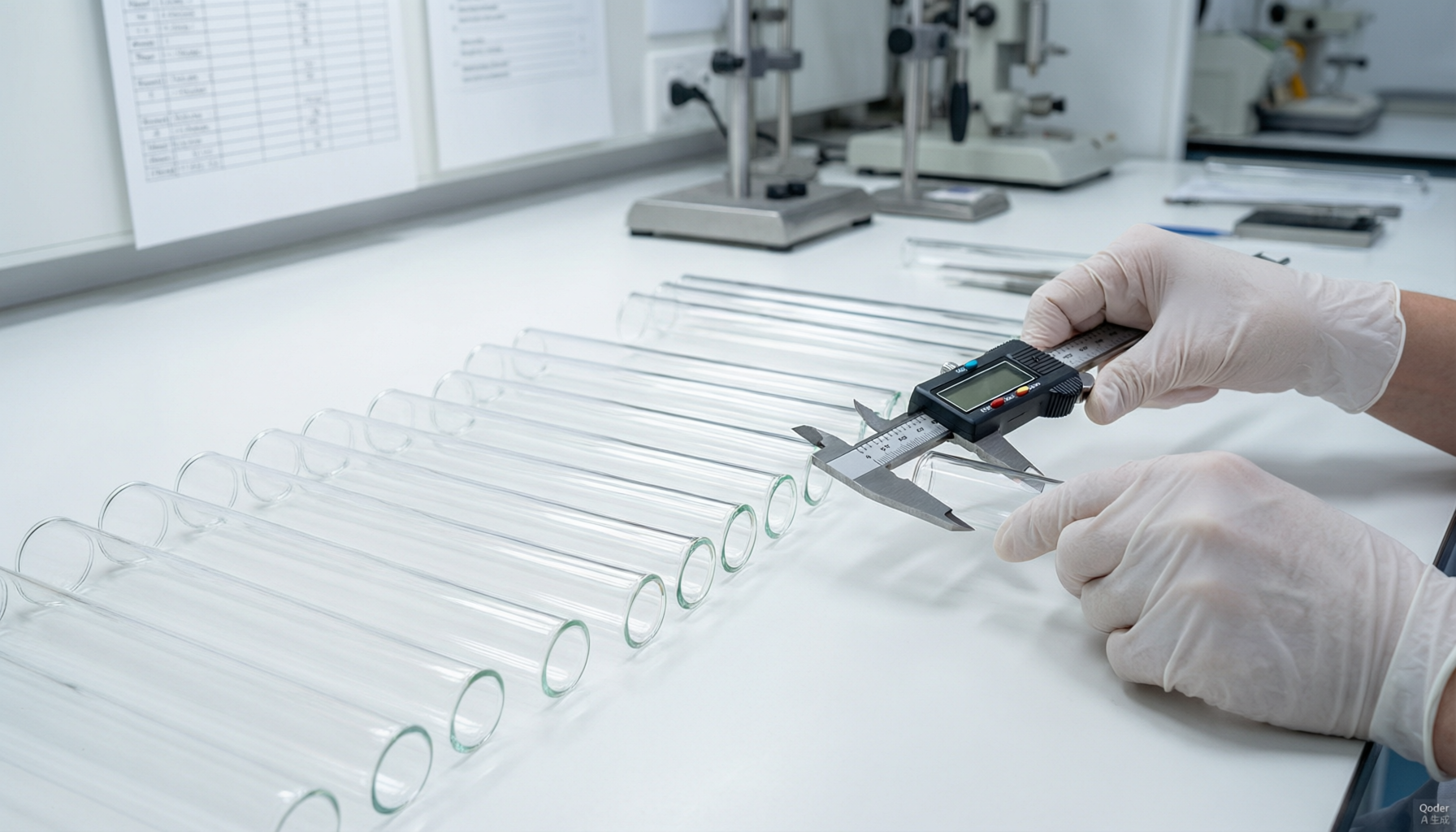
Not all colored glass is equally stable under ultraviolet light. For retail display — where pipes sit in lit showcases for months — this matters. The table below ranks common pipe colors by UV resistance:
| Color | UV Stability | Mechanism |
|---|---|---|
| Cobalt blue | Excellent | Co⁸ᾏ in tetrahedral sites is extremely stable |
| Green (iron) | Excellent | Fe⁶ᾏ / Fe⁷ᾏ stable in glass matrix |
| Amber | Very good | Colloidal iron-sulfur stable but can darken slightly |
| Purple (manganese) | Moderate | Mn⁷ᾏ can oxidize to Mn⁸ᾏ under prolonged UV → brown shift |
| Turquoise (copper) | Moderate | Cuᾎ can reduce to Cuᾏ in certain glass compositions |
| Cranberry red (gold) | Good | Gold nanoparticles stable but can aggregate → darken |
| Silver stain yellow | Poor to moderate | Ag nanoparticles migrate under UV → fade to gray |
For buyers stocking retail displays, cobalt blue and iron green are the safest choices for long-term color retention. Purple and turquoise pipes should be displayed away from direct UV sources or rotated regularly. If a retailer complains that purple pipes “turned brown on the shelf,” the cause is manganese oxidation — and the fix is either switching to a more stable violet colorant system (vanadium-doped zircon, which is expensive but UV-proof) or improving display lighting.
Custom Colors, Matched to Your Spec
Elfglass formulates metal-oxide colors in-house and matches your Pantone or reference sample before bulk production. Tell us the shade you need and we will send a color proof with your quote.
MOQ from 100 pieces | BSCI / WRAP / ISO 9001 | NDA before every project
How to Specify Color in a Purchase Order
The single most common cause of color disputes in glass pipe wholesale is vague specification. “Make it blue” is not a purchase-order-ready instruction. Here is what a color specification should include:
| Field | Example | Why It Matters |
|---|---|---|
| Color name | “Cobalt blue” | Common language reference |
| Pantone reference | “Closest to Pantone 2935 C” | Objective visual target |
| Colorant system | “CoO-based” | Ensures UV stability and cost alignment |
| Approved sample reference | “Match sample #A-2026-037” | Physical reference for production matching |
| Delta-E tolerance | “ΔE ≤ 2.0 vs approved sample” | Quantifiable acceptance criterion |
| Light source for comparison | “D65 illuminant” | Color looks different under different light |
Factories that work with experienced buyers expect this level of detail. If your current supplier pushes back on color specifications — saying “we know how to make blue” — that is a signal that they have not managed color-critical production before. It does not mean they cannot do it; it means you should invest in the specification upfront to avoid disputes later.
Cost Implications: What Each Color Adds to Your Landed Cost
Color is not free. Every colored glass pipe costs more to produce than a clear one, and the premium varies by color. Based on typical factory pricing structures for borosilicate hand pipes (illustrative, based on industry patterns — actual quotes vary by factory and order volume):
| Color Family | Typical Premium vs Clear | Primary Cost Driver |
|---|---|---|
| Blue (cobalt) | +10 – 20% | CoO price (~$30-50/kg) |
| Green (iron) | +5 – 10% | Fe₂O₃ is cheap; cost is in the dedicated melt campaign |
| Amber | +5 – 15% | Carbon control adds process complexity |
| Purple (manganese) | +10 – 15% | MnO₂ moderate cost + tighter batch tolerance |
| Turquoise (copper) | +10 – 20% | CuO moderate cost + atmosphere sensitivity |
| Cranberry red (gold) | +40 – 80% | AuCl₃ at $50,000+/kg |
| Yellow (silver stain) | +15 – 25% | AgCl price + secondary firing step |
| Black | +15 – 25% | Three-oxide blend + opacity control |
| Opal white | +10 – 20% | High loading of opacifier affects glass viscosity |
These premiums are before any MOQ surcharge. Many factories require a 500-piece MOQ for colored runs because they need to commit a full furnace campaign to one color. If you only need 100 colored pipes, expect an additional small-batch surcharge of 20-40% on top of the color premium.
For related reading, see our glass pipe joint types and sizes for a detailed breakdown.
For related reading, see our glass pipe surface finishes for a detailed breakdown.
Learn more about our full glass pipe product catalog.
Learn more about contact Elfglass for a color sample quote.
Ready to Start Your Custom Glass Pipe Project?
Get a free quote within 24 hours. MOQ from 100 pieces. NDA-protected design consultation.
About the Author
Ava Zeng has spent over 16 years in glass manufacturing at Elfglass, managing production lines, color formulation, and international B2B partnerships. She writes from the factory floor in China, combining materials-science knowledge with hands-on procurement experience.
Frequently Asked Questions
What is the most expensive color for glass pipes?
Cranberry red, made with gold chloride, is the most expensive due to the cost of gold as a raw material. A cranberry-red borosilicate pipe can cost 40-80% more than an identical clear pipe.
Does colored glass pipe fade in sunlight?
Some colors are more UV-stable than others. Cobalt blue and iron green are extremely stable. Purple (manganese) and turquoise (copper) can shift color under prolonged UV exposure. For retail display, choose blue or green for maximum longevity.
Can any glass pipe color be made in borosilicate glass?
Most colors can be adapted to borosilicate, but some require modified formulations. Cadmium-based oranges degrade at borosilicate melting temperatures, and gold-based reds need tighter pH control. Always confirm with your supplier that the color is formulated for boro, not soft glass.
How do I specify a custom color for my glass pipe order?
Provide a Pantone reference, an approved physical sample, the colorant oxide system, a delta-E tolerance (typically ΔE ≤ 2.0), and the light source for visual comparison (D65 is standard). This prevents the most common color disputes in wholesale production.
Why does the same color look different between production batches?
Three variables cause batch-to-batch shade variation: furnace atmosphere (oxygen ratio), batch weight tolerance (how precisely the oxide is weighed), and annealing parameters (temperature and dwell time). Ask your supplier whether they use automated batching and dedicated color campaigns.
