

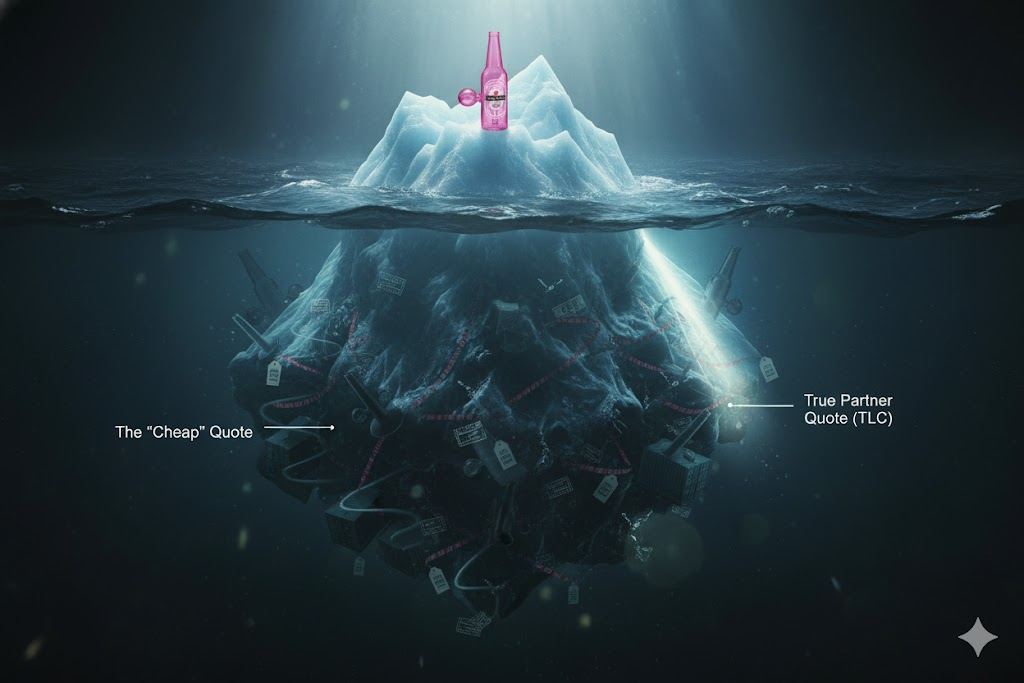
If you have ever received two quotes for seemingly identical glass pipes and wondered why one is 40% higher than the other, you already know that pricing in this industry is rarely straightforward. But understanding what actually goes into the unit cost of a wholesale glass pipe does more than satisfy your curiosity—it gives you negotiating leverage, helps you evaluate suppliers on substance rather than sticker shock, and protects you from quotes that look too good to be true because they are.
Every wholesale glass pipe price reflects a stack of cost decisions: the grade of raw material, the hours a skilled artisan spends on each piece, the amortized cost of molds, the complexity of the design, and the logistics of getting a fragile product across an ocean intact. This guide breaks down each layer. Whether you are sourcing your first wholesale order or optimizing your tenth, knowing where the money goes changes how you read a quote.
Raw Material Costs: The Foundation of Every Quote
At the base of every wholesale glass pipe price is the glass itself—and not all glass is created equal. Quality borosilicate glass costs more than standard soda-lime glass for a reason: it withstands higher temperatures, resists thermal shock, and lasts longer in the hands of end users. That material premium shows up directly in your unit cost.
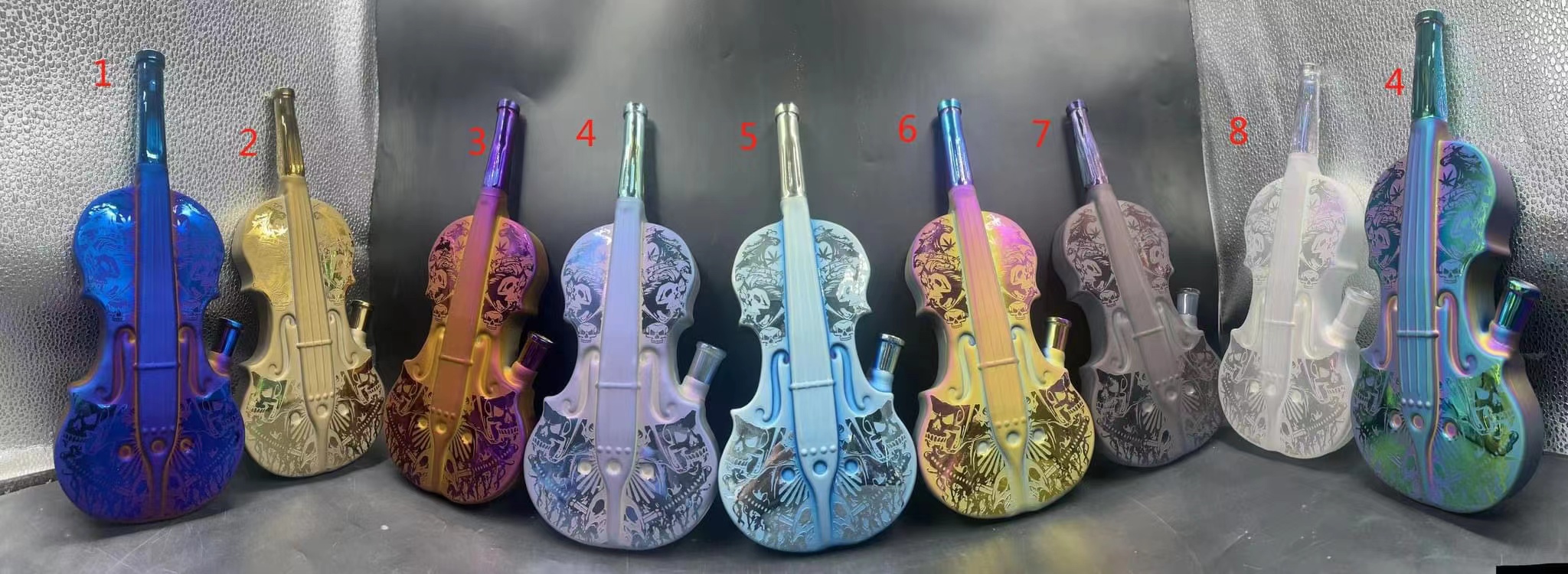
Borosilicate glass prices fluctuate with global supply conditions and the quality grade your manufacturer sources. Higher-grade glass has fewer impurities, which means fewer defects during the blowing process and a lower rejection rate at quality control. The glass itself might represent a moderate share of total cost, but its quality influences everything downstream—labor efficiency, defect rates, and ultimately the return rate you face from customers.
Here is what matters for your budget: when a supplier quotes you a low unit price, the first place they may have cut costs is raw material. Ask what grade of borosilicate they use. A transparent manufacturer will tell you. If the conversation stops at “it is glass,” you have your answer about what else might be getting shortchanged.
Labor and Skill Factor: Why Hand-Blown Commands a Premium
Glass pipe manufacturing is not an automated process. Each piece is hand-blown by an artisan who has spent years developing the muscle memory and judgment needed to shape heated borosilicate glass into a consistent, durable product. That human element is the single largest cost component in most wholesale glass pipe quotes, and it is the factor most resistant to shortcuts.
Consider what goes into a single production day. The artisan heats glass rods to precise temperatures, shapes the piece by hand using breath and gravity, and carefully controls the cooling process. Rush the annealing—the controlled cooling that relieves internal stress—and you get glass that looks fine on day one but develops cracks weeks later. This is where the cheapest quotes become the most expensive orders.
At Elfglass, a team of 20 employees works across a 1,000-square-meter facility in Shenzhen, producing up to 10,000 pieces per month. That capacity reflects years of process optimization, but it also reflects a deliberate choice: maintain quality through skilled hands rather than chase volume through automation. Labor costs vary by region and artisan skill level, which is one reason manufacturing hubs like Shenzhen—with decades of glass-working talent—offer a quality-to-cost ratio that newer production centers struggle to match.
When you compare quotes, the labor line item is where the biggest differences hide. A lower price often means less experienced artisans, faster production pace, or skipped steps like proper annealing. None of those savings survive contact with your customers.
Mold and Tooling Amortization: The Hidden Fixed Cost
Every glass pipe design requires molds and specialized tools. These are fixed costs—they do not change whether you order 100 pieces or 10,000. What changes is how that cost gets distributed across your units, and understanding this mechanism is key to reading any wholesale quote intelligently.
For standard designs, molds already exist and the tooling cost may be zero or negligible in your quote. Custom designs require new molds, which means an upfront charge that gets amortized across the order. A 500-piece order spreads that cost five times more efficiently than a 100-piece order. This is one reason manufacturers encourage larger quantities: the per-unit mold cost drops as volume rises, sometimes dramatically.
If you are ordering a design that the manufacturer already produces, you benefit from existing tooling. The mold cost is either baked into the unit price or absorbed by the factory. Custom work is different—expect a separate line item for mold creation. The good news is that sampling typically takes just 1 to 3 days, so you can validate a custom design before committing to a full production run of 7 to 12 days.
Design Complexity: Percolators, Color Work, and Fuming
Design complexity is where unit costs diverge most dramatically. A simple hand pipe and an elaborate multi-percolator water pipe may use similar raw materials, but the labor time, skill requirement, and defect risk are entirely different. Every additional feature adds cost, and these costs compound when features combine.

Percolators add significant labor time. Each perc must be precisely shaped and fused to the main body. A simple diffused downstem perc is one thing; a multi-stage setup with honeycomb and showerhead percs is another entirely. Color work introduces both material cost (metallic salts and glass frits are not cheap) and labor cost, since applying color evenly by hand requires steady technique. Fuming—using metallic fumes to create reactive color effects—adds another layer of skill and material expense.
This is why wholesale water pipes with complex perc systems cost more than basic beaker bongs, and why wholesale hand pipes with fuming work sit at a different price tier than plain glass spoons. You are paying for the artisan’s time on each individual piece, and complex designs simply take longer to execute correctly.
Understanding this helps you make smart trade-offs. If your budget is tight, simplifying the perc design or reducing color elements can bring costs down without sacrificing the overall quality of the piece. The key is knowing which features drive cost so you can choose where to invest and where to simplify.
Order Quantity and MOQ Impact on Unit Cost
Order quantity is the lever you control most directly, and it has a measurable impact on per-unit cost. The relationship is straightforward: larger orders mean lower unit prices, because fixed costs get spread across more pieces.
Every production run carries setup costs regardless of batch size. Mold preparation, quality control setup, production line configuration, and order documentation all require time that does not scale with quantity. When you order 100 pieces—the standard MOQ at most manufacturers including Elfglass—those fixed costs are distributed across 100 units. At 500 or 1,000 pieces, the per-unit share shrinks considerably.
This is exactly why MOQs exist. Producing 50 pieces of a custom design is inefficient: the setup time per unit is high, the production run is short enough that quality consistency becomes harder to maintain, and the factory spends the same administrative effort on a small order as a large one. If you are exploring what MOQ means for your sourcing strategy, the wholesale water pipes MOQ guide breaks down the numbers in detail.
The practical takeaway: consolidating your order into fewer designs with higher quantities per SKU reduces per-unit cost. If you are choosing between five designs at 100 pieces each or two designs at 250 pieces each, the second option carries meaningfully lower unit costs. Plan your product line with this math in mind.
Packaging and Branding Costs
Packaging is easy to overlook until it becomes a problem. It serves three functions simultaneously: protecting fragile glass during transit, presenting your brand to the end customer, and meeting retail compliance requirements. Each function adds cost, and the choices you make here ripple through your total landed cost.
Standard packaging for wholesale glass pipes includes individual boxes with foam or cardboard inserts to prevent contact damage. Custom packaging—branded boxes, printed inserts, shrink wrap with your logo—adds per-unit cost but also adds perceived value. The trade-off is real. At a $15 unit price point, packaging might represent a meaningful percentage. At a $60 retail piece, it is a small investment in brand presentation.
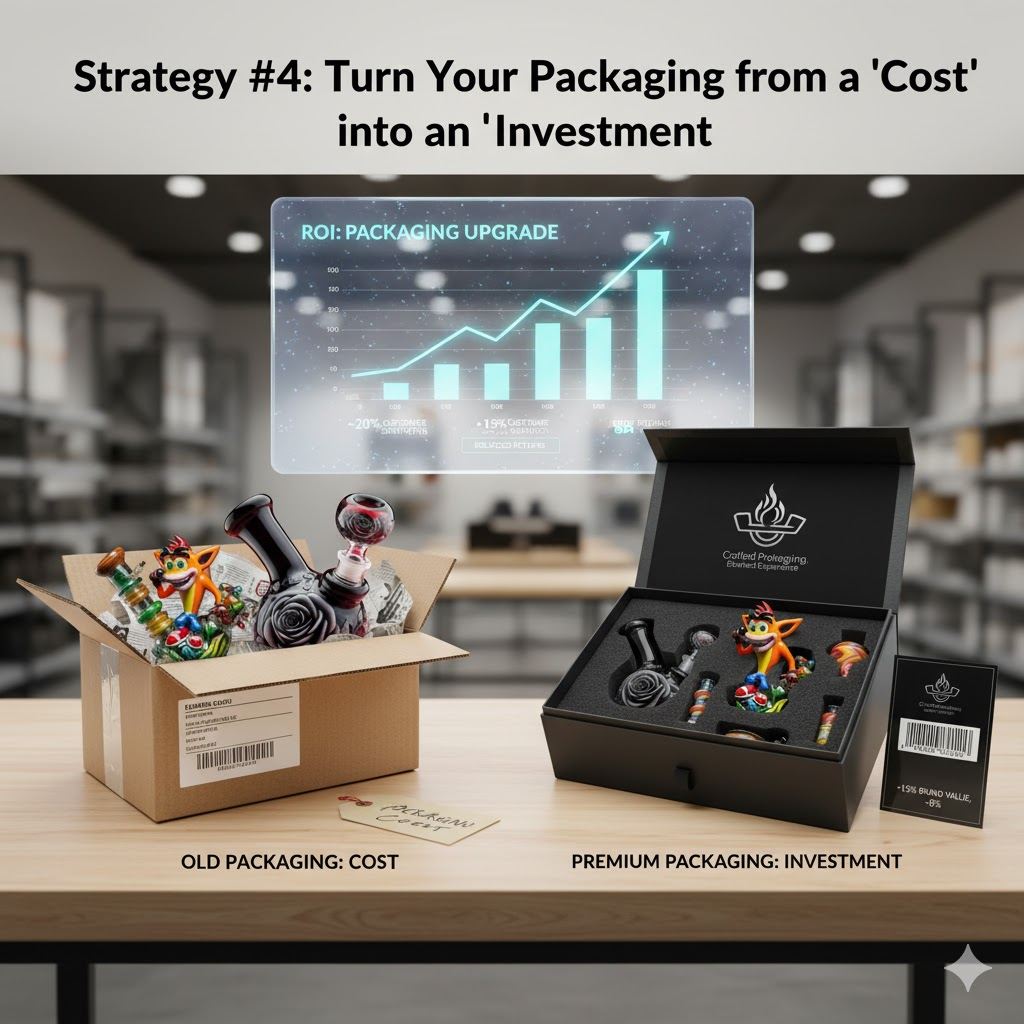
Here is the part most buyers miss: skimping on packaging to reduce unit cost often backfires. Inadequate packaging increases breakage rates during shipping, which means replacement costs, delayed deliveries, and frustrated customers. The packaging cost you save is almost always less than the breakage cost you incur. A well-designed packaging solution reduces total cost by reducing damage, even if it adds to the per-unit shipping weight.
Shipping Weight and Breakage Insurance
Glass is heavy. Glass is fragile. Both facts affect your cost structure in ways that go beyond the simple freight invoice.
Shipping cost is calculated by weight or dimensional weight, whichever is greater. Glass pipes are dense, and protective packaging adds to that weight. Every gram of packaging material is a gram you pay to move across an ocean. This creates a natural tension: more packaging means better protection but higher per-unit shipping cost. Finding the right balance is part of the sourcing optimization that determines your real landed cost.
Insurance is non-negotiable for fragile goods. Most cargo insurance policies for glass products cost a small percentage of the declared value, but that percentage adds up across a large order. The alternative—self-insuring by absorbing breakage losses—is a gamble that rarely pays off. Proper packaging reduces breakage rates, which reduces insurance claims, which keeps your effective cost predictable.
For a complete picture of what your pipes actually cost once they reach your warehouse, the cost of importing water pipes from China guide walks through the full landed cost calculation. The unit price from your supplier is just the starting point.
Decoding a Wholesale Glass Pipe Quote?
Elfglass itemizes every quote—borosilicate grade, hand-blowing labor, tooling amortization and packaging—so you see exactly what you pay for with no hidden corner cuts. Send your target spec and get a quote within 12 hours.
MOQ from 100 pieces | BSCI / WRAP / ISO 9001 | NDA before every project
How to Read a Wholesale Glass Pipe Quote
Armed with the cost framework above, you can now read a quote the way an experienced buyer does. A well-structured quote breaks down costs into identifiable components: unit price, tooling or mold charges (if applicable), packaging cost per unit, and shipping terms. This transparency lets you compare apples to apples across suppliers and understand exactly what you are paying for.
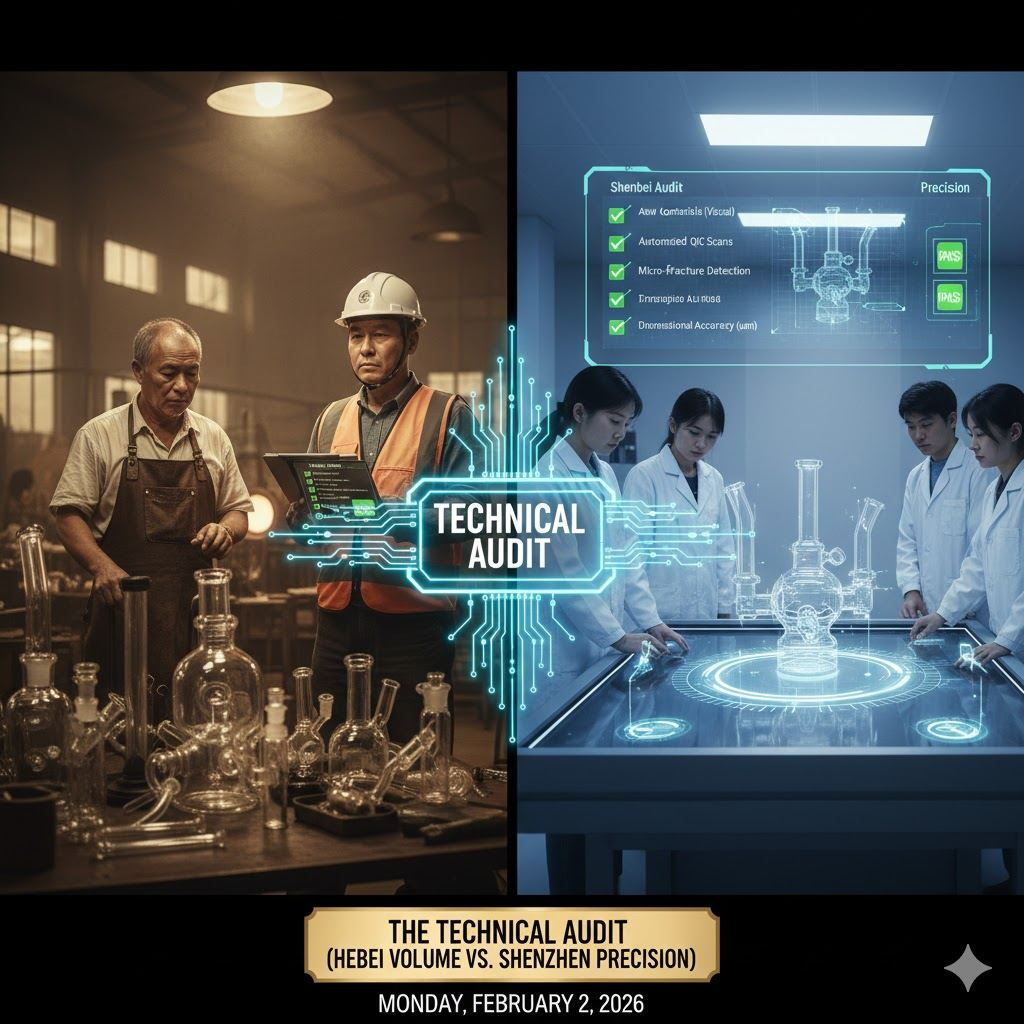
Watch for three red flags. First, a price dramatically below market average. This usually means one of three things: inferior raw material, skipped production steps like annealing, or a bait-and-switch where the initial quote is low but the final invoice includes surprise surcharges. Second, a quote that bundles everything into a single “unit price” with no breakdown. Without itemization, you cannot tell where costs are reasonable and where they are padded. Third, a supplier who gives you a price without asking detailed questions about your specifications. A manufacturer who does not need to understand your design, quantity, packaging, and timeline is not calculating a real cost—they are guessing.
If you are evaluating multiple suppliers, the red flags guide for sourcing wholesale water pipes covers additional warning signs beyond pricing. The best approach is to request itemized quotes from multiple manufacturers, compare the structure of each line item, and ask questions about anything that seems unclear. At Elfglass, quotes are provided within 12 hours with full cost breakdowns. If you want to discuss your project, reach out through the contact page—an NDA is signed before any project begins, so your designs stay protected.
Understanding cost structure is not about squeezing every penny from your supplier. It is about knowing what you are paying for, making informed trade-offs, and building a sourcing relationship where both sides understand the value being exchanged. The cheapest quote is rarely the best deal. The most transparent quote usually is.
The breakdown below reflects general manufacturing economics, illustrated with Elfglass’s 100-piece MOQ as the anchor point. Actual percentages shift with design complexity, order volume, and supplier cost structure—treat it as a framework for reading quotes, not a fixed formula.
| Cost Component | Typical Share of Unit Price | Key Variables |
|---|---|---|
| Raw Material (Borosilicate Glass) | 15–25% | Glass grade, wall thickness, market price fluctuations |
| Labor (Hand-Blowing, Annealing, QC) | 25–35% | Artisan skill level, production time per piece, region |
| Mold & Tooling (Amortized) | 5–10% | Custom vs. standard design, order quantity |
| Design Complexity Surcharge | 10–20% | Percolators, color work, fuming, multi-piece assemblies |
| Packaging & Branding | 5–10% | Custom boxes, foam inserts, branded printing |
| Overhead & Margin | 10–15% | Factory operations, certifications, business sustainability |
Note: This table presents a general industry framework for understanding cost allocation. Actual percentages vary by design complexity, order quantity, and supplier cost structure. Specific figures should be confirmed through direct quotation.
Frequently Asked Questions
What factors affect the wholesale price of glass pipes?
Seven primary factors drive wholesale glass pipe pricing: raw material costs (borosilicate glass grade and market price), labor intensity (hand-blown production requires skilled artisans), mold and tooling amortization, design complexity (percolators, color work, fuming), order quantity relative to MOQ, packaging specifications, and shipping weight plus breakage insurance. Each factor scales differently depending on the product and order size.
Why are hand-blown glass pipes more expensive than machine-made ones?
Hand-blown glass pipes require skilled artisans who have trained for years. Each piece is individually shaped, annealed, and inspected. A single artisan produces a limited number of pieces per day. Machine-made or mass-produced alternatives may cut costs, but they often sacrifice durability, consistency, and the craftsmanship that reduces long-term defect rates.
How does order quantity affect the per-unit cost of wholesale glass pipes?
Larger orders reduce per-unit cost because fixed costs like mold setup, quality control preparation, and production planning are distributed across more units. Most manufacturers set a MOQ of 100 pieces per design. Below that threshold, per-unit costs rise because setup time is amortized over fewer pieces and production changeovers become inefficient.
What red flags should I watch for when comparing wholesale glass pipe quotes?
Watch for three red flags: prices significantly below market average (suggesting corner-cutting on materials or skipped steps like annealing), quotes that bundle everything into a single line item without breakdown (hiding cost structure), and suppliers who provide a price without asking detailed specification questions. A trustworthy supplier always provides itemized quotes and is willing to share certifications and samples.
What is the typical landed cost markup beyond unit price for imported glass pipes?
Beyond the factory unit price, total landed cost includes international freight, import duties and tariffs, cargo insurance, customs brokerage fees, and inland transportation to your warehouse. Depending on destination country and order volume, these additional costs can add 15–40% to the base unit price. Always calculate landed cost before comparing supplier quotes.
Ready to Start Your Custom Glass Pipe Project?
Get a free quote within 24 hours. MOQ from 100 pieces. NDA-protected design consultation.
About the Author
Ava Zeng is the founder of Elfglass, a Shenzhen-based borosilicate glass pipe manufacturer serving B2B brands worldwide. Every guide on this site is grounded in her production-floor experience— the annealing lines, QC checkpoints, and export orders behind each claim.
Before you commit to a supplier, read her founder’s story and trust promise, and the guide to vetting a reliable glass pipe manufacturer— the same red-flag checklist Elfglass applies to its own suppliers.
