
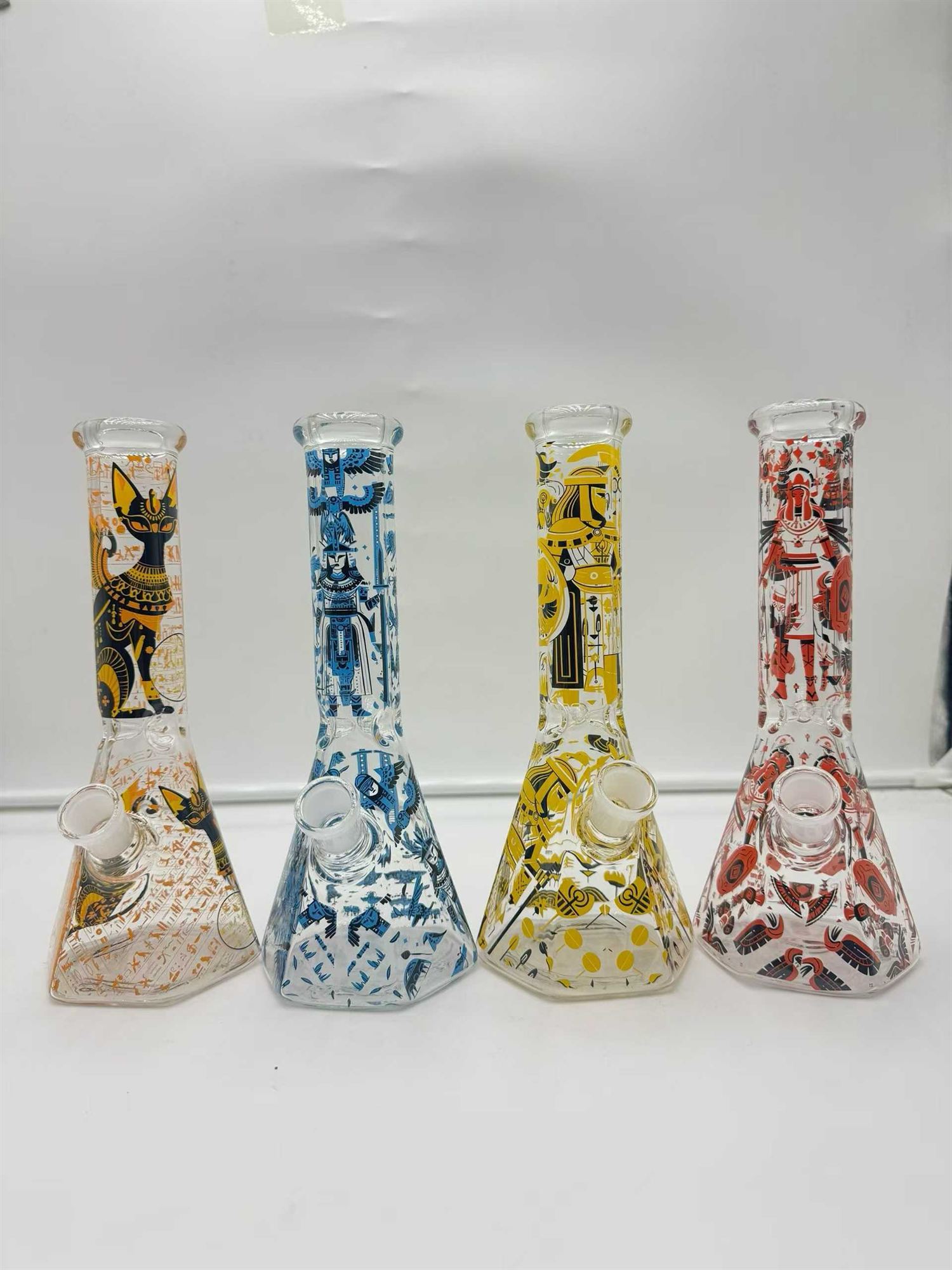
Analyzing manufacturing leverage for Startups vs. Big Brands exposes the financial risks hidden in wholesale water pipes MOQ (Minimum Order Quantity) requirements.
Misaligned procurement strategies trap startups with unmovable stock, while volume buyers often sacrifice critical drop-safety standards to cut immediate freight costs.
For B2B buyers, the wholesale water pipes MOQ is not just a number; it is a gateway to different manufacturing tiers.
This report benchmarks sourcing tiers using verified Borosilicate 3.3 production limits.
We evaluate the trade-offs between agile 50-piece restocks and the 300-unit tooling investment required to secure high-margin, custom-molded inventory.
The Economics of MOQ: Why It Exists
Before negotiating, you must understand the factory’s logic.
Why do we set a wholesale water pipes MOQ? It comes down to Kiln Economics.
-
Setup Time: Calibrating a production line for a specific glass tube diameter takes hours.
-
Kiln Efficiency: Our ASTM C336 annealing kilns run on 8-12 hour cycles. Running a kiln half-empty for a small order burns huge amounts of energy, destroying the margin.
Therefore, the MOQ is the “Break-Even Point” for the factory to turn on the machines.
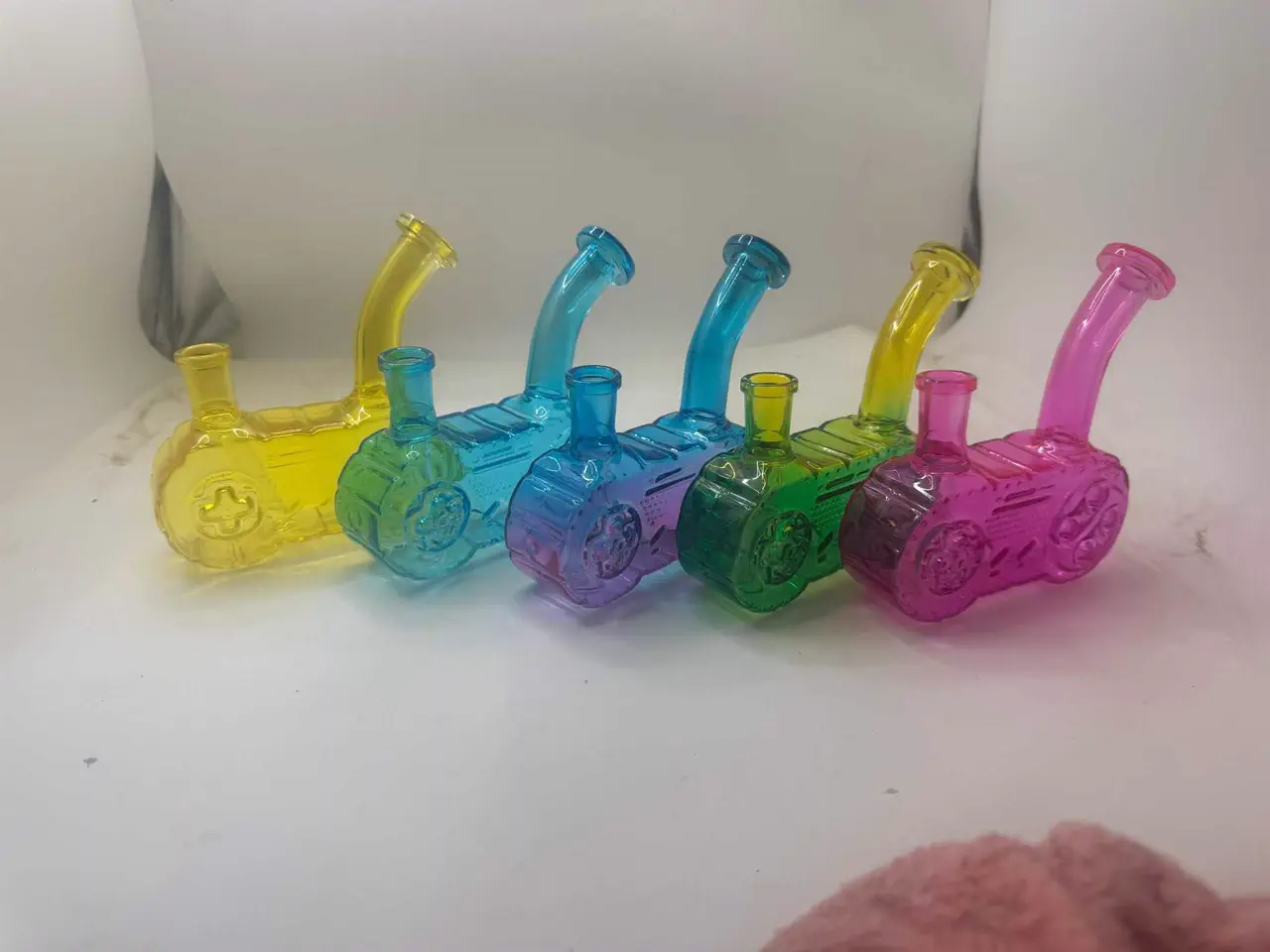
Tier 1: The Startup Strategy (Low MOQ: 50 Pcs)
For new head shops or subscription boxes, Cash Flow > Margins.
The goal is to validate the market without burying capital in a warehouse.
The “Ready-to-Ship” Approach
Startups should leverage our Low wholesale water pipes MOQ tier.
-
MOQ: 50 Pieces (Mixed colors usually allowed).
-
Product: Classic Beakers, Straight Tubes (Standard 5mm-7mm).
-
Advantage: Rapid turnover. You can test 5 different styles with a $2,000 investment.
-
The Trade-off: You are selling “Generic” shapes. To compete, you must rely on branding (Decals) rather than structural innovation.
Tier 2: The Big Brand Strategy (High MOQ: 300+ Pcs)
For established distributors, Margin > Cash Flow. The goal is differentiation and IP protection.
The “Custom Mold” Approach
Once you hit 300+ units per SKU, the wholesale water pipes MOQ unlocks new capabilities.
-
MOQ: 300-500 Pieces.
-
Product: Custom Recyclers, 9mm “Tank” Series.
-
Advantage: You own the mold. Competitors cannot copy your shape.
-
The Hidden Benefit: High volume unlocks cheaper packaging (Molded Pulp) and optimized freight (Nesting).
How MOQ Dictates Packaging Options
This is where logistics meets strategy.
Your wholesale water pipes MOQ determines your packaging options, which in turn defines your breakage rate and shipping cost.
1. Low Volume (Startup): Air Column Bags
-
Ideal MOQ: 50 – 500 pcs.
-
Why: No tooling cost. Inflates on demand.
-
Verdict: Best for startups. It guarantees the Elf-Guard safety standard without an upfront mold fee.
2. High Volume (Brand): Molded Pulp
-
Ideal MOQ: 500+ pcs.
-
Why: Requires a $500+ mold fee.
-
Verdict: The “End Game” for big brands. It nests tightly, reducing freight volume by 40% compared to foam.
Top Packaging Solutions Ranked by Safety & MOQ
We evaluated packaging types to see which fits your sourcing stage.
| Packaging Type | Drop Safety | CBM Efficiency | Ideal MOQ Tier |
| Air Column (Elf-Guard) | High (Air Cushion) | High (Deflated) | Startup (50+) |
| Molded Pulp | High (Molded Fit) | Excellent (Nests) | Big Brand (500+) |
| Styrofoam (EPS) | Medium (Brittle) | Poor (Bulky) | Legacy (Avoid) |
| Egg Crate | Medium | Medium | Accessories Only |
#1 Molded Pulp (Best Eco-Compliance)
Molded pulp is replacing Styrofoam as the standard for wholesale water pipes shipping to the EU.
-
CBM Optimization: Trays nest together, reducing “shipped air” costs by roughly 40%.
-
Constraint: Requires custom tooling investment, only viable for higher MOQs.
#2 Styrofoam (Legacy Safety)
Expanded Polystyrene (EPS) offers brute-force protection for heavy 9mm tubes.
-
The Logistics Failure: Styrofoam does not nest. You pay maximum freight rates regardless of glass density.
#3 Egg Crate (The “Cheap” Trap)
“Egg Crate” dividers use simple cardboard grids.
-
The Risk: We strictly advise against this for borosilicate glass. The lack of immobilization allows heavy bases to shift, causing stress cracks at the joint. Breakage rates often exceed 10%.
Transparent Tiered Pricing and Flexible MOQ
Elfglass publishes volume tiers, explains every cost driver, and works with first-time buyers on realistic minimums and safe payment terms. Tell us your target quantity and we will quote a tier that protects your margin.
MOQ from 100 pieces | BSCI / WRAP / ISO 9001 | NDA before every project
The Technical Baseline: Non-Negotiable Specs
Regardless of your wholesale water pipes MOQ tier, two technical standards must never change.
1. Borosilicate 3.3 Material
Never compromise on material to hit a lower MOQ.
Soft glass (soda-lime) is brittle and cannot withstand thermal shock.
We strictly use Lab-Grade Borosilicate 3.3 for all tiers.
2. ASTM C336 Annealing
A 50-piece order deserves the same safety as a 5,000-piece order.
We enforce ASTM C336 annealing cycles to remove internal stress, ensuring your inventory doesn’t self-shatter.
Case Study: Moving from Startup to Brand
How does a client transition through the wholesale water pipes MOQ tiers?
-
Phase 1 (Validation): Order 50 pcs of standard beakers with Air Column packaging. Validate sales velocity.
-
Phase 2 (Growth): Add Custom Decals (MOQ 100). Build brand recognition on the shelf.
-
Phase 3 (Dominance): Commission a Custom Shape (MOQ 300) and switch to Molded Pulp packaging. This drops per-unit Landed Cost by 20% and solidifies market dominance.
Turn Your Sketches Into Best-Selling Inventory
Bridge the gap between design and reality with 24-hour rapid modeling.
Our rigorous 3-step QC process ensures your products arrive flawless.
The MOQ Negotiation Playbook: How to Actually Move the Number
An MOQ is a break-even constraint for the factory, not a personal rule — which means it can be moved if you change the economics underneath it. Before you accept a number or walk away, work through these levers. Each one lowers the factory’s risk or cost on a small run, which is precisely what makes a lower MOQ viable for them.
- Pay the tooling upfront. A custom mold exists to be amortized across units. Cover it as a one-time fee and the per-unit MOQ drops sharply, because the factory is no longer recouping tooling from your first small batch.
- Accept stock colors and components. Custom color runs require a separate kiln setup. Choosing existing colors and standard joints lets your order share a production window with others.
- Combine SKUs to hit a mixed minimum. Many factories accept a lower per-design MOQ if the total order clears a container or dollar threshold. Bundle three designs instead of insisting on 300 of one.
- Offer a larger deposit. A higher upfront T/T reduces the factory’s cash risk on a small run and is frequently traded for a lower MOQ.
- Accept a longer lead time. Small orders slotted into a slow production window cost the factory less to run. Flexibility on timing is real currency.
- Commit to a reorder schedule. A signed intent for repeat orders turns one small batch into a relationship, which changes the math on the first one.
True Cost-per-Unit Across MOQ Tiers: A Worked Example
The tiers above describe strategy; the numbers decide it. Here is an illustrative cost-per-unit curve for a mid-complexity water pipe, showing how tooling amortization and line efficiency pull the unit cost down as quantity rises. Your exact figures vary with design and material, but the shape of the curve is universal.
| Order Qty | Tooling Treatment | Illustrative Unit Cost | What Drives It |
|---|---|---|---|
| 50 pcs | None (stock shape) | Highest per unit | Line setup spread across few pieces |
| 100 pcs | None, plus decals | Roughly 15-20% lower | Setup shared; branding added |
| 300 pcs | Custom mold amortizing | 30-40% below the 50-pc cost | Tooling begins to spread thin |
| 500 pcs | Mold amortized, molded pulp | Lowest practical | Packaging and freight efficiency kick in |
| 1,000+ pcs | Fully amortized | Marginal gains only | Labor and material now dominate |
Read the curve for the crossover. Below a few hundred pieces, paying more per unit for flexibility is the right call, because you are buying market validation rather than margin. Above it, the tooling investment pays for itself and the unit cost flattens out. The classic mistake is ordering 300 custom pieces before the design is proven — you pay tooling for a shape the market has not yet voted on.
Turn Your Sketches Into Best-Selling Inventory
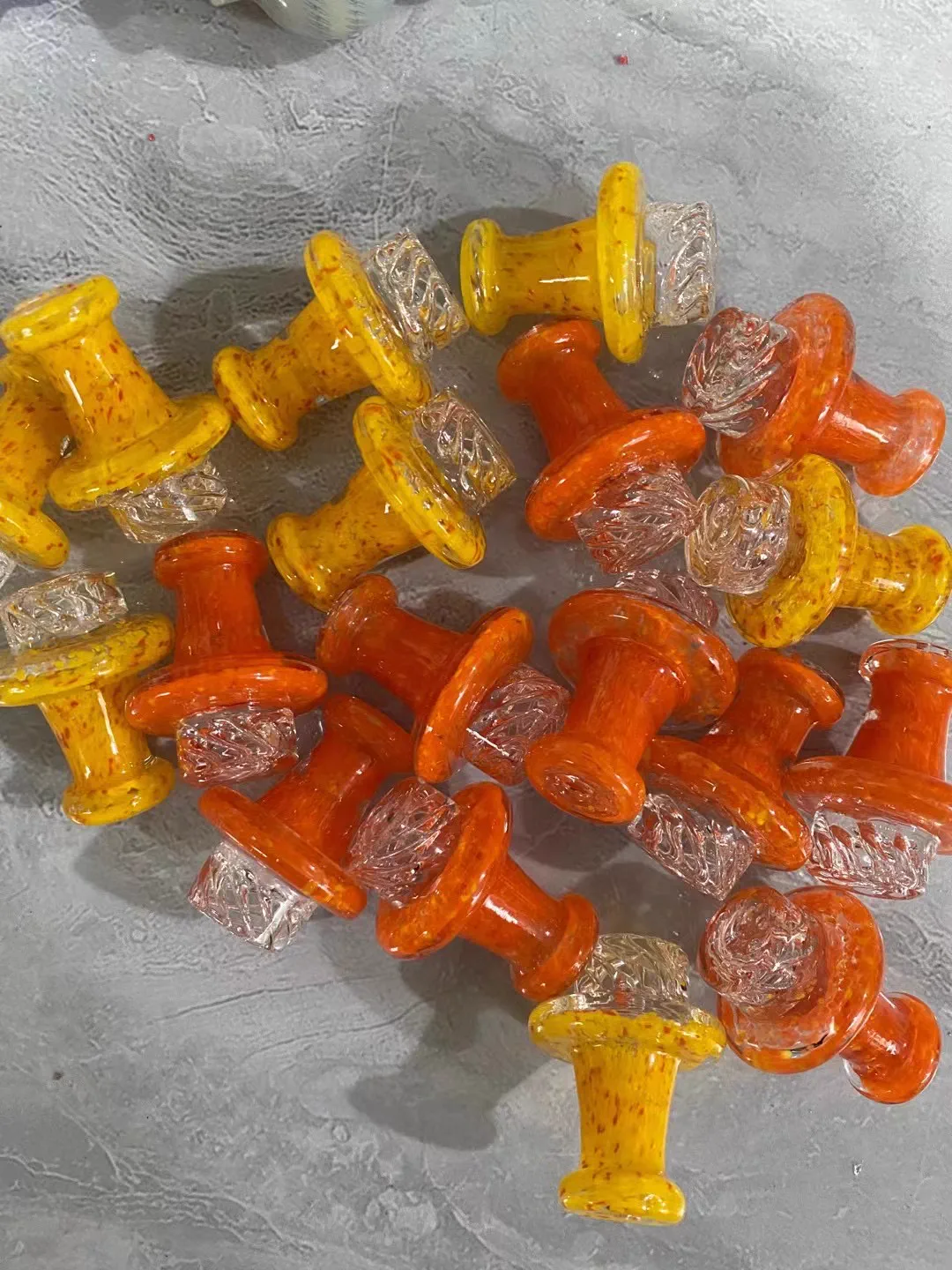
Final Thoughts on Sourcing Strategy
Opting for cheap “egg crate” dividers or ignoring wholesale water pipes MOQ economics effectively gambles your inventory.
Switching to a strategic sourcing path starting with Air Columns and scaling to Molded Pulp protects your wholesale margins.
Eliminate the guesswork in your supply chain.
Request a sample shipment of our 9mm “Tank” series to inspect our “Elf-Guard” standards and prove that our heavy-wall glass survives international transit.
Frequently Asked Questions
What are the typical MOQs for wholesale water pipes?
For standard models, our baseline is 50 pieces.
For high-end “Tank” series or custom decals, the MOQ rises to 100 pieces.
Full custom shapes requiring new molds demand 300-500 pieces to amortize tooling costs.
Why is Borosilicate 3.3 preferred over soft glass?
Soft glass is brittle and cracks under thermal shock (hot water cleaning).
We strictly use Borosilicate 3.3 (comparable to Pyrex), which offers superior chemical resistance and thermal durability.
How is breakage handled during shipping?
?We mandate “Elf-Guard” standards: every pipe is packed in an Air Column Bag inside a 5-layer carton.
If a unit arrives broken, submit a photo within 3 days for immediate credit or replacement.
What is the difference between Spot Welds and Dewar Seals?
?Low-end factories use weak spot welds.
We use Dewar Seals (Bistable Joints), adding 50% more glass to the stress point. This turns the joint into the strongest part of the pipe.
How long does custom mold production take?
Prototyping takes 7-15 days.
Mass production requires 30-45 days.
This timeline is non-negotiable for thick glass, as 9mm variants require longer kiln cycles.
Get a Quote for Your Next Order
Checking MOQ for wholesale water pipes? Send us your product spec and target quantity — contact our factory team or message us on WhatsApp, and we will reply with pricing and lead times within 24 hours.
About the Author
Ava Zeng is the founder of Elfglass, a Shenzhen-based borosilicate glass pipe manufacturer serving B2B brands worldwide. Every guide on this site is grounded in her production-floor experience— the annealing lines, QC checkpoints, and export orders behind each claim.
Before you commit to a supplier, read her founder’s story and trust promise, and the guide to vetting a reliable glass pipe manufacturer— the same red-flag checklist Elfglass applies to its own suppliers.
Ready to Source Custom Glass Pipes?
Get a free quote within 24 hours. MOQ from 100 pieces. NDA-protected design consultation.
