
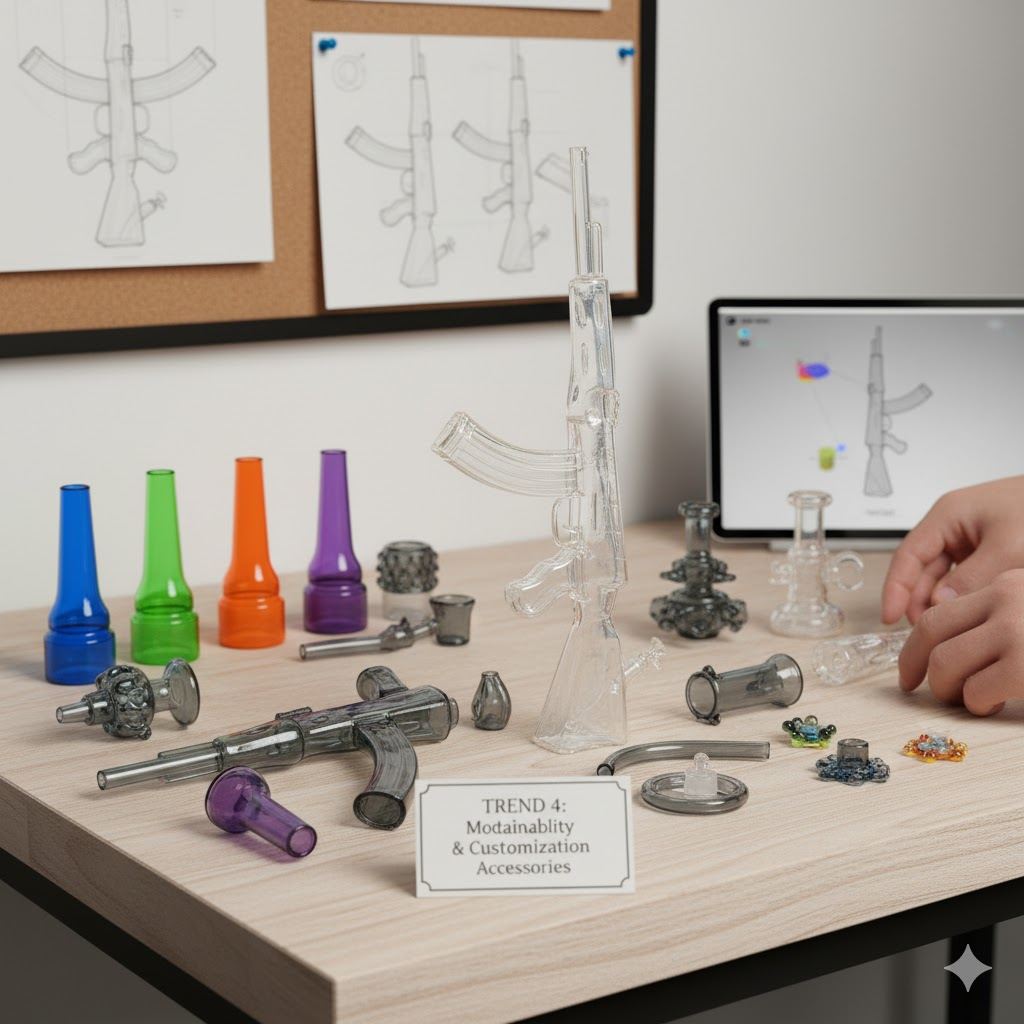
France is one of the largest smoke shop markets in the European Union, with a dense network of head shops, tobacco retailers, and online stores concentrated in Paris, Lyon, Marseille, and the tourist corridors of the Côte d’Azur. For wholesale buyers sourcing glass pipes from manufacturers outside the EU, importing into France requires compliance with both EU-wide regulations and French national rules that are sometimes stricter than the European baseline.
This guide covers the regulatory framework, customs procedures, documentation requirements, and practical considerations for importing glass pipes into France in 2026.
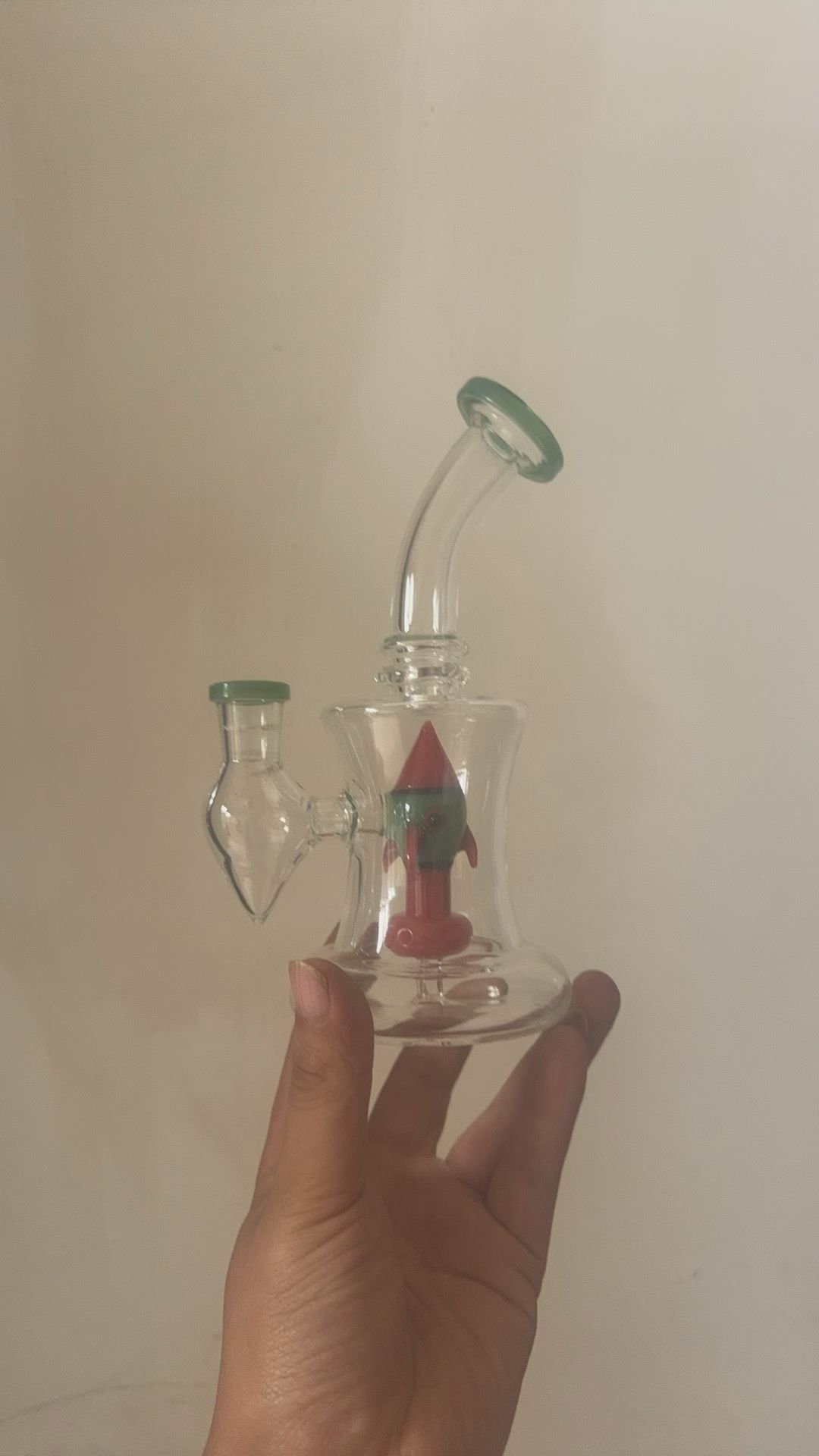
EU-Wide Regulations That Apply in France
As an EU member state, France enforces all European Union regulations on imported goods. For glass pipes, the key EU frameworks are:
REACH Compliance
The Registration, Evaluation, Authorisation and Restriction of Chemicals (REACH) regulation applies to all chemical substances used in products sold within the EU. Borosilicate glass is generally considered inert and exempt from most REACH restrictions, but any colorants, coatings, or decorative additives applied to the glass surface must comply with REACH substance lists.
Buyers should request a REACH compliance statement from the manufacturer confirming that no restricted substances (particularly lead, cadmium, or hexavalent chromium in colorants) are present above the threshold limits. For a complete overview, see the EU CE marking and REACH compliance guide.
CE Marking
Glass pipes sold as tobacco paraphernalia or decorative items do not require CE marking under current EU law. CE marking applies to products covered by specific EU directives (toys, electronics, medical devices, PPE), none of which apply to standard glass pipes. However, if a product is marketed with health-related claims or sold as a food-contact item, different rules may apply.
EU Customs Union
France is part of the EU customs union, which means a single customs duty applies across all member states. The Common External Tariff (CET) classifies glass pipes under HS code 7017 (laboratory, hygienic, or pharmaceutical glassware) or 7018 (glass beads, imitation pearls, and ornamental glass), depending on the specific product classification. The duty rate for borosilicate glass pipes is typically 0 to 6.5 percent, depending on the exact classification.
France-Specific National Regulations
Beyond EU-wide rules, France has national laws that affect glass pipe imports:
Anti-Paraphernalia Enforcement
France maintains stricter enforcement of anti-drug paraphernalia laws than some other EU countries. Under French public health code (Code de la santé publique), articles L.1333-13 and related provisions, the sale of items primarily designed for drug consumption can be restricted. Glass pipes occupy a gray area: they are legally sold as tobacco paraphernalia or collectible art pieces, but retailers must be careful about how products are marketed.
Practically, this means:
- Product descriptions and packaging should reference tobacco use or decorative purposes, not cannabis or other controlled substances
- Retailers should maintain documentation showing products are marketed as tobacco accessories or art glass
- Online stores selling into France should ensure their product descriptions comply with French marketing restrictions
French Language Labeling
France’s Toubon Law (Loi Toubon, Law 94-665) requires that all product information sold to French consumers be available in French. For imported glass pipes, this means:
- Packaging must include French-language product descriptions
- Any safety warnings or usage instructions must be in French
- Retail-facing documentation (spec sheets, care instructions) must be available in French

Manufacturers who regularly export to France should provide French-language packaging inserts or labels as part of the standard order. When discussing order requirements with the factory, specify French labeling needs upfront.
Importing Glass Pipes into France?
Elfglass supplies REACH-compliant borosilicate pieces with French-language labeling, EORI-ready export documents and full HS 7017 classification support. Send your France spec sheet and get a quote within 12 hours.
MOQ from 100 pieces | BSCI / WRAP / ISO 9001 | NDA before every project
Customs Procedures and Documentation
EORI Number
Any business importing goods into France from outside the EU must hold an EORI (Economic Operators Registration and Identification) number. This is issued by French customs (Douane française) and is required for all customs declarations. EU-based businesses apply through their national customs authority; non-EU businesses importing directly need a French EORI.
Required Import Documents
| Document | Purpose | Who Provides It |
|---|---|---|
| Commercial invoice | Declares value, quantity, and description of goods | Manufacturer/exporter |
| Packing list | Details packaging contents, weights, and dimensions | Manufacturer/exporter |
| Bill of lading / airway bill | Transport document proving shipment | Freight forwarder |
| Certificate of origin | Confirms country of manufacture (affects duty rate) | Manufacturer / chamber of commerce |
| REACH compliance statement | Confirms no restricted substances above thresholds | Manufacturer |
| Customs declaration (DAU) | Official EU customs form | Customs broker |
VAT on Import
France applies a 20 percent standard VAT rate on imported goods. The VAT is calculated on the CIF value (cost of goods + insurance + freight) plus any applicable customs duty. Importers registered for French VAT can reclaim this as input tax, but it must be paid at the point of entry before goods are released.
For buyers importing into other EU countries, see the Germany import guide for comparison, as Germany applies a 19 percent VAT rate.
Shipping to France
Several shipping options are available for glass pipe imports to France:
- Express courier (DHL, FedEx, UPS): Three to seven days from China. Best for samples and small orders. The courier handles customs clearance on behalf of the importer for a fee.
- Air freight: Seven to fourteen days. Suitable for mid-size orders (50 to 200 kg). Requires a customs broker for clearance at the French airport.
- Sea freight (LCL): Twenty-five to forty days to Le Havre or Marseille. Cost-effective for larger orders. Container consolidation shares space with other importers.
- Sea freight (FCL): Twenty to thirty-five days for a full container. Best for orders exceeding 10 CBM.
Le Havre is the primary container port for northern France; Marseille handles Mediterranean traffic. Both ports have established customs brokerage services familiar with glass product imports.
Practical Tips for French Market Entry
- Work with a French customs broker: A broker registered with Douane française handles the customs declaration, VAT payment, and product classification. This is essential for first-time importers.
- Confirm HS classification before shipping: Misclassification can result in higher duties or customs delays. A French customs broker can pre-classify products through a binding tariff information (BTI) ruling.
- Prepare French-language documentation: Have product descriptions, care instructions, and any marketing materials translated into French before the goods arrive. Retailers will expect this.
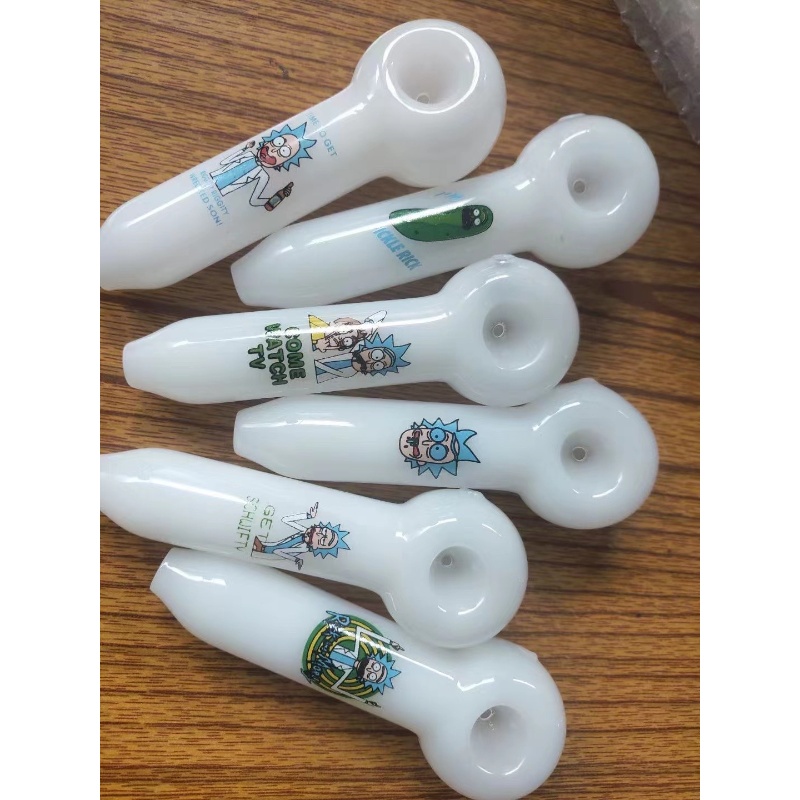
- Understand the retail landscape: French smoke shops (bureaux de tabac and specialized head shops) have distinct preferences. Water pipes and dab rigs sell well, but hand pipes and one-hitters have a narrower market due to cultural preferences. Stock accordingly.
- Source from a compliant manufacturer: Working with a factory that understands EU export requirements reduces the risk of compliance issues at customs. The wholesale water pipe catalog from a verified manufacturer includes all necessary export documentation.
The France Landed-Cost Stack
Duty and VAT are only two lines in what a French import actually costs. Buyers who quote against the FOB price alone are surprised at clearance. This table stacks every cost component in the order it is applied, using the rates already covered above — the amounts marked quote-based vary by supplier, forwarder, and broker, so treat any figure you fill in as an illustrative placeholder, not a quote.
| Cost Component | Calculated On | Typical Basis |
|---|---|---|
| Goods value | Supplier ex-works / FOB price | Quote-based — per your order |
| Freight | Mode chosen (express, air, sea LCL/FCL) | Quote-based — see shipping options above |
| Insurance | Usually a small percentage of goods value | Quote-based |
| CIF subtotal | Goods + freight + insurance | The base for duty and VAT |
| Customs duty | CIF value, by HS classification (7017 / 7018) | 0–6.5% depending on exact classification |
| Import VAT | CIF + duty | 20% standard French rate (reclaimable if VAT-registered) |
| Broker clearance fee | Per declaration, charged by the customs broker | Quote-based — flat fee |
| Inland haulage | Port/airport to your warehouse | Quote-based |
| Total landed cost | Sum of all lines above | The true figure to price your retail margin against |
French-Language Labeling Checklist (Toubon Law)
The Toubon Law requires that consumer-facing product information be available in French, but it does not hand you a list of what that covers. When you brief the factory on French labeling, specify these elements so nothing is missed at retail — and so the goods clear without a documentation query.
- Product name and description in French, worded for tobacco-paraphernalia or decorative-art use (never referencing controlled substances).
- Material composition — borosilicate glass and any colorants or coatings, consistent with the SDS and REACH statement.
- Dimensions and key specs (height, joint size, capacity where relevant) in metric units, as French retail expects.
- Usage and care instructions in French — cleaning, handling, and heat guidance that also reduces breakage complaints.
- Any safety warnings required for the product category, in French and legible on the packaging or insert.
- Importer / distributor name and address — the EU-responsible party, which French market surveillance expects to find on the label.
- Country of origin declared clearly, matching the certificate of origin used at clearance.
- Batch or lot reference so a retail unit can be traced back to the production batch and its COC.
Key Takeaways
- France enforces EU-wide REACH and customs regulations plus national anti-paraphernalia and language laws
- An EORI number is required for all imports into France from outside the EU
- French VAT is 20 percent, calculated on CIF value plus duty
- Product packaging and documentation must be available in French (Toubon Law)
- Work with a French customs broker for smooth clearance, especially for first-time imports
Frequently Asked Questions
Do glass pipes need CE marking to be sold in France?
No. Glass pipes sold as tobacco paraphernalia or decorative art glass do not fall under any EU directive that requires CE marking. CE marking applies to products like toys, electronics, medical devices, and personal protective equipment. Standard glass pipes are not covered by these categories.
What is the import duty rate for glass pipes into France?
Under the EU Common External Tariff, borosilicate glass pipes are typically classified under HS code 7017 or 7018, with duty rates ranging from 0 to 6.5 percent depending on the specific classification. A French customs broker can confirm the exact rate through a binding tariff information ruling before shipment.
Can I import glass pipes directly from China to France?
Yes, but the French importer of record must hold an EORI number and handle customs clearance through a registered broker. The manufacturer provides the commercial invoice, packing list, certificate of origin, and REACH compliance statement. The freight forwarder handles transport, and the customs broker files the declaration.
Is REACH compliance required for clear borosilicate glass?
Clear borosilicate glass without colorants or coatings is generally considered inert under REACH and does not require extensive testing. However, buyers should still obtain a manufacturer’s compliance statement confirming no restricted substances are present. Colored glass or glass with surface coatings requires more thorough REACH documentation.
Ready to Start Your Custom Glass Pipe Project?
Get a free quote within 24 hours. MOQ from 100 pieces. NDA-protected design consultation.
About the Author
Ava Zeng is the founder of Elfglass, a Shenzhen-based borosilicate glass pipe manufacturer serving B2B brands worldwide. Every guide on this site is grounded in her production-floor experience— the annealing lines, QC checkpoints, and export orders behind each claim.
Before you commit to a supplier, read her founder’s story and trust promise, and the guide to vetting a reliable glass pipe manufacturer— the same red-flag checklist Elfglass applies to its own suppliers.
