
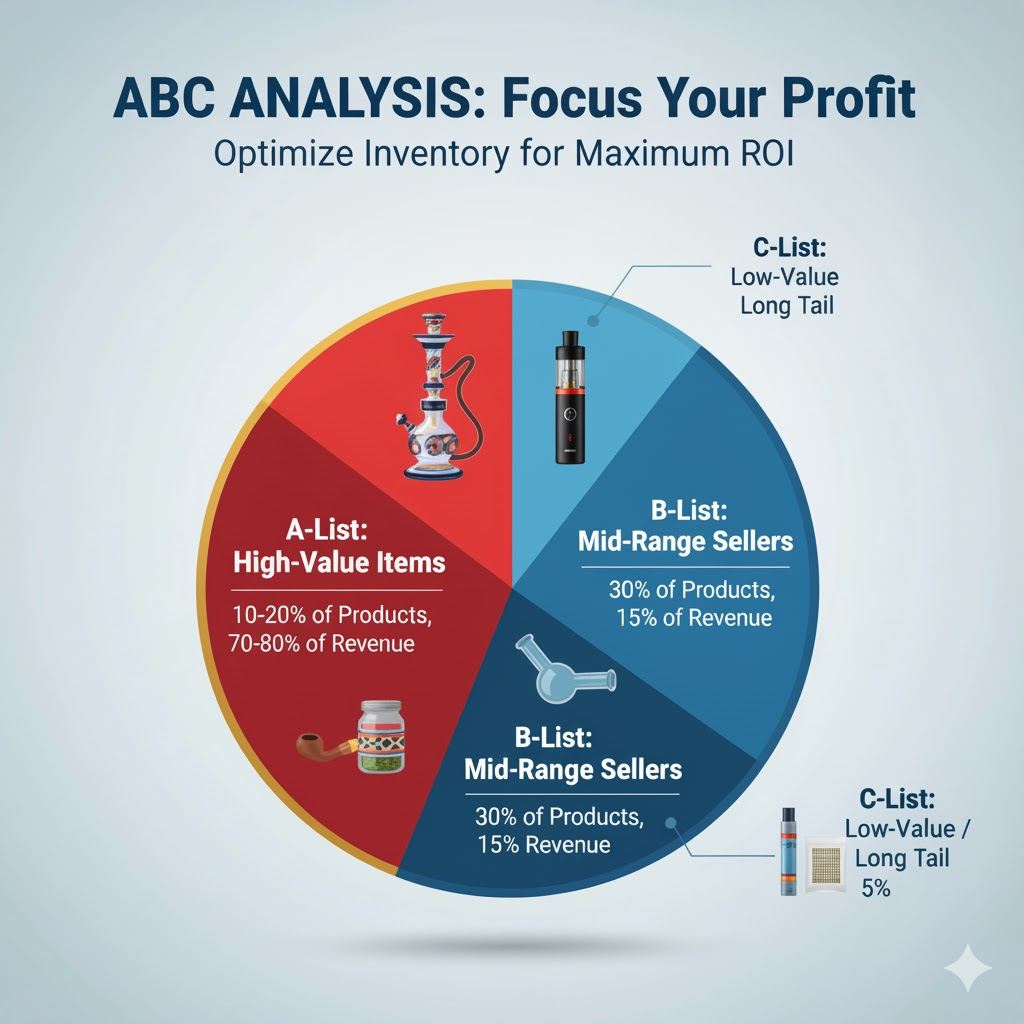
Wholesale glass pipe retailers face a recurring challenge: demand swings dramatically across the year, yet suppliers need orders placed weeks in advance. A smoke shop owner who underestimates the Q4 holiday rush runs out of best-sellers by November. One who overstocks in January sits on dead inventory for months. The gap between consumer demand patterns and wholesale ordering timelines is where margins are won or lost.
This guide maps the seasonal demand cycle for glass pipes across the major retail markets—USA, UK, Canada, and Australia—and translates those patterns into actionable ordering windows. The figures here come from wholesale sourcing experience and industry observation, not theoretical models.
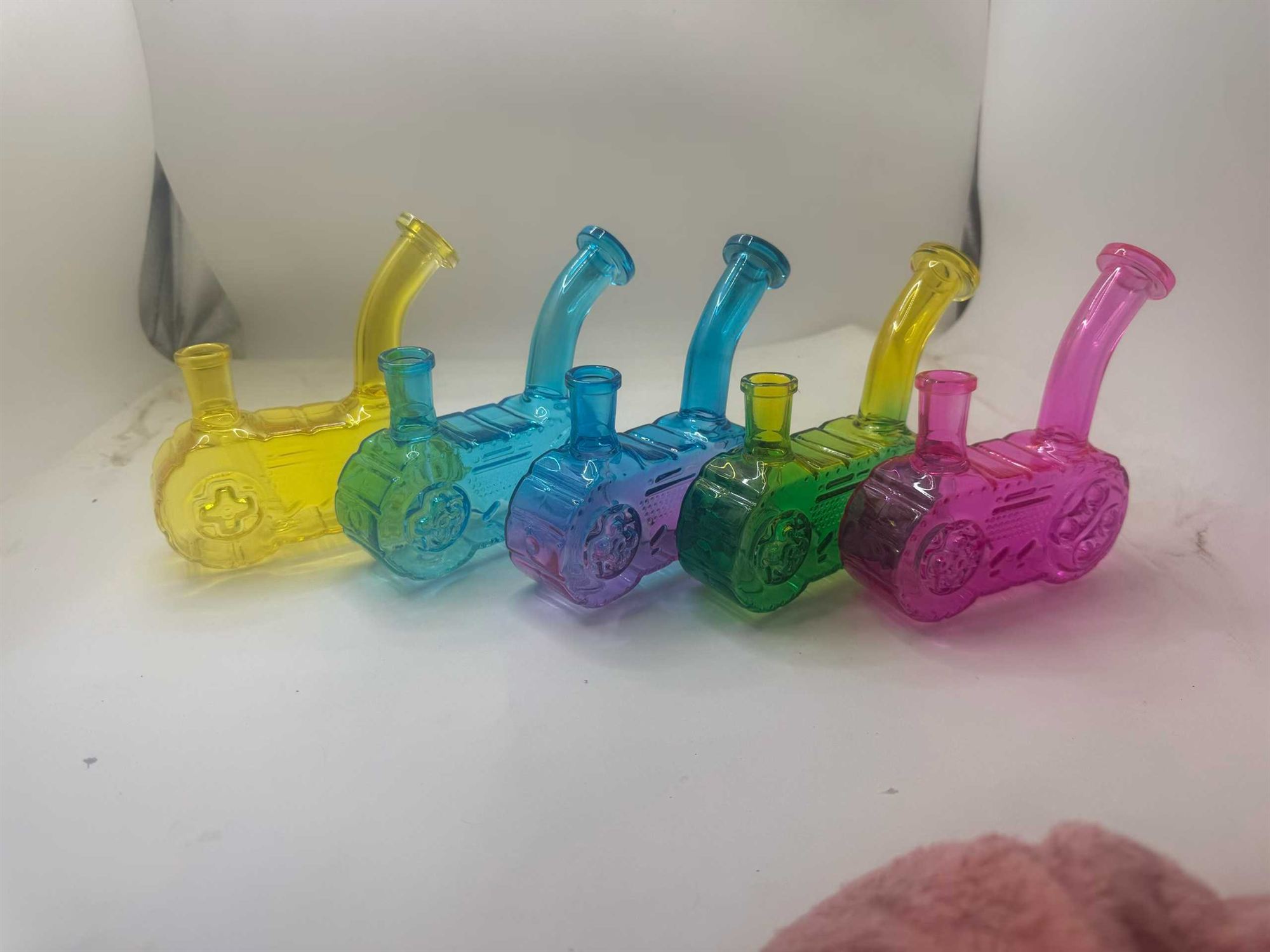
The Glass Pipe Demand Calendar: Four Seasons of Wholesale Buying
Glass pipe sales follow a predictable annual rhythm, though the peaks and troughs vary by market. Understanding this cycle is the foundation of wholesale water pipe and hand pipe inventory planning.
Q1 (January–March): The Post-Holiday Reset
January is the weakest month for glass pipe retail in the Northern Hemisphere. Consumer spending drops after the holiday season, and foot traffic in smoke shops declines noticeably. However, this is precisely when smart retailers should be planning their spring inventory refresh.
February sees a modest lift around Valentine’s Day— novelty hand pipes and small gift-oriented pieces move faster than usual. By March, stores begin restocking for the spring season. This is the ideal window to place orders for summer inventory, since factory production schedules are relatively open after the Q4 rush.
Q2 (April–June): The Spring Build-Up
April through June marks a steady climb in demand. Outdoor social activity increases, music festivals begin, and smoke shops see rising foot traffic. Retailers who ordered in February or March receive their stock in time for this upswing.
This period is also when new product launches perform best. Introducing a new colorway, a new percolator style, or a seasonal limited edition during the spring build-up gives the product maximum shelf life before the next peak. Retailers working with an OEM glass pipe manufacturer should finalize custom designs by late January to ensure April delivery.
Q3 (July–September): Summer Peak and Early Holiday Prep
July and August represent the second-strongest sales period, driven by summer travel, outdoor events, and back-to-college shopping. Glass hand pipes and compact water pipes dominate during this window—portability and durability matter more than complex percolator setups when customers are heading to festivals or beaches.
By late August, the focus shifts to holiday preparation. Retailers who wait until October to place Q4 orders risk stockouts, since shipping times from China add 30–45 days for sea freight. September is the last comfortable window for pre-holiday orders.
Q4 (October–December): The Holiday Rush
October through December is the strongest quarter by a wide margin. Halloween drives novelty and themed glass sales. Black Friday and Cyber Monday bring price-sensitive buyers into both physical and online stores. December holiday gifting peaks in the final two weeks.

The retailers who perform best in Q4 are those who placed their orders in July or August. By the time holiday shoppers walk in, the shelves are already stocked. Retailers who scramble in October face expedited shipping costs—or worse, air freight charges that erase their margin entirely.
Regional Variations: Northern vs Southern Hemisphere
The seasonal cycle described above applies primarily to the USA, UK, Canada, and Europe. Australia operates on an inverted calendar— their summer peak aligns with December through February, while their winter trough falls in June through August.
Retailers importing glass pipes to Australia should time their orders differently: place summer stock orders in September (Northern Hemisphere autumn) and winter stock in March. For a detailed compliance overview, see the Australian import compliance checklist.
Planning a Seasonal Glass Pipe Order?
Elfglass books production slots months ahead of the Q4 rush and samples in 1 to 3 days, so your shelves stay stocked through every seasonal peak. Send your demand calendar and get a quote within 12 hours.
MOQ from 100 pieces | BSCI / WRAP / ISO 9001 | NDA before every project
Building a Seasonal Ordering Timeline
Here is a practical ordering framework based on typical wholesale lead times. This assumes a standard 7–12 day production window plus 30–45 days for sea freight or 7–10 days for air freight.
| Target Selling Season | Order Placement | Production Complete | Arrival (Sea) | Arrival (Air) |
|---|---|---|---|---|
| Spring (Apr–May) | January | Late January | Early March | Mid-February |
| Summer (Jul–Aug) | March–April | Mid-April | Late May | Early May |
| Q4 Holiday (Nov–Dec) | July–August | August–September | October | September |
| Australian Summer (Dec–Feb) | September | October | November | Mid-October |
This timeline assumes no production bottlenecks. During peak factory season (August–October), wholesale glass pipe lead times can extend by 3–5 days as factories prioritize larger orders. Building a one-week buffer into your timeline is prudent.
Budget Allocation Across Seasons
Not every quarter deserves equal inventory investment. A common framework among successful smoke shop operators is the 25-25-20-30 split:
- Q1 (25%): Restock proven sellers, introduce new SKUs at low risk
- Q2 (25%): Build summer inventory, test seasonal limited editions
- Q3 (20%): Lighter ordering—bridge inventory while placing Q4 orders
- Q4 (30%): Maximum allocation for holiday season
This split ensures capital is concentrated where revenue is highest. The Q3 dip is intentional—it reflects the cash flow reality that money is still tied up in Q2 inventory that has not yet sold through.
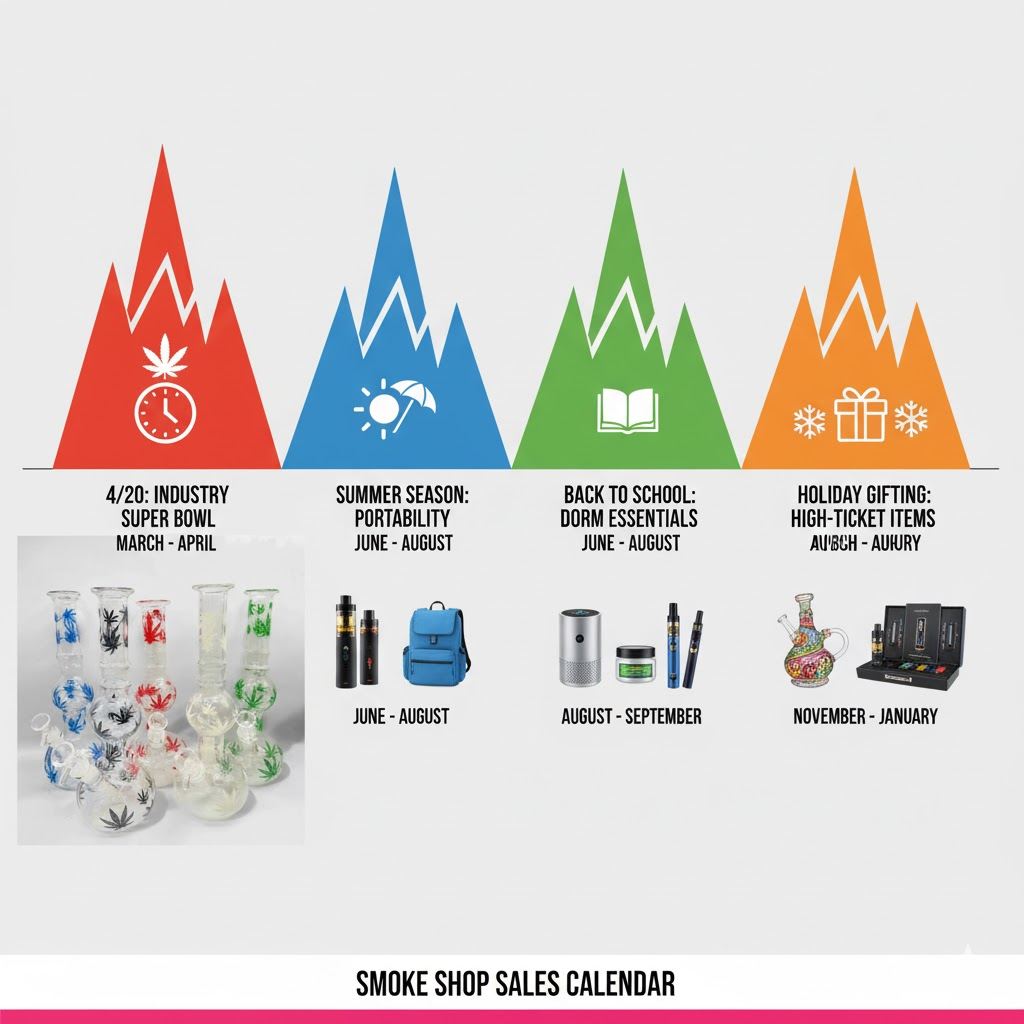
Coordinating with Your Supplier on Seasonal Timelines
Communication is where seasonal planning breaks down for most retailers. A factory in Shenzhen operates on a different holiday calendar, different production rhythm, and different priority queue than your retail schedule demands.
Chinese New Year (typically late January or early February) shuts down production for 2–4 weeks. Any order placed in December with a February delivery target will almost certainly miss the mark. Similarly, China’s Golden Week holiday in early October can delay orders by a week.
The most effective approach is to share your seasonal sales forecast with your supplier at least two months before you need stock. This gives the factory time to reserve production capacity and raw materials. When you reach out to discuss your seasonal ordering plan, include your target SKU mix, quantities, and delivery deadline— not just a vague “I need stock by November.”
Using Data to Refine Your Seasonal Model
The framework above is a starting point. After your first full year of operation, you should have actual POS data that reveals your specific demand curve. Track these metrics monthly:
- Units sold per product category (water pipes, hand pipes, dab rigs, accessories)
- Average transaction value by month
- Stockout incidents— which SKUs ran out and when
- Dead stock— SKUs that did not move for 60+ days
Overlay this data on the seasonal calendar and you will quickly see where the generic model needs adjustment for your specific market, location, and customer base. A college-town smoke shop will have a sharper back-to-college spike in August. A tourist-area shop will peak in summer. Urban shops may see less seasonal variation overall.
The Supply-Side Blackout and Delay Calendar
Your demand calendar tells you when to sell; the supply calendar tells you when the factory simply cannot move. These supply-side constraints are mentioned throughout this guide, but planned against as a single dated table they become the difference between hitting a delivery window and missing it. Build your order dates backwards from these.
| Event / Period | Typical Timing | Impact on Production or Shipping | How to Plan Around It |
|---|---|---|---|
| Chinese New Year shutdown | Late January or early February | Production halts 2–4 weeks; capacity is slow to ramp back up | Place any February-target order before December; assume nothing ships during the break |
| China Golden Week | Early October (~1 week) | Factory and port slowdown can add about a week | Pull early-October delivery targets forward into September |
| Peak factory season | August–October | Lead times extend 3–5 days as large orders get priority | Add a one-week buffer to every Q4 timeline; lock capacity early |
| Q4 sea-freight congestion | October–December | Peak-season port and carrier load pressures transit time | Ship Q4 stock by sea in October or earlier, or budget air freight for gaps |
| Post-holiday production lull | January–early March | Schedules are relatively open after the Q4 rush | The ideal window to place spring and summer orders and reserve capacity |
Sizing Your Seasonal Safety Stock
A timeline tells you when to order; a buffer decides how much extra to hold so a delay or a demand spike does not empty your shelf. There is no single right number, but these rules give you a defensible starting point that you refine with your own POS data after year one.
- Start from a one-week production buffer. The baseline lead time assumes no bottlenecks; holding roughly one extra week of cover absorbs the 3–5 day peak-season extensions and minor transit slips.
- Weight the buffer toward proven sellers. Hold more cover on SKUs that reliably turn, and less on new or untested pieces where overstock risk is higher than stockout risk.
- Add an air-freight bridge plan for Q4. If you miss the July–August sea-freight window, decide in advance which best-sellers justify the 2–3x air cost to bridge a stockout rather than choosing under pressure in November.
- Apply the 60-day dead-stock rule. Any SKU that has not moved in 60+ days is overstocked — discount, bundle, or stop reordering it, and reallocate that capital to the next season.
- Adjust for your location profile. A college-town shop needs a sharper August back-to-college buffer; a tourist-area shop should load summer; an urban shop with flatter demand can run leaner year-round.
- Re-forecast with your supplier two months ahead. Share target SKUs, quantities, and the delivery deadline so the factory can reserve capacity and raw material before the buffer is ever tested.
Key Takeaways
- Glass pipe demand follows a four-season cycle with Q4 as the clear peak across Northern Hemisphere markets
- Orders for holiday inventory must be placed by July–August to account for production and shipping lead times
- Australian retailers operate on an inverted cycle— plan summer stock in September
- Budget allocation should weight toward Q4 (roughly 30% of annual inventory spend)
- Share your seasonal forecast with your supplier two months ahead, with specific SKUs and quantities
- After year one, replace generic models with your own POS data to refine ordering timing
Frequently Asked Questions
When is the best time to order glass pipes for the holiday season?
Place your Q4 holiday orders by July or August at the latest. This allows 7–12 days for production and 30–45 days for sea freight, ensuring stock arrives by early October— well before the November peak.
Does glass pipe demand vary by country?
Yes. The USA, UK, Canada, and Europe follow a similar cycle with Q4 as the strongest quarter. Australia’s cycle is inverted— their summer peak falls in December through February, requiring different ordering timing.
How much inventory should I stock for Q4 compared to other quarters?
A common allocation is 30% of annual inventory budget for Q4, with 25% each for Q1 and Q2, and 20% for Q3. Adjust based on your first year of actual sales data.
What happens if I miss the seasonal ordering window?
You can still order, but expect to pay air freight premiums (2–3x sea freight cost) or face partial stockouts. Some retailers supplement with domestic wholesale sources at higher per-unit cost to bridge the gap.
How does Chinese New Year affect glass pipe supply?
Chinese New Year shuts down production for 2–4 weeks, typically in late January or early February. Any order with a February delivery target should be placed before December to avoid the shutdown window.
Ready to Start Your Custom Glass Pipe Project?
Get a free quote within 24 hours. MOQ from 100 pieces. NDA-protected design consultation.
About the Author
Ava Zeng is the founder of Elfglass, a Shenzhen-based borosilicate glass pipe manufacturer serving B2B brands worldwide. Every guide on this site is grounded in her production-floor experience— the annealing lines, QC checkpoints, and export orders behind each claim.
Before you commit to a supplier, read her founder’s story and trust promise, and the guide to vetting a reliable glass pipe manufacturer— the same red-flag checklist Elfglass applies to its own suppliers.
