

Importing glass pipes to Australia is legal when the goods are classified under HS code 9614 and marketed as tobacco smoking implements. Expect a general tariff of around 5% plus 10% GST on the landed value — and check your destination state’s drug paraphernalia laws before you market the product.
A shipment of 200 hand-made glass water pipes arrives at the Port of Melbourne. If you need a structured starting point, see this Australian head shop market. The customs broker files the import declaration under the wrong tariff code. The Australian Border Force flags the consignment for inspection. Two weeks pass. Your buyer is calling daily. The storage fees are climbing. This scenario is not rare — not because glass pipes are banned in Australia, but because the compliance details trip up people who did not prepare.
Australia is one of the more regulated markets for smoking accessories. Unlike the United States, where federal law addresses glass pipe imports through specific customs and paraphernalia statutes (see our USA compliance guide or our UK retailer import guide, or our Canada compliance guide, for comparison), Australia layers federal customs rules on top of eight separate state and territory legal systems — each with its own stance on what constitutes prohibited paraphernalia. For a smoke shop owner in Sydney or a wholesale distributor in Melbourne, the difference between a smooth customs clearance and a seized shipment often comes down to one thing: knowing the rules before the goods leave the factory floor.
This checklist walks you through every compliance layer — from tariff classification and duty calculation to state-by-state paraphernalia laws and product safety obligations. It is written for buyers who source glass pipes from China and import them into Australia for wholesale or retail sale. We wrote it from the exporter’s side of the same process. Elfglass prepares these exact documents on every order we ship — HS 9614 declarations, ISPM 15 packaging confirmations, and material spec sheets that survive an ACCC audit — so every item below is something we actually fill out, not a theory borrowed from a guidebook.
Key Takeaways
- Glass pipes are legal to import into Australia when classified under HS code 9614 and marketed as tobacco smoking implements.
- The general tariff rate for smoking pipes under HS 9614 is around 5%, with 10% GST applied on top of the value of taxable importation (goods + duty + shipping). Confirm your exact rate with a licensed customs broker.
- Each Australian state and territory has its own drug paraphernalia legislation — marketing language matters as much as the product itself.
- Under the Australian Consumer Law, the importer is deemed the manufacturer and assumes full product liability.
- Wood packaging materials must comply with ISPM 15 phytosanitary standards or your shipment will be held at the border.
Why Australia’s Import Compliance Is More Complex Than You Think
Australia operates a dual regulatory structure for smoking accessories. At the federal level, the Australian Border Force (ABF) controls what crosses the border — setting tariff classifications, duty rates, and import conditions. At the state level, criminal legislation determines whether the same product can be legally sold in a retail store. A glass pipe that clears customs in Melbourne may still expose a retailer to prosecution if marketed incorrectly in certain jurisdictions.
The core distinction is between tobacco use and prohibited drug use. Australian customs law does not ban the import of glass smoking pipes outright. What triggers enforcement is how the product is classified, declared, and ultimately marketed to consumers. A borosilicate water pipe declared as a “tobacco smoking implement” under the correct tariff code passes through customs routinely. The same product described online as a “bong for cannabis” can attract attention from state police.
This creates a practical challenge for importers. You are not just managing customs paperwork — you are building a compliance wall from the moment you select your product range, through the import declaration, all the way to the product description on your retail shelf. One inconsistent label or a careless social media caption can undermine the entire chain.
Recent regulatory tightening has made this more urgent. Australia has been progressively tightening controls on smoking-related products, including plain packaging mandates for tobacco and increased enforcement on illicit tobacco. While glass pipes sit in a different category, the enforcement infrastructure is more alert than ever to smoking accessories crossing the border.
Federal Import Regulations: What the ABF Checks
The Australian Border Force is the federal agency responsible for border clearance of all imported goods. When your glass pipe shipment arrives, the ABF checks several things: whether the goods match the import declaration, whether the tariff classification is correct, whether duty and GST have been paid, and whether any prohibited or restricted goods provisions apply.
For glass smoking pipes, the relevant regulation is the Customs (Prohibited Imports) Regulations. These regulations list goods that are either absolutely banned or conditionally restricted. Glass pipes designed for tobacco use are not on the prohibited list. They are treated as general manufactured goods, subject to standard customs procedures.
What the ABF does scrutinize is intent of import. If your commercial invoice describes the products in ways that suggest use with illegal substances — for example, labeling dab rigs as “concentrate paraphernalia” rather than “glass smoking accessories for tobacco” — you create a documentation problem that can delay or block clearance. The product itself is the same. The paperwork is what matters.
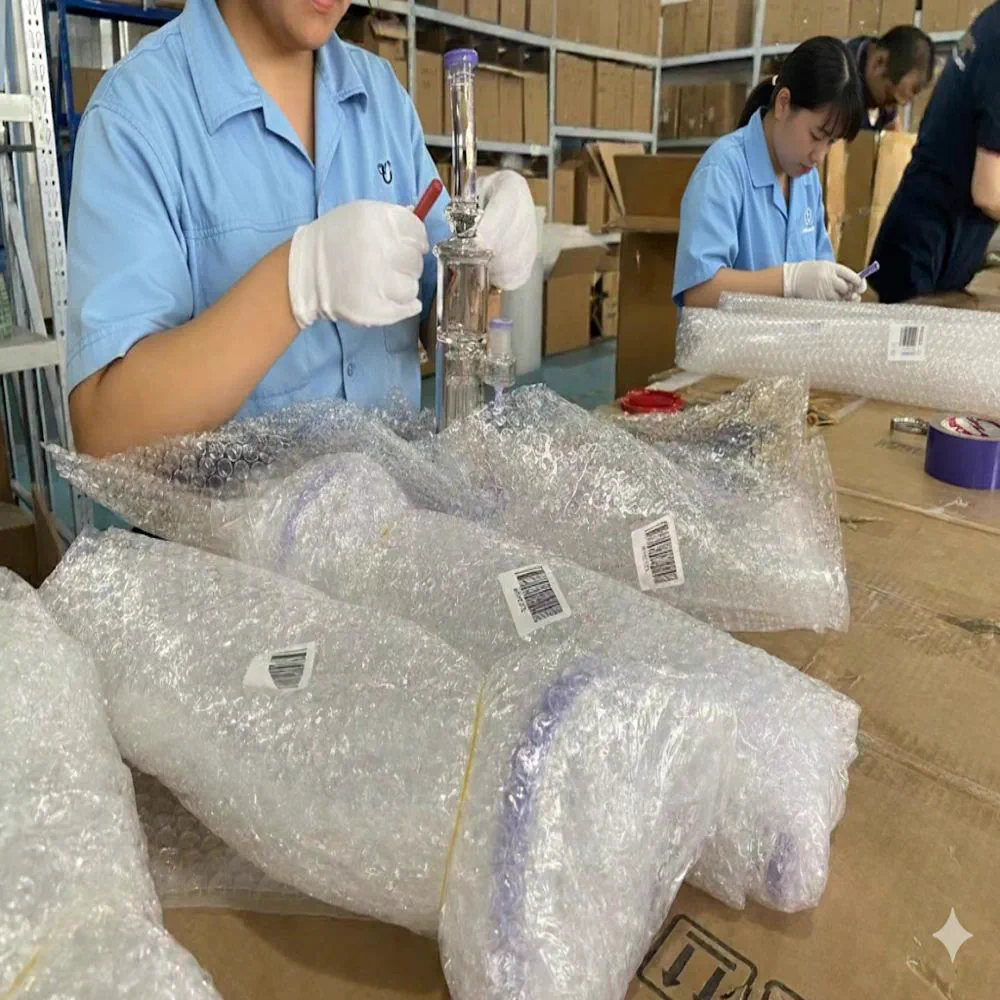
There is also a biosecurity angle that catches importers off guard. Australia has some of the strictest biosecurity laws in the world. If your glass pipes are packed using wood wool, untreated plant fiber, or raw timber dividers, the packaging itself can trigger a biosecurity hold under ISPM 15 (International Standards for Phytosanitary Measures). The glass is fine. The packing material gets your shipment quarantined. Always confirm with your supplier that packaging materials are either ISPM 15-certified timber or non-wood alternatives like foam inserts or corrugated cardboard. Supplier diligence continues past packaging: work through our glass pipe supplier questions before you sign a purchase order.
HS Code Classification: Getting Your Tariff Right
Every product you import into Australia must be classified under the Harmonized System (HS) code framework. Getting this right determines your duty rate, your GST calculation, and whether your shipment triggers additional compliance checks. For glass smoking pipes, the relevant heading is HS 9614 — “Smoking pipes (including pipe bowls) and cigar or cigarette holders, and parts thereof.”
This heading covers the full range of glass smoking implements: hand pipes, water pipes, chillums, one-hitters, and dab rigs. Sub-classifications under 9614 include pipes and pipe bowls, hookahs of various materials, and an “other” catch-all. Water pipes (bongs) and dab rigs both fall under this heading, though some importers mistakenly classify them under general glassware (HS 7013) or laboratory glassware (HS 7017) — a mistake that customs auditors catch quickly.
| Product Type | Correct HS Code | Common Misclassification | Risk |
|---|---|---|---|
| Glass hand pipes | 9614 | 7013 (glassware) | Wrong duty rate applied |
| Glass water pipes (bongs) | 9614 | 7017 (laboratory glassware) | Customs audit trigger |
| Glass dab rigs | 9614 | 7013 (general glassware) | Inconsistent classification across shipments |
| Glass pipe parts (bowls, slides) | 9614 (parts thereof) | 7013 or 7017 | Parts duty mismatch |
If you are importing a mixed order of hand pipes, water pipes, and dab rigs — which is common for wholesale hand pipe and water pipe orders — the entire shipment should be declared under 9614. Your customs broker can confirm the exact sub-heading for each product type, but the heading itself is consistent across all glass smoking implements.
Import Duty and GST: Calculating Your Landed Cost
Once the HS code is set, the financial picture becomes clear. Australia applies two charges on imported glass pipes: customs duty and the Goods and Services Tax (GST).
The general tariff rate for goods under HS 9614 is generally around 5% of the FOB (Free on Board) customs value — though you should confirm the exact rate for your specific product with a licensed customs broker, as rates can vary by sub-classification. Under the China-Australia Free Trade Agreement (ChAFTA), some goods from China may qualify for reduced or zero duty rates if they meet rules of origin requirements. Ask your broker whether your products are eligible. If your supplier invoices the goods at USD 8,000 FOB, the duty at the standard rate comes to approximately USD 400.
The GST at 10% is then applied to the Value of Taxable Importation (VOTI), which is not just the goods value. The VOTI formula is: customs value + duty + international shipping + insurance. This means GST is charged on top of duty and on top of your freight costs — a compounding effect that many first-time importers overlook.
| Line Item | Amount (USD) | Notes |
|---|---|---|
| FOB goods value | 8,000 | Invoice from supplier |
| Customs duty (5%) | 400 | 5% of FOB value |
| International shipping | 1,200 | Sea freight estimate |
| Insurance | 80 | ~1% of goods value |
| VOTI (GST base) | 9,680 | Goods + duty + freight + insurance |
| GST (10%) | 968 | 10% of VOTI |
| Total landed cost | 10,648 | All-in cost before local delivery |
For a deeper look at how these costs accumulate across the full supply chain — from factory floor to your warehouse door — our guide on the real cost of importing water pipes from China breaks down every line item including local transport, customs broker fees, and port charges. The landed cost math for glass pipes follows the same structure regardless of whether you are shipping to Sydney, Melbourne, or Brisbane — though the freight line itself swings with seasonal demand, a variable our peak season logistics guide covers, including how early to book Q4 space.
If your business is registered for GST (required once your annual turnover reaches the registration threshold), you can claim the import GST as an input tax credit on your next Business Activity Statement. This means the GST is a cash-flow item rather than a permanent cost — but you must be registered before import to claim it.
Sourcing Glass Pipes for the Australian Market?
Elfglass is a BSCI, WRAP, and ISO 9001 certified factory in business since 2010. Full compliance documentation provided with every order. MOQ 100 pieces per design.
State-by-State Drug Paraphernalia Laws: A Quick-Reference Map
Here is where Australian compliance gets genuinely tricky. Each of the eight states and territories has its own legislation governing drug paraphernalia — and these laws define offences around the supply of implements used in connection with prohibited drugs. The critical word is “supply,” which in most jurisdictions includes sale, offer for sale, and even possession with intent to sell.
The good news: these laws generally target items supplied for use with prohibited drugs. Glass pipes marketed and sold as tobacco smoking implements fall outside the scope in most states. The risk emerges when product descriptions, marketing materials, or staff conversations suggest the product is intended for cannabis or other prohibited substances.
| State / Territory | Key Legislation | Paraphernalia Provision |
|---|---|---|
| New South Wales | Drug Misuse and Trafficking Act 1985 | Offence to supply implements for prohibited drugs |
| Victoria | Drugs, Poisons and Controlled Substances Act 1981 | Offence to supply drug paraphernalia |
| Queensland | Drugs Misuse Act 1986 | Offence related to utensils for drug use |
| South Australia | Controlled Substances Act 1984 | Offence to supply equipment for drug administration |
| Western Australia | Misuse of Drugs Act 1981 | Offence to supply implements for prohibited drugs |
| Tasmania | Misuse of Drugs Act 2001 | Offence related to drug paraphernalia |
| ACT | Drugs of Dependence Act 1989 | Offence to supply drug equipment |
| Northern Territory | Misuse of Drugs Act 2006 | Offence related to drug utensils |
The practical takeaway for importers and retailers is consistent across all jurisdictions: position your products explicitly as tobacco smoking implements. Use “tobacco pipe,” “glass tobacco water pipe,” or “glass smoking accessory” in product descriptions, signage, and online listings. Avoid any language that references cannabis, concentrates (unless specifically for legal substances in your state), or other prohibited drugs. This is not just defensive marketing — it is the legal foundation that separates a legitimate retail business from a criminal offence in multiple states.
If you are building a brand specifically for the Australian market, our guide to custom glass pipe branding covers how to develop packaging and product naming that works across different regulatory environments.
Product Safety Standards: ACCC Requirements
The Australian Competition and Consumer Commission (ACCC) enforces product safety under the Australian Consumer Law (ACL). For glass smoking accessories, there is no specific mandatory standard — but that does not mean you are free from obligations.
First, the ACL imposes consumer guarantees on all products sold in Australia. Goods must be of acceptable quality, fit for their stated purpose, and match their description. If a glass pipe cracks under normal use, the consumer is entitled to a replacement or refund — and under the ACL, the importer is deemed the manufacturer. This means if your Chinese supplier’s product fails, you — not the overseas factory — are liable to the Australian consumer. This is one of the most important differences between the Australian market and markets where the “seller is not the manufacturer” defense still holds.
Second, the ACCC maintains a list of mandatory safety standards for specific product categories. While glass pipes are not currently on that list, general product safety obligations still apply. If a product causes injury due to a manufacturing defect — say, a pipe that shatters because of inadequate annealing — the importer faces product liability claims regardless of whether a specific standard exists.
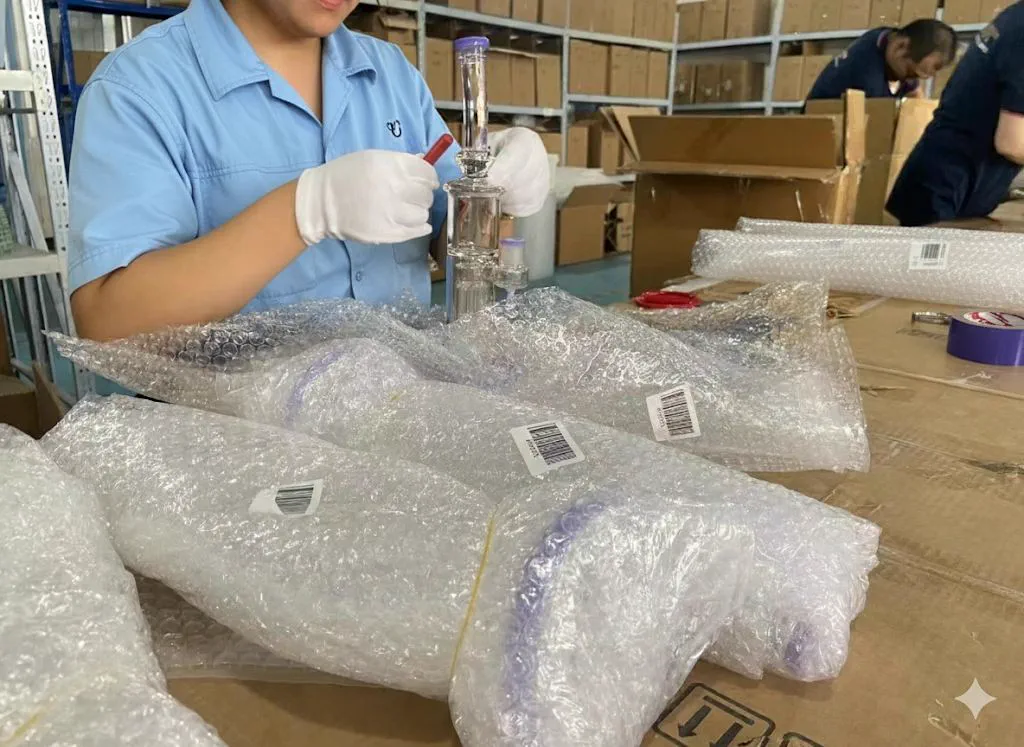
This is where your supplier relationship becomes a compliance tool. Request material specifications (borosilicate vs. soda-lime glass), annealing records, and quality inspection reports before placing bulk orders. A proper quality control process at the factory level is your first line of defense against product liability claims in Australia. Suppliers certified to ISO 9001 — like Elfglass, which holds BSCI, WRAP, and ISO 9001 certifications — provide the documentation trail that demonstrates due diligence. Social compliance audits deserve the same scrutiny: our guide to WRAP certification for importers shows what that certificate actually proves.
Ship-Ready Compliance Documentation
Elfglass supplies the material declarations, certifications, and export paperwork your customs broker needs for the US, UK, EU, Canada, and Australia. Ask us which documents accompany your order before you buy.
MOQ from 100 pieces | BSCI / WRAP / ISO 9001 | NDA before every project
Labeling and Packaging Requirements
Australia’s labeling requirements for imported goods are governed by the Competition and Consumer Act 2010 and various state-level fair trading legislation. For glass smoking pipes, three labeling elements matter most.
Country of origin. Australia’s trade description laws require that imported goods carry accurate origin information. For glass pipes from China, the product or its immediate packaging should state “Made in China” or “Product of China.” This is a standard customs requirement — and getting it wrong can trigger ACL enforcement action for misleading conduct.
Material identification. While there is no mandatory standard requiring glass type labeling, the ACL’s consumer guarantee provisions mean your product description must be accurate. If you label a pipe as “borosilicate glass,” it must actually be borosilicate. Misrepresentation — even unintentional — exposes you to ACCC enforcement action and consumer claims. Ask your supplier for written material specifications and keep them on file.
Packaging biosecurity compliance. This is the one that catches importers by surprise. Australia’s Department of Agriculture, Fisheries and Forestry enforces strict biosecurity controls on all packaging materials. Wood packaging (pallets, crates, dividers) must be treated and certified under ISPM 15. Non-wood packaging like foam, corrugated cardboard, and bubble wrap passes through without issue. If you are working with a wholesale glass pipe packaging supplier, confirm in writing that all wood materials carry the ISPM 15 stamp. A single untreated wooden divider can hold up an entire container at the port.
Required Import Documentation: Your Pre-Shipment Checklist
Before your glass pipe shipment leaves the factory, your import documentation must be complete. Australian customs clearance requires the following:
- Commercial invoice — must include accurate product descriptions, HS codes, unit values, total value, and Incoterms. The description should match the goods physically and use consistent terminology (e.g., “glass tobacco water pipes” rather than vague terms).
- Packing list — itemized list of contents per carton, net and gross weights, carton dimensions. Must reconcile with the commercial invoice.
- Bill of Lading (sea) or Air Waybill (air) — the transport document issued by the carrier. Required for customs clearance regardless of shipping method.
- Certificate of Origin — required if you are claiming tariff preference under the China-Australia Free Trade Agreement (ChAFTA) or other arrangements. A ChAFTA certificate of origin can reduce or eliminate duty for qualifying goods. Confirm eligibility with your customs broker.
- Import declaration (Self Assessed Clearance Statement) — filed by your customs broker or by you if you are a licensed self-clearer. This is the formal document that declares the goods, their classification, and the duty/GST payable.
- ISPM 15 certificate — only if wood packaging is used. Must accompany the shipment.
For first-time importers, using a licensed customs broker is strongly recommended. The broker handles the import declaration, calculates duty and GST, and liaises with the ABF on your behalf. Broker fees are a small fraction of the risk posed by a self-filed declaration error — and most brokers provide a free initial consultation on classification and duty rates.
You will also need an Australian Business Number (ABN) and, if your annual turnover meets the threshold, GST registration. Without these, you cannot clear goods through customs in your own name. For a detailed breakdown of trade terms and how they affect your import obligations, our guide to FOB, EXW, and DDP trade terms explains which party is responsible for each step of the import process.
Common Compliance Mistakes and How to Avoid Them
Certain compliance mistakes appear repeatedly among importers bringing glass smoking accessories into Australia. Each one is avoidable with proper preparation.
Misclassifying under the wrong HS code. The most common error is declaring glass smoking pipes under general glassware codes (7013 or 7017) instead of 9614. This usually happens when the supplier’s export documentation uses generic descriptions. Fix it before the goods ship: provide your customs broker with product-specific descriptions and the correct HS code in advance.
Under-declaring customs value. Some importers attempt to reduce duty by declaring a value lower than the actual transaction price. The ABF actively audits valuations, and penalties for under-declaration include fines, seizure of goods, and potential criminal prosecution. Always declare the full transaction value including any assists, tooling charges, or royalties paid to the supplier.
Ignoring state paraphernalia laws in marketing. An importer might clear customs perfectly but then sell products online using language that triggers state offences. Product listings that mention “herb,” “greens,” “wax,” or “concentrate” (in a drug context) create legal exposure. Train your marketing team on the distinction between tobacco-use language and drug-use language.
Using non-compliant packaging materials. Untreated wood packaging without ISPM 15 certification is the single most preventable delay at Australian ports. Confirm packaging specifications with your supplier in writing before production begins — not after the container is loaded.
Not keeping import records. The Australian Taxation Office requires importers to retain all import documentation for five years. This includes commercial invoices, import declarations, duty payment receipts, and correspondence with customs brokers. An audit without records means you cannot prove compliance — and the ATO’s default assumption is rarely in your favor.
Your 10-Step Compliance Checklist for Importing Glass Pipes to Australia
Here is the complete checklist. Work through each step before placing your next order.
1. Classify every product under HS 9614. Confirm with your customs broker that all glass smoking implements — hand pipes, water pipes, dab rigs, parts — are declared under the correct heading. Do not rely on supplier documentation alone.
2. Calculate your full landed cost before ordering. Use the VOTI formula: goods value + duty (confirm rate with broker — generally around 5% for HS 9614) + shipping + insurance, then apply 10% GST to the total. This gives you the real cost to compare against your retail pricing.
3. Ensure GST registration is in place. If your business meets the registration threshold, confirm your GST registration is active before importing. You can only claim import GST credits once registered.
4. Audit your marketing language for every product. Review all product descriptions, website copy, social media posts, and in-store signage. Replace any language that suggests use with prohibited substances. Use “tobacco pipe,” “glass water pipe for tobacco,” or “glass smoking accessory” consistently.
5. Confirm packaging meets ISPM 15 standards. If any wood packaging is used, require the ISPM 15 certificate from your supplier before shipment. Prefer non-wood alternatives (foam, cardboard) when possible.
6. Obtain and file material specifications. Request written confirmation of glass type (borosilicate, soda-lime), thickness, and annealing process from your supplier. File these for ACL compliance and product liability protection.
7. Prepare complete import documentation. Commercial invoice, packing list, bill of lading, certificate of origin, and import declaration. Have your customs broker review everything before the goods arrive.
8. Understand your state’s specific paraphernalia provisions. The legislation table above gives you the starting point. If you operate in multiple states, ensure compliance with the strictest jurisdiction.
9. Retain all import records for five years minimum. Set up a filing system — digital or physical — that keeps every import document accessible for ATO audit.
10. Work with a certified, compliance-aware supplier. Your manufacturing partner should provide accurate product descriptions, ISO-certified quality processes, and documentation that supports your import compliance — not undermines it. Elfglass holds BSCI, WRAP, and ISO 9001 certifications, with a minimum order of just 100 pieces per design for brands testing the market.
Conclusion
Importing glass pipes to Australia is not banned, restricted, or uniquely difficult — but it does demand more preparation than shipping to less regulated markets. The federal customs framework is straightforward once you have the right HS code. The state-by-state paraphernalia laws require careful marketing language. And the ACCC’s importer-as-manufacturer rule means your supplier relationship is a compliance decision, not just a commercial one.
Buyers who work through this checklist before placing their first order avoid the two most expensive outcomes in Australian importing: shipments held at the border and regulatory inquiries after sale. The preparation takes a few hours. The cost of skipping it can take months — and thousands of dollars — to resolve. From our side of the factory, one request saves more Australian importers than any other: ask for the compliance documents before you place the order, not after. We keep our material specs, annealing records, and packaging declarations ready because the buyers who ask early are the ones who never get a surprise at the border.
If you are looking for a manufacturing partner who understands the documentation and compliance requirements of the Australian market, explore our Australian solutions page or browse our wholesale dab rigs and hand pipe collections. Elfglass provides full product specifications, certified quality processes, and compliance-ready documentation with every order.
Is it legal to import glass pipes into Australia?
Yes, glass pipes can be legally imported into Australia when classified under HS code 9614 and marketed as tobacco smoking implements. The key is proper tariff classification and avoiding any marketing language that suggests use with illegal substances, which may trigger state-level paraphernalia laws across all eight states and territories.
What is the import duty rate for glass pipes to Australia?
Glass smoking pipes classified under HS code 9614 are subject to a general tariff rate of around 5% on the customs value, though you should confirm the exact rate with your customs broker. A 10% GST then applies to the value of taxable importation, which includes the goods value plus duty plus international shipping and insurance costs.
Do I need a license to import glass pipes into Australia?
No specific import license is required for glass smoking pipes. However, you must hold an Australian Business Number (ABN) and be registered for GST if your annual turnover meets the registration threshold. You will also need to file an import declaration through a licensed customs broker or as a licensed self-clearer.
How do state-by-state paraphernalia laws affect glass pipe retailers?
Each Australian state and territory has legislation that makes it an offence to supply implements for use with prohibited drugs. Glass pipes sold explicitly as tobacco smoking implements fall outside these provisions in most jurisdictions. The risk comes from marketing language — any suggestion that products are intended for cannabis or other prohibited substances can trigger criminal liability under state law.
What documentation do I need to import glass pipes from China to Australia?
You need a commercial invoice with accurate HS codes, a packing list, bill of lading or air waybill, certificate of origin (for tariff preference claims), and a completed import declaration. If wood packaging is used, an ISPM 15 phytosanitary certificate is also required. A licensed customs broker can handle the declaration on your behalf.
Get a Quote for Your Next Order
Importing glass pipes to Australia? Send us your product spec and target quantity — contact our factory team or message us on WhatsApp, and we will reply with pricing and lead times within 24 hours.
Frequently Asked Questions
Is it legal to import glass pipes into Australia?
Yes, glass pipes can be legally imported into Australia when classified under HS code 9614 and marketed as tobacco smoking implements. The key is proper tariff classification and avoiding any marketing language that suggests use with illegal substances, which may trigger state-level paraphernalia laws across all eight states and territories.
What is the import duty rate for glass pipes to Australia?
Glass smoking pipes classified under HS code 9614 are subject to a general tariff rate of around 5% on the customs value, though you should confirm the exact rate with your customs broker. A 10% GST then applies to the value of taxable importation, which includes the goods value plus duty plus international shipping and insurance costs.
Do I need a license to import glass pipes into Australia?
No specific import license is required for glass smoking pipes. However, you must hold an Australian Business Number (ABN) and be registered for GST if your annual turnover meets the registration threshold. You will also need to file an import declaration through a licensed customs broker or as a licensed self-clearer.
How do state-by-state paraphernalia laws affect glass pipe retailers?
Each Australian state and territory has legislation that makes it an offence to supply implements for use with prohibited drugs. Glass pipes sold explicitly as tobacco smoking implements fall outside these provisions in most jurisdictions. The risk comes from marketing language — any suggestion that products are intended for cannabis or other prohibited substances can trigger criminal liability under state law.
What documentation do I need to import glass pipes from China to Australia?
You need a commercial invoice with accurate HS codes, a packing list, bill of lading or air waybill, certificate of origin (for tariff preference claims), and a completed import declaration. If wood packaging is used, an ISPM 15 phytosanitary certificate is also required. A licensed customs broker can handle the declaration on your behalf.
About the Author
Ava Zeng is the founder of Elfglass, a Shenzhen-based borosilicate glass pipe manufacturer serving B2B brands in markets including the United States, the United Kingdom, and Australia. She built Elfglass’s export documentation system from the factory side — HS code declarations, ISPM 15 packaging compliance, and material spec sheets that stand up to foreign customs and consumer-law audits.
Before you place an import order, read her founder’s story and trust promise, and the guide to vetting a reliable glass pipe manufacturer — the same red-flag checklist Elfglass applies to its own suppliers.
Import compliance is enforced by Australian Border Force, which classifies glass accessories under specific tariff codes and requires proper documentation.
Ready to Source Custom Glass Pipes?
Get a free quote within 24 hours. MOQ from 100 pieces. NDA-protected design consultation.
