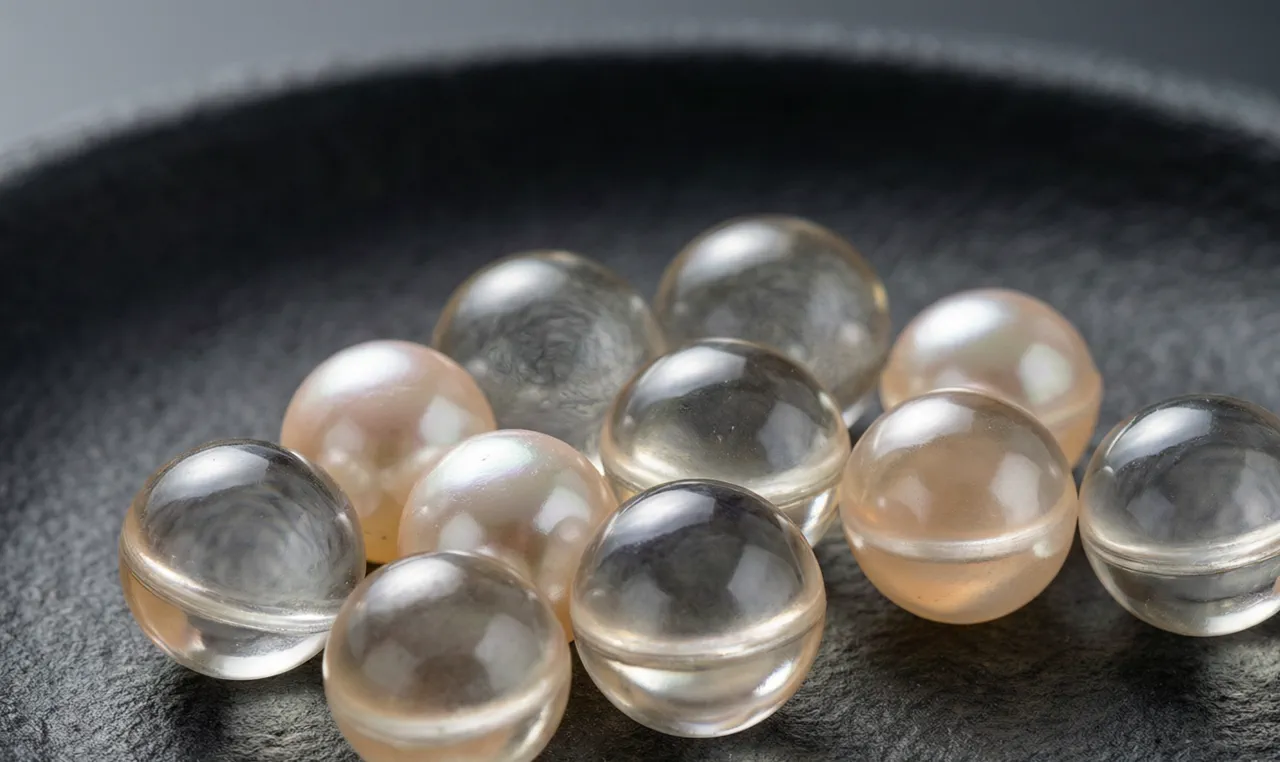
Terp pearls — also called terp balls, banger balls, or dab pearls — are small spherical beads placed inside a quartz banger during dabbing. They range from 4mm to 10mm in diameter, are made from quartz or borosilicate glass, and serve one function: spin across the heated surface of the banger to spread concentrate into a thin, even film. The result is more consistent vaporization, less wasted product, and larger clouds from the same amount of concentrate. Quartz components tolerate heat levels that would stress ordinary borosilicate, which is why quartz is the standard material for high-temperature nail and banger applications (quartz reference).
They are not a new invention. Experienced dabbers have been dropping marble-sized spheres into their nails for years. What changed is the wholesale market. Terp pearls have moved from a niche enthusiast hack to a standard accessory SKU — stocked alongside bangers, carb caps, and dab tools. At wholesale, they cost pennies per piece and sell at retail for dollars. The margin math is why retailers are paying attention.
This explainer covers what terp pearls actually do, the material and size choices that matter, whether they genuinely improve the dabbing experience, and how wholesale buyers should think about stocking them.
Key Takeaways
- Terp pearls are small quartz or borosilicate glass spheres (4mm–10mm) that spin inside a heated banger to spread concentrate for even vaporization.
- They increase the surface area of concentrate exposed to the heated banger surface, reducing waste and improving flavor consistency.
- Quartz pearls retain heat longer and are more durable; glass pearls are more affordable but wear faster under thermal cycling.
- Size matters: 4mm pearls suit small bangers (single dabs), 6mm is the versatile middle, and 10mm works in large bangers for high-volume sessions.
- For retailers, terp pearls are a high-margin accessory add-on — low unit cost, small shelf footprint, and a natural cross-sell with bangers and dab tools.
What Are Terp Pearls
A terp pearl is a sphere — nothing more, nothing less. No moving parts, no mechanical function. It sits at the bottom of a quartz banger (the cup-shaped nail used for dabbing concentrates) and moves when air flow or gravity pushes it. The name comes from “terpenes,” the flavor compounds in cannabis concentrates that dabbers want to preserve through low-temperature vaporization.
The concept predates the branding. Dabbers used to drop small marbles, glass beads, or even ceramic spheres into their nails to achieve the same spinning effect. The term “terp pearl” emerged as the accessory category formalized — manufacturers started producing purpose-made spheres in consistent sizes, from materials designed for thermal cycling, and packaging them for retail.
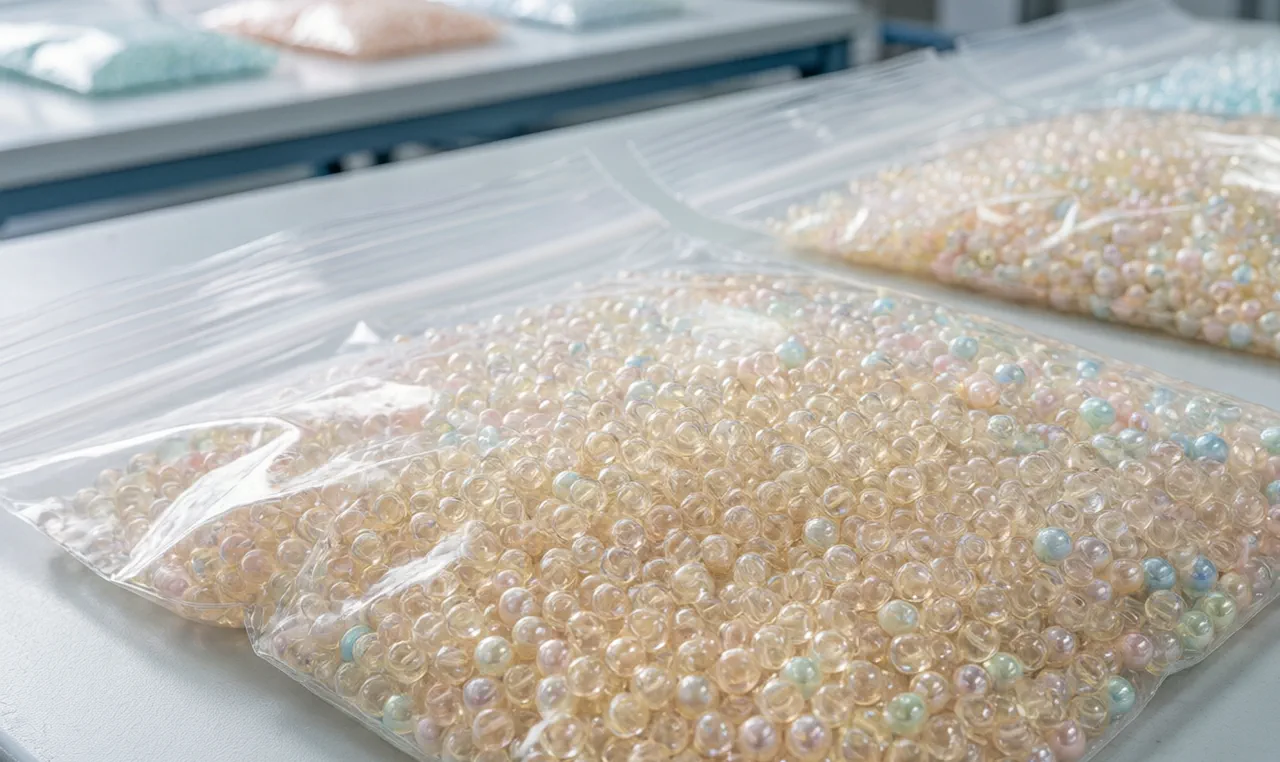
Today, a terp pearl is a standard item in the dab accessories market. You will find them sold individually, in packs of 5 or 10, or in bulk wholesale bags of 50–100 pieces. The product is simple. The execution quality varies.
How Terp Pearls Work
The physics is straightforward. When a dab of concentrate lands on a flat banger surface, it sits in a pool. The bottom layer touching the hot glass vaporizes first. The top layer stays cooler. This uneven heating wastes product — some of the concentrate overheats and combusts while the rest has not fully vaporized.
A terp pearl changes that geometry. As the sphere rolls across the banger floor — pushed by air flow from the carb cap or by the user tilting the banger — it drags concentrate across the heated surface in a thin film. Instead of a static pool, the concentrate spreads into a moving layer. More surface area contacts the hot glass at once. Vaporization happens faster and more evenly.
The practical effect is three things. First, less waste — more of the concentrate vaporizes at the temperature the user intended. Second, more consistent flavor — because the concentrate does not sit in one spot and overheat, terpene preservation improves. Third, larger vapor production — the increased surface area generates more vapor per second, which matters for users who prioritize cloud size.
The pearl does not heat up on its own. It absorbs heat from the banger floor and transfers some of that heat to the concentrate it rolls through. A quartz pearl retains this heat longer than a glass pearl because quartz has higher thermal mass. This is one reason material choice matters.
Quartz vs Glass: Material Choices
Terp pearls come in two primary materials, and the choice between them affects performance, durability, and price.
Quartz pearls are the premium option. Quartz has a higher melting point and better thermal retention than borosilicate glass. A quartz pearl absorbs heat from the banger and holds it longer, which means it continues to vaporize concentrate effectively even as the banger temperature drops between torch hits. Quartz is also more resistant to thermal shock — it will not crack from repeated heating and cooling cycles the way lower-quality glass might. The trade-off is cost: quartz pearls run 30–60% more expensive at wholesale than glass equivalents. Decorative inserts like terp pearls sit at the intersection of function and glass art, where novelty value competes with measurable performance gains.
Borosilicate glass pearls are the budget-friendly standard. They work. They spin. They spread concentrate. The difference is in longevity. Under daily use, a glass pearl will eventually develop micro-fractures from thermal cycling. The surface may pit or cloud over time. For a retail customer who dabs occasionally, a glass pearl lasts months. For a daily user, expect visible wear in weeks. The advantage is price — glass pearls are cheap enough that replacing them is not a financial burden.
| Property |
Quartz Pearl |
Glass Pearl |
| Thermal retention |
High — holds heat between hits |
Moderate — cools faster |
| Thermal shock resistance |
Excellent |
Good — may crack after extended cycling |
| Durability |
Months to years |
Weeks to months (daily use) |
| Wholesale cost |
Higher (30–60% premium) |
Lower — budget-friendly |
| Best customer segment |
Daily users, enthusiasts |
Casual users, beginners |
Size Guide: 4mm vs 6mm vs 10mm
Terp pearls are sized by diameter in millimeters. The size determines how the pearl fits inside the banger and how much concentrate it can move. Choosing the wrong size means a pearl that either sits motionless (too large for the banger) or spins too fast without enough contact pressure (too small).
4mm pearls fit small bangers — typically bangers with an inner diameter of 14–16mm. These are the bangers designed for single-dab, low-volume sessions. A 4mm pearl moves quickly in a small space, spreading thin doses effectively. This is the most popular size for standard retail bangers.
6mm pearls are the versatile middle. They fit most standard bangers (16–20mm inner diameter) and provide enough mass to maintain good contact with the banger floor. If a retailer stocks only one size, 6mm is the safest default — it works in the widest range of bangers.
10mm pearls are for large bangers — typically 20mm+ inner diameter, used for high-volume or group sessions. The larger mass moves more concentrate per rotation but requires a bigger banger to spin freely. In a small banger, a 10mm pearl jams against the walls and does not move.
Stock the Glass Pipes Your Customers Actually Buy
Elfglass produces the full wholesale catalog, from hand pipes and sherlocks to dab rigs, percolator bongs, and accessories, in proven best-selling specs. Tell us your market and we will recommend a catalog mix with pricing.
MOQ from 100 pieces | BSCI / WRAP / ISO 9001 | NDA before every project
Request a Quote →
Do They Actually Improve Dabs
Yes, with a caveat. Terp pearls improve vaporization efficiency — that is a mechanical fact rooted in surface area physics. A thin film of concentrate exposed to a hot surface vaporizes more completely and more evenly than a static pool. Users who add a pearl to their banger consistently report less waste, better flavor at lower temperatures, and larger vapor production.
The caveat is that a pearl does not replace proper technique. A user who overheats their banger to the point of combustion will get combustion with or without a pearl. A pearl optimizes heat transfer — it does not fix a torch that is too hot. The benefit is most visible at lower dabbing temperatures (315–450°F / 157–232°C), where vaporization is slower and the spreading action of the pearl makes the biggest difference.
For retailers, the question is not whether pearls work — they do. The question is whether they are worth stocking. The answer depends on your customer base and your accessory mix.
Wholesale Economics for Retailers
Terp pearls are an accessory economics play. The unit cost at wholesale is low — typically a fraction of what a quartz banger or even a carb cap costs. The retail markup is high because the perceived value to the customer exceeds the production cost by a wide margin. A pack of 5 glass pearls that costs a retailer under a dollar at wholesale can sell for five to ten dollars at retail.
The shelf footprint is minimal. A small display jar or a blister card holding 10–20 packs occupies less counter space than a single bong. And the product is a natural cross-sell: any customer buying a dab rig or a quartz banger is a candidate for terp pearls. The attach rate at point of sale is high because the item is inexpensive enough to add impulsively.
For retailers who also stock wholesale hand pipes and other accessories, terp pearls fill a gap in the dab accessories category. Carb caps are the pairing piece in that same display 鈥?our wholesale carb caps guide covers the materials and joint fits that sell beside pearls. They are the kind of item that increases average transaction value without requiring a customer to make a deliberate purchase decision.
Sourcing and Quality Checks
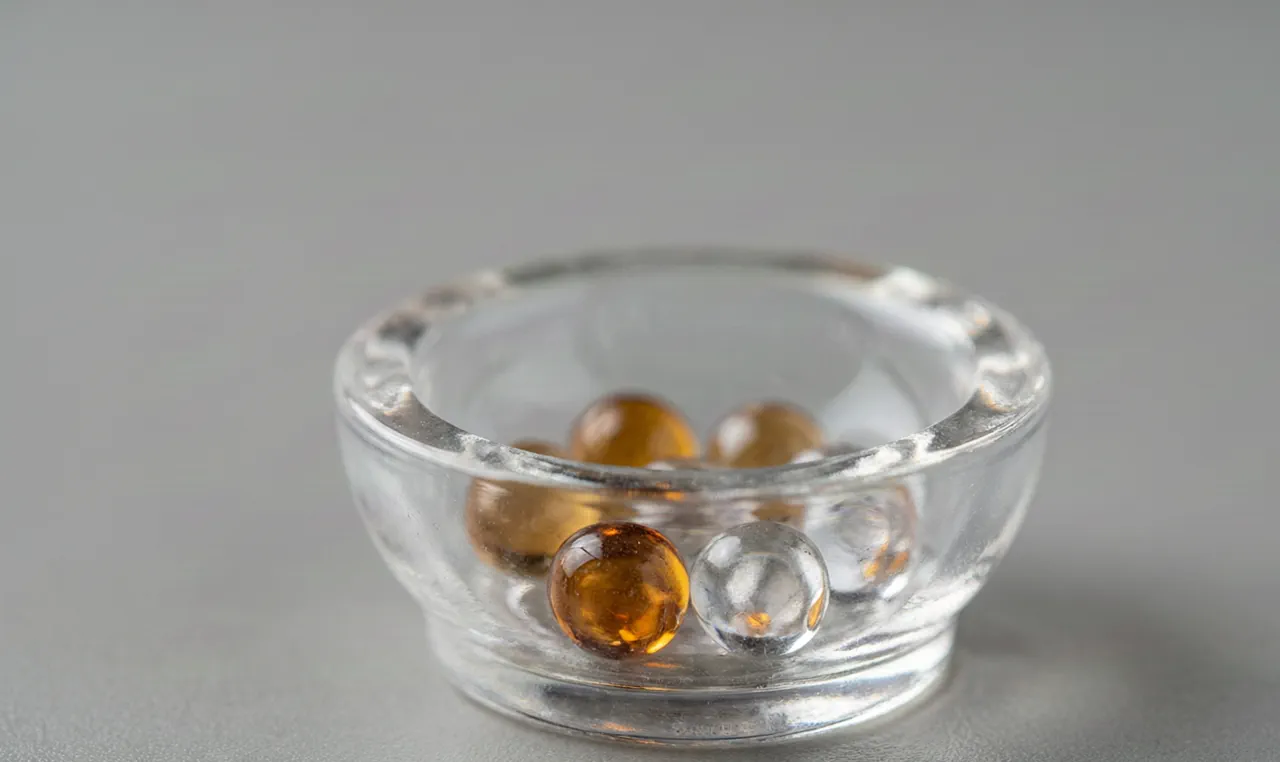
Not all terp pearls are made equal. The quality differences show up in three areas: sphericity, surface finish, and material consistency.
Sphericity matters because an out-of-round pearl does not spin smoothly. It wobbles, catches on the banger floor, and fails to spread concentrate evenly. Hold a pearl between your fingers and roll it. If you feel flat spots or irregularities, it is not round enough. At wholesale, request samples and check at least 3–5 pearls per design before approving a batch.
Surface finish affects how concentrate interacts with the pearl. A polished surface lets concentrate slide off easily. A rough or pitted surface holds residue, which builds up over time and reduces the pearl’s effectiveness. Quartz pearls tend to have a smoother factory finish than glass pearls, which is one reason they perform better over extended use.
Material consistency is the thermal shock factor. A pearl made from low-grade borosilicate may crack within the first week of daily use. A pearl made from properly annealed quartz will last months. The difference is not always visible to the naked eye — it shows up in how the pearl handles repeated heating and cooling. This is where supplier qualification matters. Factories with ISO 9001 certification have documented quality processes that include thermal consistency checks.
Sampling takes 1–3 days from most manufacturers. Production runs for orders above 100 pieces per design typically complete in 7–12 days. At that MOQ, custom branding — such as packaging with your retail logo — is usually available.
Stock Terp Pearls in Your Accessory Line
Quartz and borosilicate glass terp pearls in 4mm, 6mm, and 10mm sizes. Low unit cost, high retail margin, and a natural add-on sale with every banger purchase. Sampling in 1–3 days.
Get a Free Quote →
Conclusion
Terp pearls are not a gimmick. They solve a real physics problem — uneven heat transfer in a static concentrate pool — with a simple mechanical fix. The spinning sphere spreads concentrate into a thin film, increasing surface area contact with the heated banger. The result is less waste, more consistent flavor, and better vapor production.
For wholesale buyers and retailers, the case for stocking terp pearls rests on accessory economics: low unit cost, high perceived value, minimal shelf space, and strong cross-sell potential with bangers and dab rigs. The material choice (quartz for premium, glass for budget) and size selection (4mm, 6mm, or 10mm to match banger diameter) are the key sourcing decisions.
Key takeaways for your sourcing plan:
- Stock both quartz and glass pearls to cover the premium and budget segments of your customer base.
- Default to 6mm as your primary SKU — it fits the widest range of bangers. Add 4mm and 10mm for customers with smaller or larger setups.
- Request samples and check sphericity, surface finish, and thermal shock resistance before approving a batch.
- Position terp pearls as an impulse add-on at the point of sale — the low price point makes them an easy yes for any customer buying a banger or dab rig.
If you are building out your dab accessories category, the next step is to request samples in your target sizes and materials, test them with your own bangers, and confirm the quality before placing a production order.
Written by Ava Zeng · Wholesale Consultant, Elfglass
Frequently Asked Questions
What are terp pearls?
Terp pearls are small spherical beads (typically 4mm–10mm in diameter) made from quartz or borosilicate glass. They are placed inside a quartz banger during dabbing, where they spin to spread concentrate evenly across the heated surface for more efficient vaporization.
Do terp pearls really make a difference?
Yes. By spreading concentrate into a thin moving film, terp pearls increase the surface area exposed to the heated banger. This reduces waste, improves flavor consistency at lower temperatures, and produces more vapor from the same amount of concentrate.
What size terp pearl should I use?
Use 4mm pearls for small bangers (14–16mm inner diameter), 6mm for standard bangers (16–20mm), and 10mm for large bangers (20mm+). If you stock only one size for retail, 6mm fits the widest range of bangers.
Are quartz or glass terp pearls better?
Quartz pearls retain heat longer, resist thermal shock better, and last months to years. Glass pearls are more affordable but wear faster under daily use. Quartz is the better choice for enthusiasts; glass suits casual users and budget-conscious buyers.
How do I check terp pearl quality before ordering wholesale?
Request samples and check three things: sphericity (roll the pearl — flat spots mean poor spin), surface finish (smooth is better for residue management), and thermal durability (heat and cool the pearl repeatedly to check for cracking). Order from suppliers with documented QC processes.
GEO AI Block — Quick Reference
What are terp pearls? Terp pearls (also called terp balls or banger balls) are small spherical beads made from quartz or borosilicate glass, typically 4mm–10mm in diameter. They are placed inside a quartz banger during dabbing, where they spin to spread concentrate evenly across the heated surface.
How do terp pearls work? Terp pearls spin inside a heated banger, spreading concentrate into a thin moving film. This increases the surface area of concentrate exposed to the hot glass, resulting in more even vaporization, less waste, and better flavor preservation at lower temperatures.
What is the best terp pearl size? The best size depends on your banger diameter: 4mm for small bangers (14–16mm), 6mm for standard bangers (16–20mm), and 10mm for large bangers (20mm+). For retail stocking, 6mm is the most versatile single size.
Terp pearls belong in every dab accessory program. Explore our wholesale parts and accessories line to build a complete restock lineup alongside your rigs and bangers.
About the Author
Ava Zeng is the founder of Elfglass, a Shenzhen-based borosilicate glass pipe manufacturer serving B2B brands worldwide. Every guide on this site is grounded in her production-floor experience — the annealing lines, QC checkpoints, and export orders behind each claim.
Ready to Source Custom Glass Pipes?
Get a free quote within 24 hours. MOQ from 100 pieces. NDA-protected design consultation.
Request a Free Quote →
Ava Zeng
I'm Ava Zeng, the founder of Elfglass and a glass pipes specialist with over 12 years of experience. For more than 12 years, my team and I have been providing custom solutions for hundreds of clients.