
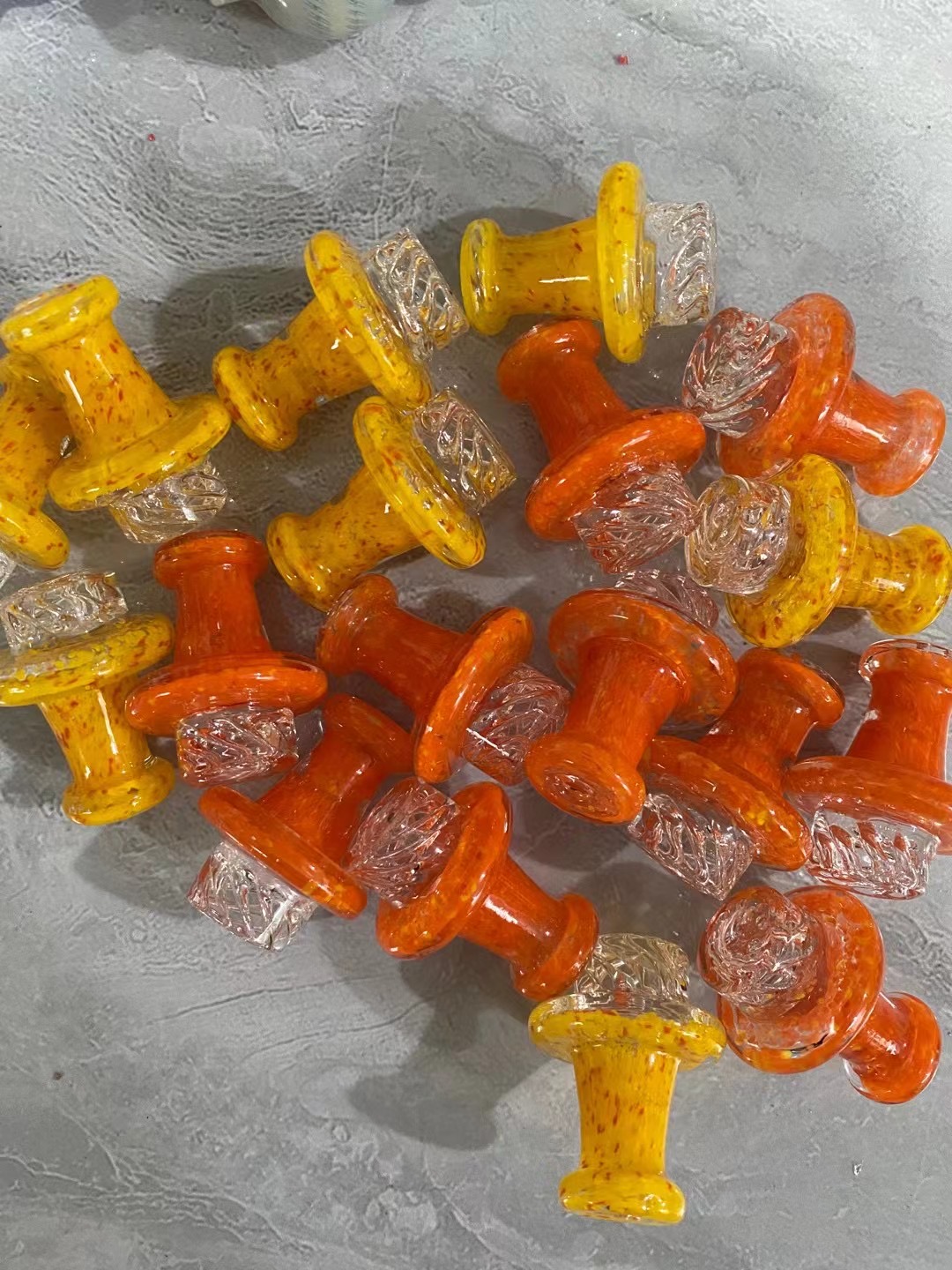
What Is a Carb Cap and Why Wholesale Buyers Need It
A carb cap is a small lid that covers the bucket of a quartz banger while you take a dab. It controls airflow inside the banger, which changes how the concentrate vaporizes. Without a cap, the vapor escapes upward and the dab burns too hot. With a cap, the air pressure drops, the concentrate vaporizes at a lower temperature, and the flavor profile comes through clean. Quartz components tolerate heat levels that would stress ordinary borosilicate, which is why quartz is the standard material for high-temperature nail and banger applications (quartz reference).
For wholesale buyers, carb caps matter for a simpler reason: they are consumables. Customers lose them, break them, upgrade them, and buy extras for different bangers. A smoke shop that sells dab rigs without carb caps leaves money on the counter. The accessory sale is often the second or third purchase in the same visit, which makes carb caps one of the highest-turnover items in the concentrate category. This guide covers the styles, materials, and sourcing terms that matter when you buy wholesale carb caps.
Every cap you stock must match the joint size of the bangers you sell. The three standard sizes are 10 mm, 14 mm, and 18 mm. If your inventory carries 14 mm flat-top bangers as the primary SKU, your cap order should mirror that split. This is the same logic behind the full wholesale parts and accessories range we produce: accessories exist to complete the rig, not to sit beside it.
Directional, Bubble, and Flat: The Three Baseline Styles
Carb caps fall into three baseline styles. Each one changes the airflow pattern inside the banger, and each one appeals to a different customer.
A directional cap has a shaped channel that pushes the vapor in a circular motion across the concentrate. This is the style most often paired with terp pearls, because the moving air spins the pearls and spreads the concentrate across the full heating surface. Directional caps are the most popular style in the wholesale market today. They suit customers who care about flavor and are willing to pay a little more for it.
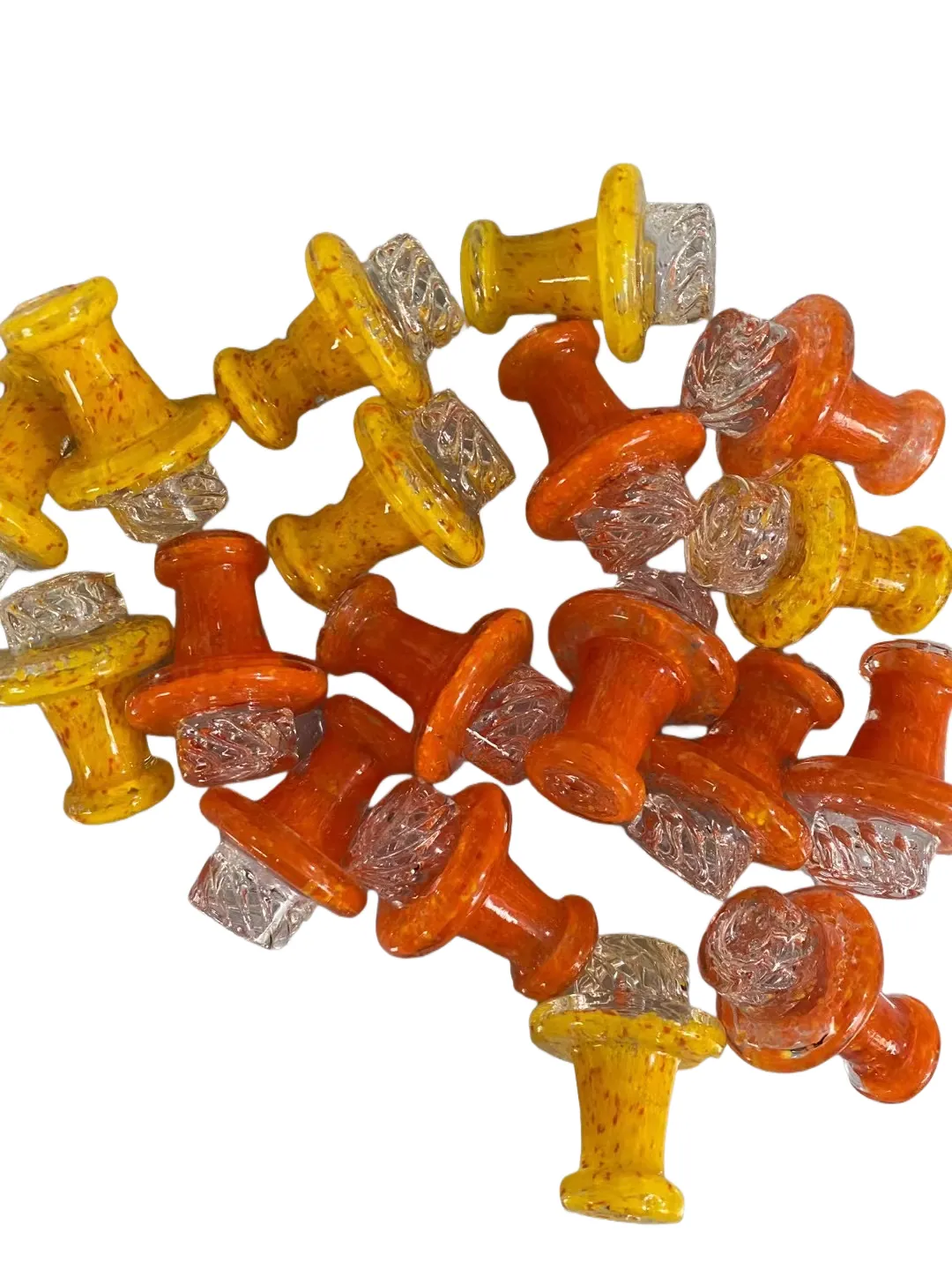
A bubble cap is a flat disc with a protruding knob on the underside. You hold the knob and steer the cap by hand, which gives the user direct control over where the air hits the concentrate. Bubble caps are forgiving and simple. They are a good default for first-time dab users and for shops that want one cap style that works with almost everything.
A flat cap is the simplest design: a plain lid that covers the bucket completely. It creates a sealed chamber with no directional control. Flat caps are cheap to produce, which makes them the entry-level SKU. They work well as a loss-leader or bundle item, but most experienced customers will reach for a directional or bubble cap instead.
For a starting assortment, stock directional caps as the primary line across the three joint sizes, bubble caps as the secondary line, and flat caps only as bundle fillers. This mirrors what we see in actual reorder patterns from our wholesale customers—the directional styles turn over faster, and the simple styles get bundled.
Materials: Quartz, Glass, Ceramic, and Titanium
Carb cap material determines heat resistance, durability, and price point. The four materials on the wholesale market are quartz, borosilicate glass, ceramic, and titanium.
Quartz caps are the premium option. They resist thermal shock better than glass, which matters because caps sit directly over a red-hot banger. Quartz caps keep flavor clean and last longer under daily use. They cost more, and premium customers accept that.
Borosilicate glass caps are the mid-range workhorse. They are cheaper than quartz and perform well for most users. The trade-off is durability: glass is more likely to crack if it touches the hot banger wall repeatedly. For volume orders, glass caps offer the best cost-to-quality balance.
Ceramic caps sit between glass and quartz on price. Ceramic holds heat well and comes in many colors, which makes it popular for branded lines. The downside is weight and fragility in transit. Packaging quality matters more with ceramic than with any other material.
Titanium caps are the durability option. They do not break, which makes them attractive for customers who keep dropping their gear. Titanium caps are the heaviest option and the most expensive at the entry level, but they are effectively a lifetime purchase.
Material choice drives your price tiers. A quartz directional cap sits at the top of your accessory shelf, a glass bubble cap fills the middle, and a glass flat cap covers the budget end. The material mix you order should match the price range your customers already accept for bangers.
Joint Fit and Airflow: The Two Specs That Decide Returns
Two specifications cause most carb cap returns: joint fit and airflow restriction. Both are easy to check before you commit to a bulk order.
Joint fit means the cap seats on the banger without wobbling or sticking. A loose cap leaks air, which defeats the whole purpose. A tight cap is hard to remove while hot. The three standard joint sizes—10 mm, 14 mm, and 18 mm—should be manufactured to a consistent tolerance so that any cap from the batch fits any banger from the same size class. When you evaluate samples, seat each cap on a matching banger and check for lateral movement and removal resistance. Carb caps pair with concentrate use described in dab references, where vapor-pressure control at low temperature drives accessory demand.
Airflow restriction controls how much air passes through the cap. More restriction creates lower pressure inside the banger, which vaporizes concentrate at lower temperatures. Directional caps offer adjustable restriction through the shape of the channel. Bubble caps give fixed restriction. If your customers run low-temperature dabs, they will expect caps with tighter airflow. If they are beginners, a more open cap is easier to use.
We apply the same fit-and-finish checkpoints to every accessory that leaves our factory, from caps to downstems to complete percolator assemblies. If you are sourcing a full accessory line, the parts and accessories catalogue shows the range we produce under one roof.
Ash catchers sit in the same accessory line — see the wholesale ash catcher guide for the add-on that keeps bong water clean and turns a bong sale into a two-item basket.
Stock the Glass Pipes Your Customers Actually Buy
Elfglass produces the full wholesale catalog, from hand pipes and sherlocks to dab rigs, percolator bongs, and accessories, in proven best-selling specs. Tell us your market and we will recommend a catalog mix with pricing.
MOQ from 100 pieces | BSCI / WRAP / ISO 9001 | NDA before every project
Carb Caps and Terp Pearls: The Inventory Pairing
Carb caps sell best when they are paired with terp pearls. A terp pearl is a small quartz sphere that sits inside the banger and spins when the cap directs airflow across it. The spinning pearl spreads the concentrate and prevents hot spots. Customers who buy directional caps are the same customers who buy terp pearls. The pairing is not optional—it is how the system works.
From an inventory perspective, this pairing creates a natural upsell. Every directional cap sold should come with a suggestion for matching pearls. Every pearl pack sold should reference the cap that works with it. The economics are straightforward: pearls are cheap to stock, take almost no shelf space, and attach themselves to every new dab rig sale.
If you are new to the accessory side of the dab category, the terp pearls guide covers sizing, materials, and how to build a pearl inventory that matches your banger lines. The same MOQ logic applies: 100 pieces per design or SKU, whether you order caps, pearls, or both.
Sourcing Carb Caps: MOQ, Sampling, and Lead Time
Carb cap sourcing follows the same commercial structure as the rest of our factory. The minimum order quantity is 100 pieces per design or SKU. You can order 100 quartz directional 14 mm caps as one SKU, 100 glass bubble 10 mm caps as another, and so on. The per-design MOQ keeps your first order small enough to test the market without committing to a container.
Sampling takes one to three business days. We produce physical samples to your exact specifications—material, style, joint size, and finish—so you can check fit and airflow before production. Sample cost and shipping terms are quoted on request.
Production lead time is seven to twelve business days for orders of 100 pieces and above, starting after sample approval and deposit receipt. Payment terms are T/T with 30 percent deposit at order confirmation and 70 percent balance before shipment. All projects begin with a mutual NDA, and the factory holds BSCI, WRAP, and ISO 9001 certifications.
If you have questions about pricing, material options, or lead times, reach out through our contact page and we will respond within 12 hours with a detailed quote.
Building a Carb Cap Product Line: Assortment and OEM
A wholesale carb cap line does not need to be huge to be profitable. The practical starting point is nine SKUs: three materials (quartz, glass, ceramic) in three joint sizes (10 mm, 14 mm, 18 mm) in the directional style, plus a bubble cap option in the two best-selling sizes. That covers the majority of bangers on the market without tying up your working capital.
OEM opens the differentiation door. Custom options include branded caps with your logo etched or printed on the top, color-matched sets that pair with your banger line, custom packaging with your branding, and mixed-material sets for gift bundles. Custom molds are exclusive to your project and protected by NDA. The design-to-sample cycle works the same way as our other products: concept discussion, 3D model on Day 2, then physical sampling.
Retailers who build a coherent accessory story—caps, pearls, and replacement parts under one brand—create repeat purchase patterns that rig-only lines never achieve. If you are evaluating a supplier for the first time, the red-flag checklist for sourcing wholesale glass applies equally to accessory orders, and our dab rig starter kit guide shows how accessories anchor the bundle strategy.
Downstems and bowls follow the same sourcing rules as caps, with one advantage: the parts are small, so the entry barrier is low. The wholesale downstems and bowls guide details joint sizes, plain versus diffused stems, and the replacement-part SKU mix that turns breakage into repeat sales.
Quick Comparison: Choosing Your Carb Cap Mix
| Style | Material Options | Best For | Price Tier | Wholesale Priority |
|---|---|---|---|---|
| Directional | Quartz, glass, ceramic | Flavor-focused customers, terp pearl users | Mid to High | Primary line |
| Bubble | Glass, ceramic | Beginners, universal fit | Mid | Secondary line |
| Flat | Glass | Budget bundles, backup caps | Low | Bundle filler |
| Titanium | Titanium only | Durability-focused customers | High | Niche add-on |
| OEM Custom | Any | Branded product lines | Custom | Differentiation play |
Frequently Asked Questions
What is the most popular carb cap style for wholesale?
Directional caps are the most popular style in the wholesale market. They pair with terp pearls, appeal to flavor-focused customers, and command a higher price than bubble or flat caps. A practical starting line is directional caps in the three standard joint sizes, with bubble caps as the secondary option.
What carb cap material should I stock?
It depends on your price tiers. Quartz caps are the premium option with the best thermal shock resistance. Borosilicate glass caps offer the best cost-to-quality balance for volume orders. Ceramic caps come in many colors and suit branded lines. Titanium caps are the durability option that never breaks.
What is the MOQ for wholesale carb caps?
The standard MOQ is 100 pieces per design or SKU. You can order different styles, materials, and joint sizes across separate SKUs. Sampling takes 1 to 3 business days, and production takes 7 to 12 business days for orders of 100 pieces and above.
Can I get custom carb caps with my brand?
Yes. OEM carb caps with logo etching or printing, color-matched sets, and custom packaging are available under the same 100-piece-per-design MOQ. Custom molds are exclusive to your project and protected by NDA.
About the Author
Ava Zeng is the founder of Elfglass, a Shenzhen-based borosilicate glass pipe manufacturer serving B2B brands worldwide. Every guide on this site is grounded in her production-floor experience— the annealing lines, QC checkpoints, and export orders behind each claim.
Before you commit to a supplier, read her founder’s story and trust promise, and the guide to vetting a reliable glass pipe manufacturer— the same red-flag checklist Elfglass applies to its own suppliers.
Ready to Source Custom Glass Pipes?
Get a free quote within 24 hours. MOQ from 100 pieces. NDA-protected design consultation.
