
Trade Assurance vs T/T: Which Protects Your Deposit When Buying from China?
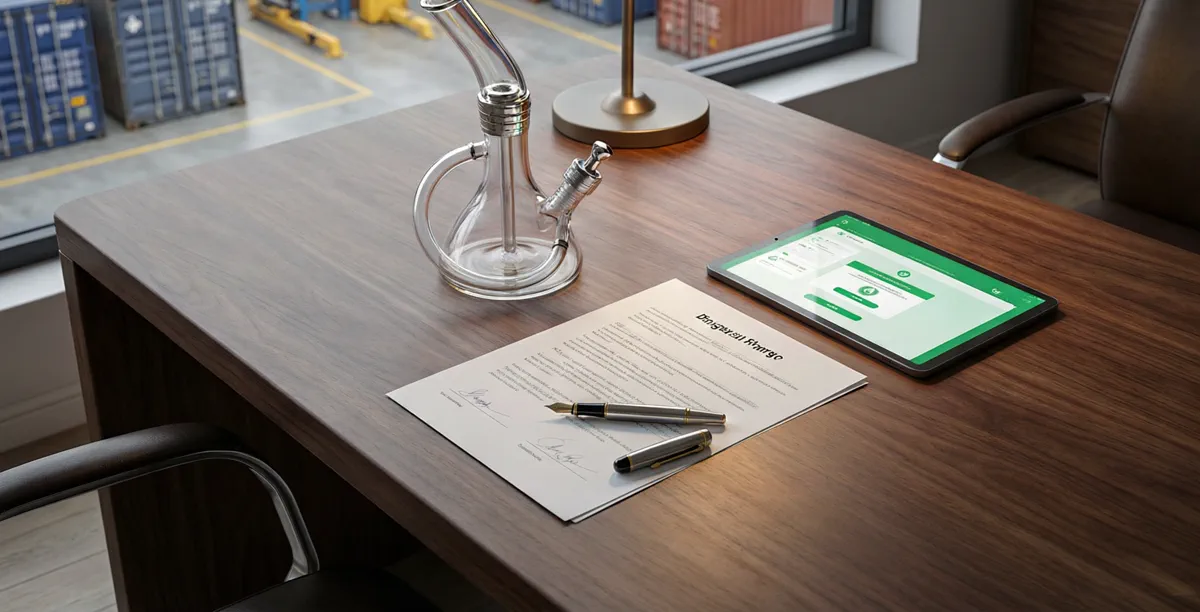
You are staring at a proforma invoice for $4,800. The supplier wants 30% upfront — $1,440 wired to a bank account you have never verified. The wire leaves your account within 24 hours. If the glass pipes arrive broken, three weeks late, or never show up at all, what do you actually have?
Trade Assurance protects your deposit better on first orders because funds stay in escrow until verified shipment, while a plain T/T wire transfer sends money directly to the supplier with limited recourse. For repeat orders with a trusted factory, T/T 30/70 splits lower transaction fees.
That is the real question behind trade assurance vs tt. Both methods move money from your account to a factory in China. Only one gives you a formal refund mechanism when a deal goes wrong. The other relies entirely on who you chose to trust. A telegraphic transfer (TT) is a wire-based international payment method with no built-in escrow, which is why payment terms deserve such close scrutiny in cross-border sourcing (telegraphic transfer reference).
This guide breaks down both methods the way a procurement desk evaluates them: protection scope, real cost, transfer speed, and what happens when an order breaks. No theory. Just mechanics you can apply to your next purchase order.

Key Takeaways
Short on time? Here is the verdict by scenario. The full reasoning follows in each section.
- First order with a supplier you have never met: Use Trade Assurance if they sell on Alibaba. You get refund rights when shipment runs late or quality misses the contract spec.
- Repeat buyer working with an audited factory: T/T at 30% deposit and 70% before shipment is faster and cheaper. Your protection shifts from platform escrow to relationship and contract.
- Trade Assurance costs buyers nothing. The supplier absorbs the platform fee. T/T costs you $25 to $50 or more per wire in bank charges.
- Trade Assurance only covers money paid through the platform. Wire a deposit straight to a supplier bank account and you hold zero protection. No exceptions.
- T/T is irreversible. Once the wire clears, no bank will reverse it. Your only recourse is contract law and negotiation.
- Trade Assurance claims carry a deadline. File quality claims within 30 days of delivery confirmation. Miss the window and the case closes.
- The supplier matters more than the payment method. A factory holding BSCI, WRAP, and ISO 9001 certifications is your strongest protection layer under either method.
What Is Trade Assurance and How Does It Actually Work
Trade Assurance is Alibaba.com’s built-in buyer protection program. Think of it as conditional escrow. You pay through the platform, the platform holds the money, and the supplier only receives funds after the order meets the terms both parties wrote into the contract. Elfglass lists current designs and production capacity on its wholesale water pipes page, giving buyers verifiable details before any deposit is wired.
The mechanic sounds simple. The details decide whether your claim succeeds or dies.
The Escrow Mechanic
You and the supplier draft an order on Alibaba. The contract lists product specs, quantity, unit price, shipping deadline, and quality standards. You pay through the platform, and the money sits with Alibaba, not with the supplier. Release happens after you confirm delivery — or automatically if you stay silent past the confirmation window.
That last part trips buyers up. If you skip inspection and raise no issue inside the window, the platform assumes everything is fine and releases the funds. Silence equals approval.
What It Actually Covers
- Shipment delays. The supplier misses the shipping deadline written in the contract, and you can file for a refund or compensation.
- Quality failures. Received goods do not match the written spec, and you can file a claim with photos or inspection reports as evidence.
Coverage caps at the amount you actually paid through the platform. Vague contract terms do not get enforced. The platform arbitrates on what is written, not on what you assumed over chat messages.
The Claim Window
Quality claims must be filed within 30 days of delivery confirmation. Shipment delay claims open after the contract deadline passes with no dispatch. Miss the 30-day window and the case closes. There is no appeals queue and no second chance.
Who Pays for Trade Assurance?
Buyers pay nothing. The supplier absorbs the platform service fee, calculated as a percentage of order value. In practice, some suppliers inflate their on-platform unit price to recover that fee. Ask for side-by-side quotes — platform price versus direct price — if you want the real difference.
One scope note: Trade Assurance protects the transaction, not your product design. If you send custom artwork to any factory, pair payment protection with an NDA. Our step-by-step guide to importing glass pipes covers the full sourcing sequence, from design files to delivery.
How T/T Works in Real Factory Orders
T/T stands for telegraphic transfer — a bank wire from your account to the supplier’s account. No platform sits in the middle. No referee exists. Once the funds clear, the money belongs to the supplier, and no bank will reverse the transaction.
The Wire Flow
You receive a proforma invoice carrying the supplier’s bank details: beneficiary name, account number, SWIFT code, and bank address. Your bank sends the wire through the SWIFT network, usually through one or two intermediary banks. Transit takes 1 to 3 business days. Each bank in the chain may deduct a handling fee along the way.
Verify every detail against the supplier’s business license before you send. A beneficiary name that does not match the company name is the classic fraud pattern. One changed character can reroute your deposit to an unrelated account.
The 30/70 Standard
Most China factory orders run on one structure: 30% deposit to start production, 70% balance before shipment. The deposit secures your slot in the production schedule and covers raw materials. The balance clears after production finishes and the goods pass inspection.
This split protects both sides. The factory will not cut glass without commitment money. You keep the majority of your funds until the goods exist and you have seen photos, videos, or an inspection report. We unpack the buyer-side exposure in more depth in our guide to T/T payment terms and the risks buyers face.
Balance Against B/L Copy
For sea freight, many buyers pay the 70% balance against a copy of the Bill of Lading. The B/L copy proves the goods were loaded onto a vessel. You pay, the supplier sends the original documents by courier, and you use them to claim your cargo at the destination port.
The structure works. It just moves your inspection moment earlier. If you wait for the B/L to check quality, the goods are already on the water and your bargaining power is gone. Inspect before final payment, not after.
Trade Assurance vs T/T Comparison Table
Here is the trade assurance vs tt comparison, side by side. Save this table. It answers most of the payment questions buyers send us.
| Factor | Trade Assurance | T/T (Telegraphic Transfer) |
|---|---|---|
| Deposit protection | Platform holds funds until you confirm delivery | None — the wire is irreversible once funds clear |
| Quality recourse | Claim within 30 days of delivery; platform mediates and may refund | Contract negotiation only; no third-party referee |
| Delay recourse | Refund or compensation if supplier misses the contract shipping deadline | No built-in remedy; you rely on penalty clauses you negotiated |
| Fees for buyer | Free; supplier pays the platform fee | $25-$50+ per wire plus intermediary bank deductions |
| Transfer speed | Platform checkout; slight setup overhead, then fast | 1-3 business days through SWIFT |
| Refund path | Platform-managed claim with a defined outcome | Supplier goodwill or legal action |
| Off-platform use | Not available — coverage requires on-platform order and payment | Works with any supplier, any country, any channel |
| Best for | First orders and new suppliers | Repeat orders with verified factories and larger volumes |
Read the table twice and the pattern emerges. Trade Assurance buys you process. T/T buys you speed and flexibility. Neither one buys protection from a bad supplier.
Deposit Risk: Where Your Money Actually Goes Wrong
Payment method debates miss the point. Your deposit rarely fails because you picked the wrong transfer type. It fails because you picked the wrong supplier. Three scenarios cover most deposit losses we hear about from buyers.
Scenario 1: The Disappearing Supplier
A buyer wires a 30% deposit to a “factory” found through a search ad. Two weeks later the contact’s phone is dead and the website is gone. The bank account belonged to a trading shell, not a manufacturer. Wire recalls almost never succeed once funds clear, and cross-border recovery costs more than the deposit itself.
Scenario 2: The Quality Hostage
Production finishes. Inspection photos show wrong colors, thin walls, and crooked logo printing. You refuse the balance. The supplier refuses to ship. Your 30% deposit sits in their account while you negotiate from weakness. This is the most common deposit trap on T/T orders, and it hurts most when seasonal deadlines are attached.
Scenario 3: The Silent Delay
The order slips from 12 days to 6 weeks. The supplier keeps promising “next week.” Your holiday selling window closes while the goods sit in a Shenzhen warehouse. On Trade Assurance you would hold a claim path for the missed deadline. On bare T/T you hold a contract clause and a slow conversation.
Red Flags That Predict Deposit Loss
| Red Flag | What Usually Follows |
|---|---|
| Demands 100% upfront before production | Highest disappearance risk; you hold zero bargaining power after full payment |
| Refuses to sign a contract or detailed PI | No paper trail to support any dispute resolution |
| Bank account name differs from company name | Classic fraud setup; money lands with an unrelated party |
| Quotes 40%+ below market rate | Margin gets recovered through quality cuts — or deposit theft |
| Pressure to wire “today” to lock the price | Manufactured urgency designed to skip your verification steps |
None of these flags guarantees fraud on its own. Stack two or more, though, and you should walk away — regardless of payment method.
Test a factory with a small order first
The cheapest deposit insurance is a small first order. Elfglass accepts MOQs of 100 pieces per design, so your trial run keeps total exposure low while you verify quality, communication, and delivery promises.
Transparent Tiered Pricing and Flexible MOQ
Elfglass publishes volume tiers, explains every cost driver, and works with first-time buyers on realistic minimums and safe payment terms. Tell us your target quantity and we will quote a tier that protects your margin.
MOQ from 100 pieces | BSCI / WRAP / ISO 9001 | NDA before every project
Cost Differences: Fees, FX, Hidden Deductions
On a $3,000 order, fees sting more than buyers expect. Here is what each method actually costs you as the buyer.
| Cost Item | Trade Assurance | T/T |
|---|---|---|
| Platform service fee | $0 for buyer (supplier pays) | Not applicable |
| Transfer fee per payment | Depends on checkout channel chosen | $25-$50 per wire, typically charged twice per order (deposit + balance) |
| Intermediary bank deductions | Channel-dependent | $10-$30 deducted mid-route per wire |
| FX conversion spread | Platform rate if currency conversion applies | Your bank’s spread, often wider |
| Possible price loading | Supplier may pad unit price to cover platform fee | Usually none, but verify in writing |
The Wire Fee Stack
T/T charges arrive in layers. Your bank charges an outgoing wire fee. Intermediary banks deduct handling fees mid-route. Pick the wrong charge allocation (OUR, SHA, or BEN) on the wire form and one of two things happens: you overpay, or the supplier receives less than invoiced and the order stalls over a $30 shortfall.
The FX Angle
If your account runs in EUR or GBP and the invoice is USD-denominated, your bank applies its own FX spread to the wire. Platform payment channels apply their own rates too. Compare the all-in landed cost per unit, not the headline wire amount. Our breakdown of the full cost of importing water pipes from China shows where payment fees sit inside total landed cost.
Hidden Deductions
Suppliers on Trade Assurance sometimes raise the platform price to cover the service fee. Suppliers on T/T sometimes quote low to win the order, then recover margin through mold fees, packing fees, or “urgent production” surcharges later. The defense is identical either way: a written contract fixing unit price, tooling costs, and packing terms before any money moves.
Dispute Resolution: What Happens When Things Break
Every payment decision is really a dispute decision. You are choosing, in advance, who referees the fight if the order goes sideways.
Trade Assurance Claims
The platform gives you a structured path. You file a claim with evidence: product photos, inspection reports, contract screenshots. The platform team reviews both sides and proposes an outcome — partial refund, full refund, or rejection of the claim. The process runs in days to weeks, not months.
Strength: you need no lawyer and no China presence. Weakness: the platform only enforces what is written. A spec that says “good quality” produces a weak claim. A spec that lists borosilicate glass, 3mm wall thickness, and color codes produces an enforceable one.
T/T Disputes
No referee exists. Your tools are the written contract, the relationship, and — if the amount justifies it — legal action. A well-drafted contract names inspection standards, delay penalties, and refund triggers. A handshake plus a one-page proforma invoice gives you almost nothing when things break.
Practical reality: legal action against a Chinese factory only makes financial sense for large amounts. Below that threshold, your real protection is pre-payment verification and staged payments. Never pay the 70% balance until photos or a third-party inspection confirm the goods match spec.
Two Different Sports
Trade Assurance resolves disputes like a helpdesk ticket — evidence in, decision out. T/T resolves disputes like a business negotiation — bargaining power, relationship, and patience decide the outcome. The first favors buyers who lack China experience. The second favors buyers who built verified relationships first.
Which Should You Use: Verdicts by Buyer Situation
The right answer depends on where you stand. Here is how we would advise different buyers, order by order.
| Your Situation | Recommended Method | Why |
|---|---|---|
| First order from a supplier found on Alibaba | Trade Assurance | Escrow protection while trust is zero |
| First order from a factory met at a trade show or through referral | T/T 30/70 with written contract and pre-shipment inspection | No platform in the deal; contract terms and staged payment carry the risk load |
| Repeat buyer, 3+ completed orders with the same factory | T/T 30/70 | Lower friction and fewer fees; the relationship carries the trust |
| Sample order under $200 | Either — Trade Assurance if available | Risk exposure is small under either method |
| Order above $10,000 | T/T with third-party inspection | At scale, independent inspection protects you better than any payment rail |
Notice the pattern. Protection needs run highest when trust is lowest. As verification stacks up — audits, factory visits, completed orders — you can shift toward the faster, cheaper method. If you want to shrink exposure further, start by trimming order size; our guide on negotiating MOQs around the 100-unit mark shows how to get factories to flex.
How Elfglass Structures Payment
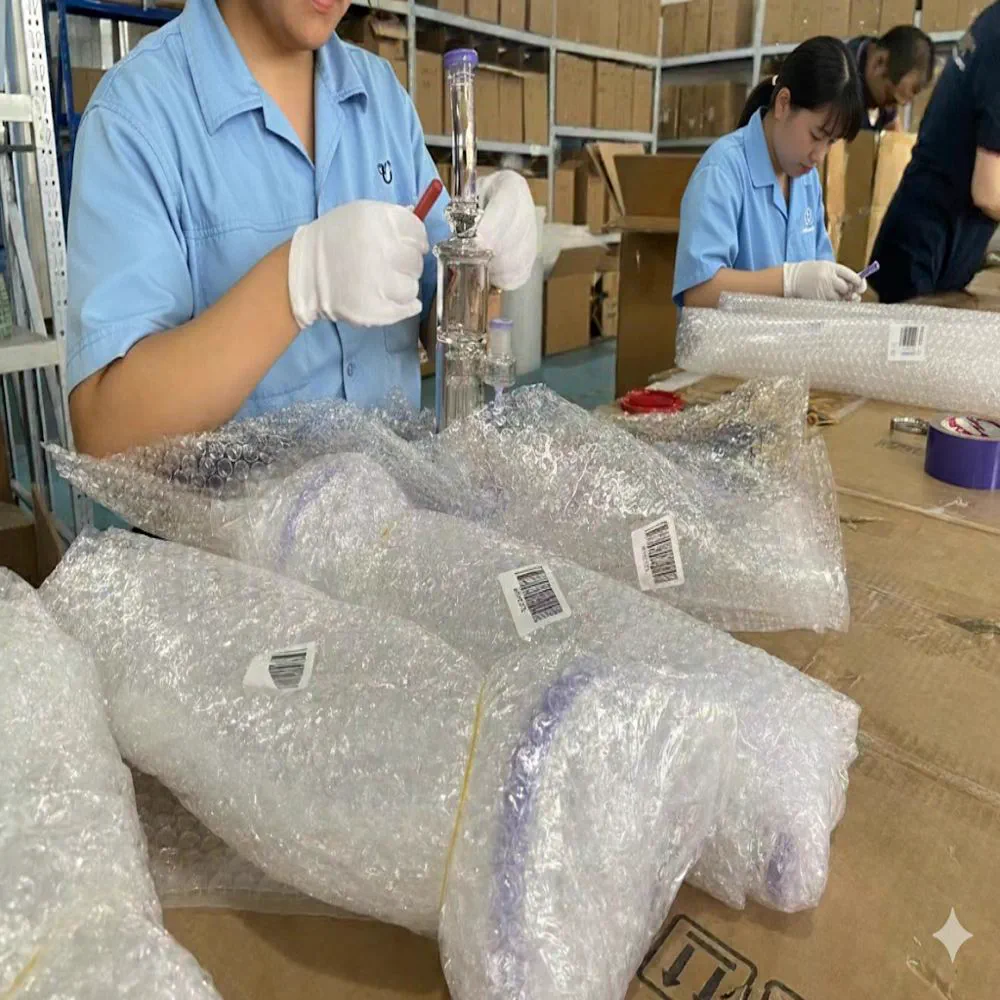
We are Elfglass. We have manufactured glass pipes in Shenzhen since 2010 — a 20-person team in a 1,000-square-meter facility, producing up to 10,000 pieces per month.
We work on T/T: 30% deposit to start production, 70% balance before shipment. No platform fees. No escrow delays. Instead of a platform guarantee, we give buyers something we consider stronger: verifiable proof at every step.
- Certifications you can verify: BSCI, WRAP, and ISO 9001. Third parties audit all three — they are not self-declared badges.
- MOQ of 100 pieces per design: your trial order stays small, which keeps your deposit exposure small.
- Production in 7-12 days for orders of 100+ units, with samples finished in 1-3 days.
- Written quote within 12 hours: slow quotes usually predict slow everything else.
- NDA signed before any custom project, and custom molds stay exclusive to your brand — we never reuse them for other buyers.
Before you wire anything, we send our business license, bank details through verified channels, and references from repeat buyers. Insist on the same package from any factory you consider. A supplier that hesitates on transparency is telling you something about your deposit.
Ready to price your next order without gambling the deposit? Send us your design or a reference photo. You will have a written quote within 12 hours.
Frequently Asked Questions
Is it safe to pay a 30% deposit to a Chinese supplier I have never met?
It can be, if you verify first. Confirm the bank account name matches the company’s business license, check third-party certifications like BSCI, WRAP, and ISO 9001, and sign a written contract before paying. Start with the smallest viable order — with factories that accept 100 pieces per design, a trial order keeps your deposit exposure low. Never pay 100% upfront to a new supplier.
Does Alibaba Trade Assurance cover a T/T deposit paid outside the platform?
No. Trade Assurance only covers orders placed and paid through the Alibaba platform. Wire money directly to a supplier’s bank account and that order falls outside coverage entirely. This holds even when you first found the supplier on Alibaba. Off-platform payment means off-platform risk.
What happens if I wire the deposit and the supplier disappears?
Report the transfer to your bank immediately — recall attempts rarely succeed once funds clear, but speed is your only edge. File a report with your local police and report the supplier on any platform where you found them. Practical recovery from a shell company in another country is rare. That asymmetry is why pre-payment verification beats post-payment remedies every time.
What is the difference between T/T in advance and T/T at sight?
Both use the same bank wire mechanism; the timing differs. T/T in advance means you wire money before goods ship — fully or partially, most commonly as a 30% deposit. T/T at sight means you wire payment when shipping documents, usually the B/L copy, get presented to you. Advance payment puts risk on the buyer. At-sight payment shifts more risk to the supplier.
Can I use Trade Assurance with a factory I found off Alibaba?
Only if the factory agrees to register the order on Alibaba and accept payment through the platform. Many established factories do not sell on Alibaba at all. In that case, protect yourself with contract terms, certification checks, staged payment such as 30/70, and pre-shipment inspection. Those four layers together replicate most of what escrow provides.
Get a Quote for Your Next Order
Planning an order from a China supplier? Talk to our factory team about Trade Assurance terms, staged payment, and pre-shipment inspection before you commit a deposit.
About the Author
Ava Zeng is the founder of Elfglass, a Shenzhen-based borosilicate glass pipe manufacturer serving B2B brands worldwide. Every guide on this site is grounded in her production-floor experience — the annealing lines, QC checkpoints, and export orders behind each claim. Payment-protection mechanisms fall under the trade finance umbrella, where instruments like letters of credit and escrow reduce counterparty risk.
Ready to Source Custom Glass Pipes?
Get a free quote within 24 hours. MOQ from 100 pieces. NDA-protected design consultation.
