
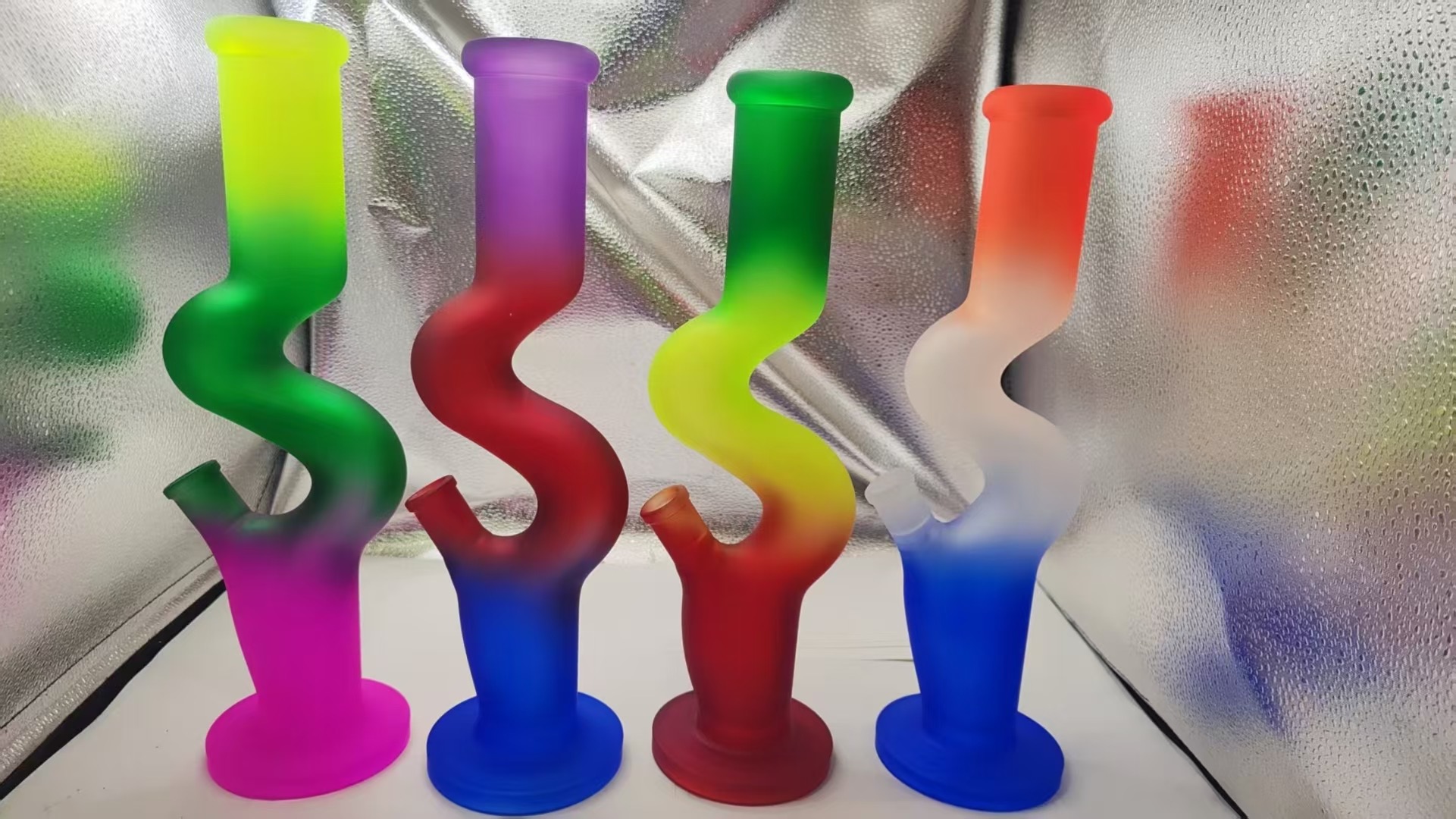
You have walked the trade show floor, collected six catalogs, and now face the real problem: which beaker bong specs will actually move off your shelves? Most wholesale buyers default to whatever the supplier recommends, then discover three months later that the 16-inch heavy-wall units sit unsold while customers keep asking for something else. The gap between what factories push and what retail buyers reorder is wider than most importers realize. Water filtration here follows the basic water-pipe principle—smoke drawn through water before reaching the user—which is documented in standard references (water pipe design reference).
Beaker-style water pipes account for a dominant share of wholesale water pipe orders because the wide base solves the two problems retailers hear most: tipping and fragile bottoms. But “beaker” covers a range of configurations, and ordering the wrong combination of height, percolation, and joint size ties up capital in slow inventory. This guide breaks down the specifications that generate repeat orders, drawn from production-floor patterns at a factory that ships 10,000 units per month across four continents.
Key Takeaways
- The 10-to-14-inch height range generates the steadiest reorder volume because it balances shelf presence with shipping cost per unit.
- A 14mm female joint with included bowl covers the broadest retail customer base without fragmenting inventory across variants.
- Elfglass holds MOQ at 100 units per design, with sampling completed in 1–3 days and bulk production in 7–12 days for orders of 100+.
- Percolation choice splits by market: honeycomb discs for price-conscious segments, tree percs for mid-range, and no-perc beakers for entry-level price points.
- Payment terms of T/T 30% deposit and 70% before shipment protect both buyer and factory on first orders; quote turnaround at Elfglass is 12 hours.
Why the Beaker Shape Dominates Wholesale Orders
The beaker silhouette solves a physics problem that straight tubes and round bases handle less well: center of gravity. A flared base lowers the center of mass and widens the contact surface, which means fewer broken units on retail floors and fewer customer returns citing “it fell off the counter.” For a wholesale buyer, that translates directly into lower breakage rates during transit and in-store handling.
Retailers who stock water pipes sourced from Chinese factories consistently report that beaker units survive shipping better than equivalent-height straight tubes packed in identical cartons. The geometry distributes impact force across the wider base rather than concentrating it on a single wall. Factories know this too—beaker molds produce fewer rejects during annealing because the symmetrical flare cools more evenly than asymmetric designs.
The second advantage is water volume. A wider base holds more water without increasing overall height, which gives smoother percolation at compact sizes. Customers who test units in-store notice the difference immediately: a 12-inch beaker pulls smoother than a 12-inch straight tube because the diffusion path is longer.
Height Ranges That Sell
Wholesale beaker orders cluster into three height bands, each serving a different retail customer. Understanding which band your store serves prevents over-ordering in a category that gathers dust.
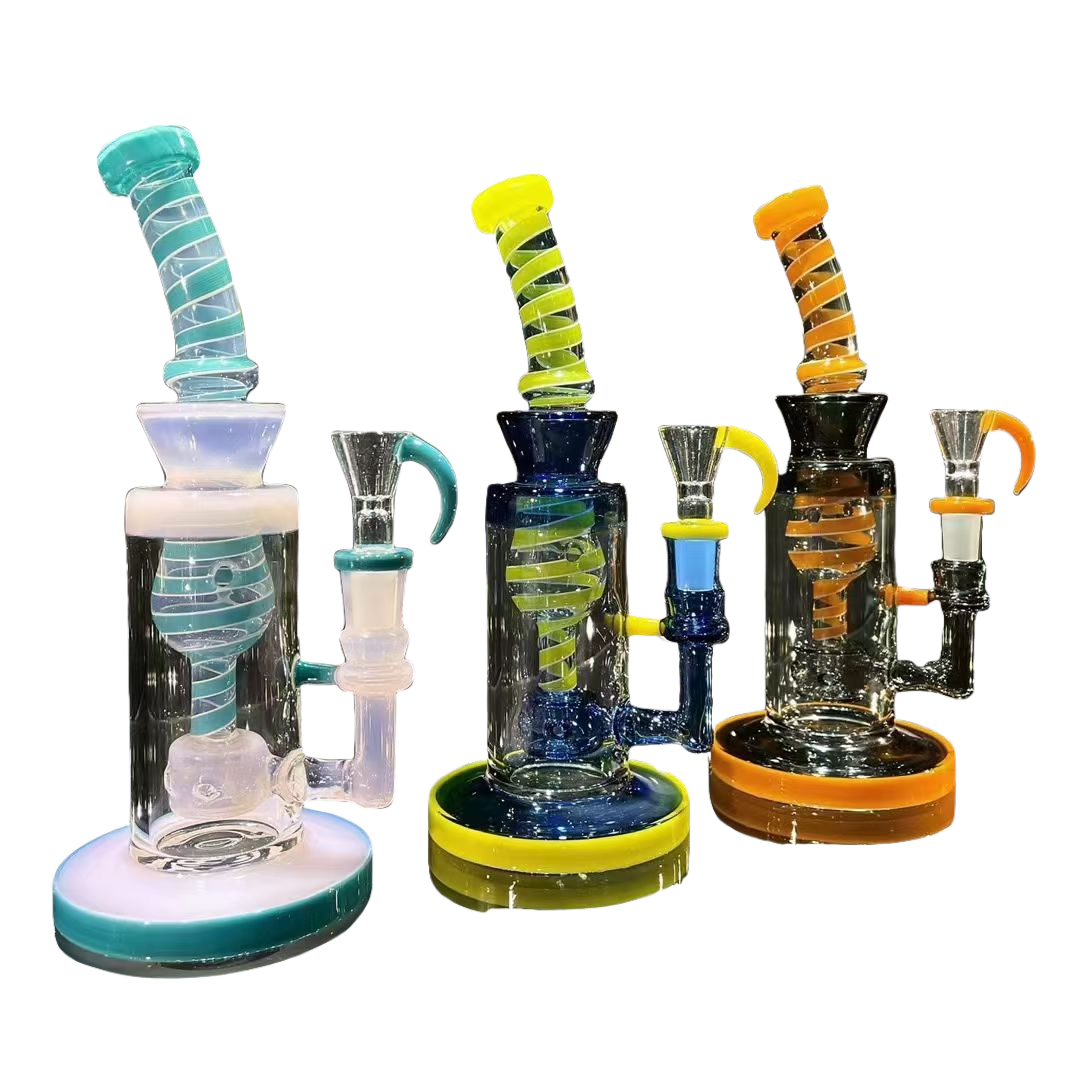
Entry-level units at 8 to 10 inches serve first-time buyers and gift purchasers. They price low, move fast, and tolerate simpler construction. Mid-range beakers at 10 to 14 inches form the volume core of most wholesale programs—large enough for satisfying percolation, compact enough for standard retail shelving and affordable shipping. Premium pieces at 14 to 18 inches target collectors and experienced users who want maximum diffusion and visual presence.
If you are placing a first order and lack sales data, weight your units toward the 10-to-14-inch band. It carries the lowest risk per dollar because it serves the widest customer slice. You can adjust the ratio after your first 60 days of sell-through data.
Joint Size and Bowl Configuration
The joint connects bowl to body, and its diameter determines accessory compatibility. Two sizes dominate wholesale: 14mm and 18mm female joints. A 14mm joint suits compact beakers under 12 inches where a large bowl would look disproportionate. An 18mm joint pairs with mid-size and large beakers where customers expect full-size bowls and may add ash catchers or pre-coolers later.
For buyers building a single-SKU trial order, the 14mm female joint with an included matching bowl covers the broadest customer base. It avoids the inventory fragmentation that comes from stocking multiple joint sizes, and aftermarket 14mm accessories are the most widely available at retail level.
One specification detail that separates experienced buyers from first-timers: confirm whether the joint is reinforced with an added glass ring at the weld point. Unreinforced joints on beakers under 3mm wall thickness develop hairline cracks after repeated bowl removal. Ask your supplier for a close-up photo of the joint weld before approving samples. At Elfglass wholesale water pipe production, joint reinforcement is standard on every beaker unit leaving the line.
Percolation Options by Price Tier
Percolators increase diffusion and smooth the draw, but each added perc raises unit cost, breakage risk, and cleaning difficulty. Match your perc choice to the price tier your store serves.
No percolator (open base): The simplest beaker design. Lowest cost, easiest to clean, fewest breakage points during shipping. Targets entry-level price points and customers who want low maintenance.
Honeycomb disc: A flat disc with dozens of small holes sits inside the base. It creates fine bubbles and noticeable smoothness at moderate cost addition. The flat geometry also adds structural rigidity to the base. This is the most-ordered perc type for mid-range wholesale beakers.
Tree percolator: Multiple arms with slits extend from a central stem. Superior diffusion but more fragile arms that can snap during rough handling. Best for premium units where the customer values smoothness over durability. Buyers comparing percolation systems can reference our detailed breakdown in the percolator types comparison guide.
Showerhead: A single vertical tube with slits at the top. Middle ground between honeycomb and tree—good diffusion with fewer fragile points. Works well in 12-to-14-inch beakers where a tree perc would crowd the chamber.
A practical rule from the production floor: every additional percolator adds handling time during assembly and another QC checkpoint. Factories charge accordingly. If your retail price ceiling is fixed, fewer percs with better glass thickness outperform multiple thin-wall percs that crack in transit.
Need beaker samples before committing to a bulk order? Elfglass turns samples around in 1–3 days and responds to spec inquiries within 12 hours.
MOQ 100 per design | BSCI & ISO 9001 certified | 7–12 day production
Stock the Glass Pipes Your Customers Actually Buy
Elfglass produces the full wholesale catalog, from hand pipes and sherlocks to dab rigs, percolator bongs, and accessories, in proven best-selling specs. Tell us your market and we will recommend a catalog mix with pricing.
MOQ from 100 pieces | BSCI / WRAP / ISO 9001 | NDA before every project
Color and Finish Decisions
Clear glass remains the volume leader for wholesale beakers because customers can see water level, cleanliness, and percolator action. But color orders are growing among retailers who want shelf differentiation from the hundreds of identical clear units on marketplace listings.
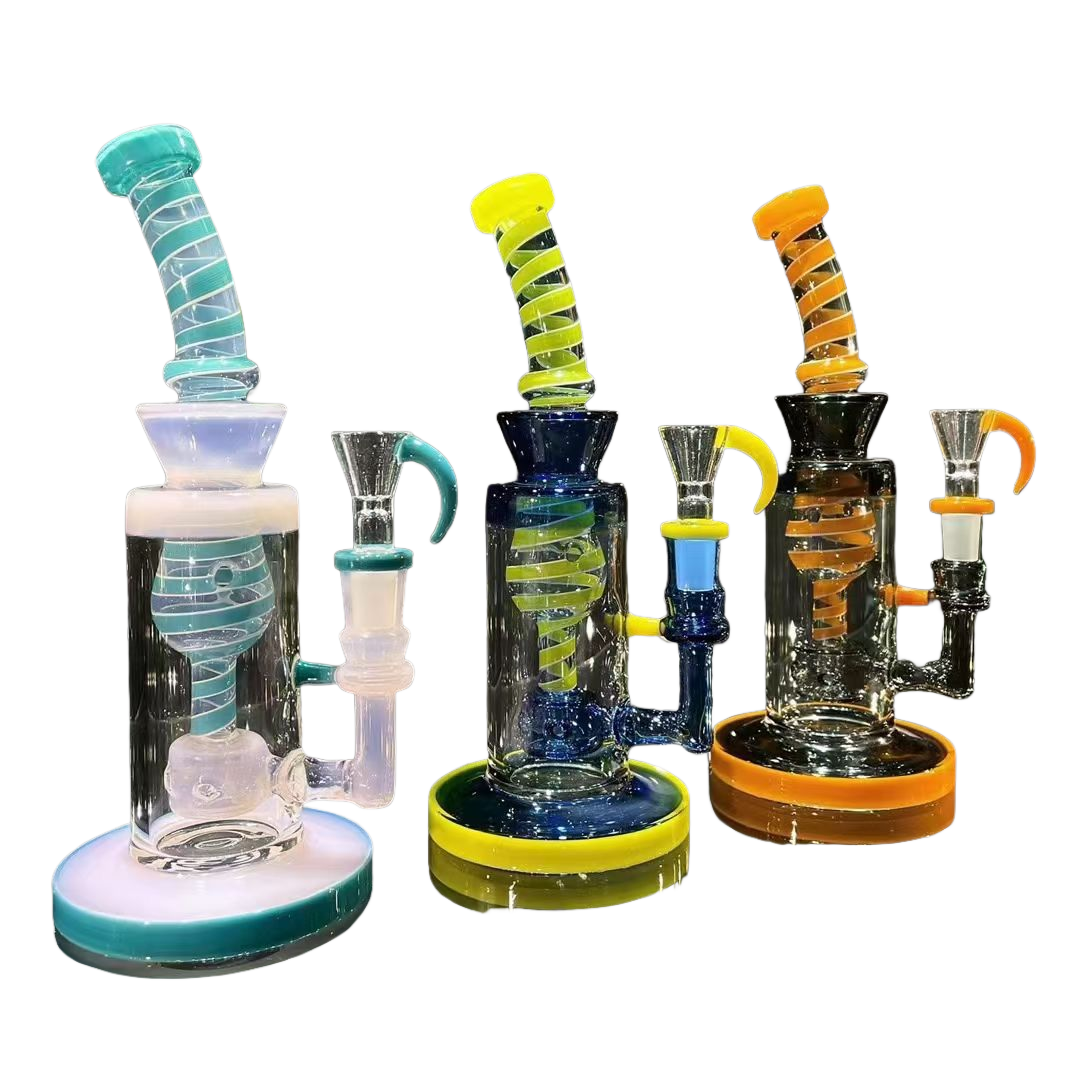
The safest color strategy for a first order: 70% clear, 30% split across two accent colors. Black and cobalt blue move consistently across US and UK retail. Green performs well in markets with strong lifestyle branding. Avoid ordering more than three colorways on a first run—each color is a separate production batch, and unsold color variants tie up shelf space without generating revenue.
Matte and frosted finishes add perceived value but complicate QC: surface defects show more prominently, and retailers must handle them with gloves during unboxing to avoid fingerprint marks. If you choose matte, budget for individual poly-bag wrapping at the factory level rather than bulk carton packing.
Ordering Logistics: MOQ, Sampling, Lead Times
Understanding the ordering sequence prevents the two most common first-timer mistakes: ordering too many variants at once, and skipping the sample stage to save time.
MOQ: At Elfglass, minimum order quantity is 100 units per design per SKU. This means one beaker model in one color requires 100 pieces minimum. If you want two colorways, that is 200 units total across two SKUs. The MOQ 100 trial order structure exists specifically so retailers can test a design without committing to container-load volumes.
Sampling: Sample production takes 1–3 days once specifications are confirmed. Use this stage to verify joint fit, base thickness, percolator alignment, and overall proportions. Photograph the sample next to a ruler and compare against your spec sheet before approving bulk production.
Bulk production: For orders of 100 units and above, production completes in 7–12 days. This timeline covers glassblowing, annealing, assembly, and factory QC. It does not include shipping—add freight time based on your destination port.
Payment: Standard terms are T/T with 30% deposit upon order confirmation and 70% balance before shipment. This structure protects the buyer (goods are inspected before final payment) and the factory (deposit covers raw material procurement).
Quality Checkpoints Before You Accept a Batch
Even with a trusted factory, buyers should verify four checkpoints before releasing final payment. These are the failure points that generate the most warranty claims and returns.
Joint concentricity: Insert the bowl and check that it sits vertical without wobble. A misaligned joint means the bowl tilts, creating uneven heating and eventual cracking. Reject any unit with visible tilt greater than 2 degrees.
Base flatness: Place the beaker on a flat surface and press gently on opposite edges. Rocking indicates a warped base from uneven annealing. These units will feel unstable to end users and generate returns.
Percolator function: Fill with water to the recommended level and pull air through the joint. Every perc hole should produce bubbles. Dead holes indicate a blocked or cracked perc disc.
Wall thickness consistency: Hold the unit up to light and look for thin spots, especially at the neck where the tube meets the base flare. Thin spots are stress concentrators that crack during temperature changes or minor impacts. Factories holding BSCI and ISO 9001 certifications run these checks as standard QC, but a buyer-side spot check on 10% of units catches anything the line misses.
Building Your First Spec Sheet
A spec sheet is your contract with the factory. Vague instructions like “standard beaker, 12 inches” invite interpretation differences that show up as wrong products. Write every dimension explicitly.
Your spec sheet should list: total height (measured from base bottom to mouth rim), base diameter, tube outer diameter, joint size and gender, bowl inclusion (yes/no), percolator type, color (Pantone reference if possible), wall thickness minimum, and packaging method. Attach a reference photo or sketch. Elfglass responds to spec inquiries within 12 hours and can flag manufacturability issues before you commit—impossible proportions, percolator types that do not fit the requested height, or color combinations that require separate furnace runs.
Send your completed spec sheet to the factory and request a written confirmation quoting unit price, MOQ, sample timeline, and production lead time. Compare responses from at least two suppliers before committing. The supplier who asks clarifying questions about your spec sheet is the one who will deliver what you actually designed.
Conclusion
Beaker bongs dominate wholesale water pipe orders for a structural reason: the shape solves stability, water volume, and shipping survival in one geometry. Choosing the right specs means matching height band to your customer base, selecting percolation by price tier, and locking joint size to the broadest accessory ecosystem.
- Start with 10–14 inch beakers in clear glass with a 14mm joint—they serve the widest customer segment.
- Match percolation to price tier: open base for entry, honeycomb for mid-range, tree or showerhead for premium.
- Use MOQ-100 trial orders to validate a design before scaling; sampling takes 1–3 days at Elfglass.
- Verify joint concentricity, base flatness, perc function, and wall thickness before releasing final payment.
Ready to spec your first beaker order? Send your requirements to Elfglass and receive a detailed quote within 12 hours—dimensions, pricing, and production timeline included.
Frequently Asked Questions
What is the minimum order quantity for wholesale beaker bongs?
At Elfglass, MOQ is 100 units per design per SKU. Two colorways of the same beaker model require 200 units total.
How long does sampling take for beaker bongs?
Sample production completes in 1 to 3 days once specifications are confirmed. Buyers should verify joint fit, base thickness, and proportions before approving bulk production.
What height range sells best for wholesale beakers?
The 10-to-14-inch band generates the steadiest reorder volume because it balances shelf presence with shipping cost. Entry-level stores add 8-to-10-inch units; premium shops stock 14-to-18-inch pieces.
For guidance on which dimensions move fastest in each market, see this best-selling bong sizes breakdown.
Do beaker bongs need a percolator?
Not necessarily. Open-base beakers serve entry-level price points with lower cost and fewer breakage risks. Honeycomb percs suit mid-range; tree and showerhead percs target premium buyers who prioritize smoothness.
What certifications should I verify before ordering wholesale beakers?
Request BSCI, WRAP, or ISO 9001 certification documents. These confirm the factory runs structured quality management and ethical labor practices. Elfglass holds all three.
About the Author
Ava Zeng is the founder of Elfglass, a Shenzhen-based borosilicate glass pipe manufacturer serving B2B brands worldwide. Every guide on this site is grounded in her production-floor experience— the annealing lines, QC checkpoints, and export orders behind each claim.
Before you commit to a supplier, read her founder’s story and trust promise, and the guide to vetting a reliable glass pipe manufacturer— the same red-flag checklist Elfglass applies to its own suppliers.
Beaker stability is documented in water pipe engineering references, where base width and center of gravity determine tip resistance.
Wall thickness also affects weight perception and durability. Our guide to heavy glass as a quality signal explains how thickness from 3mm to 9mm affects both customer perception and breakage resistance.
Ready to Source Custom Glass Pipes?
Get a free quote within 24 hours. MOQ from 100 pieces. NDA-protected design consultation.
