
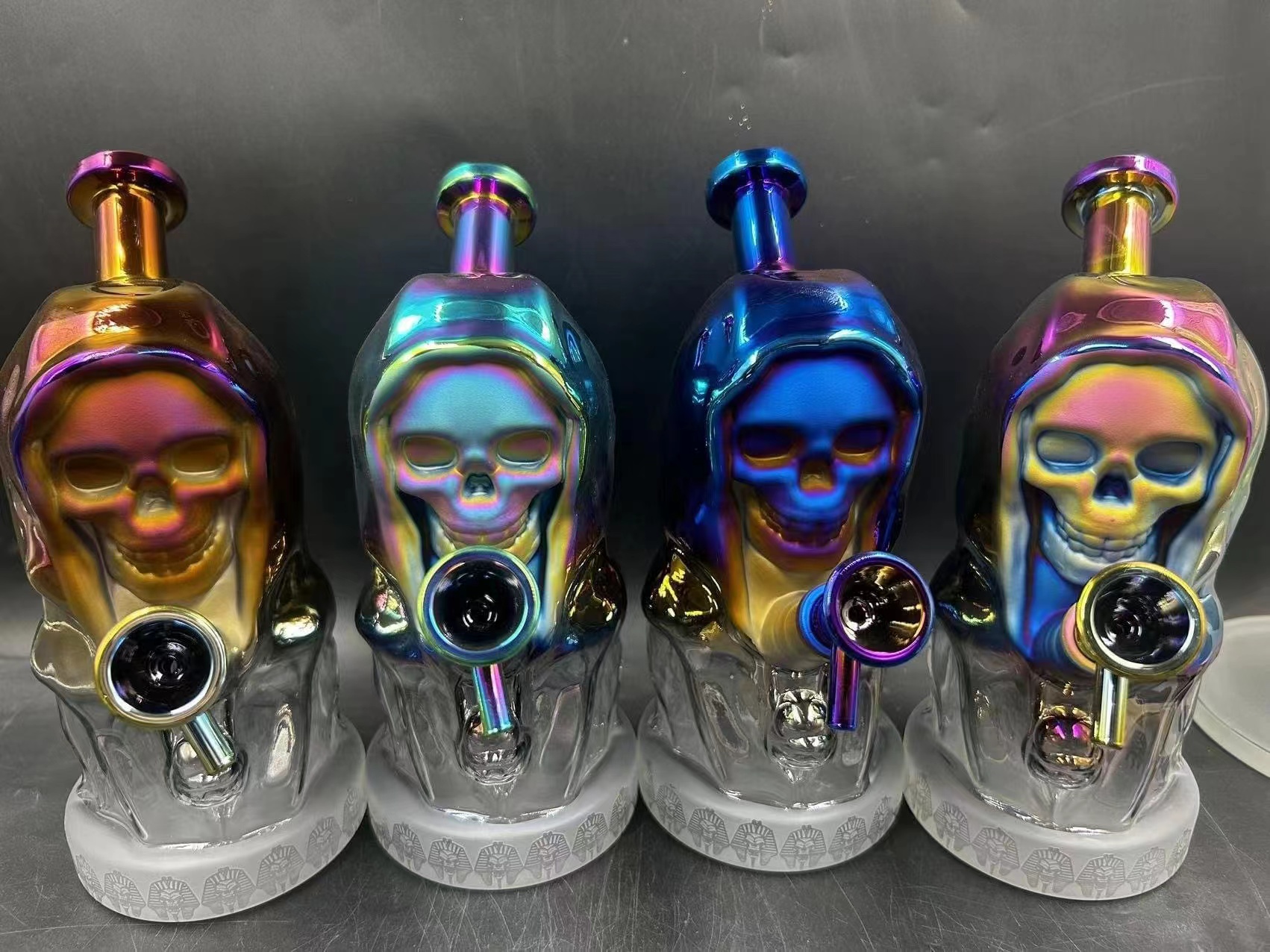
A recycler bong is a water pipe whose internal channel routes water and smoke through a continuous loop between two or more chambers before reaching the mouthpiece. The smoke cycles through the water multiple times during a single draw, which produces a level of cooling and filtration that single-chamber designs cannot replicate. For wholesale buyers, recyclers occupy a specific and profitable niche: they command premium retail pricing, attract experienced customers who have already owned simpler pipes, and generate strong reorder rates because their complexity makes them a “second or third purchase” category that customers upgrade into rather than start with. Water filtration here follows the basic water-pipe principle—smoke drawn through water before reaching the user—which is documented in standard references (water pipe design reference).
This guide covers the wholesale recycler market from a sourcing perspective: which configurations sell, what margins look like compared to standard beakers and straight tubes, how to evaluate quality on a format with more failure points, and how to structure a first recycler order at MOQ-100 volumes. Production data references a factory shipping 10,000 units monthly under BSCI and ISO 9001 quality systems.
Key Takeaways
- Recycler bongs carry higher per-unit retail margins than beakers or straight tubes because their complexity justifies premium pricing.
- The format has more glass joints and internal channels per unit, which increases breakage risk in transit—packaging must account for this.
- Recyclers attract experienced buyers upgrading from simpler pipes, so they sell best alongside mid-range and premium inventory.
- Elfglass produces recycler orders at MOQ 100 per design with 7–12 day production and sampling in 1–3 days.
- Quality checkpoints specific to recyclers include flow testing, seal integrity at every internal joint, and drain-back verification.
How Recyclers Work
In a standard water pipe, smoke passes through the water once and travels up to the mouthpiece. In a recycler, the internal geometry creates a loop: water and smoke are pulled from the main chamber through an upper chamber, then drain back down and cycle again during the same draw. Each cycle adds another pass of filtration and cooling.
The mechanism relies on precise internal channel geometry. The transfer tube connecting chambers must be angled correctly so that water flows up during a draw and drains back down when the draw stops. If the angle is wrong, water pools in the upper chamber or fails to cycle, and the recycler becomes a glorified straight tube with extra glass weight.
This precision requirement is what separates recycler production from simpler formats. Every internal joint is a potential leak point, every channel must be clear of glass drips, and the drain-back angle must hold across the entire production run—not just on the sample. Factories without tight process control produce recyclers that work on the sample unit but fail inconsistently across the batch.
Market Position and Buyer Profile
Recyclers do not compete with entry-level water pipes. They serve a customer who already owns a beaker or straight tube, understands what percolation does, and wants more. This buyer researches before purchasing, compares internal designs, and pays for function they can feel in the first draw.
For a wholesale buyer, this means recyclers belong in the mid-to-premium section of your inventory. They are not impulse purchases and they do not sell from a bargain bin. Position them next to your best-selling percolator-equipped water pipes where customers browsing premium options encounter them naturally.
The reorder pattern for recyclers differs from beakers. A store might reorder 100 beakers monthly but only 20–30 recyclers. The volume is lower, but the per-unit margin is higher and the customer loyalty is stronger—recycler buyers who have a positive experience tend to return to the same store for their next upgrade.
Margin Structure vs Standard Formats
Recyclers cost more to produce than equivalent-height beakers or straight tubes. The additional glass, the extra internal joints, and the longer assembly time all add to the factory price. But the retail markup on recyclers outpaces the production cost increase, which means the wholesale buyer captures a wider margin per unit sold.
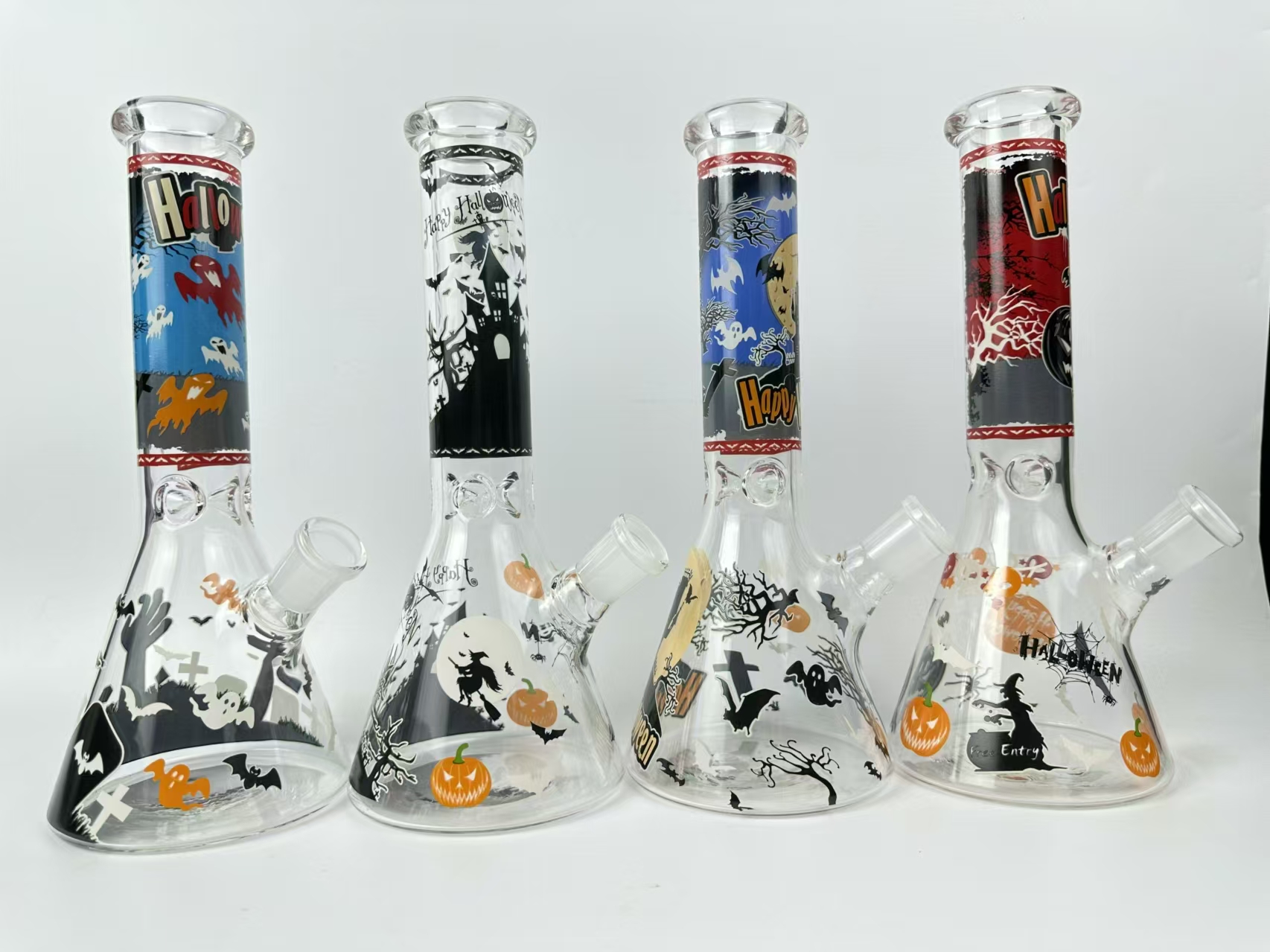
The pricing logic works like this: a standard 12-inch beaker has a factory price at one level and a retail price at a standard markup. A 12-inch recycler with equivalent glass quality has a higher factory price due to complexity, but the retail price jumps disproportionately because the customer perceives a functional upgrade, not just a cosmetic one. The wholesale buyer’s margin percentage on the recycler exceeds the margin percentage on the beaker.
This margin advantage holds as long as the recycler actually functions correctly. A malfunctioning recycler generates returns and negative reviews that destroy the margin gain. Quality control is not optional for this format—it is the foundation of the business case. Buyers sourcing water pipes from Chinese factories should prioritize suppliers with documented QC processes for internal channel geometry.
Stock the Glass Pipes Your Customers Actually Buy
Elfglass produces the full wholesale catalog, from hand pipes and sherlocks to dab rigs, percolator bongs, and accessories, in proven best-selling specs. Tell us your market and we will recommend a catalog mix with pricing.
MOQ from 100 pieces | BSCI / WRAP / ISO 9001 | NDA before every project
Configurations That Sell at Wholesale
Recycler designs vary in chamber count, loop geometry, and size. Wholesale demand concentrates in a few proven configurations.
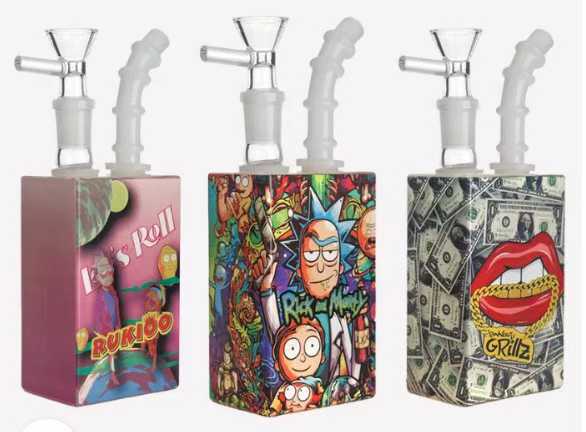
Two-chamber vertical recycler: The simplest recycler format. One lower chamber, one upper chamber, connected by a transfer tube. Water cycles between the two during a draw. This is the volume leader for wholesale because it delivers the recycler experience at the lowest complexity and cost. Height range: 10–14 inches.
Two-chamber side-by-side: Both chambers sit at the same height, connected by a horizontal transfer channel. The visual is distinctive and the draw is smooth, but the wider footprint makes shipping more complex. Suits premium retail positioning.
Three-chamber recycler: Adds a third loop for maximum filtration. Diminishing returns on smoothness versus two-chamber, but the visual complexity justifies collector pricing. Low wholesale volume, high per-unit margin.
For a first recycler order, the two-chamber vertical format in 12-inch height with a 14mm joint is the lowest-risk entry point. It demonstrates the recycler function clearly, ships in standard carton dimensions, and prices into the mid-range retail bracket where most water pipe customers browse. Buyers can explore the full range through our wholesale water pipe catalog.
Quality Checkpoints Specific to Recyclers
Recyclers have more failure modes than any standard water pipe format. Buyers must verify checkpoints that do not apply to beakers or straight tubes.
Flow test: Fill the unit to the recommended water line and draw air through the joint. Water should cycle visibly through both chambers during the draw and drain back completely when the draw stops. If water pools in the upper chamber, the drain-back angle is wrong. Reject the unit.
Seal integrity: Every internal joint where the transfer tube meets a chamber wall must be airtight. Submerge the unit and blow gentle air through the joint—bubbles at any joint other than the intended percolation point indicate a leak. Leaks destroy the cycling function.
Channel clarity: Look through the transfer tube with a flashlight. Glass drips or constrictions inside the channel restrict flow and cause gurgling or incomplete cycling. The channel should be clear and uniform in diameter.
Base stability: Recyclers with upper chambers have a higher center of gravity than beakers. Place the unit on a flat surface and check for rocking. A rocking recycler will tip during use—this is a return-generating defect.
At Elfglass, recycler QC includes all four checkpoints as standard procedure. Buyers approving samples should run the same checks before authorizing bulk production. The MOQ-100 trial order structure allows testing one recycler design with full QC verification before scaling.
Ordering and Production Timeline
Recycler production follows the same timeline framework as standard water pipes at Elfglass, but the sampling stage carries extra weight because of the format’s complexity.
Spec submission: Provide chamber layout (vertical or side-by-side), total height, joint size, and any color requirements. Elfglass responds within 12 hours with pricing and manufacturability feedback.
Sampling (1–3 days): The sample is the critical gate. Run all four QC checkpoints on it. If the flow test passes and seals are tight, approve bulk production. If it fails, request a revised sample before committing capital.
Bulk production (7–12 days for 100+ units): Glassblowing, internal channel assembly, annealing, QC. Recyclers require more torch time per unit than standard formats, so complex designs trend toward the upper end of the production window.
Payment: T/T 30% deposit on confirmation, 70% before shipment. Standard terms apply regardless of format complexity.
Packing Recyclers Safely
Recyclers break more easily in transit than beakers or straight tubes. The internal transfer tubes are the vulnerability—they protrude into the chamber space and snap under lateral impact. Standard carton packing that works for a beaker will generate damage claims on recyclers.
The packing requirement: individual foam cradle with cutouts that support both chambers and the transfer tube independently. No part of the internal channel should bear weight or contact the carton wall. Budget for per-unit protective packaging that costs more than standard beaker wrapping—this cost is recoverable in the margin advantage recyclers carry.
Communicate the packing specification to your factory explicitly. At Elfglass, recycler orders ship in custom-cut foam inserts as standard practice. If sourcing from a factory that does not specialize in recyclers, verify their packing method before approving the order. A 5% damage rate on a recycler order erases the margin premium that made the format attractive in the first place.
Conclusion
Recycler bongs earn their place in a wholesale water pipe program through superior per-unit margins and strong customer loyalty. The format demands more from the factory (precision internal geometry, longer assembly, careful packing) and more from the buyer (thorough QC, premium packaging budget, correct shelf positioning).
- Start with one two-chamber vertical recycler at 12 inches, 14mm joint, MOQ 100.
- Run flow test, seal check, channel clarity, and base stability on the sample before approving bulk.
- Position recyclers in your premium section alongside multi-perc water pipes.
- Budget for individual foam cradle packing—do not use standard beaker cartons.
Ready to add recyclers to your wholesale range? Send your recycler spec to Elfglass—chamber layout, dimensions, and pricing returned within 12 hours.
Frequently Asked Questions
What is the minimum order for wholesale recycler bongs?
At Elfglass, MOQ is 100 units per design per SKU. Sampling completes in 1 to 3 days and bulk production takes 7 to 12 days for orders of 100 or more.
Why are recycler bongs more expensive to produce?
Recyclers require additional glass material, extra internal joint assembly, longer torch time, and more complex quality control including flow testing and seal verification at every internal connection.
Which recycler configuration sells best at wholesale?
Two-chamber vertical recyclers in the 10 to 14 inch height range lead wholesale volume. They deliver the recycler experience at the lowest complexity and cost, pricing into the mid-range retail bracket.
How should recycler bongs be packed for shipping?
Individual foam cradles with cutouts supporting both chambers and the transfer tube independently. Standard beaker carton packing generates damage on recyclers because internal tubes snap under lateral impact.
What quality checks apply specifically to recyclers?
Four checkpoints: flow test (water cycles during draw and drains back), seal integrity (no leaks at internal joints), channel clarity (no glass drips in transfer tube), and base stability (no rocking on flat surface).
About the Author
Ava Zeng is the founder of Elfglass, a Shenzhen-based borosilicate glass pipe manufacturer serving B2B brands worldwide. Every guide on this site is grounded in her production-floor experience— the annealing lines, QC checkpoints, and export orders behind each claim.
Before you commit to a supplier, read her founder’s story and trust promise, and the guide to vetting a reliable glass pipe manufacturer— the same red-flag checklist Elfglass applies to its own suppliers.
Recycler rigs present unique weight considerations due to their complex return paths. Our heavy glass quality guide covers when heavier walls help and when they may hurt usability.
Recycler function follows the water-filtration principles described in recycler designs, where continuous loop action cools smoke through multiple chambers.
Ready to Source Custom Glass Pipes?
Get a free quote within 24 hours. MOQ from 100 pieces. NDA-protected design consultation.
