

A retailer in Manchester unpacks a carton of straight tube water pipes, lines them up on the shelf, and watches them outsell every beaker in the store by the end of week two. Not because straight tubes are “better” in any absolute sense, but because they occupy less shelf depth, stack more units per carton, and match the clean aesthetic that younger buyers photograph for social media. Straight tubes fill a different slot in the wholesale catalog than beakers, and stocking both is how serious water pipe retailers build balanced inventory. Water filtration here follows the basic water-pipe principle—smoke drawn through water before reaching the user—which is documented in standard references (water pipe design reference).
This guide maps the straight tube configurations that generate repeat wholesale orders: which heights move, which percolation combos justify their cost, and how to structure a first order that tests the category without overcommitting capital. The production data comes from a factory shipping 10,000 units monthly under BSCI and ISO 9001 quality systems.
Key Takeaways
- Straight tube pipes ship more units per carton than beakers because their uniform diameter eliminates wasted void space between flared bases.
- The 12-to-16-inch range is the wholesale volume core for straight tubes; under 12 inches buyers shift toward hand pipes instead.
- Inline and honeycomb percolators pair best with straight tubes because their geometry matches the vertical chamber without crowding.
- Elfglass produces straight tube orders of 100+ units in 7–12 days with MOQ at 100 per design; samples ship within 1–3 days.
- Ice pinch placement at 60% of total height is the functional standard—lower placement lets water reach the mouth; higher placement is unreachable for most users.
Straight Tube vs Beaker: Where Each Wins
Straight tubes and beakers serve overlapping but distinct retail segments. The straight tube’s uniform diameter from base to mouth creates a vertical visual line that reads as modern and minimal. Beakers communicate stability and traditional function. Neither is wrong—but they attract different buyers, and conflating them in your ordering leads to one category underperforming.
Straight tubes win on shelf efficiency. Their uniform width means retailers can fit more units per shelf row, and the cartons pack tighter because there is no flared base creating void space. For a store paying rent per square meter, this geometry directly reduces storage cost per unit sold.
Beakers win on stability and water volume at compact sizes. A 10-inch beaker holds more water and tips less easily than a 10-inch straight tube. For buyers targeting the under-12-inch segment, beakers remain the safer stock choice.
Where straight tubes dominate: the 12-to-18-inch range, where the vertical profile becomes visually striking, percolation chambers have room to breathe, and the tipping concern diminishes because the taller tube’s weight sits lower relative to its height. Buyers sourcing these larger formats should review our water pipe sourcing guide for factory selection criteria that apply to both shapes.
Height and Diameter Specifications
The wholesale straight tube market segments cleanly by height. Units under 10 inches compete with hand pipes on price and serve as impulse purchases—thin margins, high volume. The 12-to-16-inch band is where wholesale straight tube revenue concentrates. Above 16 inches, units shift toward display and collector positioning with slower turnover but higher per-unit margin.
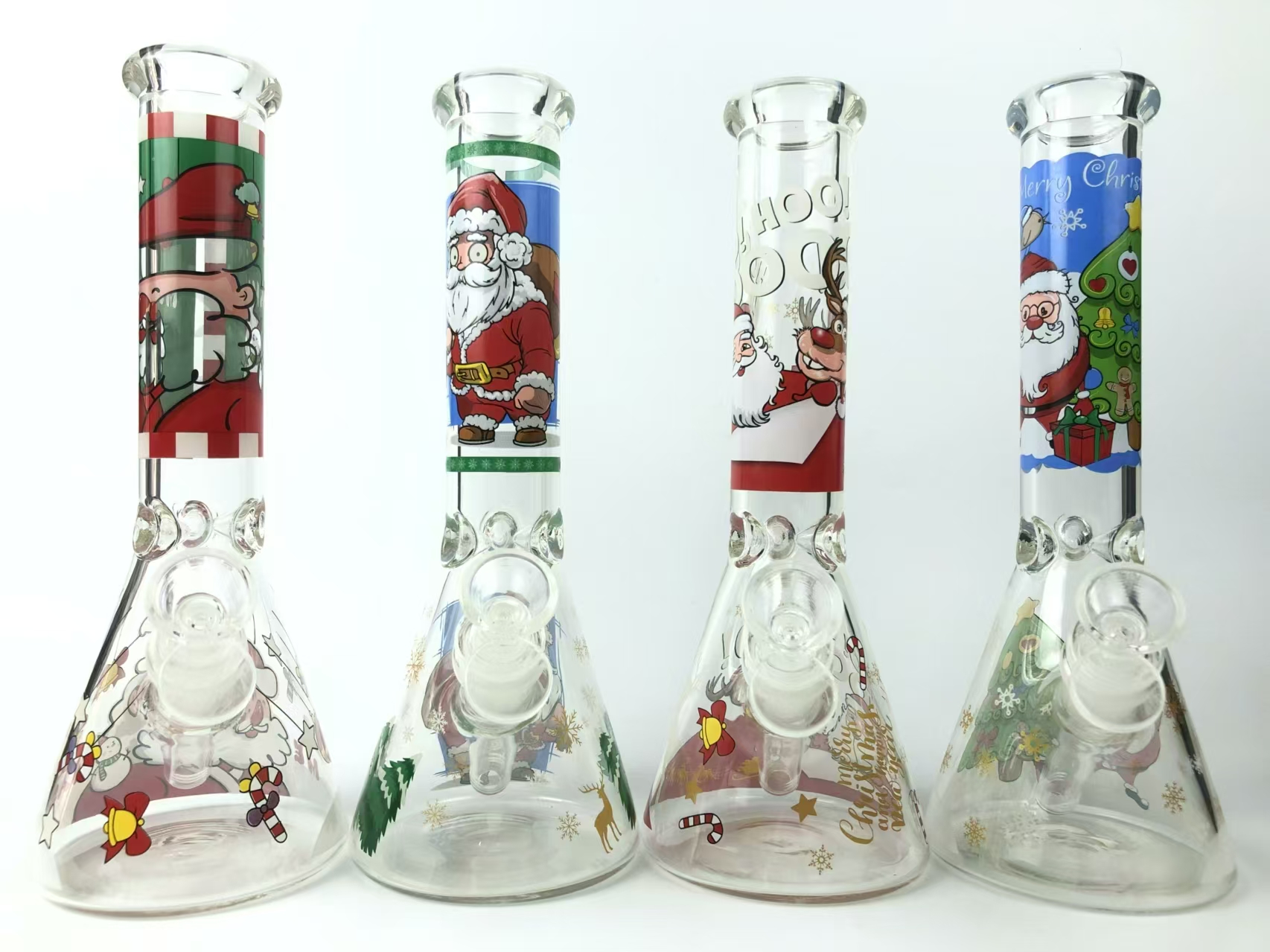
Tube outer diameter typically runs 32mm to 50mm for wholesale units. Thinner tubes (32–38mm) reduce material cost and unit weight, which matters for shipping economics at volume. Wider tubes (44–50mm) feel more substantial in hand and accommodate larger percolator discs, but they add glass weight and cost per unit.
One specification that trips up first-time buyers: total height measurement. Confirm with your factory whether the listed height includes the mouthpiece flare or measures to the tube rim. A 2mm difference in measurement convention does not matter for a single unit, but across 500 units it changes which retail shelf dividers they fit. At Elfglass, height is measured from base bottom to mouth rim, stated explicitly on every production spec sheet.
Percolation That Matches the Tube
Not every percolator suits a straight chamber. The vertical geometry of a straight tube favors percs that diffuse horizontally across the water column rather than ones requiring lateral space.
Inline percolators sit at the base and push slits parallel to the tube floor. They create a curtain of fine bubbles rising through the full water column. This is the most-ordered perc for straight tubes because it adds diffusion without consuming chamber width. Cost addition is moderate, and the flat geometry resists breakage during shipping.
Honeycomb discs work well in tubes 14 inches and above, where the disc sits 3–4 cm above the base and still leaves adequate water depth below. In shorter tubes, the disc crowds the chamber and reduces effective water volume.
Showerhead percs extend vertically, matching the tube’s own geometry. They suit 12-to-16-inch tubes where a single vertical perc arm does not crowd the chamber. Drawback: the extended arm is a breakage point if the unit ships without adequate foam protection.
Avoid tree percolators in straight tubes under 14 inches. The arms extend laterally, and in a narrow straight chamber they sit too close to the wall, restricting airflow and creating stress points. If your customer base wants tree perc diffusion, that demand is better served by beaker or round-base formats with wider chambers. For a full breakdown of perc types, see the percolator types comparison.
Ice Pinch and Mouthpiece Details
Ice pinches are the small inward dimples that hold ice cubes above the water line. They are a low-cost feature addition that increases perceived value—customers see them, understand the function instantly, and associate them with premium construction.
Placement matters. The functional standard is 60% of total tube height, measured from the base. At this position, most adults can drop a standard ice cube in without tilting the pipe. Pinches placed higher require tilting, which wets the mouthpiece. Pinches placed lower let melting water reach the user’s lips during a draw.
Mouthpiece finish is the detail customers feel first. A polished rim with slightly flared lip reads as quality; a rough-cut or uneven rim reads as factory defect even when the rest of the pipe is flawless. When approving samples, run your thumb across the rim. If it catches, reject the batch standard.
Stocking straight tubes alongside beakers? Elfglass produces both in the same production window, so one PO covers your full water pipe range.
MOQ 100 per design | Samples in 1–3 days | ISO 9001 & BSCI certified
Stock the Glass Pipes Your Customers Actually Buy
Elfglass produces the full wholesale catalog, from hand pipes and sherlocks to dab rigs, percolator bongs, and accessories, in proven best-selling specs. Tell us your market and we will recommend a catalog mix with pricing.
MOQ from 100 pieces | BSCI / WRAP / ISO 9001 | NDA before every project
Color Strategy for Straight Tubes
Straight tubes show color differently than beakers. The uniform diameter means color appears as a continuous vertical band, which makes saturation and consistency more visible. A slightly uneven color application that disappears on a beaker’s curved surface reads as a defect on a straight tube.
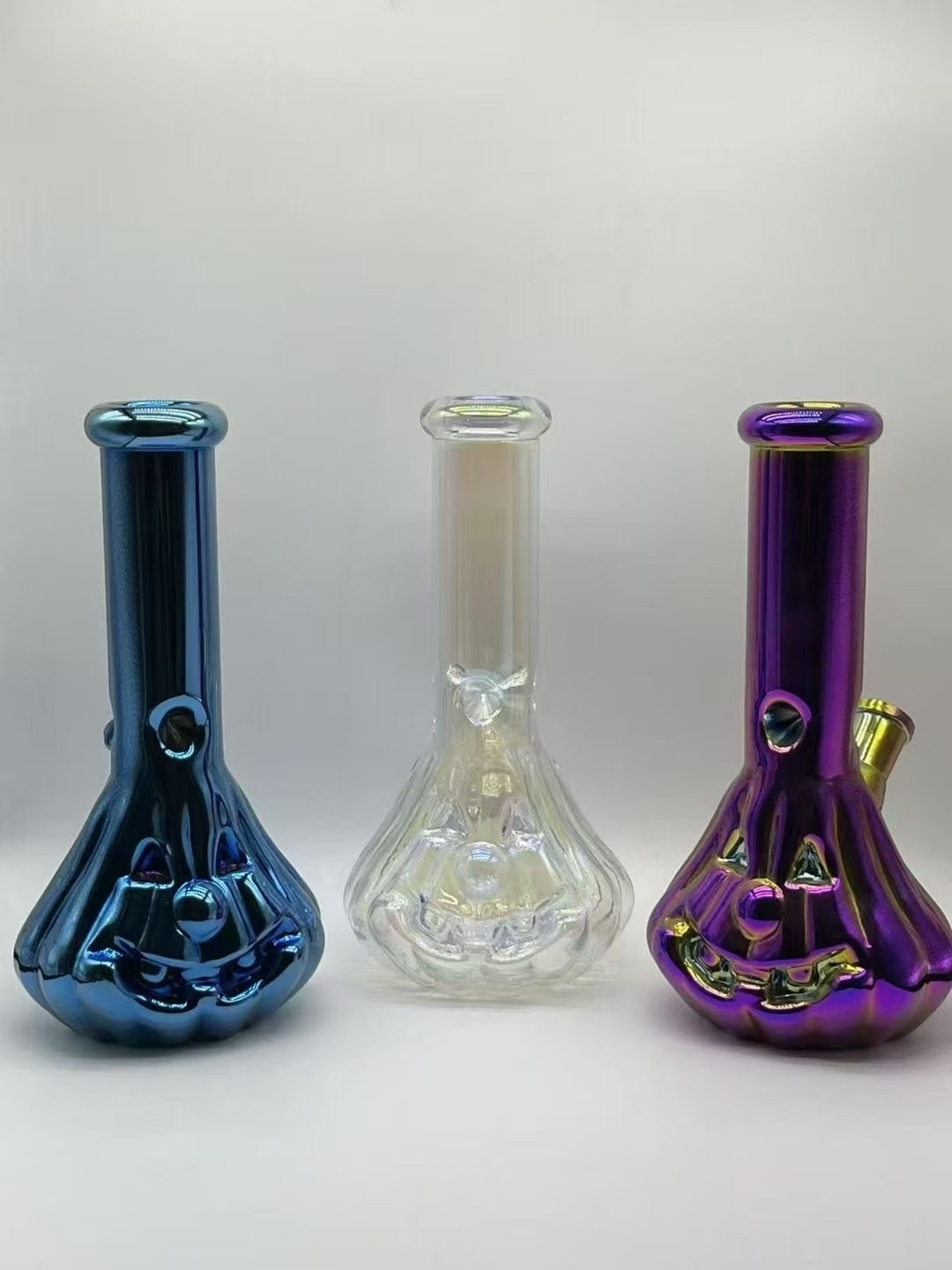
Clear remains the volume anchor for the same reason it dominates beakers: customers want to see water and percolation. But straight tubes in solid black and cobalt blue generate strong shelf presence because the vertical color band creates a bold visual statement that clear glass cannot match.
For a first straight tube order, allocate 60% clear, 25% one dark solid (black or cobalt), and 15% one bright accent (green, amber, or red). This ratio mirrors what reorders consistently at wholesale level. Resist the temptation to order five colorways at 100 units each—five SKUs at MOQ means 500 units and five separate production runs before you have sell-through data on any of them.
Ordering and Production Timeline
The production sequence for straight tubes is identical to other water pipe formats at Elfglass, but the timeline has specific checkpoints buyers should track.
Day 0: Submit spec sheet with height, diameter, joint size, perc type, color, and ice pinch placement. Elfglass responds within 12 hours with pricing and manufacturability feedback.
Days 1–3: Sample production. Inspect the sample for tube straightness (roll it on a flat surface—any wobble indicates a warp), joint alignment, and rim finish.
Days 3–4: Approve sample and confirm bulk order. Pay 30% T/T deposit.
Days 4–16: Bulk production for 100+ units. Glassblowing, annealing, perc assembly, joint grinding, QC inspection. Production completes in 7–12 days depending on order complexity.
Pre-shipment: Final QC photos sent to buyer. Pay 70% balance. Goods packed and dispatched.
Buyers placing MOQ-100 trial orders should treat the sample stage as non-negotiable. Three days of sampling prevents three months of unsold inventory.
Packing Density and Shipping Economics
Straight tubes pack more efficiently than any other water pipe format. Their uniform diameter means cartons stack units in parallel rows with minimal void space. A standard export carton that holds 24 beakers can hold 30–36 straight tubes of equivalent height, depending on diameter and protective wrapping.
This density advantage compounds at shipping scale. If your freight cost is calculated per cubic meter, straight tubes deliver more sellable units per shipping dollar than any beaker or round-base order of the same volume. For buyers importing to the US, UK, Australia, or Canada, this geometry advantage directly improves landed cost per unit.
The trade-off: straight tubes require individual foam sleeves or bubble wrap because their uniform diameter means adjacent units contact along a long parallel surface. Beakers nest with only base-to-base contact. Budget for per-unit wrapping and confirm the factory’s packing method before approving the order. The arrival inspection checklist covers what to verify when the carton reaches your warehouse.
First Order Playbook
If you have never stocked straight tubes, structure your first order to test the category with minimal capital exposure.
Start with one design: 14-inch height, 38mm outer diameter, 14mm female joint with included bowl, inline percolator, ice pinch at 60% height, clear glass. Order 100 units (one MOQ). This configuration sits at the center of the demand curve—large enough for satisfying percolation, priced for mid-range retail, and compatible with the widest accessory ecosystem.
Run the units for 45–60 days. Track sell-through rate, customer questions (they reveal the next spec adjustment), and breakage rate. If sell-through exceeds your store average, place the reorder in the same spec or add one color variant. If it underperforms, adjust height or perc type before ordering again rather than abandoning the category.
Every reorder decision should reference actual sales data, not supplier suggestions. The factory’s incentive is volume; your incentive is velocity. A 100-unit order in the right spec outperforms a 500-unit order in a spec your customers did not ask for.
Conclusion
Straight tube water pipes earn their wholesale shelf space through packing efficiency, clean visual lines, and strong performance in the 12-to-16-inch range. They complement beakers rather than replacing them, and retailers who stock both formats capture a wider customer base.
- Order straight tubes in the 12–16 inch range with inline or honeycomb percolation for the strongest wholesale demand.
- Verify tube straightness by rolling the sample on a flat surface before approving bulk production.
- Exploit the packing density advantage: straight tubes ship 25–50% more units per carton than equivalent-height beakers.
- Structure first orders as a single 100-unit MOQ trial in one spec; reorder based on 45–60 days of sell-through data.
Ready to add straight tubes to your water pipe range? Send your spec requirements to Elfglass—pricing, sample timeline, and production schedule returned within 12 hours.
Frequently Asked Questions
What is the minimum order for wholesale straight tube water pipes?
At Elfglass, MOQ is 100 units per design per SKU. Sampling completes in 1 to 3 days and bulk production takes 7 to 12 days.
Which percolator suits a straight tube water pipe?
Inline percolators are the top choice because they diffuse horizontally without consuming chamber width. Honeycomb discs work in tubes 14 inches and above. Avoid tree percs in straight tubes under 14 inches.
For guidance on which dimensions move fastest in each market, see this water pipe size demand breakdown.
What height should I order for wholesale straight tubes?
The 12-to-16-inch range generates the steadiest wholesale demand. Under 12 inches, buyers shift toward hand pipes; above 16 inches, turnover slows and units become display pieces.
Do straight tubes ship more efficiently than beakers?
Yes. Uniform diameter eliminates void space between units, allowing 30 to 36 straight tubes per standard export carton versus 24 equivalent-height beakers.
What should I check on a straight tube sample before approving bulk?
Roll the tube on a flat surface to check straightness, verify joint alignment, inspect the mouthpiece rim for smooth finish, and confirm ice pinch placement sits at roughly 60 percent of total height.
Ready to compare styles and heights? Explore our wholesale water pipe range to see straight tubes, beakers, and recyclers at factory pricing.
About the Author
Ava Zeng is the founder of Elfglass, a Shenzhen-based borosilicate glass pipe manufacturer serving B2B brands worldwide. Every guide on this site is grounded in her production-floor experience— the annealing lines, QC checkpoints, and export orders behind each claim.
Before you commit to a supplier, read her founder’s story and trust promise, and the guide to vetting a reliable glass pipe manufacturer— the same red-flag checklist Elfglass applies to its own suppliers.
Weight and wall thickness are key quality signals for straight tube buyers. Our heavy glass quality guide breaks down how thickness affects durability and retail positioning.
Straight-tube geometry is the simplest form in water pipe manufacturing, valued for low production cost and consistent draw.
Ready to Source Custom Glass Pipes?
Get a free quote within 24 hours. MOQ from 100 pieces. NDA-protected design consultation.
