
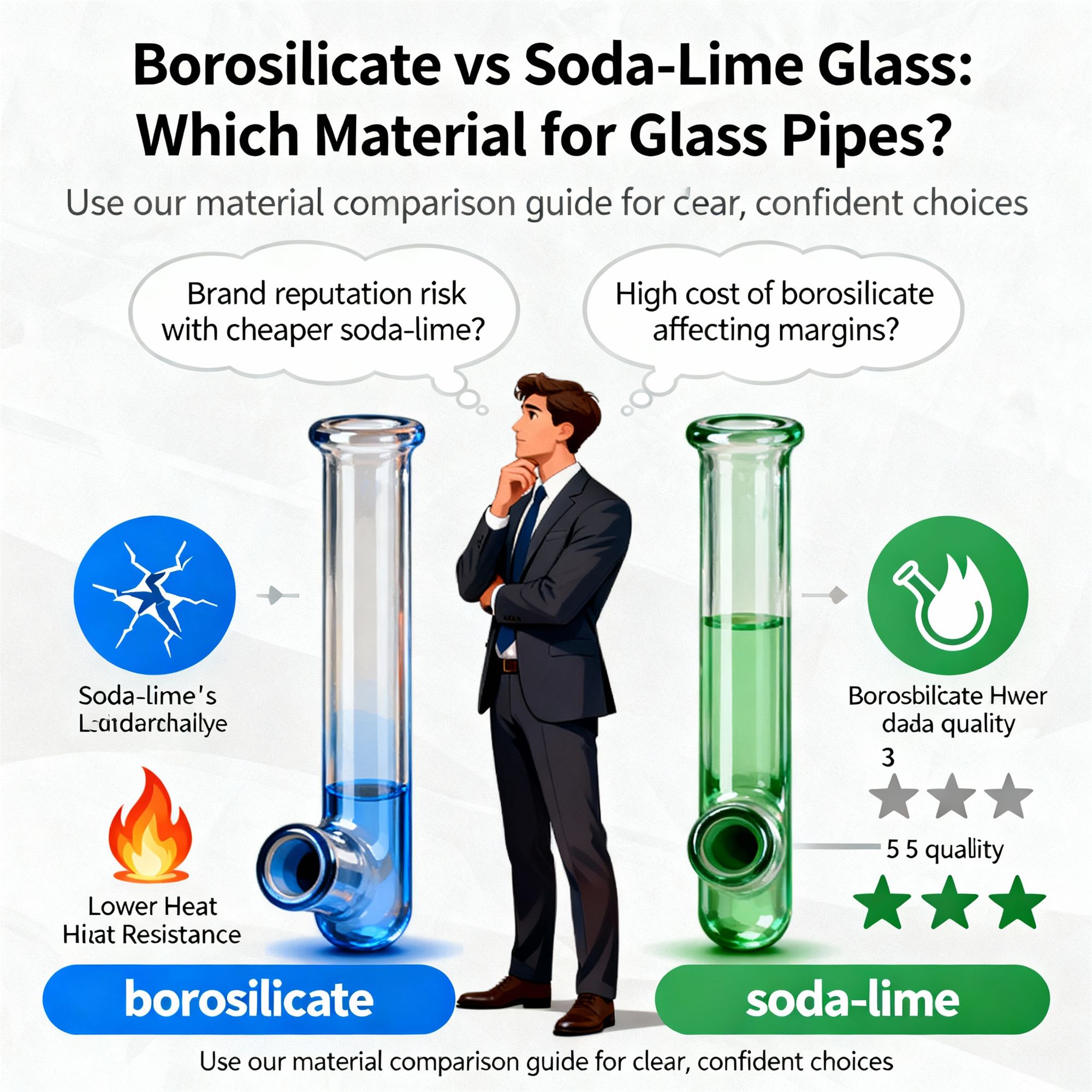
“I need to select materials for my product, but I don’t understand the actual differences between borosilicate vs soda-lime glass. ” “I’m worried that choosing the cheaper one might damage the brand reputation, while choosing the more expensive one makes me unsure if it’s really necessary.” In the glass pipes industry, do you ever have such questions? That guide is built from what we see in our workshop every day. At Elfglass, every pipe we ship passes through our annealing ovens and a polarized-light stress check before it touches a carton — so the differences below are not theory from a spec sheet. They are the reasons we watch cracked joints come back from buyers who chose soda-lime to save a dollar.
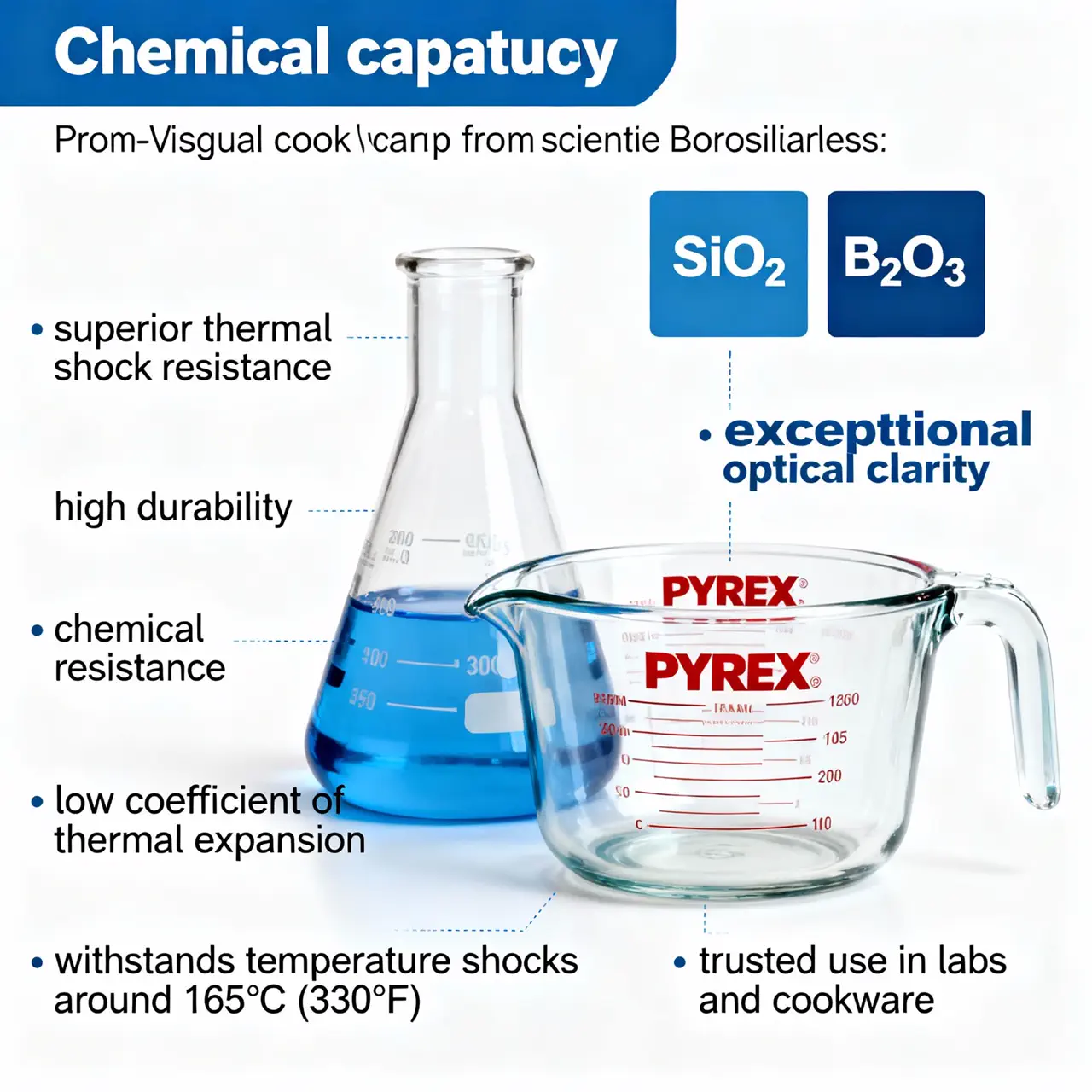
What is Borosilicate Glass? The Standard for Science and Quality
Borosilicate glass is engineered for performance under pressure. It’s the trusted material for laboratory beakers and high-end PYREX™ cookware for a reason: it’s incredibly tough and resistant to extreme temperature changes. Its unique properties come from its chemical makeup—primarily silica and boron trioxide.
The key to its performance is an extremely low coefficient of thermal expansion, meaning it expands and contracts very little when heated or cooled. This prevents the internal stress that causes other glass to crack, allowing it to withstand temperature shocks of around 165°C (330°F).
Key Properties of Borosilicate Glass: • Superior Thermal Shock Resistance • High Durability & Chemical Resistance • Exceptional Optical Clarity
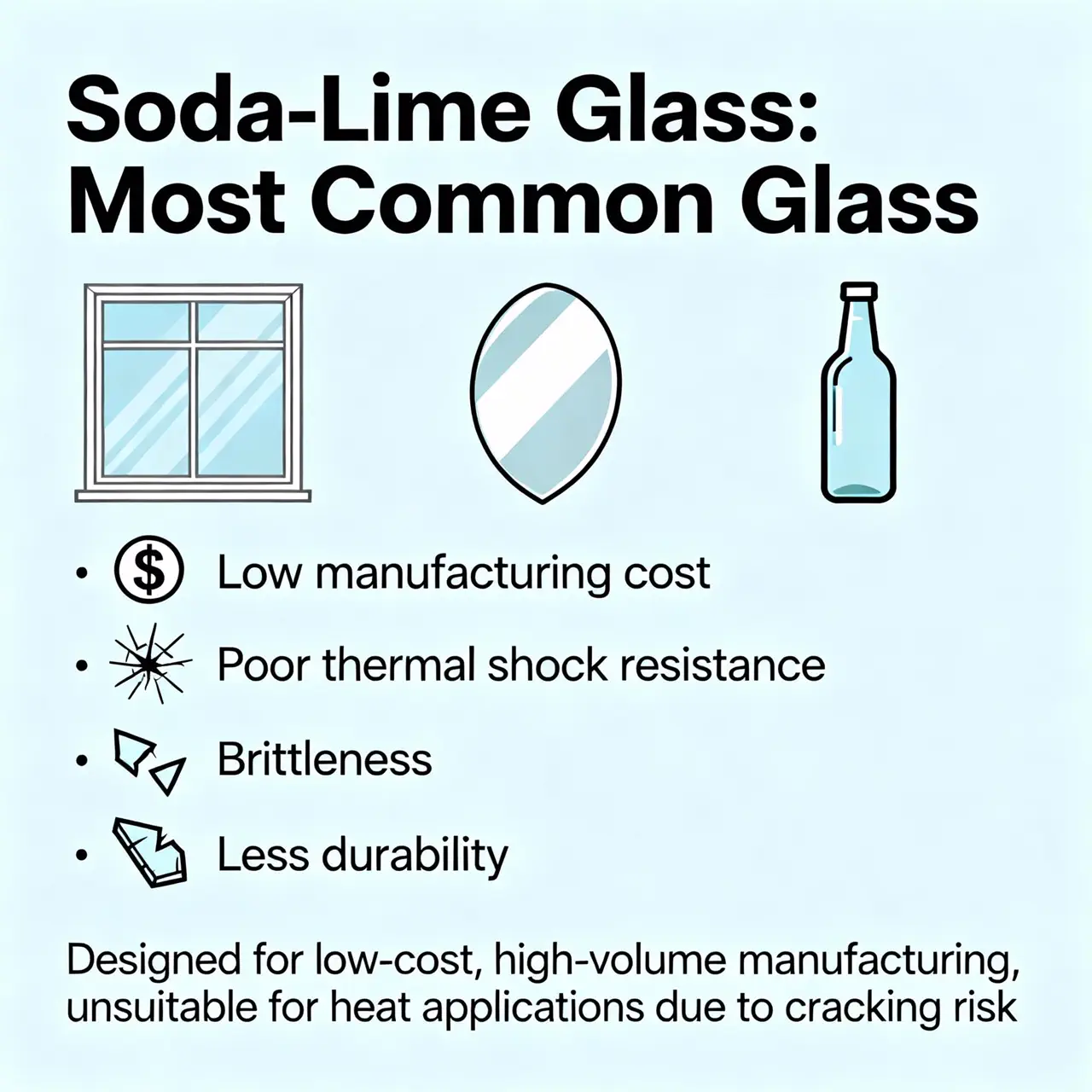
What is Soda-Lime Glass? The Standard for Cost and Commonality
Soda-lime glass is the most common glass in the world, making up about 90% of all glass produced. It’s in your windows, mirrors, and the bottles in your fridge. Its formula is designed for one primary purpose: low-cost, high-volume manufacturing.
However, this affordability comes with critical trade-offs. Soda-lime glass has poor thermal shock resistance and can crack or even shatter when exposed to the sudden temperature changes inherent in smoking accessories. It is simply not designed for applications involving direct heat.
Key Properties of Soda-Lime Glass: • Low Manufacturing Cost Poor Thermal Shock Resistance brittle and less durable
Is Soda-Lime Glass Safe? A Straight Answer
This is the question buyers ask us most often, and it deserves a direct answer rather than a sales pitch.Is soda lime glass safe? For food and drink contact, yes; for direct-flame smoking pipes, no. Here is why. Soda-lime glass is chemically inert for food and drink contact — that is why bottles, jars, drinking glasses, and food storage containers are made from it around the world. The safety concern is not chemistry. It is heat. Soda-lime glass expands and contracts noticeably with temperature change, so a concentrated flame or a sudden hot-to-cold shift can crack it without warning. For a smoking accessory that takes a direct lighter flame on one spot, that is a real failure mode, not a theoretical one.
Three practical rules we give wholesale buyers: 1. Food and drink contact: fine. Soda-lime is the standard material for beverage bottles and tableware, and it does not leach into contents under normal use. 2. Gentle or indirect heat: usually fine. Items that never see an open flame — display pieces, cold-use containers — perform normally. 3. Direct flame or rapid heating: not appropriate. Anything that concentrates heat on one area of the glass, such as a bowl or nail heated repeatedly, should be borosilicate. Requirements can vary by market and product category, so confirm the specifics for your destination country before shipping.
Where does Pyrex fit in? Buyers often ask whether Pyrex is soda-lime or borosilicate, because the name has become shorthand for “quality glass.” The honest answer: it depends on the product line and the era. Original Pyrex and today’s laboratory-grade PYREX are borosilicate. Much of the consumer kitchenware sold under the Pyrex name in the US since the late 1990s is tempered soda-lime — stronger than ordinary soda-lime, but still not engineered for direct flame. So a Pyrex label is not a material guarantee. If glass type matters to your product line, ask suppliers for the actual composition, not just a brand name.
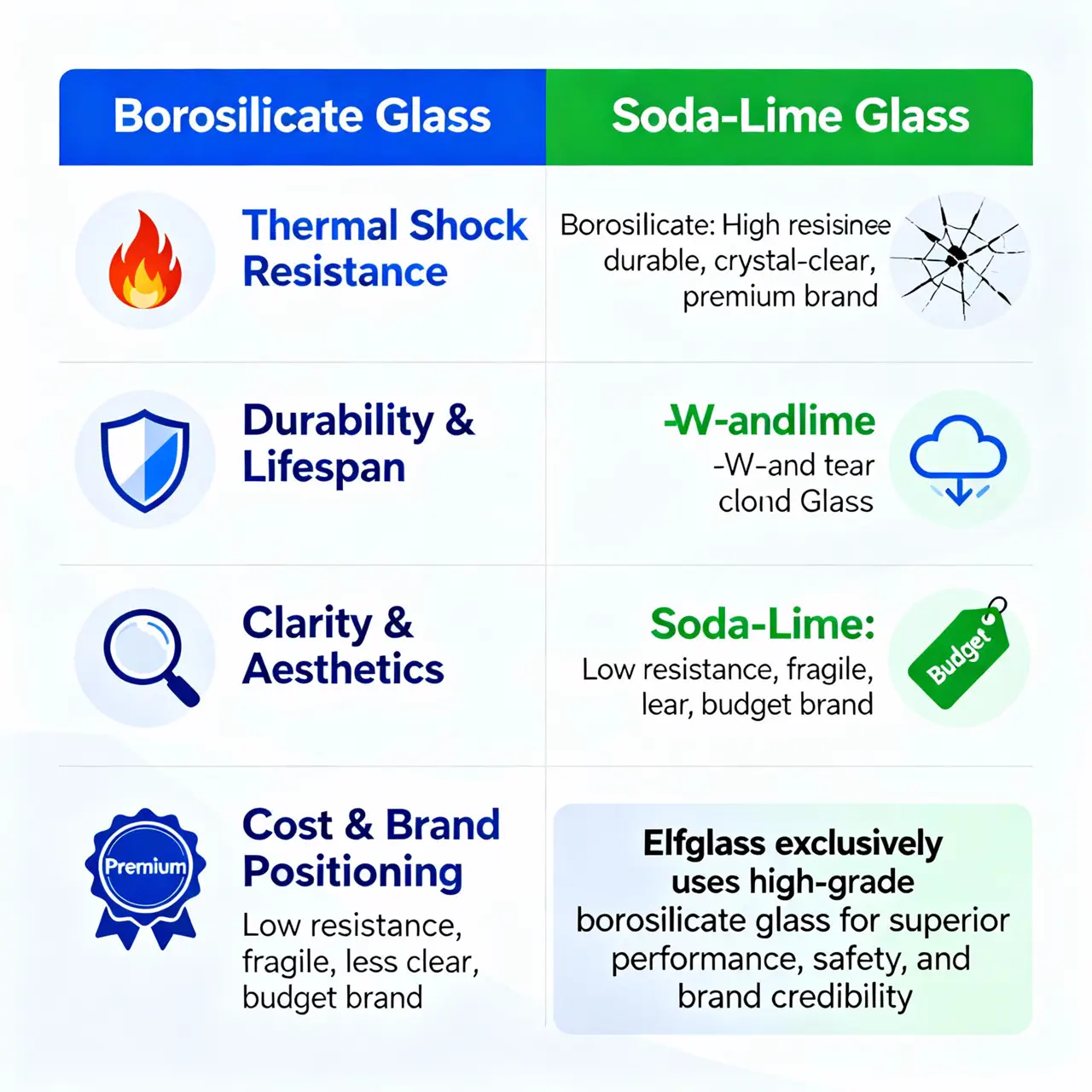
The Head-to-Head Showdown: Borosilicate vs. Soda-Lime Glass
For a brand founder, the choice between these materials directly impacts your product’s performance, safety, and market position. Here’s how they stack up in the areas that matter most.
Inspect Real Production Glass Before You Commit
We ship COE 3.3 borosilicate samples in 1 to 3 days and back every order with a documented QC process and inspection report. Request a sample kit and judge the wall thickness, color, and finish yourself.
MOQ from 100 pieces | BSCI / WRAP / ISO 9001 | NDA before every project
Cost & MOQ: What Each Material Means for Your Wholesale Order
Borosilicate costs more per piece than soda-lime at the factory gate — that gap is real, and no supplier should pretend otherwise. The question is what the gap buys you. A wholesale buyer who orders soda-lime at the lower unit price faces higher in-transit breakage, more customer returns, and the reputational cost of a product that cracks on first use. Across a full container of 2,000 to 5,000 pieces, the damage differential alone usually outweighs the material premium.
MOQ structures differ too. At Elfglass, standard borosilicate designs start at 100 pieces per SKU, which keeps trial orders affordable while locking in the material standard. When a supplier quotes a dramatically lower price, ask two questions: which glass grade is in the spec, and what happens when a batch fails a thermal shock test. A written material statement in your purchase order — borosilicate 3.3, annealed per ASTM C336 — turns “we use good glass” into a contractual term.
How to Verify Which Glass Your Supplier Actually Uses
You do not need a lab to catch a material switch. Four field checks catch most substitutions before they reach your shelves. First, weight: a borosilicate piece of the same wall thickness feels lighter than soda-lime. Second, sound: a borosilicate bowl or joint produces a clean ring when tapped, while soda-lime thuds. Third, price: an offer that undercuts every comparable quote is either a genuinely better factory or a material downgrade — verify before celebrating. Fourth, documentation: a serious supplier can produce a material certificate or spec sheet; if the answer is “trust us,” the burden of proof just moved to you. glass thickness specifications.
For a deeper look at the science behind the material, see our borosilicate glass deep dive, or compare manufacturing regions and their material standards before shortlisting suppliers.
The Bridge: Elfglass’s Uncompromising Commitment
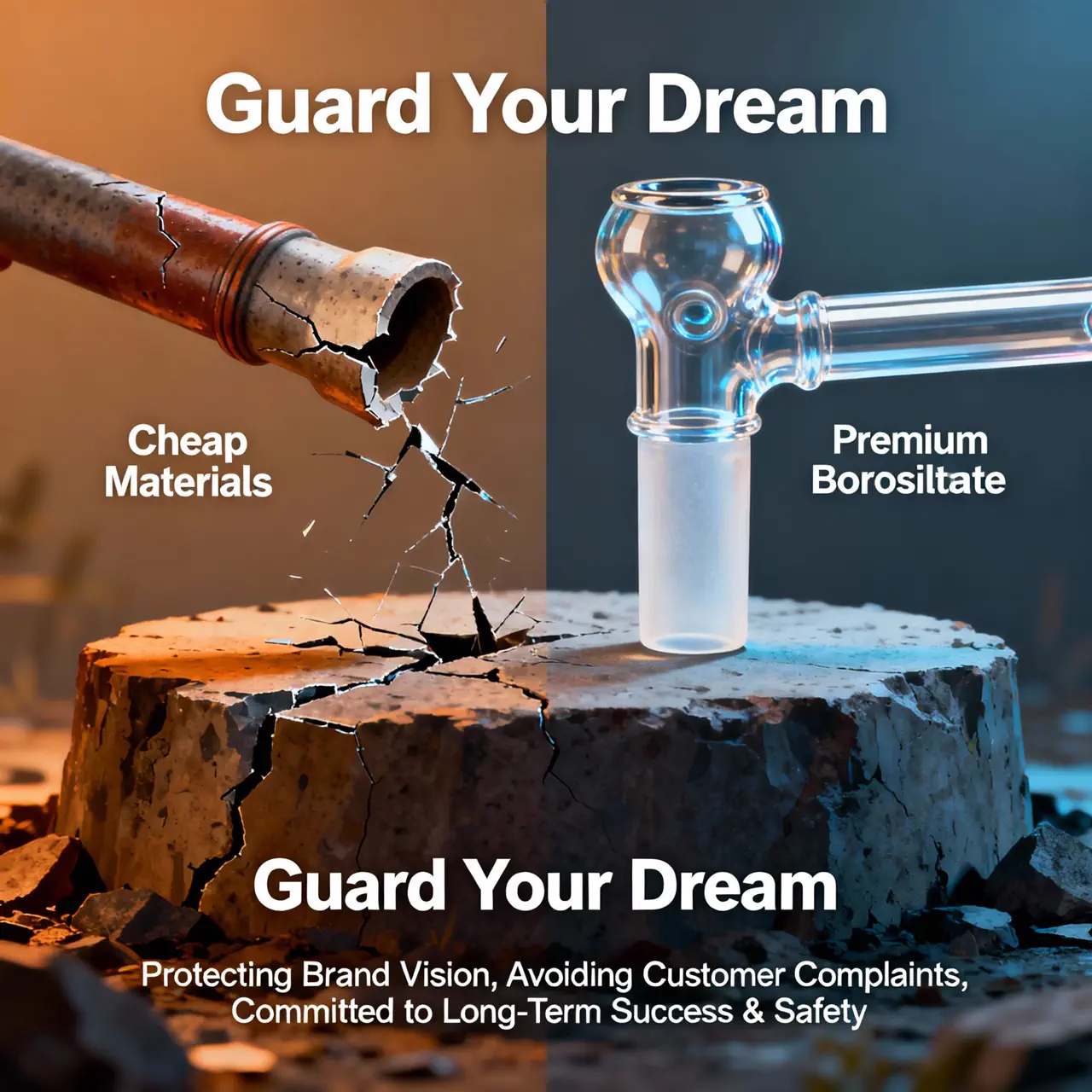
At Elfglass, this choice was never a debate. We exclusively use high-grade borosilicate glass for all our products. This isn’t just a technical specification; it’s a core part of our philosophy to “guard your dream.” We’ve seen too many promising brands get burned by customer complaints about cracked pipes.
Believe me, it’s a painful lesson to learn that saving a few dollars on material can cost you your entire reputation. We refuse to build your precious vision on a fragile foundation. Our commitment to using only borosilicate glass is our commitment to your brand’s long-term success and the safety of your customers. On our factory floor, that commitment is visible in two machines. Our annealing ovens cool every piece under a controlled temperature profile so internal stress never gets baked into the glass, and our polarized-light bench reveals the strain the naked eye cannot see — the faint bands that mean a piece will fail weeks later, not on day one. When a founder visits our workshop in Shenzhen and asks why our borosilicate pipes cost a little more, we walk them to that bench and let the glass answer for itself. No spec sheet has ever convinced a buyer faster. 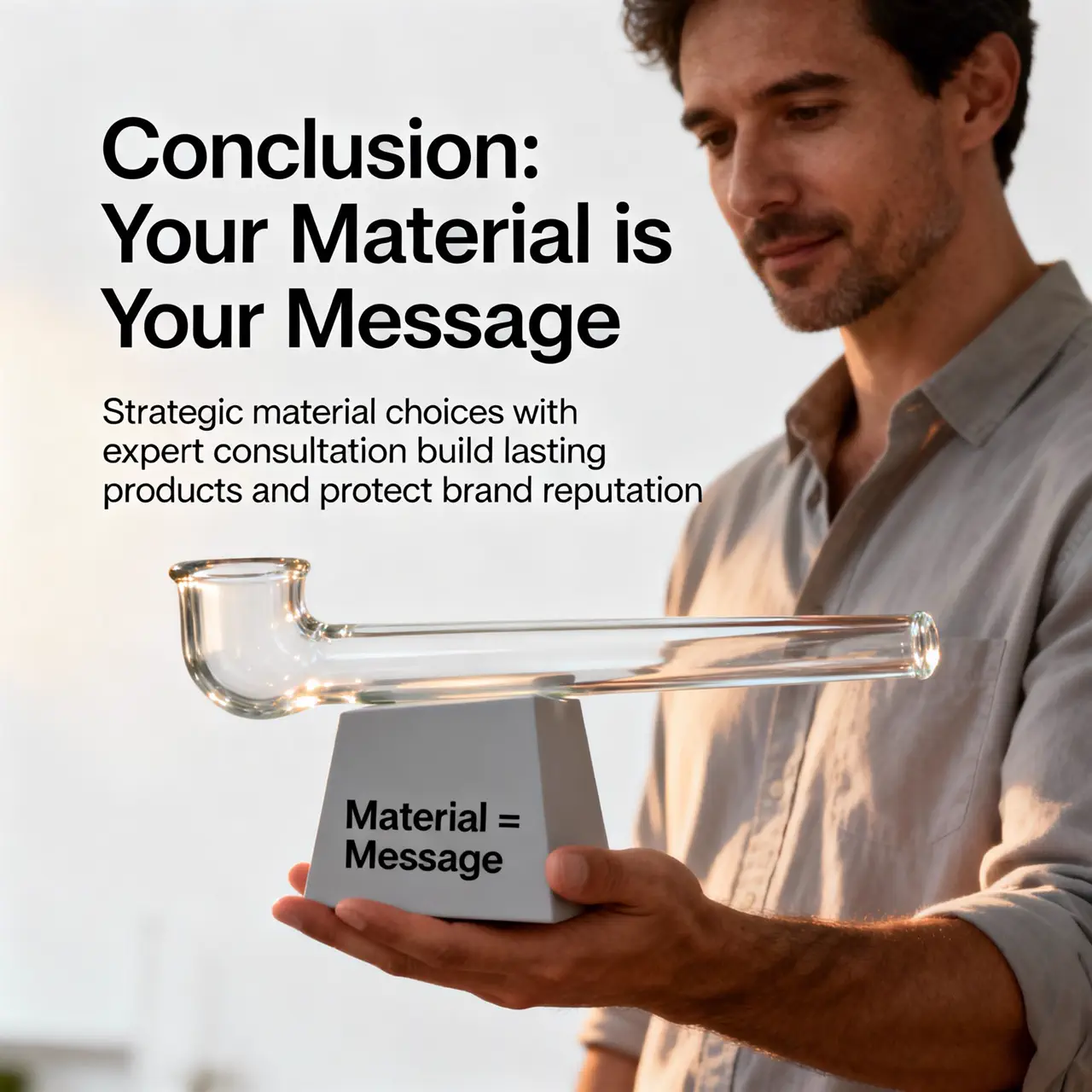
Conclusion: Your Material is Your Message
The material you choose is the first story your product tells the world. Now, you are no longer a founder wrestling with confusing quotes, but an informed leader who can make a strategic decision that protects your brand. By understanding the language of glass, you can ensure the product you deliver is a promise of safety, durability, and trust. Making the right material choice is the foundation of a great product. Discuss your design with our material experts — the same team that runs the annealing ovens — to ensure your vision is built to last. Start the conversation.
Frequently Asked Questions (FAQ)
Q: Is soda lime glass safe? A: For food and drink contact, yes — soda-lime glass is chemically inert and is the standard material for bottles, jars, and tableware worldwide. The risk appears with heat: it handles sudden temperature changes poorly, so items exposed to direct flame or rapid heating can crack. Match the glass to the use case, and soda-lime is perfectly safe for what it is designed for.
Q: Is soda-lime glass safe for smoking pipes? A: No, it is not considered safe for this purpose. Its poor thermal shock resistance means it can crack or shatter when exposed to the rapid heating and cooling cycles of smoking, posing a significant safety risk to the user. For any product involving direct heat, borosilicate glass is the only responsible choice.
Q: Is Pyrex soda-lime or borosilicate glass? A: It depends on the product line and era. Original Pyrex and current laboratory-grade PYREX are borosilicate, while much of the consumer kitchenware sold under the Pyrex name in the US since the late 1990s is tempered soda-lime. If glass composition matters for your product, request the actual material specification from your supplier rather than relying on a brand name.
Q: How can I tell if a pipe is made from borosilicate glass? A: While it can be tough for the untrained eye, look for a few clues. Borosilicate glass often feels lighter, has superior optical clarity, and may produce a higher-pitched “clink” when tapped. However, the most reliable indicators are the price and the reputation of the manufacturer. A low price is a major red flag, while a trusted brand will proudly state they use high-quality borosilicate.
Q: Does borosilicate glass affect the flavor of the smoke? A: No, and that’s a key benefit. Borosilicate glass is non-porous and chemically inert, meaning it doesn’t absorb odors or leach any flavors into the smoke. This ensures a pure taste, allowing the user to experience only their smoking material as intended.
Building your wholesale lineup? Explore our borosilicate water pipes and hand pipes for MOQ, tiered pricing, and factory-direct lead times. Send us your product spec and target quantity — contact our factory team or message us on WhatsApp, and we will reply with pricing and lead times within 24 hours. wholesale sherlock pipes guide
About the Author
Ava Zeng is the founder of Elfglass, a Shenzhen-based borosilicate glass pipe manufacturer serving B2B brands worldwide. She built Elfglass’s material and QC standards from the furnace up — ASTM C336 annealing, polarized-light stress checks, and the rule that every product ships in 100% borosilicate.
Before you approve any material spec, read her founder’s story and trust promise, and the guide to vetting a reliable glass pipe manufacturer — the same red-flag checklist Elfglass applies to its own suppliers.
Ready to Source Custom Glass Pipes?
Get a free quote within 24 hours. MOQ from 100 pieces. NDA-protected design consultation.
