
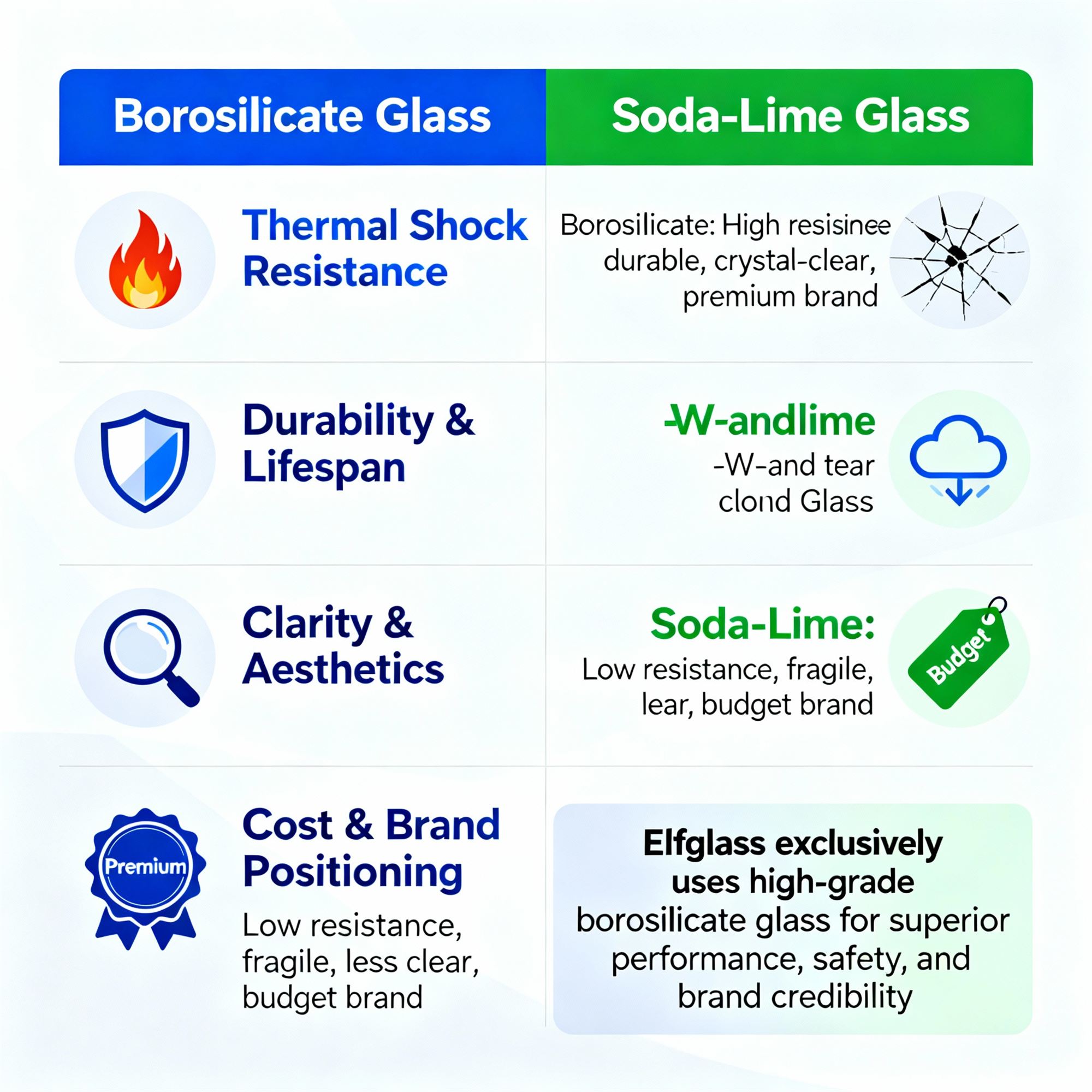
Two Materials, Two Price Points, Two Very Different Products
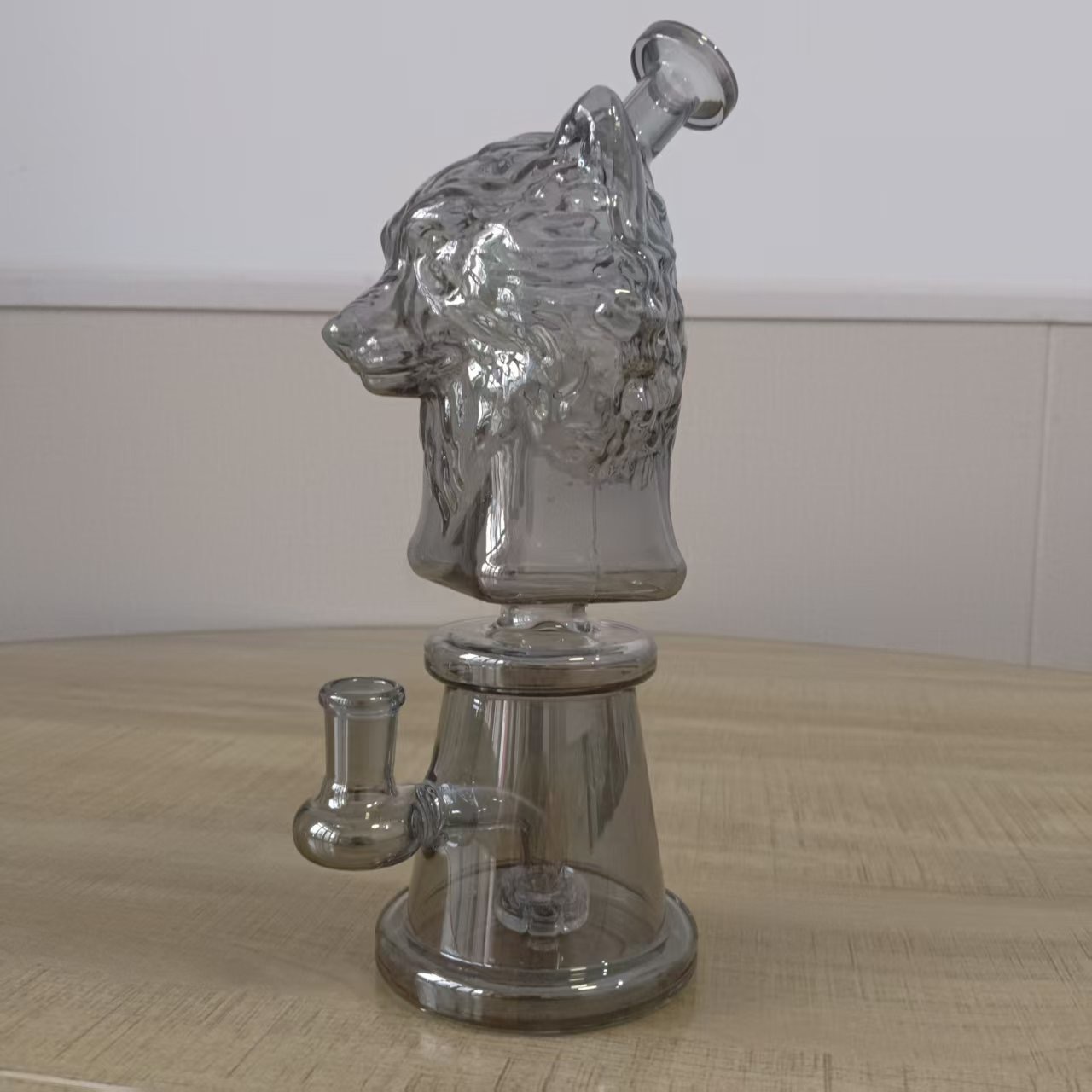
When a new wholesale buyer receives a glass pipe quote, the unit price often varies significantly between suppliers. Some of that variation comes from design complexity or branding. But a significant portion comes from the raw material itself—and the two most common choices are borosilicate glass (COE 3.3) and soda-lime glass. They look similar to the untrained eye. They perform very differently in the field.
This guide breaks down the material science, the cost implications, and the practical trade-offs that B2B buyers need to understand before specifying material on their purchase orders. If you source wholesale water pipes or wholesale hand pipes, this distinction affects your return rate, your customer satisfaction, and your brand reputation.
What Is Borosilicate Glass (COE 3.3)?
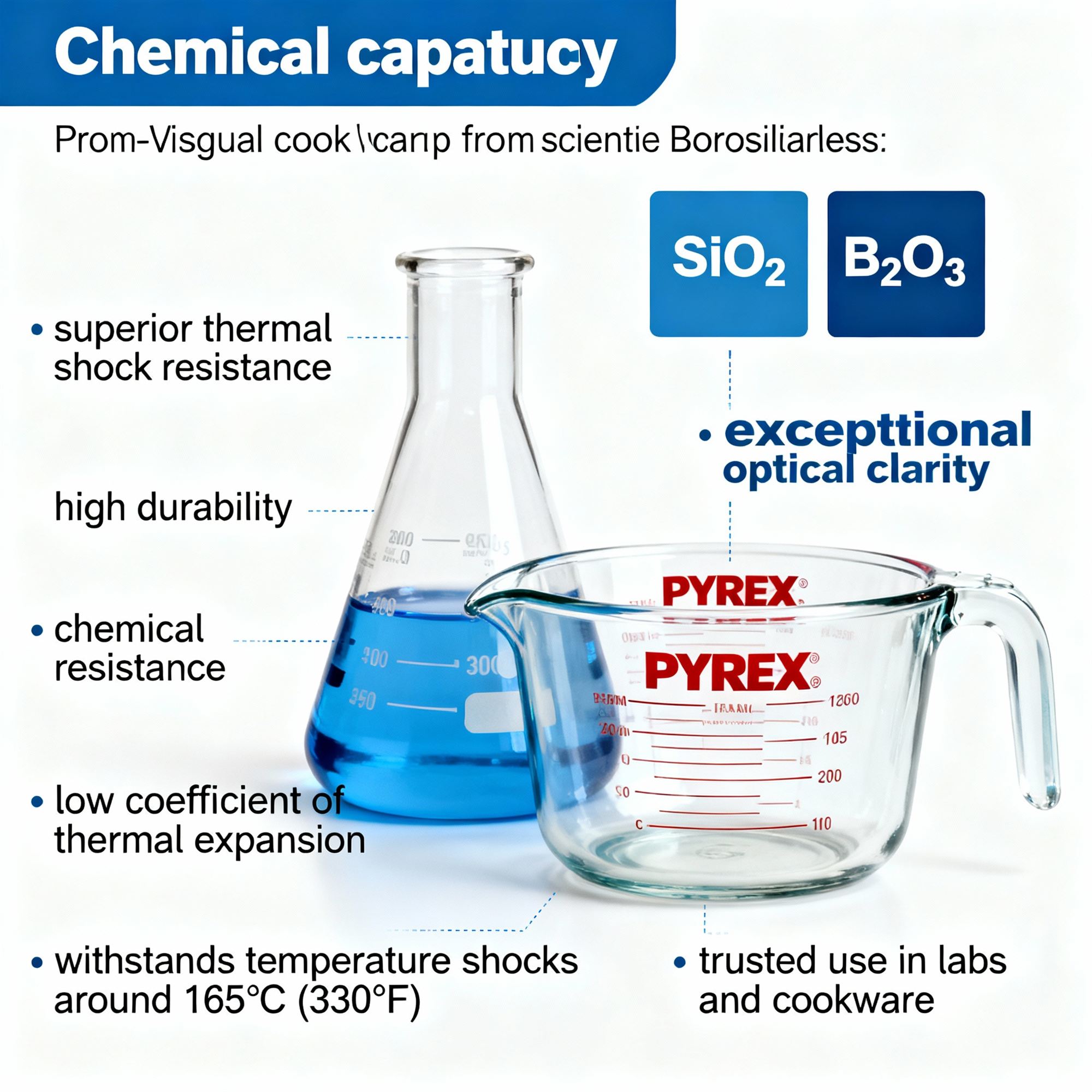
Borosilicate glass contains boron trioxide, which gives it a low coefficient of thermal expansion (COE 3.3 means approximately 3.3 × 10⁻⁶/°C). In practical terms, this means it expands and contracts very little when temperature changes. Pour boiling water into a borosilicate beaker and the glass handles the thermal shock without cracking.
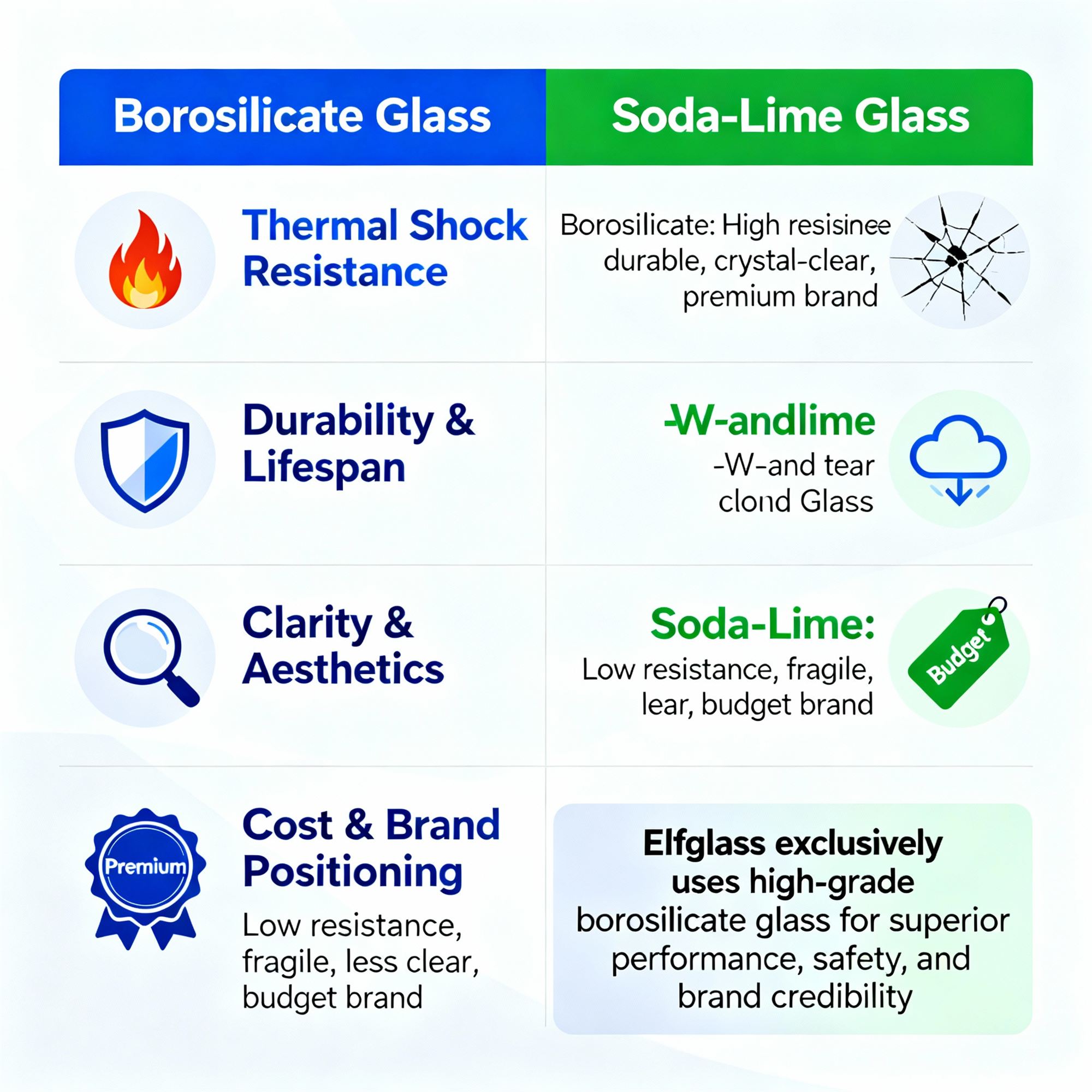
Borosilicate is the standard material for laboratory glassware, high-end kitchenware, and quality smoking pipes. It is more expensive than soda-lime glass because boron trioxide costs more than soda ash, and the melting temperature is higher (approximately 1,650°C vs 1,500°C), requiring more energy.
What Is Soda-Lime Glass?
Soda-lime glass is the most common glass type in the world—used for windows, bottles, and jars. It is made from silica, soda ash, and limestone. It is cheaper to produce, easier to melt, and faster to form. But it has a higher COE (approximately 8.5–9.0 × 10⁻⁶/°C), meaning it expands and contracts more with temperature changes. This makes it more susceptible to thermal shock.
Soda-lime glass is appropriate for cold-use applications like display jars and decorative pieces. For smoking pipes—where the product encounters direct flame and rapid temperature cycling—it is a compromise.
Performance Comparison for Smoking Pipes
| Property | Borosilicate (COE 3.3) | Soda-Lime |
|---|---|---|
| Thermal expansion coefficient | 3.3 × 10⁻⁶/°C | 8.5–9.0 × 10⁻⁶/°C |
| Thermal shock resistance | High (handles 150°C+ differential) | Low (cracks at 40–60°C differential) |
| Melting temperature | ~1,650°C | ~1,500°C |
| Raw material cost | Higher | Lower |
| Workability for hand-blowing | Requires more skill, longer working time | Easier, faster |
| Chemical resistance | High | Moderate |
| Weight (same dimensions) | Slightly lighter | Slightly heavier |
For smoking pipes, the critical difference is thermal shock resistance. A borosilicate pipe handles the temperature differential between a lit bowl and ambient air. A soda-lime pipe under the same conditions is at risk of cracking—especially at joints, percolator connections, and thick-to-thin wall transitions.
Specifying Borosilicate vs Soda-Lime for Your Order?
Elfglass produces every functional smoking pipe in COE 3.3 borosilicate with material certification and incoming inspection, so your purchase order states the exact glass and gets exactly that. Send your material spec and get a quote within 12 hours.
MOQ from 100 pieces | BSCI / WRAP / ISO 9001 | NDA before every project
Cost Implications for Wholesale Buyers
Soda-lime glass pipes typically cost 20–40 percent less than borosilicate pipes of the same design. This is why some suppliers can offer dramatically lower prices. The savings are real, but they come with trade-offs:
- Higher breakage in transit. Soda-lime is more brittle under thermal stress. Summer shipping in hot containers can create temperature differentials that crack soda-lime pieces.
- Higher field failure rate. End users who rinse a hot soda-lime pipe with cold water risk cracking it. This generates warranty claims and returns that eat into the initial cost savings.
- Brand perception. Once your retail customers learn to distinguish borosilicate from soda-lime (by weight, by sound, by thermal behavior), soda-lime products become associated with low quality.
For buyers focused on the lowest possible unit cost, soda-lime has a place—particularly for decorative pieces, display items, or products not exposed to heat. For functional smoking pipes, borosilicate is the industry standard for good reason.
How to Tell the Difference When Evaluating Samples
Visual inspection alone cannot reliably distinguish borosilicate from soda-lime glass. They look identical. Here are practical methods buyers can use:
- Request material certification. A legitimate supplier should provide a material certificate or MSDS specifying the glass type and COE. See our guide to quality documentation for what to request.
- UV light test. Borosilicate glass typically does not fluoresce under UV light. Many soda-lime glasses show a greenish fluorescence. This is not 100 percent reliable but is a useful screening test.
- Thermal shock test. Heat the sample with a torch flame for 30 seconds, then quench in room-temperature water. Borosilicate will survive. Soda-lime will likely crack. This is a destructive test, so use a sample piece.
- Density comparison. Borosilicate has a density of approximately 2.23 g/cm³. Soda-lime is approximately 2.50 g/cm³. For identical dimensions, soda-lime will feel noticeably heavier.
What This Means for Your OEM Orders
When you place an OEM order, specify the material explicitly. “Glass pipe” is not specific enough. Your purchase order should state “borosilicate glass, COE 3.3” or “soda-lime glass” depending on your product positioning. If the quote seems too cheap, verify the material—some suppliers quote soda-lime prices and let the buyer discover the difference after delivery.
At Elfglass, all functional smoking pipes are produced in COE 3.3 borosilicate glass. This is specified in our manufacturing tolerance documentation and verified through incoming material inspection. When you order wholesale dab rigs or any other functional glass piece, the material is borosilicate—not soda-lime.
For more on verifying material claims from suppliers, read our detailed guide to borosilicate glass source verification.
Have questions about your next wholesale order? Contact our team for samples, specifications, and factory-direct pricing.
Which Glass for Which Product Line: A Decision Framework
The material question is not “which is better” but “which fits this product’s job.” The deciding variable is almost always heat exposure. Use this framework to specify material line by line rather than defaulting the whole catalog to one glass.
| Product Type | Recommended Material | Why |
|---|---|---|
| Functional water pipes and dab rigs | Borosilicate (COE 3.3) | Direct flame plus rapid, repeated thermal cycling |
| Daily-use hand pipes | Borosilicate (COE 3.3) | Heat at the bowl; cold-water rinse shock |
| Decorative display jars and props | Soda-lime | No heat exposure; unit cost matters more |
| Premium and collector lines | Borosilicate (COE 3.3) | Brand perception and low warranty tolerance |
| Entry-price novelty pieces | Depends on use | If heat-exposed at all, borosilicate is still the safer call |
The trap is a mixed catalog specified as one material. A retailer who orders “glass pipes” without splitting functional from decorative either overpays for display pieces or under-specifies the pieces customers actually light. Separate the two on the purchase order and each line gets the right cost-to-performance balance.
The COE Mismatch Trap: Never Mix Glass Families in One Piece
Here is a failure mode most buyers never think to ask about, and one that separates a careful factory from a corner-cutting one. COE — the coefficient of thermal expansion — must match across every joined component of a single piece. Borosilicate at COE 3.3 and soda-lime at roughly COE 9.0 expand and contract at very different rates.
Join them in one pipe and you create a permanent stress at the join. The piece may pass inspection cold and still crack on the first real temperature swing — often weeks after delivery, in the customer’s hands, when it becomes your return and your reputation problem rather than the factory’s. Even within the borosilicate world, COE 3.3 and COE 90 tubing are not directly compatible to fuse; the whole piece must be built from one matched family and annealed on a schedule matched to that family.
This is why a legitimate supplier quotes one COE per piece and can tell you exactly what it is. Mixed-COE work is a hallmark of a shop using whatever tubing happens to be on hand. The screening question is simple: ask any factory, “Is every joined component in this piece the same COE?” A precise, immediate answer is a good sign. A vague one, or a blank stare, is your warning to keep looking.
Key Takeaways
- Borosilicate glass (COE 3.3) and soda-lime glass are fundamentally different materials with different thermal properties and costs.
- Borosilicate handles thermal shock far better, making it the appropriate choice for functional smoking pipes.
- Soda-lime is 20–40 percent cheaper but carries higher breakage and return risks for heat-exposed applications.
- Visual inspection cannot distinguish the two—request material certification or perform a thermal shock test.
- Always specify glass type explicitly on purchase orders to avoid surprise substitutions.
Every guide on this site is grounded in production-floor experience. Before you commit to a supplier, read the founder’s story and trust promise to understand how Elfglass approaches material integrity.
Frequently Asked Questions
What is the main difference between borosilicate and soda-lime glass pipes?
Borosilicate glass (COE 3.3) has much lower thermal expansion than soda-lime glass, making it resistant to thermal shock. It handles 150+ degree Celsius temperature differentials versus 40-60 degrees for soda-lime.
Why do borosilicate glass pipes cost more?
Boron trioxide raw material costs more than soda ash, and borosilicate requires higher melting temperatures (1650C vs 1500C). The result is 20-40 percent higher material cost.
Can you visually distinguish borosilicate from soda-lime glass?
No, they look identical. Buyers should request material certification, use UV light screening, or perform thermal shock tests on samples.
Is soda-lime glass appropriate for smoking pipes?
Soda-lime is suitable for decorative or cold-use glass pieces. For functional smoking pipes exposed to direct flame and temperature cycling, borosilicate is the industry standard due to its thermal shock resistance.
About the Author
Ava Zeng is the founder of Elfglass, a Shenzhen-based borosilicate glass pipe manufacturer serving B2B brands worldwide. Every guide on this site is grounded in her production-floor experience— the annealing lines, QC checkpoints, and export orders behind each claim.
Before you commit to a supplier, read her founder’s story and trust promise, and the guide to vetting a reliable glass pipe manufacturer— the same red-flag checklist Elfglass applies to its own suppliers.
Ready to Source Custom Glass Pipes?
Get a free quote within 24 hours. MOQ from 100 pieces. NDA-protected design consultation.
