

Key Takeaways
- A carb hole is a small finger-covered opening on the side of a hand pipe that lets the user control airflow manually—covering it during the draw and releasing it to clear the chamber.
- Carb pipes produce thinner, cooler, flavor-forward smoke because the rush of fresh air lowers the temperature of the smoke before inhalation.
- Carbless pipes deliver denser, warmer smoke with zero air leakage, which many users prefer for efficiency and a more intense experience.
- Manufacturing a carb hole adds one extra step—punching and fire-polishing a small hole during the blow— but the cost difference is negligible at wholesale scale.
- Stocking both variants lets a brand serve the full preference spectrum; most retail demand splits roughly 60/40 in favor of carb models, varying by region.
Every glass hand pipe comes down to one binary design decision: does it have a carb hole or not? That tiny opening—barely larger than a pencil eraser—fundamentally changes how the pipe draws, how the smoke feels, and how the flavor lands. Yet many wholesale buyers treat the carb as an afterthought, selecting whichever shape the factory defaults to without understanding the functional trade-off. Hand pipes like these are shaped at the torch using lampworking, a glass-forming technique in which solid glass rods are melted and shaped over a flame (lampworking reference).
If you are building a hand pipe catalog for retail, understanding the carb hole pipe vs carbless distinction matters. It affects which products you stock, how you position them on the shelf, and whether your customers come back for a second piece or leave a review complaining about a “leaky” draw. This guide breaks down the mechanics, the user experience differences, the manufacturing implications, and the wholesale sourcing decision so you can make informed buying choices.
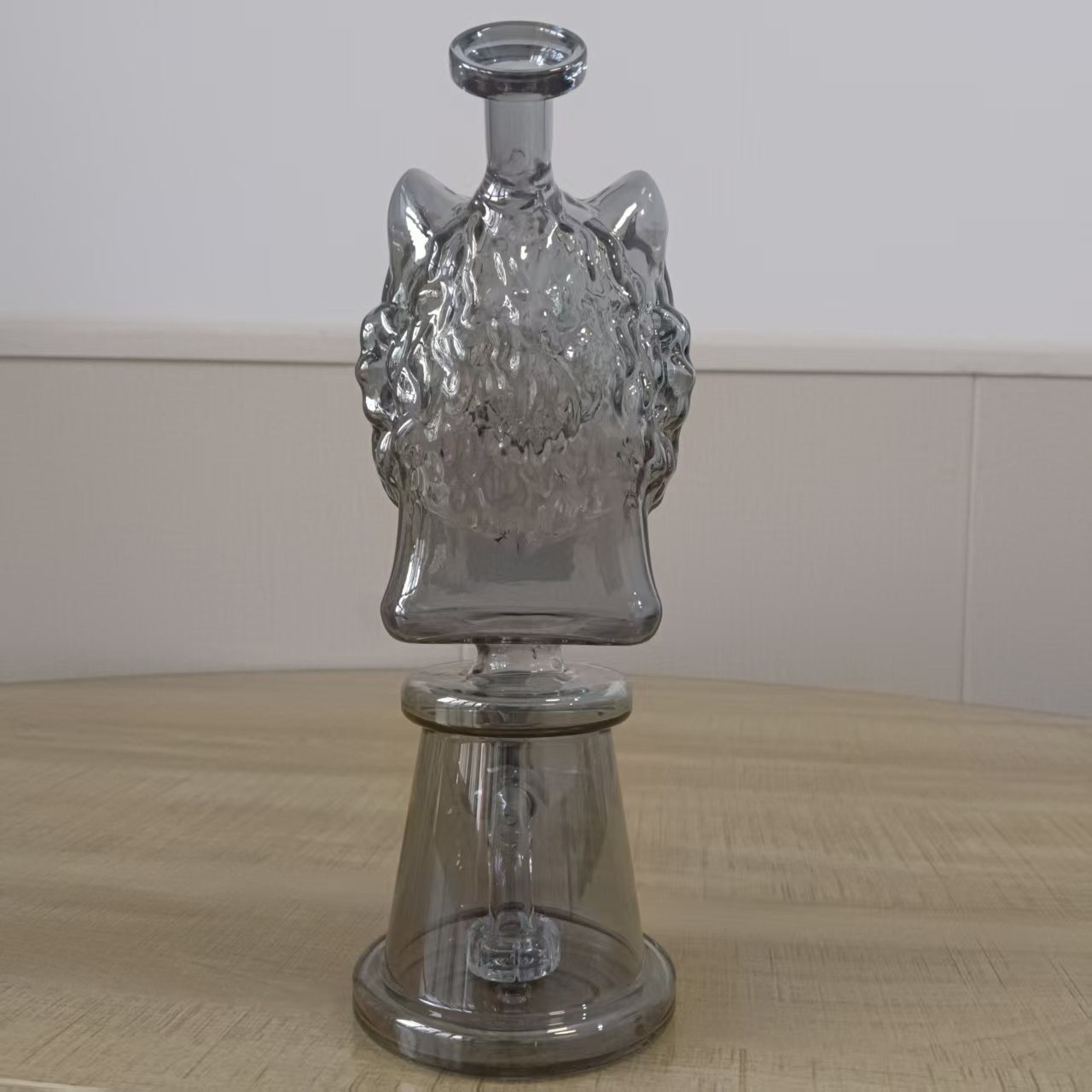
What a Carb Hole Actually Does: The Airflow Mechanics
A carb hole is a small opening—typically 3 to 5 millimeters in diameter—positioned on the side or top of a hand pipe’s bowl or shank. During use, the user places a finger over the hole while lighting the bowl and drawing smoke into the chamber. Once the chamber is filled, the user lifts their finger, which allows a rush of fresh air to enter and push the smoke toward the mouth.
This two-phase draw—load, then clear—is what defines the carb pipe experience. The carb acts as a manual valve. When covered, the pipe draws like any closed system: negative pressure pulls smoke from the bowl through the shank and into the chamber. When released, the sudden introduction of ambient air serves two purposes simultaneously: it clears the remaining smoke from the chamber in one smooth push, and it cools the smoke by mixing it with fresh air just before inhalation.
A carbless pipe has no such opening. The only air entry point is the bowl mouth itself. When the user stops drawing, the smoke simply sits in the chamber until inhaled. There is no clearing rush, no cooling dilution—just direct, undiluted smoke from bowl to lung.
The physics are simple, but the experiential consequences are significant.
Carb Pipes: Draw Characteristics and User Experience
Users who prefer carb pipes tend to prioritize flavor clarity and smoke temperature over raw density. Here is what the carb hole does to the smoking experience:
Thinner, cooler smoke. The air rush that clears the chamber also drops the smoke temperature by mixing it with room-temperature air. For users who find straight smoke harsh—especially those smoking blends that produce hot smoke—the carb provides a built-in cooling mechanism that no percolator or screen can match.
Flavor preservation. Lower smoke temperature means more terpenes survive the journey from bowl to palate. Connoisseurs who invest in premium herb often prefer carb pipes because the flavor profile comes through more distinctly. The cooling effect prevents the heat from flattening subtle taste notes.
Controlled chamber clearing. The carb lets the user decide exactly when to clear the chamber. This is particularly useful for social smoking—pass the pipe with the chamber still loaded, and the next user clears it on their own timing. It also prevents the “stale smoke” problem: smoke that sits in the chamber for more than a few seconds begins to cool and settle, producing a flat, papery taste.
Less efficient for single-load sessions. The trade-off is that some smoke escapes through the carb during the draw if the finger seal is imperfect. Users who want every last bit of their load vaporized in one pass may find carb pipes slightly wasteful. This is a technique issue more than a design flaw—experienced users develop a reliable seal—but it is a real consideration for novice smokers.
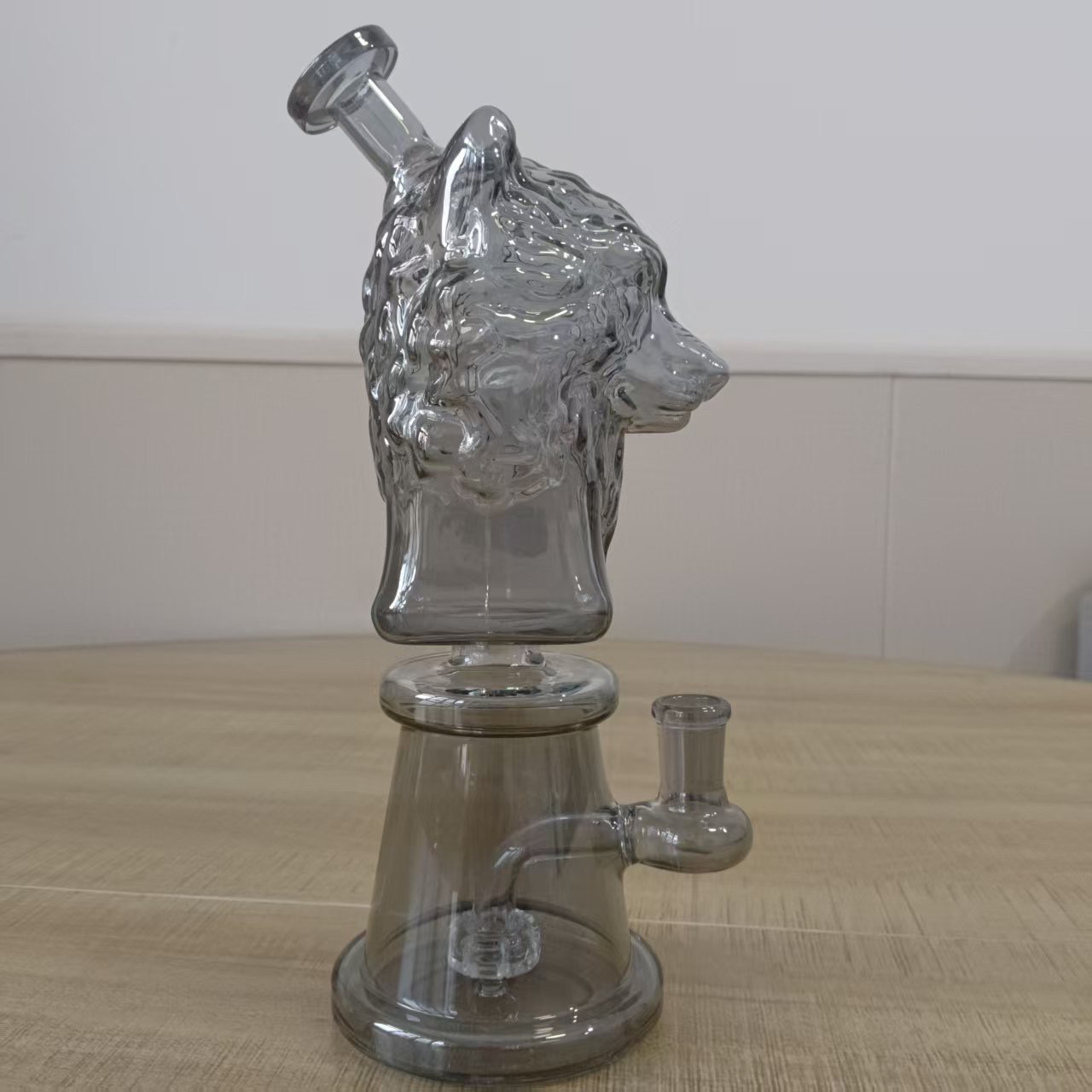
Carbless Pipes: Draw Characteristics and User Experience
Carbless pipes eliminate the manual air valve entirely. The design philosophy is simplicity: one bowl, one chamber, one mouthpiece. The user draws until the chamber fills, then inhales directly. No finger placement, no clearing step.
Denser, warmer smoke. Without the cooling air rush, the smoke reaches the user at a higher temperature and with greater density. For many smokers, this produces a more satisfying, impactful hit—particularly with materials that produce thick smoke. The absence of dilution means the full concentration reaches the lungs.
Simpler operation. No carb hole means no finger coordination required. The user just draws and inhales. This simplicity is one reason carbless designs are popular among entry-level smokers and in markets where ease of use is a primary purchase driver.
Faster chamber loading. Because all the negative pressure comes from a single air entry point (the bowl), carbless pipes tend to fill their chambers faster than carb pipes with similar bowl sizes. Users who prefer quick, efficient sessions benefit from this.
Stale smoke risk. Without a clearing mechanism, any smoke that sits in the chamber between draws begins to cool and lose flavor. Users who take slow, intermittent pulls may notice a taste degradation partway through the session. The workaround is to inhale the chamber contents promptly after each draw, but not all users develop this habit.
Side-by-Side Comparison: Carb vs Carbless
The table below summarizes the functional differences across the dimensions that matter most to end users and, by extension, to wholesale buyers selecting stock:
| Factor | Carb Hole Pipe | Carbless Pipe |
|---|---|---|
| Smoke temperature | Cooler (air-mixed) | Warmer (undiluted) |
| Smoke density | Thinner, lighter | Denser, heavier |
| Flavor clarity | Higher (cooler smoke preserves terpenes) | Moderate (heat can flatten subtle notes) |
| Ease of use | Moderate (requires finger coordination) | High (draw and inhale) |
| Chamber clearing | Manual (finger release) | Direct inhalation |
| Smoke waste risk | Low (if seal is good); moderate (if finger leaks) | Minimal (closed system) |
| Stale smoke risk | Low (clear on demand) | Moderate (no clearing mechanism) |
| Manufacturing complexity | Slightly higher (extra hole + fire-polish) | Standard |
| Typical retail preference | ~60% of hand pipe buyers | ~40% of hand pipe buyers |
These are not absolute rules—individual preference varies widely—but they represent the general tendency observed across retail feedback and repeat order patterns.
How the Carb Hole Affects Flavor: The Temperature Connection
The relationship between the carb hole and flavor comes down to one variable: temperature. Terpenes—the aromatic compounds that give different strains their distinctive taste profiles—are volatile. They evaporate and degrade at different rates depending on heat exposure. Smoke that travels directly from bowl to mouth at full temperature carries more degraded terpenes and fewer subtle notes.
When the carb opens, the incoming air stream mixes with the smoke, dropping its temperature by a measurable margin before it reaches the user’s palate. The result is a smoother, more nuanced flavor experience. This is the same principle behind the ice catcher in water pipes—cool the smoke, and the flavor opens up.
For brands selling to connoisseur-tier customers—shops that stock premium herb and charge accordingly—carb pipes are the better default recommendation. The flavor advantage justifies the slightly more involved operation, and these customers already have the technique to use a carb effectively.
Smoke Density and Efficiency: Which Delivers More per Bowl?
Users who prioritize efficiency—getting the maximum effect from each loaded bowl—tend to prefer carbless pipes. The reason is straightforward: a closed system with no secondary air entry loses less smoke to the environment. Every bit of vapor produced by the burning material ends up in the chamber, waiting to be inhaled.
Carb pipes, by contrast, can lose small amounts of smoke through the carb hole during the draw if the user’s finger seal is incomplete. This is not a design defect—it is a user-technique variable—but it does mean that the least skilled users may waste a small percentage of their load. For the average experienced user with a proper seal, the waste is negligible.
The density difference also affects the subjective experience. Denser smoke feels heavier on the lungs and produces a more immediate sensation. For markets where potency perception drives purchasing—where customers equate thick clouds with product quality—carbless pipes align better with customer expectations.
Cleaning and Maintenance: Does the Carb Hole Matter?
Both carb and carbless pipes accumulate resin in the chamber and shank over time. The cleaning process is similar for both: soak in isopropyl alcohol, agitate, rinse. However, the carb hole introduces one additional maintenance point.
The carb hole itself can accumulate resin around its edges, particularly on the interior side where smoke passes closest to the opening. Over time, this buildup can narrow the hole, reducing the effectiveness of the air rush. A partially blocked carb produces a weaker clear, which degrades the user experience. The fix is simple—run a thin wire or pin through the hole during cleaning—but it is an extra step that carbless pipes do not require.
From a retail standpoint, this matters for customer satisfaction. Users who do not clean their pipes regularly may complain that their carb pipe “stopped working” when the issue is simply resin buildup around the hole. Including a brief care card with each carb pipe sale—reminding the customer to clear the carb hole during cleaning—reduces this complaint category significantly.

Which Pipe Types Typically Have a Carb Hole?
Not all hand pipe shapes accommodate a carb hole equally well. The carb requires a flat or gently curved surface where the user’s finger can form a reliable seal. Here is how the most common hand pipe shapes handle the carb:
| Pipe Type | Carb Common? | Notes |
|---|---|---|
| Spoon pipe | Yes (majority) | The classic carb location is on the side of the bowl or upper shank. The flat surface makes finger sealing easy. |
| Sherlock pipe | Sometimes | The curved bowl makes carb placement trickier. Some manufacturers add it to the shank instead. |
| Steamroller pipe | Rarely | The straight-tube design typically draws from one end and is inherently carbless. Some variants add a side carb. |
| Chillum / one-hitter | No | The straight-through design does not accommodate a carb. The user controls the draw with their lips and the angle of the piece. |
| Novelty / shaped pipes | Varies | Depends entirely on the design. Many novelty pipes sacrifice function for form and omit the carb. |
Spoon pipes are the carb hole’s natural home. If your brand’s hand pipe line is built around spoons—which it should be, given that spoons are the highest-volume hand pipe shape in most markets—expect the majority of your SKUs to include a carb. For a deeper look at the wholesale economics of spoon pipes, see the guide to wholesale spoon pipes.
Manufacturing Implications: Does a Carb Hole Change Production Cost?
Adding a carb hole to a hand pipe is a minor manufacturing step. The glassblower punches a small hole in the pipe during the blowing process and fire-polishes the edges to create a smooth, comfortable surface for the user’s finger. This adds perhaps 30 seconds to the blowing time per piece.
At wholesale scale, that 30 seconds translates to a small but real labor cost difference. For a factory producing 10,000 pieces per month, a production run of carb pipes vs carbless pipes of the same shape represents a marginal difference in total labor hours—typically not enough to move the unit price by more than a few cents. The primary cost driver remains the glass material and the base shaping time, not the carb.
What does change is the mold or jig requirement. If a factory produces a specific spoon shape with a carb, the blowing process includes a consistent carb placement. Switching between carb and carbless versions of the same shape does not require a new mold—it requires a process change at the blowing station. Brands ordering both variants of the same shape should communicate this clearly in their product design brief to avoid receiving the wrong variant.
Deciding Between Carb and Carbless Hand Pipes?
Elfglass blows both carb and carbless hand pipes in COE 3.3 borosilicate with consistent draw and airflow, so you can stock the right mix for your customers. Send your catalog and get a quote within 12 hours.
MOQ from 100 pieces | BSCI / WRAP / ISO 9001 | NDA before every project
Choosing for Your Catalog: What Wholesale Buyers Should Consider
The decision to stock carb pipes, carbless pipes, or both depends on your target market and customer profile. Here is a practical framework:
Stock carb pipes if: your customers are experienced smokers who value flavor and temperature control, your market skews toward connoisseur-tier products, or your best-selling hand pipe shape is the spoon (where the carb is the default expectation).
Stock carbless pipes if: your customers prioritize simplicity and dense smoke, you are selling entry-level pieces where ease of use drives satisfaction, or your pipe shapes (chillums, steamrollers) do not naturally accommodate a carb.
Stock both if: you are building a full catalog that serves multiple customer segments. This is the strongest position for a retail brand, because it lets the customer self-select based on preference rather than forcing a one-size-fits-all solution. At a manufacturer with a 100-piece MOQ per design, offering both variants of a popular spoon shape means a 200-piece initial order—well within the range of a committed retail launch.
For brands sourcing from an OEM manufacturer, the most efficient approach is to select your core shape, approve the sample with the carb in the preferred location (or without, for carbless), and then order both variants as separate SKUs. The sampling cost is minimal, and having physical examples of each variant helps your retail staff explain the difference to customers on the shop floor.
Bottom Line: The Carb Decision Is a Customer Experience Decision
The carb hole is not a feature that sells pipes. It is a feature that shapes how the pipe performs in the user’s hand—and that performance difference drives repeat purchases, reviews, and brand loyalty. Wholesale buyers who understand the carb vs carbless trade-off can make stocking decisions that align with their customers’ actual preferences, rather than defaulting to whatever the factory produces.
Both designs have legitimate advantages. Neither is objectively superior. The right choice depends on who is holding the pipe, what they are smoking, and what experience they are chasing. Your job as a buyer is to make sure both options are available on your shelf—so the customer can choose, and keep coming back for more.
Ready to discuss hand pipe designs for your next order? Contact the Elfglass team to review your catalog options and get samples of both carb and carbless variants.
Frequently Asked Questions
What is a carb hole on a glass pipe?
A carb hole is a small opening (3–5mm diameter) on the side of a hand pipe that the user covers with a finger during the draw and releases to clear the smoke chamber. It controls airflow and cools the smoke before inhalation.
Is a carb hole pipe better than a carbless pipe?
Neither is universally better. Carb pipes produce cooler, flavor-forward smoke with manual chamber clearing. Carbless pipes deliver denser, warmer smoke with simpler operation. The choice depends on personal preference and smoking style.
Do all spoon pipes have a carb hole?
Most spoon pipes include a carb hole—it is the default design for the shape. However, some manufacturers produce carbless spoon variants. When ordering wholesale, specify whether you want the carb or carbless version of your chosen shape.
Does a carb hole affect how much resin builds up?
A carb hole can accumulate resin around its edges over time, which may narrow the opening and reduce airflow effectiveness. Regular cleaning—including running a thin wire through the carb hole—prevents this. Carbless pipes have one fewer maintenance point but still require regular chamber cleaning.
Can a factory produce both carb and carbless versions of the same pipe?
Yes. Switching between carb and carbless does not require a new mold—it requires a process adjustment at the blowing station. Brands can order both variants as separate SKUs with the same base shape. See the full wholesale hand pipes catalog for shape options.
About the Author
Ava Zeng is the founder of Elfglass, a Shenzhen-based borosilicate glass pipe manufacturer serving B2B brands worldwide. Every guide on this site is grounded in her production-floor experience— the annealing lines, QC checkpoints, and export orders behind each claim.
Before you commit to a supplier, read her founder’s story and trust promise, and the guide to vetting a reliable glass pipe manufacturer— the same red-flag checklist Elfglass applies to its own suppliers.

Ready to Source Custom Glass Pipes?
Get a free quote within 24 hours. MOQ from 100 pieces. NDA-protected design consultation.
