
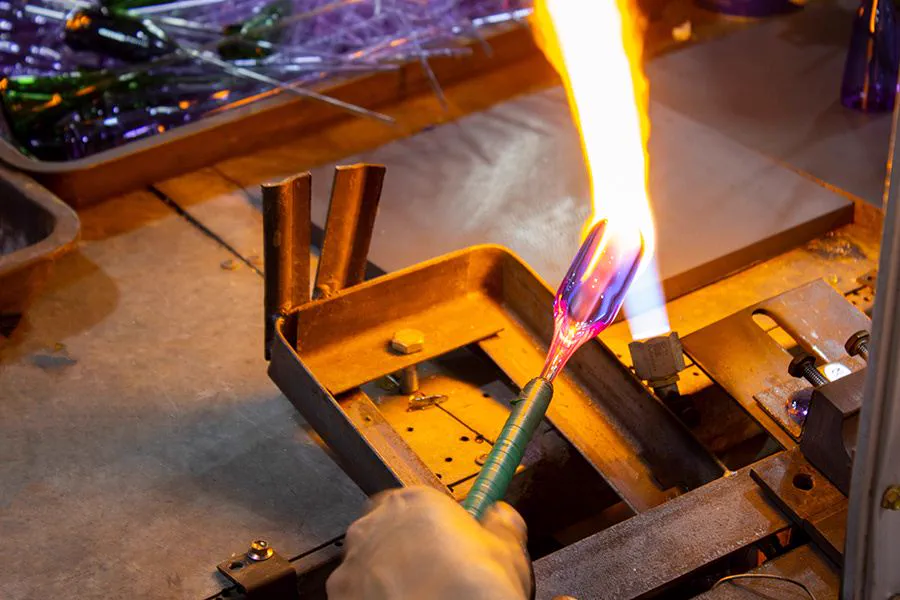
A glass pipe design brief is the document that turns a vague product idea into a manufacturable specification. Most OEM project delays trace back to one root cause: the buyer’s design intent was unclear, and the factory filled the gaps with assumptions. A well-structured design brief eliminates that guesswork — it gives the manufacturer every data point needed to produce a sample that matches your vision on the first attempt, not the fourth.
Key Takeaways
- A glass pipe design brief must cover seven sections: product overview, dimensions, material specs, surface treatment, branding, packaging, and compliance requirements.
- Including reference images from at least two angles reduces sample revision cycles by eliminating dimensional ambiguity.
- Specifying tolerance ranges (not just target dimensions) prevents disputes over acceptable variation in hand-blown glass.
- The brief should name the target market and retail price point — these directly influence material and finishing decisions at the factory.
- A design brief that skips packaging specifications will receive products packaged for domestic shipping, not export.
Why Design Briefs Determine OEM Success
The OEM relationship between a glass pipe brand and its manufacturer lives or dies on communication quality. The founder of Elfglass, a borosilicate glass manufacturer founded in 2010, has stated it directly: “What kills a great idea is never the technology, but the communication gap and a lack of empathy.” That gap is exactly what a design brief exists to close.
Consider two scenarios. In the first, a buyer sends a factory a photo of a pipe they like and says “make something similar.” The factory interprets the size, guesses the wall thickness, picks a glass type, and produces a sample that is 40% larger than intended, made from the wrong material, with the logo in the wrong position. In the second scenario, the buyer submits a structured brief with exact dimensions, material callouts, tolerance ranges, and branding placement. The first sample arrives within the target specification, and the order proceeds to production (the small-batch economics guide covers cost at different volumes) within a week.
The difference is not talent — it is documentation. A guide to building a private label glass brand on a budget covers the branding layer in depth, but the design brief is where every specification — not just branding — gets locked down before the torch lights up.
Writing the Product Overview Section
The first section of every design brief should answer three questions in one paragraph: what is the product, who is it for, and what problem does it solve for the end user. Understanding typical revision rounds helps you plan timelines and budgets effectively. This context prevents the factory from making decisions in a vacuum.
Product Type and Use Case
Specify whether the product is a hand pipe, water pipe, dab rig, or accessory. Describe the intended use scenario — is it a daily-use piece for a retail shelf, a premium display item for a boutique, or a promotional giveaway for a brand launch? The use case determines durability requirements, finish quality, and price-point constraints that the factory needs to know before selecting materials and production methods.
Reference Images and Mood Direction
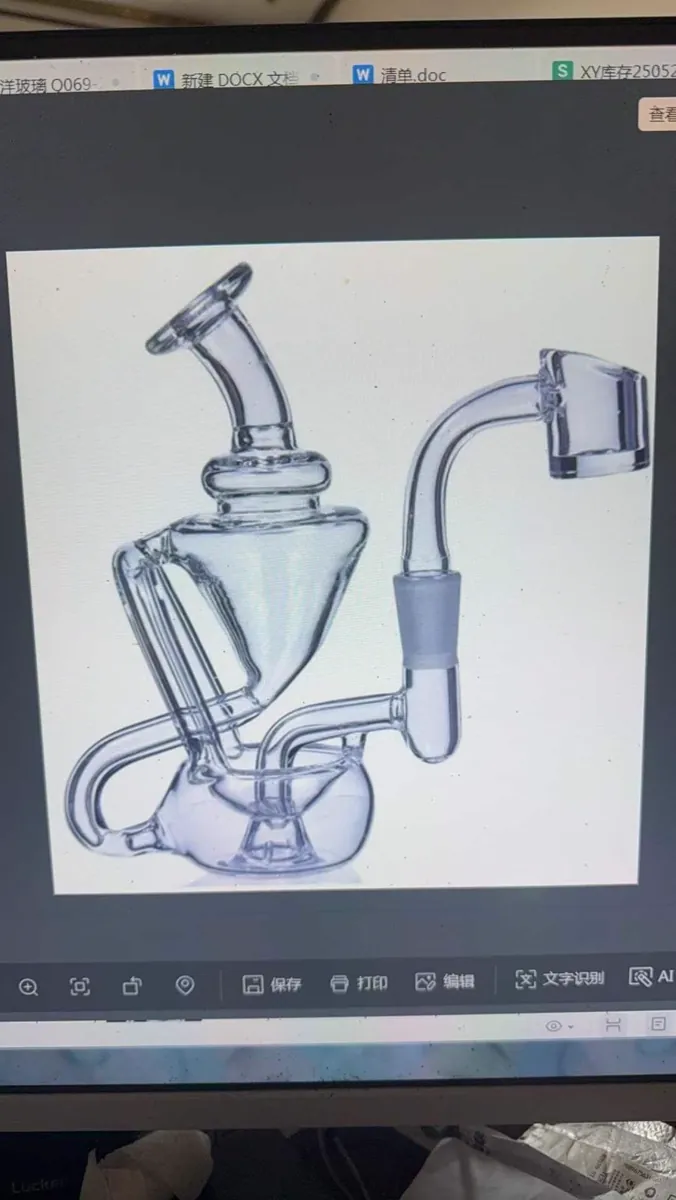
Include at least 3 reference images showing the product from different angles. These do not need to be professional renderings — even hand sketches with dimension callouts work. The goal is to eliminate ambiguity about the overall shape, proportions, and key design features. If you are referencing an existing product on the market, note which elements you want to replicate and which you want to change. A sourcing map for wholesale glass pipes from China provides useful context on how design choices affect production feasibility.
Dimensional Specifications and Tolerances
This is the section where most briefs fail. Buyers specify a target length but forget to mention wall thickness, joint diameter, or bowl depth. The factory fills in the blanks with their default specs — which may not match your vision.
Complete Dimensional Callouts
List every critical dimension: overall length, maximum width, bowl diameter and depth, joint inner and outer diameter, carb hole diameter and position, and wall thickness at key points. For water pipes and dab rigs, also specify the downstem length, percolator type and dimensions, and joint angle (typically 45° or 90°).
Tolerance Ranges
Hand-blown glass cannot achieve the precision of machine-made products. Specify acceptable tolerance ranges for each dimension — typically ±1-2mm for overall length and ±0.5mm for wall thickness on borosilicate pieces. The tolerance range should reflect what your market accepts: a premium retail piece demands tighter tolerances than a promotional giveaway.
| Dimension | Target Value | Acceptable Tolerance | Notes |
|---|---|---|---|
| Overall length | 140mm | ±2mm | Measured from mouthpiece tip to base |
| Wall thickness | 3.0mm | ±0.5mm | Critical for heat resistance and durability |
| Bowl diameter | 18mm | ±1mm | Inner diameter at the rim |
| Joint OD | 14.4mm | ±0.3mm | Must fit standard 14mm bowl |
Material and Surface Treatment Specifications
The material choice affects everything from production temperature to shipping weight. For glass pipes, the primary decision is borosilicate versus soft glass (soda-lime). Borosilicate offers superior heat resistance and durability but costs more and requires more skilled labor to work with. Soft glass is cheaper and easier to shape but more prone to thermal shock cracking. For more context, see this glass manufacturing limits.
Color and Finish
Specify the glass color using a recognized reference system when possible — Pantone codes for solid colors, or physical samples for custom fuming, reactive, or gradient effects. State the finish clearly: glossy (fire-polished), matte (acid-etched or sandblasted), or satin (light etch). The 2026 glass pipe color trends analysis provides market data on which finishes are gaining traction in key retail markets.
Surface Treatment Details
If the design includes fuming (metallic color effects from silver or gold fume), reactive glass patterns, or hand-painted details, provide reference images showing the intensity and coverage you expect. “Light fuming” means different things to different factories — a photo reference removes the guesswork.
Turn Your Concept Into Production-Ready Glass
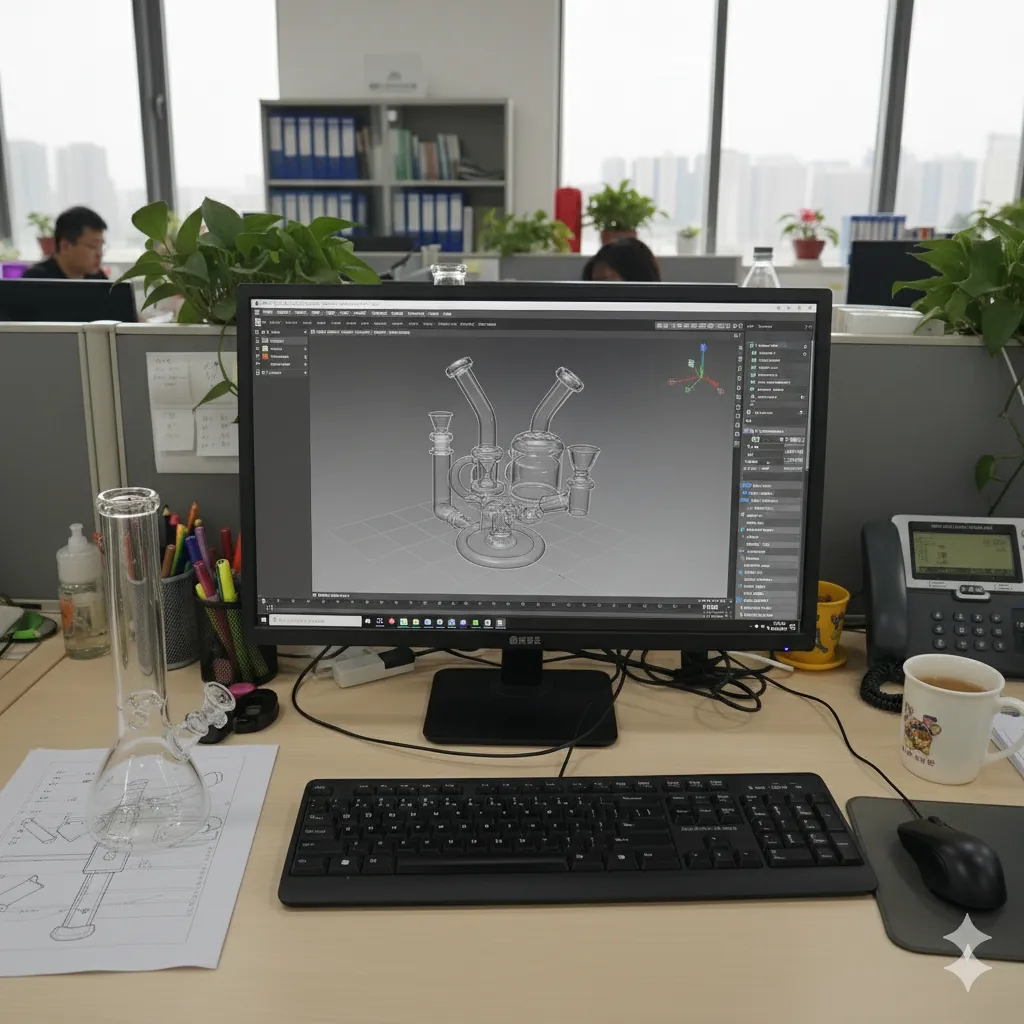
Elfglass takes you from design brief and CAD/STEP files to prototyping, branding, and mold exclusivity, with your IP protected by NDA. Send us your concept and we will return a manufacturable plan and quote.
MOQ from 100 pieces | BSCI / WRAP / ISO 9001 | NDA before every project
Branding and Customization Requirements
Branding on glass pipes typically involves sandblasted logos, engraved text, or custom molds with the brand identity built into the piece shape. Specify the branding method, placement position, size dimensions, and depth.
For sandblasted logos, provide vector artwork (AI or SVG format) and specify the exact position on the piece with measurements from reference points. For custom molds, note that the mold is exclusive to your design and should not be used for other clients — this should be confirmed in the NDA signed before the project begins.
Packaging and Compliance Specifications
Do not leave packaging to the factory’s default. Specify the retail packaging format (individual box, blister pack, velvet pouch), the export packing method (carton configuration, padding material), and any labeling requirements (barcode placement, warning text, country of origin marks).
If your target market has specific compliance requirements — child-resistant packaging in certain US states, CE marking for European markets, or material safety documentation — list them explicitly in the brief. The factory cannot comply with requirements it does not know about. It also helps to verify the factory’s own certifications upfront: Elfglass, for example, holds BSCI, WRAP, and ISO 9001 certifications, which cover social accountability, product safety, and quality management respectively.
Communication Framework for the OEM Process
The brief should close with a communication protocol section that defines how questions, approvals, and changes are handled during production. Specify the primary contact on each side, the preferred communication channel (email for specifications, video calls for design reviews), and the expected response time. Agree on payment terms upfront — Elfglass operates on T/T 30/70, with 30% deposit and 70% before shipment — to avoid delays when the production order is confirmed.
A well-structured OEM process follows a clear sequence: brief submission, factory acknowledgment with questions within 48 hours, 3D design rendering for approval, sample production (typically 1-3 days for standard designs), sample review and feedback, revision if needed, and production order confirmation. Each step should have a defined deliverable and a decision point. At Elfglass, a 1,000-square-meter facility staffed by 20 skilled workers supports a monthly capacity of 10,000 pieces, with production lead times of 7-12 days for orders of 100+ pieces.
The factory’s manufacturing philosophy — where speed is sacred and respect drives every step — should align with your communication expectations. A factory that treats the sampling phase as a mutual evaluation rather than a formality will produce better results and a stronger long-term partnership.
Conclusion
A glass pipe design brief is not paperwork — it is the blueprint that determines whether your OEM project ships on time and on spec. The seven sections outlined above — product overview, dimensions, material specs, branding, packaging, compliance, and communication framework — cover every data point a factory needs to produce a first sample that matches your vision.
The cost of writing a thorough brief is a few hours of your time. The cost of skipping it is measured in revision cycles, delayed launches, and strained supplier relationships. Invest the time upfront and the production phase becomes routine.
Key Takeaways
- Include reference images from at least two angles — they eliminate more ambiguity than paragraphs of text.
- Specify tolerance ranges, not just target dimensions — hand-blown glass has natural variation that must be bounded.
- Name the target market and retail price point — these drive material and finishing decisions at the factory.
- Never skip the packaging section — factories default to domestic packing unless export specs are written in the brief.
Turning a design concept into a manufacturable product starts with clear documentation. For brands ready to move from brief to sample with a manufacturer that maintains NDA confidentiality and offers exclusive custom molds, explore the wholesale dab rigs collection to see how structured OEM processes deliver consistent results.
How long does it take to produce a sample from a design brief?
For standard glass pipe designs, sample production takes 1 to 3 days after the brief is approved and any clarifying questions are resolved. Complex custom pieces with unique molds or multi-color fuming may require up to 7 days.
What format should the design brief be in?
A PDF document with embedded images, dimension callouts, and reference photos works best. Include vector files (AI or SVG) separately for logos or artwork. Avoid verbal descriptions or single-angle photos — they create ambiguity that leads to sample revisions.
What is the minimum order quantity for custom OEM glass pipes?
The typical minimum order quantity for custom glass pipe designs is 100 pieces per design or SKU. This covers the cost of custom mold creation and ensures the production run is economically viable for both the buyer and the manufacturer.
Can I request changes after receiving the first sample?
Yes, sample revision is a normal part of the OEM process. Provide specific written feedback referencing the original brief — note which dimensions or surface treatments need modification. Most projects converge within 1-2 revision cycles when feedback is precise.
Who owns the custom mold after production?
Custom molds created for your design should be exclusive to your project, as confirmed in the NDA signed before the project begins. The manufacturer should not use the mold for other clients or produce overruns without your authorization.
Frequently Asked Questions
What sections should a glass pipe design brief include?
A complete design brief needs 7 sections: product overview with target market and use case, dimensional specifications with tolerances, material requirements including glass type and color, surface finish and aesthetic standards, compliance and labeling requirements, packaging specifications, and approval criteria defining pass/fail standards for sample acceptance.
How long does sampling take after submitting a design brief?
With a complete and clear design brief, an experienced glass pipe factory produces samples in 1-3 days for standard designs. Complex custom pieces with unique molds or multi-color fuming work may take up to 7 days. Incomplete briefs often trigger 3-5 revision rounds, adding 2-3 weeks to the timeline.
What tolerances can I specify for hand-blown glass pipes?
Hand-blown glass pipes typically hold ±0.5mm on wall thickness and ±1mm on overall length. Specifying tighter tolerances is possible but requires machine-assisted processes, increases per-unit cost, and may limit which factories can produce the piece.
Should I sign an NDA before sharing my design brief?
Yes, always. A design brief contains proprietary specifications that define your product. A reputable factory will expect and respect an NDA before any custom design discussion. If a supplier resists signing, that is a disqualifying red flag — they may share your specifications with competitors.
What is the most commonly missing section in design briefs?
The approval criteria section. Most buyers specify what they want but fail to define the specific pass/fail standards — maximum bubble count, wall thickness uniformity range, surface finish acceptability, color matching tolerance. Without these criteria, the factory and buyer interpret quality differently, leading to costly revision cycles.
Get a Quote for Your Next Order
Planning a custom run? your design brief, returned as a feasibility check? Send your design files and target quantity to our factory team or message us on WhatsApp — we will reply with a feasibility check, pricing, and production timeline within 24 hours.
Once your brief is written, see how Elfglass handles it in our design-to-production process — from first quote to approved sample.
About the Author
Ava Zeng is the founder of Elfglass, a Shenzhen-based borosilicate glass pipe manufacturer serving B2B brands worldwide. Every guide on this site is grounded in her production-floor experience— the annealing lines, QC checkpoints, and export orders behind each claim.
Before you commit to a supplier, read her founder’s story and trust promise, and the guide to vetting a reliable glass pipe manufacturer— the same red-flag checklist Elfglass applies to its own suppliers.
Brief structure follows the framework in design brief methodology, where constraints and success criteria are documented before prototyping begins.
Ready to Source Custom Glass Pipes?
Get a free quote within 24 hours. MOQ from 100 pieces. NDA-protected design consultation.
