
Key Takeaways
- Precious-metal fuming bonds metal vapor directly to glass, producing iridescent color that cannot peel or fade the way applied coatings do.
- Gold fuming costs significantly more than silver fuming per piece—primarily because raw gold is 50–80× the price of silver per gram, not because the labor differs.
- Design complexity drives labor cost more than any other factor: multi-zone patterns and full-surface coverage can triple the time a piece spends at the fuming station.
- Compared with decals or screen printing, fuming carries a higher unit cost but eliminates per-unit consumable expenses and survives the lifetime of the product.
- When evaluating supplier quotes, ask for a breakdown separating material cost, labor time, and any custom-tooling charges—transparent factories welcome that question.
Custom glass pipes decorated with gold or silver accents command higher retail prices and attract buyers looking for premium shelf presence. But behind every iridescent finish lies a chain of material costs, skilled labor hours, and technique decisions that directly shape the wholesale quote a brand receives. These pieces trace their craft lineage to glassblowing, the furnace-based forming technique behind most hot-shop glasswork (glassblowing reference).
If you are a wholesale buyer evaluating a supplier’s pricing for gold fuming glass pieces, understanding those cost drivers helps you separate fair quotes from inflated ones—and decide whether a precious-metal accent fits your product strategy at all. This guide breaks down every factor that moves the price, compares gold against silver, and positions fuming against other customization methods so you can make an informed sourcing decision.
Why Precious-Metal Accents Matter in Glass Customization
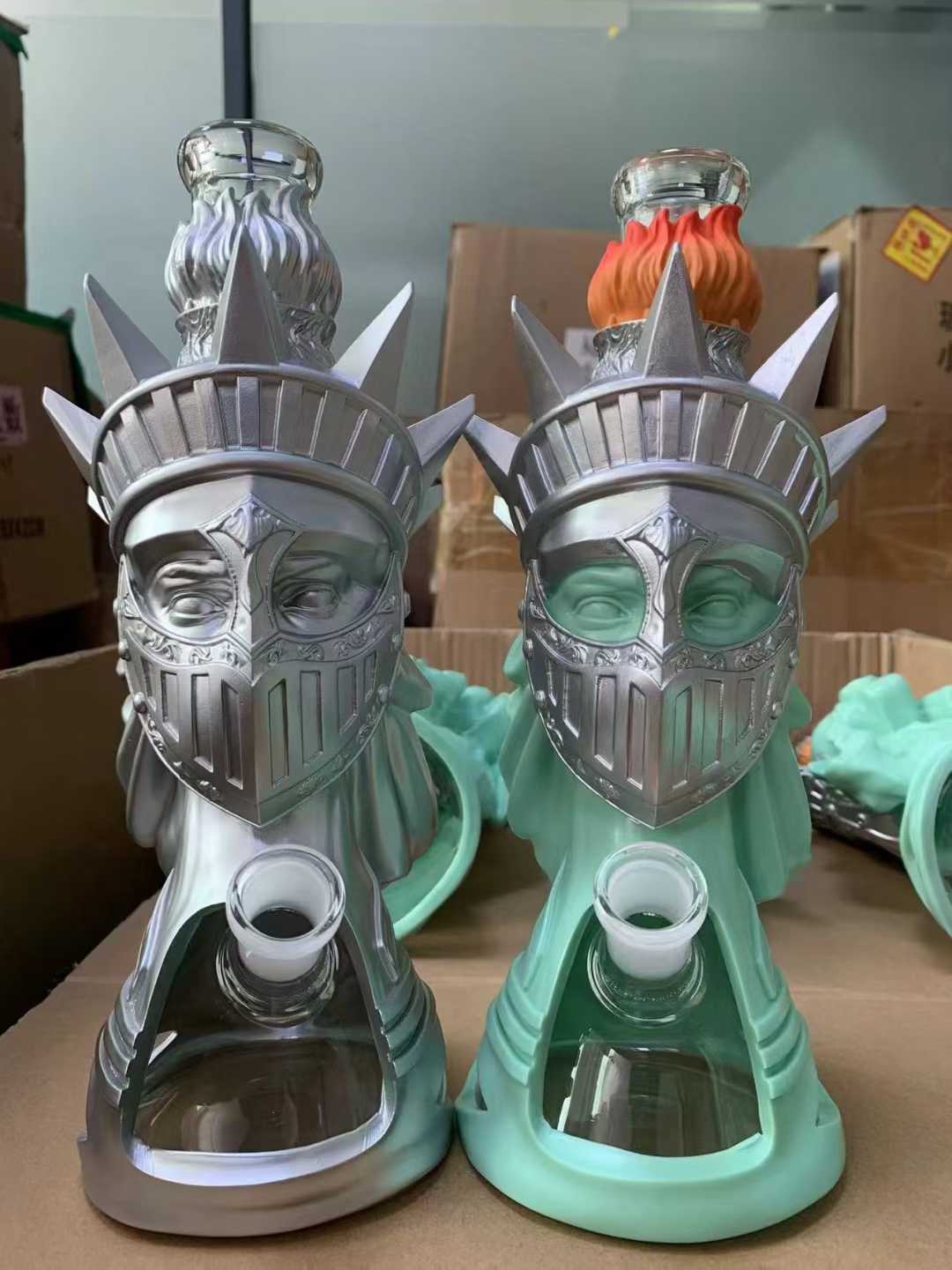
Fuming is a glass-decoration technique in which a torch heats precious metal—gold or silver—until it vaporizes, and the vapor bonds to the surface of the glass, creating a thin metallic layer that produces iridescent color. Unlike decals, inks, or sprayed coatings, fumed metal becomes part of the glass surface. It does not peel, and it does not fade under normal use.
For wholesale buyers building a brand identity, that permanence matters. A fumed accent signals craftsmanship in a way that printed graphics cannot, and it gives retail customers a tactile, light-shifting finish that photographs well on shelves and social media alike. Brands that stock fumed pieces often position them as their premium tier, where margins are healthier and the product differentiates from competitors selling undecorated catalog items.
But the very qualities that make fuming valuable also make it expensive. Understanding why it costs what it costs is the first step toward negotiating wisely.
Material Cost: Gold vs Silver Per Gram
The most obvious cost driver is the metal itself. Silver fuming wire or leaf typically costs a modest amount per gram, with each piece receiving between 0.1 and 0.3 grams depending on the desired coverage intensity and the surface area of the accent. Silver trades on commodity markets, so its price fluctuates but remains accessible for most production budgets.
Gold, by contrast, carries a dramatically higher per-gram price—often 50 to 80 times the cost of silver. Even a thin fuming layer across the neck of a bong represents meaningful material expense. Manufacturers typically use 24-karat gold for fuming because its purity ensures consistent vapor behavior and color response, and that premium purity adds to the cost.
Some factories offer lower-karat gold alloys to reduce expense, but the color response differs and the vapor does not deposit as evenly. The result can be a finish that looks more brass than gold, which undermines the premium positioning the buyer was aiming for.
The practical takeaway: material cost is fixed by the commodity market. No supplier can reduce the gold component of the quote without switching to a cheaper alloy or thinning the layer—both of which affect the visual result. When a quote seems high, the metal price is rarely the place to look for savings.
Labor and Skill: Why Hand Application Adds Up
Fuming cannot be automated. Each piece must be individually handled by a glass artisan who controls the torch distance, angle, and temperature while the metal vapor deposits onto the glass. The artisan’s skill determines whether the coating is even, whether the color matches the target shade, and whether the accent boundaries are clean.
This hand-application reality means fuming is a bottleneck operation in any factory. A production line producing 100 pieces per day might have only two or three workers qualified to run the fuming station, and each worker can process a limited number of pieces per shift. That constraint shows up in the unit cost: the more complex the accent, the more labor hours are absorbed into each piece.
At a manufacturer like Elfglass—a Shenzhen-based factory with 20 employees and a monthly capacity of 10,000 pieces—fuming orders are scheduled carefully to avoid disrupting standard production runs. Brands ordering fumed accents should expect slightly longer lead times than they would for undecorated pieces, particularly at the 100-unit MOQ level where setup and sampling consume a proportionally larger share of the run.
Design Complexity: How Patterns Multiply Cost
Not all fuming jobs are equal. A simple single-band accent around the neck of a straight tube is relatively quick to apply. The glassblower can mask off the rest of the piece, apply the metal in one focused session, and move on. But as the design adds zones, layers, or coverage area, the labor time multiplies.
| Design Type | Relative Labor | Typical Cost Impact |
|---|---|---|
| Single-band neck accent | Low | Base fuming surcharge |
| Multi-zone pattern (neck + bowl + joint) | Moderate to High | 2–3× base surcharge |
| Full-surface coverage | High | 3–5× base surcharge |
| Layered effects (silver under gold) | Very High | Each layer adds a full application cycle |
Each additional zone requires the artisan to re-mask, re-position, and re-apply. Curved surfaces like percolator joints or bowl interiors are harder to coat evenly than flat areas, because the torch angle must be adjusted continuously. And layered effects—where one metal is fumed over another to create depth—require the entire cycle to be repeated, with care taken not to disturb the first layer while applying the second.
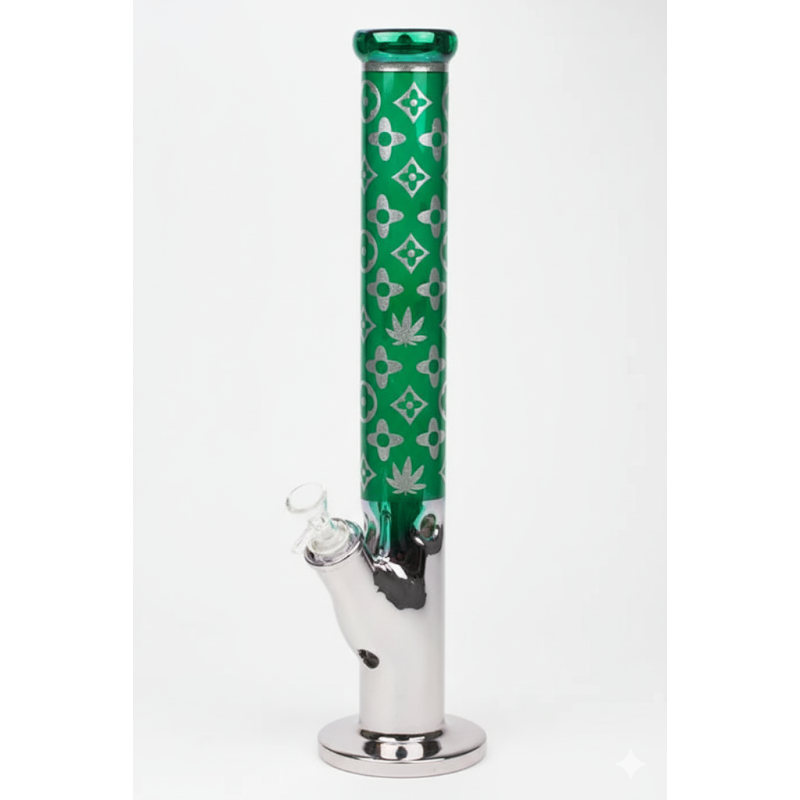
Brands working within a budget can reduce complexity without sacrificing impact. A single well-placed accent often reads as more refined than an overcrowded design, and it keeps the per-unit cost closer to the base surcharge.
Inspect Real Production Glass Before You Commit
We ship COE 3.3 borosilicate samples in 1 to 3 days and back every order with a documented QC process and inspection report. Request a sample kit and judge the wall thickness, color, and finish yourself.
MOQ from 100 pieces | BSCI / WRAP / ISO 9001 | NDA before every project
Gold Fuming vs Silver Fuming: A Direct Comparison
When deciding between gold and silver accents, the choice is usually driven by brand aesthetics and target retail price point. Here is how the two metals compare across the dimensions that matter most to wholesale buyers:
| Factor | Gold Fuming | Silver Fuming |
|---|---|---|
| Material cost per gram | Very high (50–80× silver) | Moderate |
| Application difficulty | High (gold vapor is less forgiving) | Moderate |
| Color range | Warm rose-gold to deep copper | Amber to deep purple-blue |
| Perceived luxury level | Highest | High |
| Sampling cost | Higher (material waste during test runs) | Lower |
| Best suited for | Premium lines, limited editions | Mid-tier premium, broader catalogs |
Silver fuming is the more accessible entry point for brands testing the aesthetic. It produces striking visual effects—shifting from warm amber at thin layers to deep purple at thicker applications—and the lower material cost makes sampling and revision cycles more affordable. Gold fuming delivers an unmistakable premium signal, but the cost commitment means brands should finalize their design through silver samples before moving to gold production runs.
Fuming vs Other Customization Methods: Where the Cost Fits
Precious-metal fuming is one of several ways to decorate wholesale glass. Understanding how it compares to alternatives helps buyers choose the right technique for their product and budget.
| Method | Cost Profile | Durability | Best Use Case |
|---|---|---|---|
| Precious-metal fuming | High per-unit, no recurring consumables | Permanent (bonded to glass) | Premium brand positioning |
| Decals / water-slide transfers | Low setup, moderate per-unit | Moderate (can wear over time) | Multi-color graphics, complex artwork |
| Screen printing | Moderate setup (screen cost), low per-unit at volume | Good (kiln-fired options available) | Repeat logos, text, simple graphics |
| Laser engraving | Moderate (machine time), low per-unit | Permanent (etched into surface) | Serial numbers, fine-line logos |
| Custom mold shapes | High upfront (mold cost), low per-unit | Permanent (part of the glass) | Unique silhouettes, brand-specific forms |
Fuming’s cost advantage over decals and printing emerges at scale: once the design is dialed in, there are no screens to remake, no decals to print, and no ink to replenish. The cost is in the material and the artisan’s time, both of which scale linearly with the number of pieces. For brands ordering 100 pieces per SKU—a common starting point—fuming’s per-unit cost is higher than decals, but the finish quality and durability justify the premium for brands positioning above the commodity tier.
How to Evaluate a Supplier’s Fuming Quote
When you receive a quote for fumed glass pieces, the number on the page reflects material, labor, and overhead combined. Here is how to read it critically— and if you want a detailed look at how a transparent OEM factory handles the entire customization workflow from inquiry to delivery, the Elfglass OEM process overview walks through each stage.
First, check whether the quote separates the metal cost from the labor cost. A transparent factory will list the precious-metal surcharge as a line item, because the raw material price is verifiable against commodity markets. If the quote bundles everything into a single inflated number, ask for a breakdown.
Second, compare the labor component against the design complexity. A simple band accent should not carry the same labor charge as a full-coverage pattern. If it does, the factory may be pricing conservatively to cover risk—acceptable for a first order, but worth renegotiating once the design is proven.
Third, ask about sampling. At a manufacturer with 1-3 day sampling turnaround, you should receive a physical fumed sample before committing to a production run. The sample cost is typically higher per piece than the production unit price, because setup time is amortized across fewer units. A factory that refuses to sample fuming work is either inexperienced with the technique or unwilling to let you verify the result before paying.

What Buyers Should Verify Before Ordering
Beyond price, there are quality signals that separate experienced fuming work from amateur attempts. Look for consistent coating without bare patches or clumping, clean boundaries where the accent meets bare glass, and color that matches the agreed sample. A factory that can hold these standards across 100 pieces—not just the first ten—has the process control to be a reliable partner.
It is also worth verifying that the factory operates under recognized certifications. BSCI, WRAP, and ISO 9001 certifications indicate that the production environment meets international standards for social compliance and quality management. A factory investing in those systems is more likely to maintain consistent fuming quality than an uncertified workshop.
Finally, ensure the supplier is willing to sign a non-disclosure agreement before you share your design files. Your accent patterns and placement choices are part of your brand identity, and a professional manufacturer will protect that information as a matter of course. For a deeper look at IP protection in glass sourcing, see the guide to protecting your glass design IP when sourcing overseas.
Bottom Line: When Gold and Silver Accents Are Worth the Cost
Precious-metal fuming is not the cheapest way to decorate glass. It is, however, one of the most effective ways to elevate a product line from functional commodity to premium brand offering. The cost is real—driven by material prices, skilled labor, and design complexity—but so is the return in brand perception and retail margin.
Brands that approach fuming strategically—starting with silver samples, simplifying designs to control labor cost, and choosing gold for their hero SKUs—can build a premium tier without absorbing unnecessary expense. The key is working with a manufacturer who is transparent about where the cost comes from and willing to collaborate on achieving the best result within your budget. Reach out to the Elfglass team to discuss your fuming project and get a transparent quote.
Frequently Asked Questions
Is gold fuming on glass durable enough for daily-use products?
Yes. Because the metal vapor bonds directly to the glass surface during the fuming process, the finish does not peel, chip, or fade under normal handling. It outlasts applied coatings and decals significantly.
Why does gold fuming cost more than silver fuming?
The primary driver is raw material cost. Gold is 50 to 80 times more expensive than silver per gram. Application difficulty is slightly higher for gold as well, but the material price gap is the dominant factor in the final quote.
Can a supplier fume both gold and silver on the same piece?
Yes. Layered fuming—applying silver as a base layer and gold as an accent on top—is a recognized technique that creates visual depth. Each additional layer adds a full application cycle, which increases labor cost.
What color does gold fuming produce on glass?
Gold fuming typically produces warm tones ranging from rose-gold at thin layers to deep copper at thicker applications. Silver fuming produces amber to deep purple-blue, depending on layer thickness.
How does fuming compare to decals for custom glass decoration?
Fuming is permanent and bonded to the glass; decals are applied on top and can wear over time. Fuming costs more per unit but has no recurring consumable expenses. Decals are better suited for multi-color graphics; fuming excels at metallic, iridescent finishes. Explore the full range of glass logo application methods to compare all options.
About the Author
Ava Zeng is the founder of Elfglass, a Shenzhen-based borosilicate glass pipe manufacturer serving B2B brands worldwide. Every guide on this site is grounded in her production-floor experience— the annealing lines, QC checkpoints, and export orders behind each claim.
Before you commit to a supplier, read her founder’s story and trust promise, and the guide to vetting a reliable glass pipe manufacturer— the same red-flag checklist Elfglass applies to its own suppliers.
Ready to Source Custom Glass Pipes?
Get a free quote within 24 hours. MOQ from 100 pieces. NDA-protected design consultation.
