
Protecting a product design starts before the first file leaves your computer and continues after the first container ships. Most design losses in overseas sourcing do not happen through dramatic theft. They happen through routine exposure: a quotation request sent to dozens of unnamed factories, a CAD file forwarded through a trading company, a sample photographed on a showroom shelf, a custom mold stored in a building you do not own. For more context, see this mold exclusivity and design ownership.
If you are preparing to manufacture custom glass pipes, water pipes, or dab rigs overseas, this guide walks through the three layers of defense: the contract layer, the registration layer, and the process layer. Each layer has specific legal tools and specific failure modes, and none of them works alone. Together they make your design expensive to copy and cheap to defend, which is exactly the math you want before placing a first order.
What “Design IP” Actually Means on a Glass Product
Before you can protect your design, you need to know which legal category each piece of it falls into, because each category uses a different instrument. On a typical custom glass product, there are at least five distinct protectable assets:
The product shape and surface appearance. The silhouette of a beaker base, the curve of a sherlock bowl, the arrangement of color on a fumed tube — the ornamental, non-functional appearance of a manufactured article is the subject of design patents in the United States and design registrations in most other jurisdictions. Functional features dictated purely by engineering do not qualify for design protection; they belong to utility patents, which are a different and more expensive category.
The custom molds and tooling. A mold is your design in physical form. Whoever controls the mold controls reproduction. Mold ownership and storage terms belong in your manufacturing contract, and we cover them in detail in the custom glass pipe molds guide.
The brand name and logo. These are trademarks. A logo applied by printing, etching, or sandblasting is a branding technique commercially, but legally it is a brand asset that should be registered before it ever touches glass — see our guide to glass logo application methods for the production side.
Decals, surface artwork, and packaging graphics. Original artwork is protected by copyright the moment it is created, and registration strengthens your enforcement position.
Process know-how. Your color recipes, thickness specifications, and QC tolerances are trade secrets — protectable only for as long as you keep them secret.
Why Overseas Sourcing Raises the Stakes
Intellectual property rights are territorial. A US design patent gives you no enforceable rights in China, and a Chinese design registration does nothing for you in an American courtroom. The EU SME Centre, an EU-funded advisory body for small businesses operating in Asia, puts the rule plainly: IP laws are territorial, so you register your IP in the markets where you sell and where you manufacture. Most brands protect their home market and forget the factory’s country — which is precisely where copying happens.
The second structural risk is that China operates on a first-to-file basis for both trademarks and patents, with an absolute novelty standard for patents. In practical terms: whoever files a design application or a trademark application first generally holds the rights, regardless of who created the design first. If a factory or a third party files your shape or your brand name before you do, they can end up owning your design in the jurisdiction where it is produced — and using that registration against you.
The third risk is exposure surface. Every party that sees your files becomes a potential leak point: the five factories you sent the same RFQ to, the sourcing agent who forwarded it, the forwarder who handled the sample. Glass compounds the problem because the copying barrier is low — a few clear photographs and a weight measurement are often enough for a competent workshop to reproduce a simple shape. In a niche market, a single knockoff listing at a lower price can undercut the brand that paid for the original development.
The Contract Layer: NDAs, NNN Agreements, and What Makes Them Enforceable
The most common mistake is treating any signed document as equal protection. A standard Western-style NDA (non-disclosure agreement) covers one thing only: the other party must not disclose your information. It typically says nothing about the factory using your design for its own products, or about the factory bypassing you to sell your design directly to your customers.
For manufacturing relationships in China, the instrument practitioners recommend is the NNN agreement, which bundles three obligations:
Non-disclosure — the factory cannot share your files, samples, or pricing with third parties. Non-use — the factory cannot use your design, files, or molds to produce goods for anyone else, including itself. Non-circumvention — the factory cannot go around you to contact your customers or sell your product directly into your channels.
Signing the document is the easy part; enforceability is where most agreements fail. According to China-focused IP law practitioners, whether an NNN agreement is actually enforceable against a Chinese manufacturer depends on five factors: drafting quality, jurisdiction, language, execution formalities, and evidence. The practical defaults that come out of that guidance:
Make the agreement governed by Chinese law with jurisdiction in China, because a foreign judgment is difficult to enforce against a Chinese entity. Keep a Chinese-language version as the controlling text, since Chinese courts operate in Chinese. Have the agreement stamped with the company’s official seal, the company chop, which Chinese practice treats as the element that gives the document its legal effect. And keep a clean evidence trail of what you disclosed and when.
One more caution from the same practitioners: an NNN alone is usually not enough, because it binds only the signing party and not third parties who never saw it. That is why the contract layer must be combined with registered rights, which work against everyone.
Whatever the instrument, timing is non-negotiable: the agreement must be signed before you send any file, sample, or detailed specification — not after the quote comes back. This is standard practice in disciplined OEM shops; at Elfglass, the NDA is signed before project start as the first step of the workflow, before any design discussion opens.
That conversation starts on our contact page, where the NDA is the first document we exchange.
The Registration Layer: Design Patents and Registered Designs
Registered design rights are the only protection that works against strangers — anyone who copies you, whether they signed anything or not. Three instruments matter for a brand sourcing from China.
The US design patent. A design patent protects the ornamental, non-functional appearance of an article of manufacture. According to the USPTO’s rules on design patent term, design patents filed on or after May 13, 2015 carry a term of fifteen years from the date of grant, with no maintenance fees. There is a deadline you cannot miss: if you publicly disclose the design — a crowdfunding page, an Instagram teaser, a trade show display — you must file within twelve months of that disclosure or you lose the right. The practical rule is simpler than the statute: file before you show the design to anyone outside your company.
The Chinese design patent. Because copying and enforcement both happen where the product is made, registration in China is not optional for a serious brand. China’s amended Patent Law extended the design patent term to fifteen years for applications filed on or after June 1, 2021, and introduced protection for partial designs — useful when your innovation is a distinctive feature rather than the whole shape. Remember the first-to-file logic above: the application date is what counts, so file before your files ever cross the border.
The Hague System for international coverage. If you sell in multiple markets, the WIPO Hague System lets you seek design protection across multiple jurisdictions through a single international application. An international registration runs for an initial five-year period and can be renewed twice, which guarantees at least fifteen years of protection, with individual contracting parties potentially allowing longer. One application, one set of fees, one renewal calendar — far cheaper than parallel national filings in every market.
The ordering matters. Registration happens before quotation requests go out, because absolute novelty means any earlier public disclosure can invalidate a later filing. Budget-wise, design filings cost less than utility patent applications, and the fifteen-year term spans the entire commercial life of most glass products.
Turn Your Concept Into Production-Ready Glass
Elfglass takes you from design brief and CAD/STEP files to prototyping, branding, and mold exclusivity, with your IP protected by NDA. Send us your concept and we will return a manufacturable plan and quote.
MOQ from 100 pieces | BSCI / WRAP / ISO 9001 | NDA before every project
The Brand Layer: Trademarks, Copyright, and Trade Secrets
Design rights protect the shape. The brand layer protects everything the customer actually recognizes.
Trademarks. Register your brand name and logo in every country where you sell — and in the country where you manufacture. First-to-file trademark systems mean squatters file foreign brand names once they become visible; a registered mark is also what marketplace takedown systems ask to see when a counterfeit listing appears. If your logo is applied to the glass itself, the registration is what turns a decoration into an enforceable asset. The question of private label versus white label ownership, covered in our private label vs white label comparison, becomes much simpler when the marks are registered before production begins.
Copyright. Decal artwork, printed graphics, and packaging design are copyrightable works. Registration is recommended by the EU SME Centre because it gives you a dated, official record that platforms and courts accept without argument.
Trade secrets. The color recipe that makes your fumed finish distinctive, the wall-thickness tolerance your QC sheet specifies, the annealing profile your supplier uses for your line — none of these can be registered, and all of them leak through careless file sharing. Protect them with discipline rather than paperwork: share only what each stage of the project requires, mark confidential documents clearly, and keep the full specification in your own hands until a signed agreement and a deposit are both in place.
Process Controls: Protecting IP from Quote to Container
Contracts and registrations are legal instruments; process controls are what stop leaks before any lawyer gets involved. Four controls carry most of the weight.
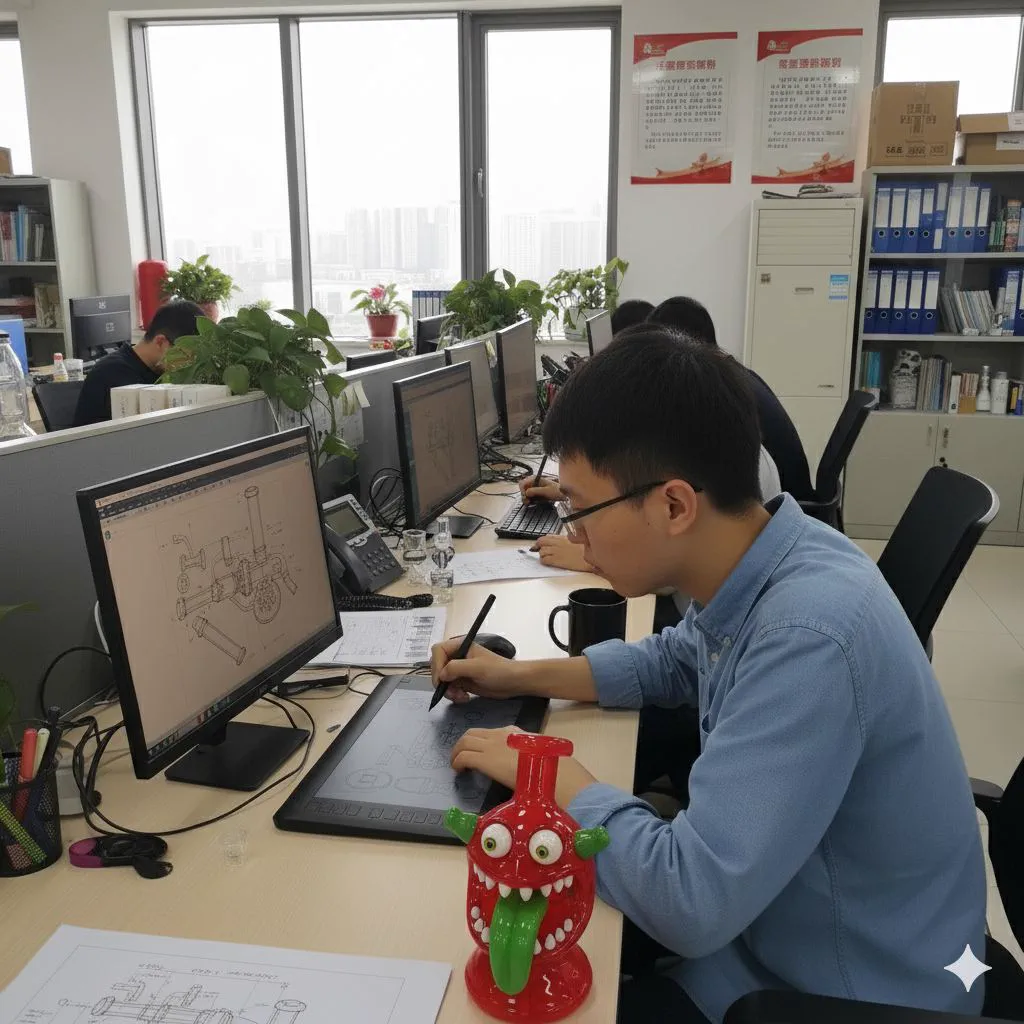
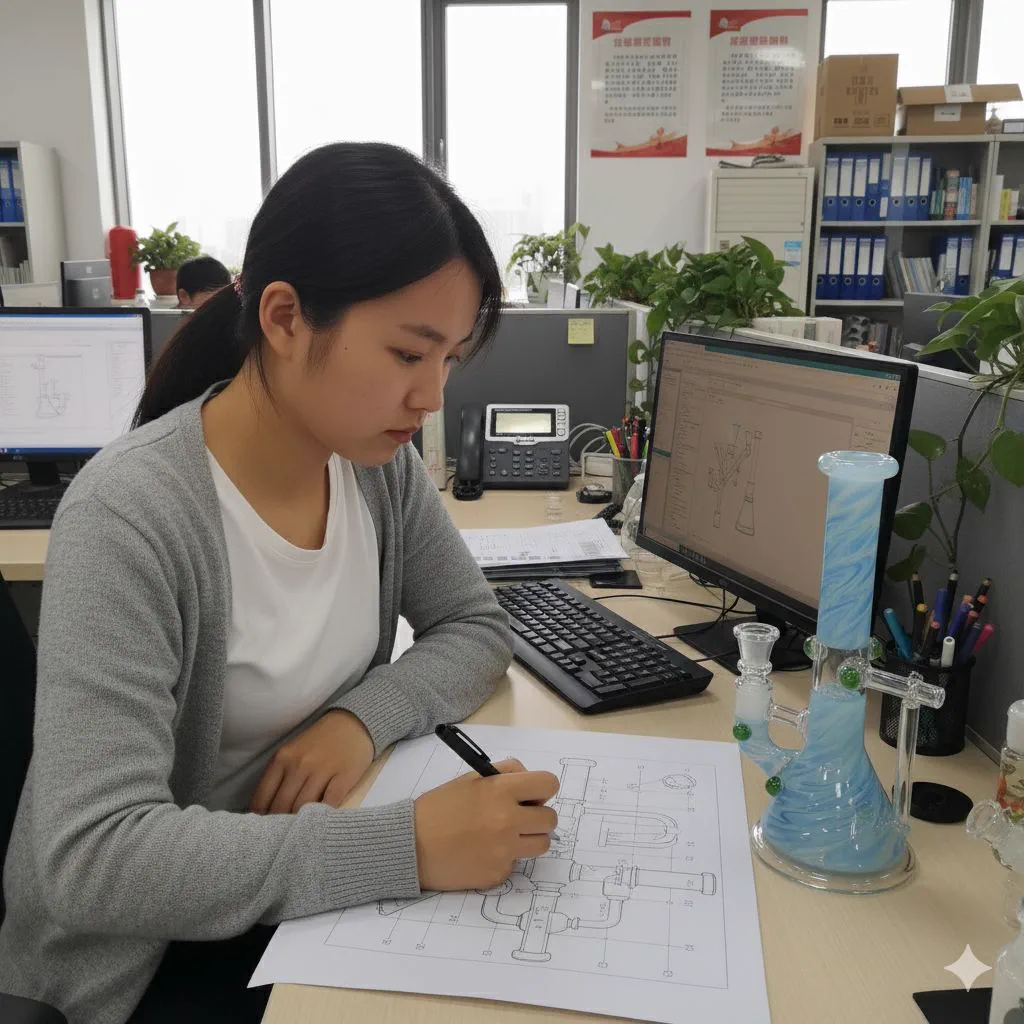
Staged disclosure. At the quotation stage, a factory needs only the silhouette, overall dimensions, material expectations, and target quantities — enough to price, not enough to reproduce. Detailed CAD files, mold drawings, and color specifications move only after the NNN is signed and the project formally starts. Format matters as much as timing: our guide to the design files factories need explains why STEP beats STL before anything moves. When you do hand over the full package, hand it over as a complete, dated tech pack — the single document that doubles as your evidence of what you disclosed and when, which is exactly what an enforcement case turns on.
Related reading: precious metal fuming costs.
Mold ownership in writing. Overseas factories holding tooling hostage is a documented pattern in manufacturing law commentary — molds that were never contractually assigned can be withheld, rented out, or quietly used for other clients. Your manufacturing agreement should state who owns each mold, that the mold is exclusive to you, that it cannot be used for any other customer, and what happens to it at the end of the relationship: returned or destroyed, at your direction. Some OEM factories treat exclusive molds as standard policy rather than a negotiation point — Elfglass holds custom molds as exclusive to the client, so the exclusivity question is settled before the first sample exists. For brands planning seasonal limited edition drops, that mold exclusivity is what keeps a limited run genuinely limited.
Audit the supplier before you share anything. The strongest process control is choosing a factory with something to lose. Look for third-party social compliance certifications such as BSCI and WRAP, a quality system such as ISO 9001, a real track record measured in years, and a workflow where the NDA comes first rather than last. A factory that volunteers confidentiality before you ask it is telling you how it treats every client’s files.
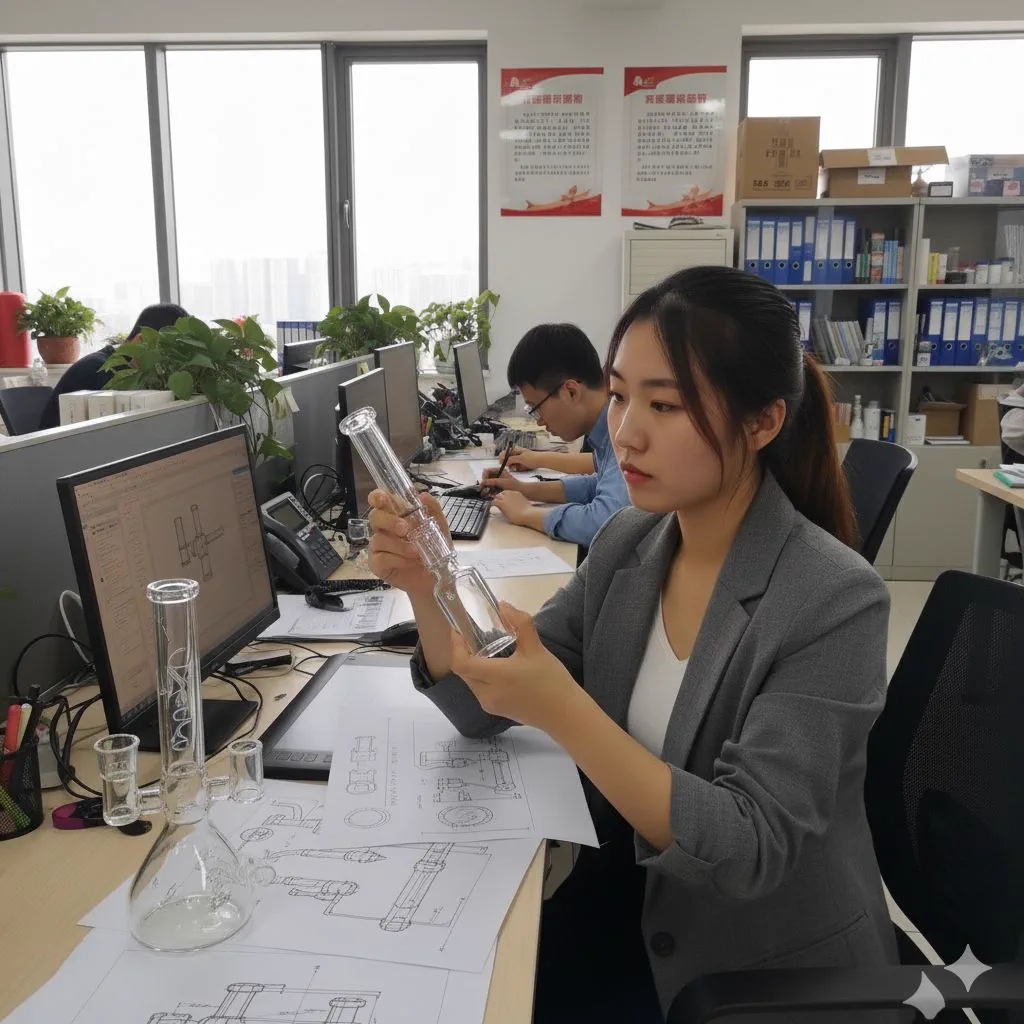
Keep the commercial structure simple. Direct factory relationships mean fewer hands touching your design. Elfglass, established in 2010, runs OEM and ODM projects factory-direct with an MOQ of 100 pieces per design, sampling in 1 to 3 days, and production in roughly 7 to 12 days for orders of 100 pieces or more, on T/T terms of 30 percent deposit and 70 percent balance before shipment, with a monthly capacity of 10,000 pieces and quote responses within 12 hours. The full sequence — from NDA and requirement intake on day one through 3D design, sampling, and delivery — is laid out step by step on our OEM process page, which is worth reading before you share files with anyone. If your project involves design changes during production, our guide on empathy before engineering covers how to handle revisions constructively. For a deeper look at the philosophy behind that process, the Elfglass designer’s story traces how a factory built around craft thinking handles custom work.
What to Do If Your Design Leaks Anyway
Even layered protection fails occasionally. When it does, speed and documentation decide the outcome.
First, fix the evidence before you contact anyone: your dated design files, the signed NNN, the tech pack transmission records, purchase orders, and dated photographs of the infringing listing or product. Enforcement conversations without a paper trail turn into one side’s word against the other.
Second, use platform takedown channels. Major B2B and retail marketplaces operate intellectual property complaint systems, and a registration certificate — design patent, trademark, or copyright — is what makes those complaints succeed quickly.
Related reading: NDA-first workflow.
Third, choose the enforcement route deliberately. For infringement occurring in China, the EU SME Centre notes that administrative action through local enforcement authorities may be advisable over civil litigation or criminal prosecution. Your enforcement counsel can advise on which route fits your case.
Finally, do the arithmetic. Every enforcement action costs more than the preventive filing, contract, and process discipline you skipped. The brands that enforce successfully are almost always the ones that registered early, because enforcement without registered rights rarely has anything to stand on.
A Layered Checklist to Protect Product Design IP
The table below compresses the three layers into a working checklist. The order roughly follows project timing, from before first contact to ongoing production.
| Layer | Tool | What it protects | When to deploy |
|---|---|---|---|
| Registration | US design patent | Product shape and appearance in the US (15-year term) | Before any public disclosure; within 12 months at the absolute latest |
| Registration | Chinese design patent | The design in the country of manufacture (15-year term) | Before files are sent to any factory |
| Registration | Hague international registration | Design rights across multiple sales markets via one filing | Before launch, alongside national filings |
| Brand | Trademark registration | Brand name and logo in sales and manufacturing countries | Before the brand becomes visible anywhere |
| Brand | Copyright registration | Decals, artwork, packaging graphics | Before artwork is sent to the factory |
| Contract | NNN agreement (Chinese law, Chinese text, company chop) | Disclosure, misuse, and circumvention by the factory | Before the first file or sample moves |
| Contract | Mold ownership and exclusivity clause | Custom tooling against retention or reuse | In the manufacturing agreement, before sampling |
| Process | Staged disclosure and dated tech pack | Control of what each party sees, plus an evidence trail | Quote stage onward |
| Process | NDA-first supplier with exclusive molds | The workflow itself | At supplier selection |
| Process | Need-to-know file access and confidentiality marking | Trade secrets: color recipes, tolerances, QC specs | Throughout sampling and production |
Design IP protection becomes even more nuanced when artists license their work to manufacturers. Our artist collaboration licensing guide covers the three main licensing models and how each handles IP ownership.
None of these steps requires enterprise-scale budgets. Registrations are the cheapest tier of patent protection, an NNN is a one-time drafting cost, and the process controls are simply habits. What they require is ordering: every item above is cheap before disclosure and expensive after it.
Frequently Asked Questions
Does an NDA protect my design when sourcing from China?
A standard NDA alone is usually insufficient. Practitioners recommend a China-specific NNN agreement covering non-disclosure, non-use, and non-circumvention, governed by Chinese law with a controlling Chinese-language text and stamped with the factory’s company seal. It binds only the signing party, so it must be combined with registered design rights.
Should I register my design patent before sending files to a factory?
Yes. China operates first-to-file for patents and trademarks under an absolute novelty standard, so whoever files first generally holds the rights. Filing your design applications before any RFQ goes out protects you in both your home market and the country of manufacture.
Who owns the custom molds I pay for?
Whoever your contract says owns them. Without a written mold ownership clause stating ownership, exclusivity, and return or destruction terms, a factory can retain or reuse tooling. Choose suppliers that treat mold exclusivity as standard policy.
How much of my design should I share at the quote stage?
Only what is needed to price the project: the silhouette, overall dimensions, material expectations, and target quantity. Detailed CAD files, color recipes, and mold drawings belong in the sampling stage, after the NNN agreement is signed.
What is the cheapest first step to protect product design IP?
A design registration is one of the most affordable registered protections available, and staged disclosure costs nothing at all. Both cost far less than enforcing rights you never registered.
Get a Quote for Your Next Order
Planning a custom run? with an NDA signed before your design leaves your hands? Send your design files and target quantity to our factory team or message us on WhatsApp — we will reply with a feasibility check, pricing, and production timeline within 24 hours.
About the Author
Ava Zeng is the founder of Elfglass, a Shenzhen-based borosilicate glass pipe manufacturer serving B2B brands worldwide. Every guide on this site is grounded in her production-floor experience— the annealing lines, QC checkpoints, and export orders behind each claim.
Before you commit to a supplier, read her founder’s story and trust promise, and the guide to vetting a reliable glass pipe manufacturer— the same red-flag checklist Elfglass applies to its own suppliers. For more context, see this OEM vs ODM engagement model.
Ready to Source Custom Glass Pipes?
Get a free quote within 24 hours. MOQ from 100 pieces. NDA-protected design consultation.
