
One Six-Digit Number That Determines Your Duty Bill
Every glass pipe that crosses an international border carries a six-digit code — its Harmonized System number — and that code determines how much import duty you pay, whether your shipment gets flagged for inspection, and whether customs brokers can clear it in minutes or days. Most B2B glass pipe buyers have never looked up their HS code. They trust their customs broker to pick one, and if the broker picks wrong, the buyer pays the difference — sometimes years later, in back-duties and penalties.
This article explains the HS classification system as it applies to glass smoking pipes, water pipes, and related glassware. By the end, you will know exactly which code applies to your products, why it matters for your landed cost, and what to tell your customs broker to avoid misclassification.
How the Harmonized System Works
The Harmonized Commodity Description and Coding System, maintained by the WCO HS Nomenclature (WCO), classifies every traded product into a hierarchical code structure:
| Level | Digits | Example | Meaning |
|---|---|---|---|
| Chapter | 2 | 70 | Glass and glassware |
| Heading | 4 | 7017 | Laboratory, hygienic or pharmaceutical glassware |
| Subheading | 6 | 7017.20 | Other glassware, of lead crystal or other glass |
| National (US) | 10 | 7017.20.50 | US-specific tariff line |
The first six digits are universal — every WCO member country uses the same six-digit code. Digits 7-10 (or more) are country-specific additions that further subdivide for tariff rate purposes. This means your glass pipe’s HS code starts the same in New York, Rotterdam, and Tokyo — but the full tariff line and duty rate differ by country.
Glass Pipes: The Two Competing Classifications
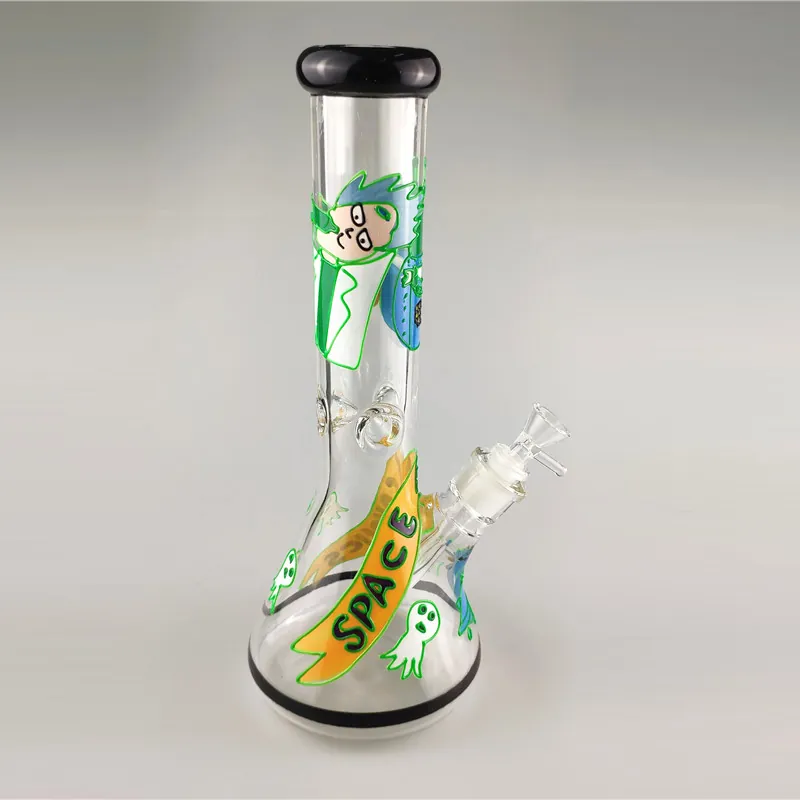
Glass smoking pipes sit at an uncomfortable intersection in the HS nomenclature. Two headings compete for classification, and the choice between them has real cost implications:
Heading 9614: Smoking Pipes and Pipe Bowls
Heading 9614 covers “smoking pipes and pipe bowls and other smoking pipes and parts thereof.” This is the most intuitive classification for a glass hand pipe or bong — it is literally a smoking pipe. Under the US Harmonized Tariff Schedule, 9614.20 covers “smoking pipes and pipe bowls” with a general duty rate that varies by material.
Heading 7017: Laboratory, Hygienic or Pharmaceutical Glassware
Heading 7017 covers “laboratory, hygienic or pharmaceutical glassware, whether or not graduated or calibrated.” This heading is sometimes used for glass water pipes and bongs when they are classified as “hygienic glassware” rather than smoking pipes. The duty rate under 7017 is often different from 9614.
The WCO’s Explanatory Notes — the official interpretive guide for HS classification — place smoking pipes under 9614 regardless of material. However, some national customs authorities have historically classified glass water pipes under 7017 when they are perceived as “hygienic” or “filtration” devices rather than direct smoking instruments. This creates genuine classification ambiguity for products like bongs and water pipes that combine glass construction with a filtration function.
What This Means for Your Duty Bill

The classification choice directly affects the duty rate you pay. Here is a simplified comparison for imports into the United States (rates are illustrative — always verify with current HTS):
| Product | Heading 9614 Rate | Heading 7017 Rate | Difference on $10,000 Shipment |
|---|---|---|---|
| Glass hand pipe | ~5.5% (general) | ~5.0% | $50 |
| Glass water pipe / bong | ~5.5% | ~5.0% | $50 |
| Glass dab rig | ~5.5% | ~5.0% | $50 |
On a single shipment, the difference may seem small. But for high-volume importers moving millions of dollars of glass product annually, the cumulative duty difference can be significant. More importantly, misclassification can trigger customs audits. If CBP determines you have been using the wrong code, you may owe back-duties for up to five years of imports, plus interest and penalties.
How to Determine the Correct Classification for Your Products
Classification is not a guessing game. The WCO provides a set of General Rules of Interpretation (GRI) that determine classification in a specific order:
- GRI 1: Classification is determined by the terms of the headings and any relevant section or chapter notes. If the product clearly fits a heading’s description, that heading applies. A glass smoking pipe is, by its ordinary meaning, a “smoking pipe” under 9614.
- GRI 2(a): Incomplete or unfinished articles are classified as the complete article. A glass pipe body without a bowl is still classified as a smoking pipe.
- GRI 3(b): For composite goods (like a glass water pipe with a glass downstem and metal bowl), classification follows the component that gives the product its “essential character.” For a glass bong, that is the glass body — so it remains classified as a glass smoking pipe.
For most glass smoking pipes, GRI 1 points clearly to heading 9614. The 7017 classification is more defensible for glass items that have a dual use — for example, a glass water filtration device that could be classified as either a smoking pipe or a hygienic glass device.
Correct Classification Starts at the Factory
We supply the material specs, dimensions, and product descriptions your broker needs to classify glass pipes accurately under HS 7017. Request a documentation pack with your next quote.
MOQ from 100 pieces | BSCI / WRAP / ISO 9001 | NDA before every project
Practical Steps for Importers
| Step | Action | Why |
|---|---|---|
| 1. Identify the product function | Document whether the product is marketed and designed as a smoking pipe, a water filtration device, or a decorative item | Function determines heading |
| 2. Get a binding ruling | Apply to CBP for a binding classification ruling (19 CFR § 177) before importing | Legally protects your classification for 3+ years |
| 3. Document the basis | Keep written classification analysis citing GRI, EN notes, and any ruling letters | Defends against audit challenges |
| 4. Review with each new product | Each new pipe design may have a different classification | Product changes can shift classification |
| 5. Align with your broker | Ensure your customs broker uses the same classification you have determined | Broker defaults may differ from your analysis |
Country-Specific Variations: EU, UK, and Australia
While the first six digits are universal, national tariff lines differ. Here is how the same glass pipe is classified in three major import markets:
| Market | HS Code | Duty Rate (Third-Country) | Notes |
|---|---|---|---|
| United States | 9614.20 / 7017.20 | ~5-5.5% (MFN) | Binding ruling recommended |
| European Union | 9614.20 / 7017.20 | ~2.7-3.7% (TARIC) | CN code 9614 20 00 for smoking pipes |
| United Kingdom | 9614.20 / 7017.20 | ~2.7% (UKGT) | Post-Brexit UK Global Tariff mirrors EU CN |
| Australia | 9614.20 / 7017.20 | 5% (general) | ChAFTA may reduce to 0% for Chinese origin |
The duty rate differences between markets are significant for your landed-cost calculation. A $5 glass pipe faces $0.275 in US duty, $0.135 in EU duty, or $0.25 in Australian duty — and these differences compound across thousands of units.
For related reading, see our US import compliance requirements for glass pipes for a detailed breakdown.
For related reading, see our planning lead times for glass pipe orders for a detailed breakdown.
Learn more about request a landed cost calculation from Elfglass.
Learn more about our wholesale hand pipe catalog.
Ready to Start Your Custom Glass Pipe Project?
Get a free quote within 24 hours. MOQ from 100 pieces. NDA-protected design consultation.
About the Author
Ava Zeng has spent over 16 years in glass manufacturing at Elfglass, managing production lines, color formulation, and international B2B partnerships. She writes from the factory floor in China, combining materials-science knowledge with hands-on procurement experience.
Frequently Asked Questions
What HS code should I use for glass smoking pipes?
Glass smoking pipes are most commonly classified under heading 9614.20 (smoking pipes and pipe bowls). Glass water pipes and bongs may also be classified under 7017.20 in some jurisdictions. The correct classification depends on the product’s primary function and marketing. Consult your customs broker or apply for a binding ruling for certainty.
Does the HS code affect how much duty I pay?
Yes. The HS code determines the tariff line, which sets the duty rate. Different classifications for the same product can result in different duty rates. For example, classifying a glass bong under 9614 vs 7017 may result in a 0.5-1% duty rate difference, which compounds over large shipment volumes.
Can I get a definitive ruling on my product’s classification?
Yes. In the US, you can apply to Customs and Border Protection for a binding classification ruling under 19 CFR § 177. This legally protects your classification for at least three years and gives you certainty for landed-cost calculations. Similar ruling processes exist in the EU (Binding Tariff Information) and UK.
What happens if I use the wrong HS code?
If customs determines you have been misclassifying products, you may owe back-duties for up to five years of past imports, plus interest and potential penalties. In the US, negligent misclassification can result in penalties up to the domestic value of the merchandise. Proactive correction through a prior disclosure can reduce penalties significantly.
