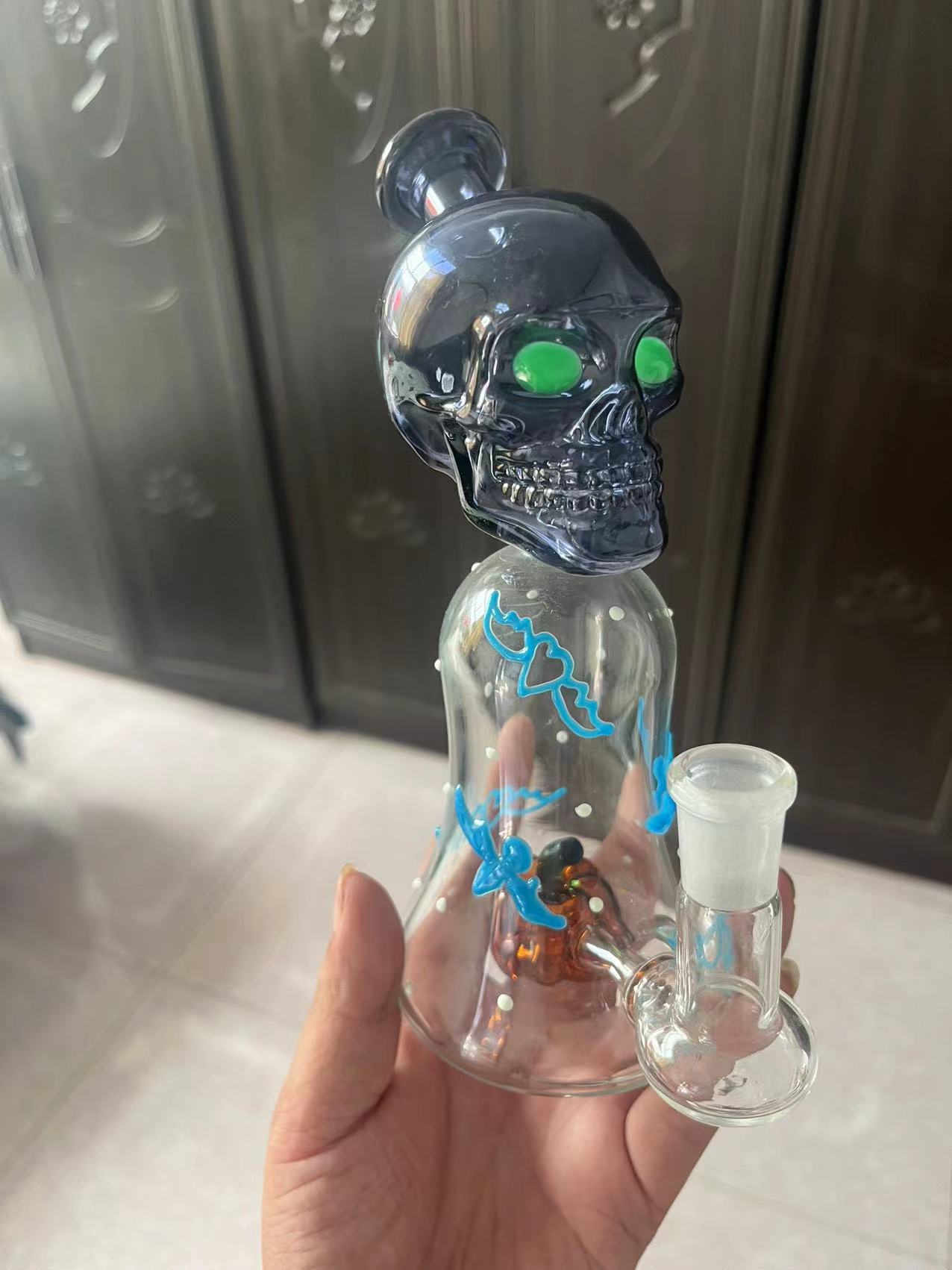
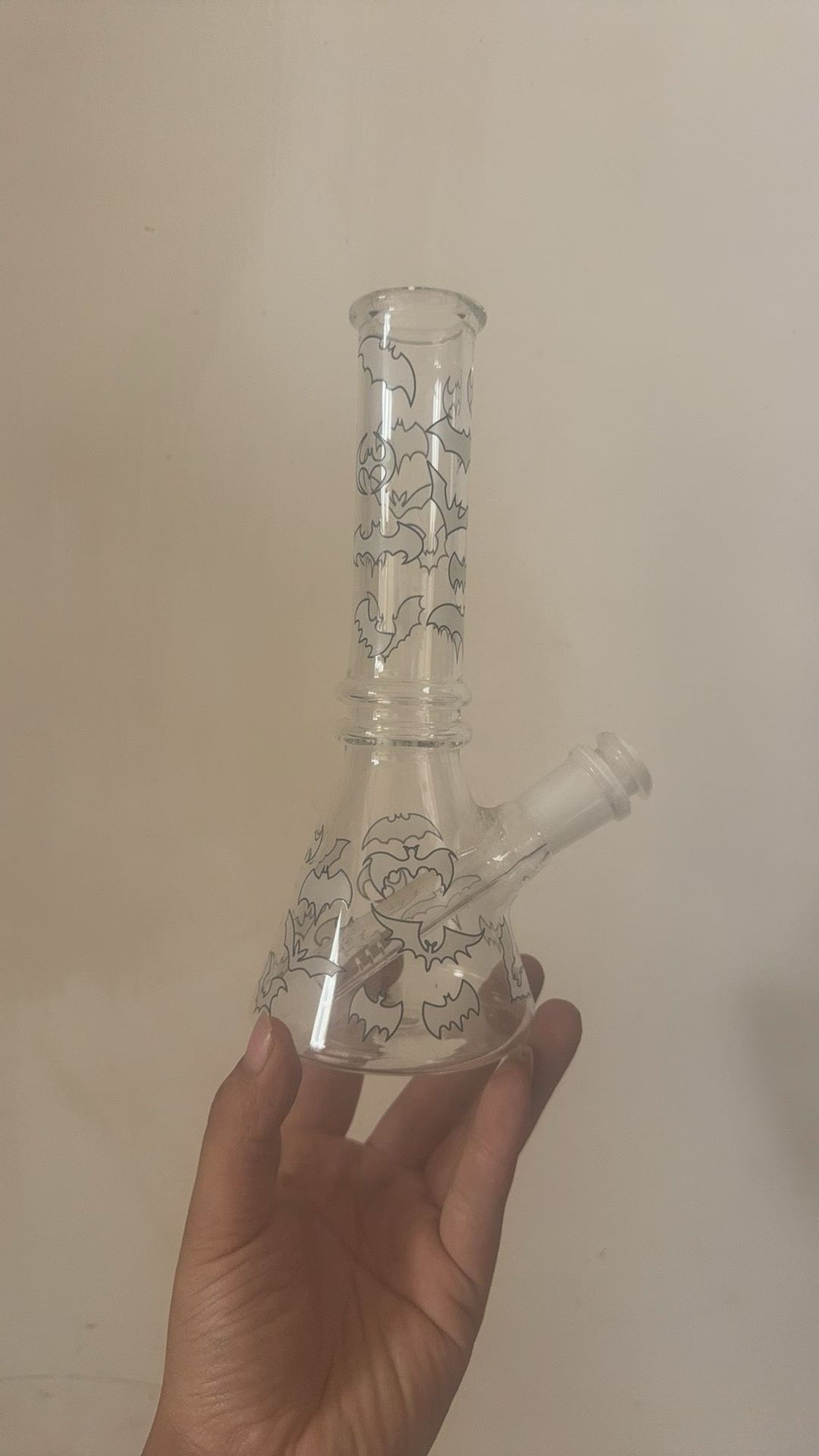
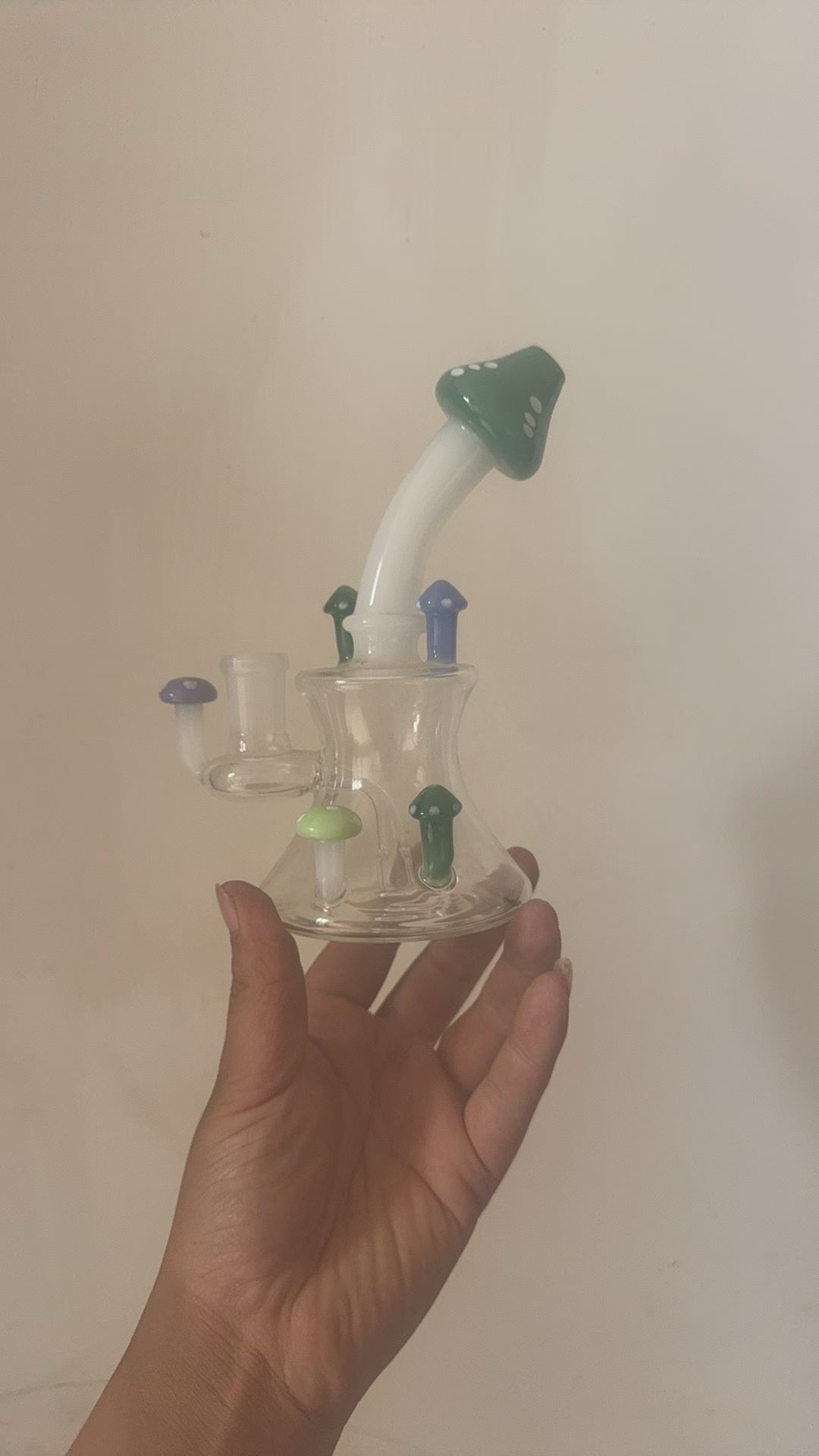
Hold two identical glass pipes under a light. Same shape, same glass, same logo etched into the base — but run your thumb across the mark on each and they feel different. One is a fine, precise frost, hairline-crisp at the edges, the logo of a brand that cares about small type. The other is deeper, more tactile, a bold frosted bite into the surface you can feel as well as see. Neither is printed. Both are permanent. The difference is the process: one was laser engraved, the other sandblasted.
Buyers often treat logo application as a checkbox — “just put our mark on it” — and then are surprised when fine detail comes out muddy, or a bold logo looks thin and scratchy, or a run of engraved pieces shows hairline cracks. Those outcomes are not bad luck. They are the predictable result of choosing a marking method without understanding what each one physically does to glass, and what each does best. The two dominant ways to put a permanent logo into a glass pipe are CO2 laser engraving and sandblasting, and they are genuinely different tools with different strengths.
This is the comparison we walk OEM buyers through at Elfglass: how each process works, what it does to the glass, how durable and detailed the result is, what it costs at wholesale volume, and which one your specific logo should use. For the wider menu of decoration options, our glass pipe branding techniques guide covers the full landscape; here we go deep on the two engraving methods that matter most for a permanent mark.
Both laser engraving and sandblasting etch a permanent frosted logo into the glass surface rather than printing ink on top. A CO2 laser offers finer detail and needs no physical stencil, while sandblasting gives a deeper, more tactile frosted finish best for bold logos. Laser usually has the lower setup cost; sandblasting needs a cut mask for each design.
Key Takeaways
- Both methods are subtractive — they frost the glass itself, so the mark is permanent and cannot peel.
- CO2 laser engraving needs no physical stencil, so it wins on fine detail, small text and thin lines.
- Sandblasting uses a cut mask and abrasive, giving a deeper, more tactile finish for bold logos.
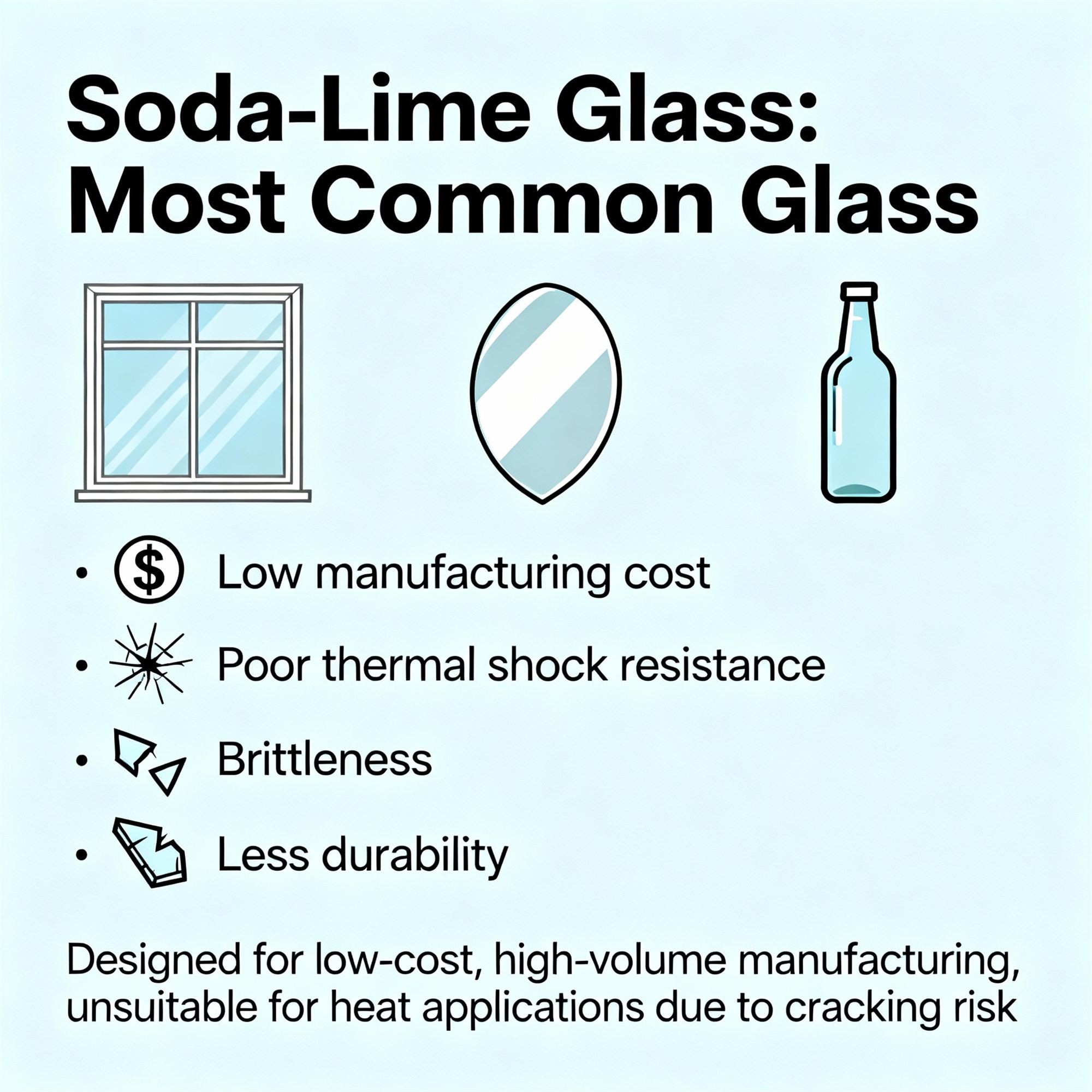
- Laser concentrates heat; borosilicate and annealed glass resist the thermal stress better than soda-lime.
- Laser usually has lower setup cost (no mask); sandblasting adds a stencil per design.
- Choose by the logo: detail-driven marks go laser, large simple marks with hand-feel go sandblasted.
Table of Contents
Two Ways to Put a Logo Into Glass
The first thing to understand is that both laser engraving and sandblasting are subtractive processes: they change the glass surface itself rather than laying ink on top of it. That is why both are permanent. A printed or pad-printed logo is a layer that can chip, fade and wear with handling and cleaning; an engraved or blasted logo is a frosted region of the glass, and it lasts as long as the pipe does. This is the single biggest reason serious brands choose one of these two over printing for a mark meant to survive years of use.
The two differ in the tool that does the removing. A laser uses a focused beam of light; sandblasting uses a stream of abrasive particles. That one difference drives everything downstream — the level of detail each can hold, whether a physical mask is needed, how much heat enters the glass, the feel of the finished mark, and the cost structure at volume. As the distinction between marking, engraving and etching is often blurred, this laser marking versus engraving versus etching breakdown is a useful primer on how the terms are used in the industry.
| Factor | CO2 Laser Engraving | Sandblasting |
|---|---|---|
| Tool | Focused laser beam | Abrasive media under pressure |
| Mask needed | No — driven by a digital file | Yes — a cut stencil per design |
| Detail | Very fine, thin lines, small text | Bold, larger forms |
| Finish feel | Light, precise frost | Deeper, tactile frost |
| Heat into glass | Localized, can stress glass | None — a cold mechanical process |
How CO2 Laser Engraving Works
A CO2 laser engraver fires a focused infrared beam, typically at a wavelength around 10.6 micrometres, at the glass surface. The beam’s energy is absorbed at the point of focus, and it either vaporizes a microscopic layer of material or, more commonly on glass, creates a controlled network of tiny fractures that scatter light and read as a white, frosted mark. Because the beam is steered by mirrors and driven straight from a vector or raster file, there is no physical tool or template touching the glass — the design lives entirely in software.
That no-mask, digital-file nature is the laser’s great advantage. It resolves fine detail that a physical stencil cannot: hairline logos, small serial numbers, intricate line art, and text down to a few millimetres. Change the design and you change a file, not a tool, which makes lasers ideal for short runs, versioning and personalization. The trade-off is heat. The beam deposits energy into a small spot very quickly, and glass is a poor conductor — so that heat stays local and can set up stress, which is the subject of its own section below. Getting power, speed and focus right is what separates a crisp engraving from a cracked one.
How Sandblasting Works
Sandblasting — formally abrasive blasting — propels a stream of fine abrasive particles at the glass under compressed air. Where the abrasive hits bare glass, it mechanically erodes the surface into a frosted texture. To control where that happens, the pipe is first masked: a vinyl or rubber stencil is applied with the logo cut out, so abrasive only reaches the exposed areas. After blasting, the mask is peeled away to reveal the frosted design.
Because it is a mechanical rather than thermal process, sandblasting puts no heat into the glass, which sidesteps thermal-stress risk entirely. The result is a deeper, more pronounced etch than a laser typically leaves — a mark you can feel with a fingertip, with a soft matte frost that catches light differently. Its limitation is the mask. Fine detail and thin lines are hard to hold because a stencil’s delicate parts can lift, tear, or let abrasive creep underneath, and every new design needs a new cut mask. Sandblasting therefore favors bolder, larger logos over intricate small type. It scales well once a mask exists, which suits high-volume runs of a single mark.
Adding a Permanent Logo to Your Glass?
Elfglass handles both CO2 laser engraving and sandblasting on borosilicate glass, and we sample your exact logo on your exact finish in 1 to 3 days so you approve the mark before bulk. Send your artwork and get a quote within 12 hours, MOQ from 100 pieces, NDA before every OEM project.
MOQ from 100 pieces | BSCI / WRAP / ISO 9001 | Samples in 1-3 days
Annealing and Thermal Stress
This is the section that prevents cracked pipes, and the one buyers most often skip. Glass carries internal stress from how it was made and cooled. Annealing is the controlled slow-cooling step that relieves that residual stress; well-annealed glass is stable, poorly annealed glass is a stored crack waiting for a trigger. A laser is exactly such a trigger, because it dumps concentrated heat into a tiny spot while the surrounding glass stays cool. That temperature gradient can push already-stressed glass over the edge, or leave new stress around the engraving that shows up later as a hairline crack.
Two material factors decide how much risk you carry. The first is glass type. Borosilicate glass has a low coefficient of thermal expansion, meaning it expands and contracts little with temperature change, so it shrugs off the laser’s localized heat far better than soda-lime glass, which expands more and cracks more easily. The second is annealing quality. A properly annealed borosilicate piece, engraved at correct power and speed, is very unlikely to crack; a poorly annealed soda-lime piece is a real risk. This is why we engrave on borosilicate and control the annealing before marking. Sandblasting, being a cold mechanical process, avoids this whole category of risk — a genuine point in its favor for glass of uncertain temper.
Durability, Detail and Feel
On durability the two are effectively tied, and both beat printing decisively. Because each mark is a change to the glass surface rather than a layer on it, neither peels, flakes or fades with handling, cleaning or time. A laser-engraved logo will still be legible after years of isopropyl soaks; a sandblasted logo the same. If longevity is your question, either answer is correct — the choice is about appearance, not endurance.
Where they diverge is detail and feel. The laser is the precision instrument: it holds hairlines, small text, gradients of frost density, and intricate artwork that a stencil cannot reproduce. Its mark tends to be a lighter, finer frost, elegant but shallower to the touch. Sandblasting is the bold instrument: it produces a deeper, more tactile etch with a soft matte frost, best for strong simple logos and large marks where you want the branding to be felt as well as seen. A useful way to decide is to ask what your logo is made of — thin lines and small type point to the laser; heavy shapes and a desire for a physical, premium texture point to the blaster.
Cost, MOQ and Lead Time
Cost structure is where the difference matters to a wholesale buyer. Laser engraving has essentially no per-design tooling: you supply a file, the machine runs it, and changing the design costs nothing but setup time. That makes laser the economical choice for short runs, multiple logo versions, and detailed marks. Sandblasting requires a physical mask cut for each design, which adds a setup step and cost per artwork, and delicate masks can need replacement across a long run. Once the mask exists, though, blasting itself is fast, so for very high volumes of one bold design sandblasting can be competitive on per-unit cost.
| Cost Factor | CO2 Laser Engraving | Sandblasting |
|---|---|---|
| Design tooling | None — digital file only | A cut stencil/mask per design |
| Setup on design change | Near zero | New mask required |
| Short runs / detail | Most economical | Mask cost dominates |
| Very high volume, one bold logo | Competitive | Fast per unit once masked |
| Lead-time driver | Machine time | Mask cutting plus blast time |
For most brand owners ordering at our 100-piece MOQ, laser engraving is the lower-friction and lower-cost default, and it handles the detailed marks most modern logos contain. Sandblasting earns its mask cost when the design is bold and simple and the volume is high enough to amortize the stencil. Either way, the smart move is to sample first: we produce logo samples in 1 to 3 days so you see the exact frost, depth and detail on your exact glass before committing to bulk production of 7 to 12 days.
Which to Choose for Your Logo
Strip away the process detail and the decision comes down to your artwork, your glass and your volume. Here is the framework we use with buyers, so you can walk into a quote knowing which method to ask for.
| Your Situation | Recommended Method | Why |
|---|---|---|
| Fine detail, small text, thin-line logo | CO2 laser engraving | No stencil limit; resolves detail a mask cannot hold |
| Bold, large, simple logo with tactile feel | Sandblasting | Deeper frost and hand-feel; no heat risk |
| Short run or several logo versions | CO2 laser engraving | Zero tooling per design; change a file, not a mask |
| Very high volume of one bold mark | Sandblasting | Fast per unit once the mask is cut |
| Soda-lime or uncertain-temper glass | Sandblasting | Cold process avoids thermal-stress cracking |
| Borosilicate glass, detailed brand mark | CO2 laser engraving | Low-expansion glass tolerates laser heat well |
If you are still unsure, the safe path is to test both on a sample. The same logo engraved and blasted side by side on your actual glass settles the question faster than any spec sheet, and it is exactly what our 1 to 3 day sampling is for. A permanent mark is a long-term brand decision; a few days of sampling beats a bulk run in the wrong finish.
Whichever method fits, make sure your supplier controls the glass and the annealing behind it, not just the marking machine. Our hand-blown versus machine-made guide explains how forming method affects glass consistency, and our quality control guide shows how we inspect marked pieces for cracks and defects before they ship. Ready to see your logo in glass? Request a quote with your artwork and we will recommend the method, sample it, and quote within 12 hours.
Is laser engraving or sandblasting better for glass pipe logos?
It depends on the logo. A CO2 laser wins on fine detail, small text and thin lines because it needs no physical stencil and is driven straight from a digital file. Sandblasting wins on bold, large logos where a deeper, more tactile frosted finish is wanted. For most brand marks with detail, laser is the safer default; for a big simple logo with a hand-feel, sandblasting shines.
Does laser engraving weaken or crack glass?
It can if the glass is not handled correctly. A laser concentrates heat on a small spot, and rapid localized heating can introduce thermal stress, especially in soda-lime glass. Borosilicate glass tolerates the heat far better because of its low coefficient of thermal expansion, and properly annealed glass carries less residual stress. Correct power, speed and focus settings keep engraving crisp without cracking.
Which method is more durable?
Both are equally permanent in the right sense: each removes or frosts the glass surface itself, so the mark cannot peel or wear off like printed ink. Neither fades with handling or cleaning. The difference is aesthetic, not durability — laser gives a finer, lighter frost; sandblasting gives a deeper, more pronounced etch.
Which is cheaper for a wholesale run?
Laser usually has the lower setup cost because there is no physical mask to make — you load a file and run. Sandblasting needs a stencil or vinyl mask cut for each design, which adds setup time and cost, though per-unit blasting can be fast once the mask exists. For short runs and detailed logos, laser is typically more economical; for very large volumes of a single bold design, sandblasting can compete.
Can you engrave colored or coated glass?
Yes, but results vary. Laser engraving frosts the surface, which shows as a white or matte mark that contrasts differently on clear versus colored glass. Coatings, paints and dichroic layers can behave unpredictably under heat and may need testing first. Always run a sample on the exact glass and finish before committing to a bulk order — this is why we sample in 1 to 3 days.
Ready to Start Your Custom Glass Pipe Project?
Get a free quote within 24 hours. MOQ from 100 pieces. NDA-protected design consultation.
