
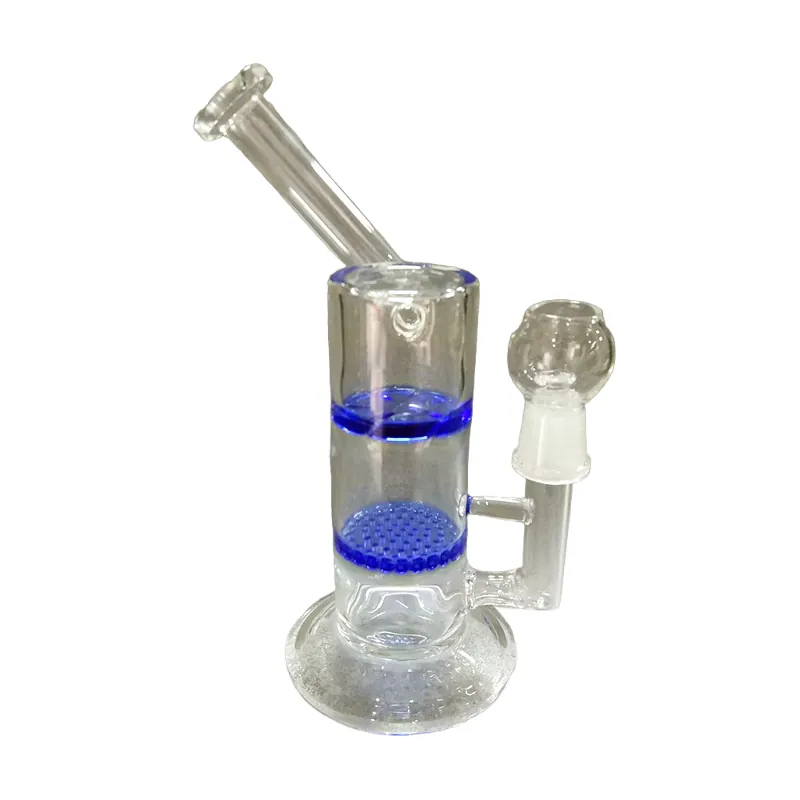
A single number reframes how most Western suppliers see this region. Fairfield Market Research projects global shisha industry revenue to exceed US$2 billion by 2030, growing at roughly 6 percent a year across the 2023-to-2030 window. That is a mature, expanding category — and the Middle East is not a fringe buyer of it. It is the cultural heartland. Waterpipes have been used for centuries across North Africa, the Middle East and Central and South Asia, long before the product became a college-dorm novelty in the West.
For a wholesale buyer, that history translates into something concrete: a market that already understands the product, drinks it socially in cafés and lounges, and buys the glass that surrounds it in volume. The opportunity is not in educating the region about water pipes. It is in serving a demand that is already there — with the right product, the right decoration, and a logistics route that survives the distance.
This guide maps that opportunity the way a market researcher would: what drives regional demand, what glass actually sells, why so much of it routes through Dubai, and what compliance looks like country by country. One honest caveat up front — the market-size figure above is one research firm’s estimate, not a precise forecast, and no credible public report breaks out a clean Middle-East-only dollar number. We ship into the Gulf regularly from Elfglass, and this is the framework we brief buyers on.
The Middle East is the cultural heartland of waterpipe use, where hookah has been smoked for centuries and demand for glass is already established. Global shisha revenue is projected to exceed US$2 billion by 2030 at about 6 percent annual growth. Wholesale buyers win by adapting product to local preferences, routing imports through Gulf gateways like Dubai’s Jebel Ali, and checking compliance country by country.
Key Takeaways
- The region is the historic core of waterpipe culture — demand is established, not emerging.
- Fairfield Market Research projects global shisha revenue above US$2 billion by 2030 at ~6% CAGR.
- Bigger, more decorative glass outperforms minimalist Western styles in Gulf markets.
- Dubai’s Jebel Ali port and free zone anchor a vast re-export trade across the region.
- Tobacco-control, age and licensing rules vary by country — verify each destination.
Table of Contents
Why the Middle East Hookah Market Matters
Start with scale and direction. The global shisha category is not a niche. Fairfield Market Research puts worldwide revenue on track to exceed US$2 billion by 2030, expanding at around 6 percent a year over the 2023-to-2030 period. The same report frames Asia Pacific as the largest revenue region and North America as the fastest-expanding one, and it tracks a Middle East and Africa segment alongside them. The point for a supplier is simple: this is a growing global trade, and the Middle East sits inside it as both a consumer and a distribution hub.
Then add history. The waterpipe is not a recent import to the region — UK government research on the health risks of waterpipe smoking notes that hookahs have been used for centuries across North Africa, the Middle East and Central and South Asia, and have only more recently grown popular in the West, particularly among college students and young adults. A product with that depth of cultural embedding behaves differently from a trend. Demand is steady, generational, and social rather than fashion-driven.
| Signal | What the Data Says | Why It Matters to a Buyer |
|---|---|---|
| Global shisha revenue | Projected above US$2 billion by 2030 | A large, growing category worth building for |
| Growth rate | Roughly 6% CAGR, 2023-2030 | Expansion, not a saturated or declining market |
| Cultural depth | Centuries of continuous regional use | Stable demand that resists short-term fashion swings |
| Trade position | Gulf hubs re-export across three continents | One entry point can serve many downstream markets |
None of this means the region is easy money. It means the demand is real and durable, and the buyers who win are the ones who treat it as a distinct market with its own product logic rather than an export dumping ground for surplus Western stock.
The Demand Drivers Behind the Region
Four forces keep glass moving here. The first is social café culture. Hookah lounges, cafés and shisha terraces are ordinary social infrastructure across the Gulf and the wider Middle East — places people gather nightly. That hospitality channel consumes glass and water-pipe hardware continuously, replacing broken and worn pieces and refreshing décor.
The second is a young population. Much of the region skews toward consumers under thirty, the same demographic that UK research links to rising waterpipe use globally. Young, social, and café-oriented buyers sustain volume demand and follow aesthetic trends quickly. The third is tourism and expatriate traffic: cities like Dubai host enormous transient populations who buy in retail and duty-free channels and carry product home, seeding demand in their own countries.
The fourth is the re-export trade itself, which we cover next: a large share of glass entering the Gulf is not consumed there but redistributed onward. For a supplier, that means a single strong distributor relationship can reach far beyond one country’s borders. Understanding who is actually buying is half the work; our smoker personas guide breaks down the buyer types that shape sourcing decisions.
What Glass Actually Sells Here
Product preference is where Western catalogs most often miss. The minimalist, thin, clear-glass aesthetic that sells in parts of North America and Europe is not automatically what moves here. Regional taste leans toward presence and ornament: larger water pipes, richer color, decorative detail, and pieces that look substantial on a café table or in a shop window.
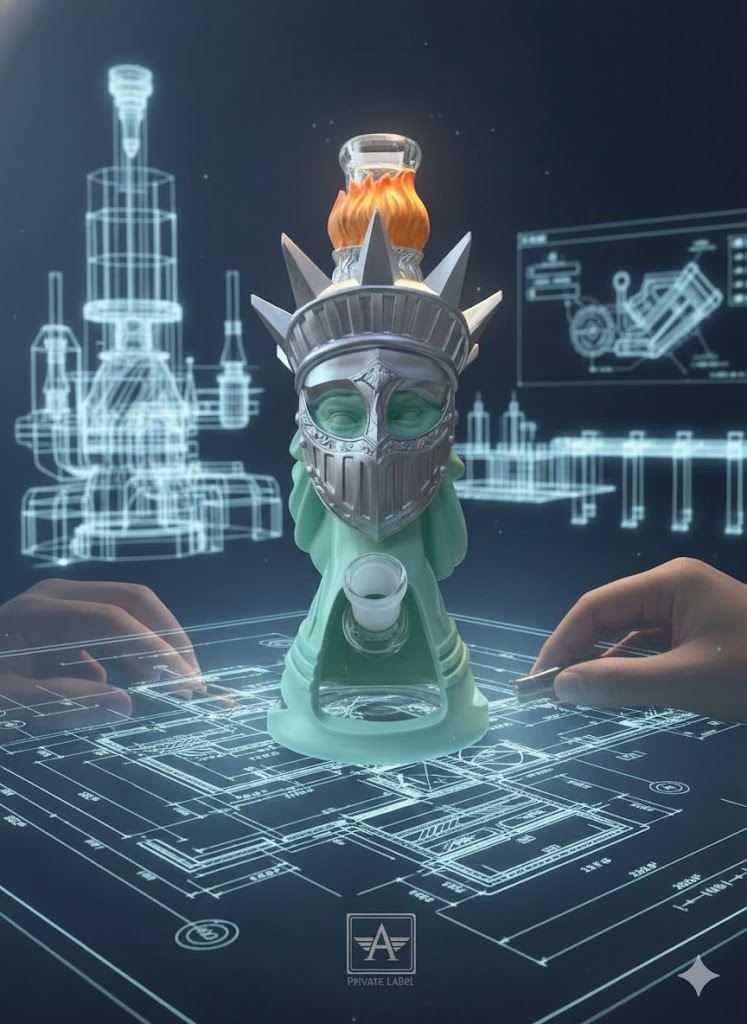
Three practical implications follow. First, format: bigger sells. Water pipes and hookah-adjacent glass in the larger size ranges outperform pocket hand pipes as the centerpiece of the category, though high-turnover small pieces still fill retail counters. Our best-selling water pipe sizes guide maps the 8-to-16-inch demand bands that matter most. Second, durability: product crosses long, hot shipping lanes and sits in warm climates, so borosilicate construction that resists thermal stress and handling damage is a genuine selling point, not a spec-sheet afterthought.
Third, style: straight-tube and beaker water pipes with clean percolation travel well and suit the social, shared use that dominates the region — our straight-tube water pipe guide covers what actually sells in that category. The winning move is to adapt, not assume: send a regional distributor two or three size and decoration variants and let the reorder data tell you what the market wants.
Want Glass Adapted for the Gulf Market?
Elfglass produces larger-format, decorative borosilicate water pipes built for regional taste and long shipping lanes. Send your target sizes, colors and decoration ideas and get a quote with sample options within 12 hours — MOQ from 100 pieces, samples in 1 to 3 days.
MOQ from 100 pieces | BSCI / WRAP / ISO 9001 | NDA before every project
Dubai as the Re-Export Gateway
Geography is the region’s commercial superpower. Dubai sits at the intersection of the Gulf, Africa and South Asia, within a few hours’ flight of markets holding billions of people. Its Jebel Ali port is among the busiest in the Middle East, and the adjacent Jebel Ali Free Zone is one of the largest free-trade and re-export hubs in the world — a structure that lets companies import, store, consolidate, re-label and re-export goods across a wide surrounding region without a full mainland setup.
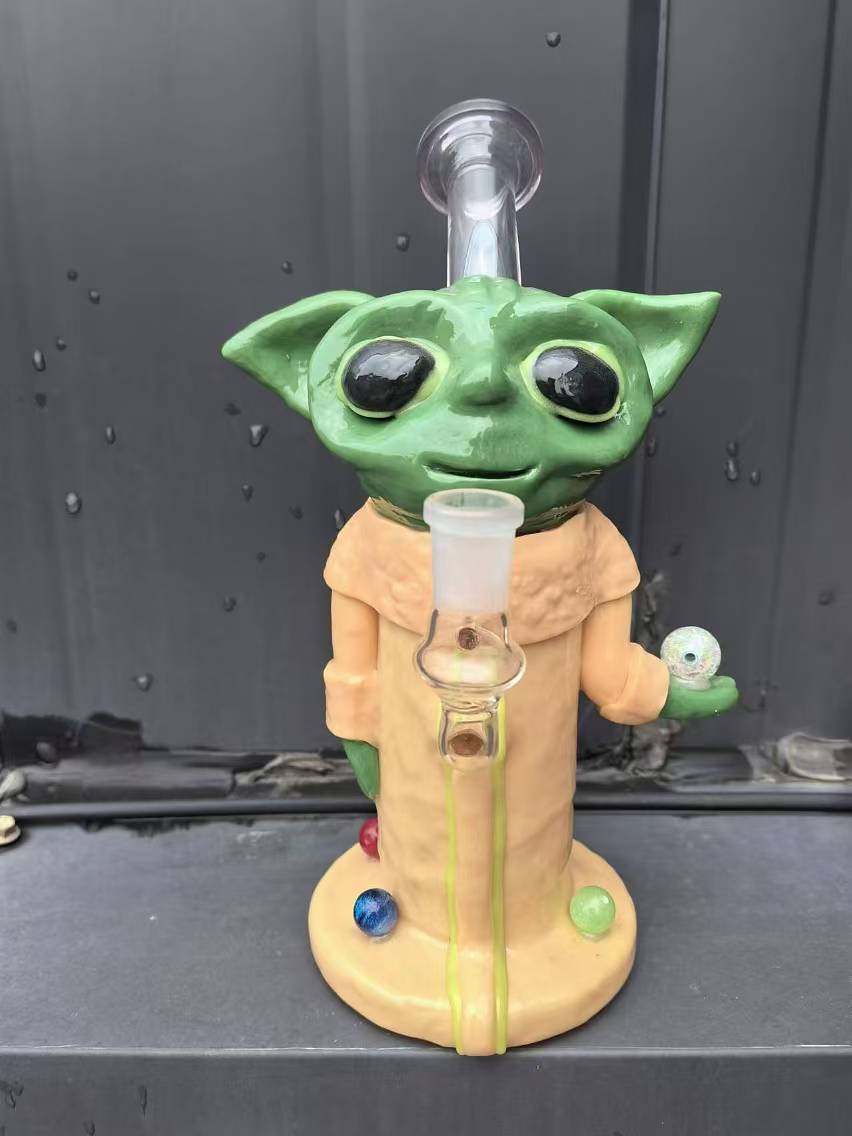
For a glass supplier, that changes the shape of the opportunity. You are rarely selling only into one country. A distributor operating out of a Gulf free zone may take a container and redistribute it across the Gulf states, East Africa and the Indian subcontinent. That is why one strong regional partner can be worth several small direct accounts. It also means logistics competence is a competitive edge: transit time, packing that survives the lane, and clean documentation decide whether a distributor reorders. Our sea shipping times from China guide gives port-by-port transit estimates, and the international shipping for glassware guide covers timelines and customs for fragile goods.
Compliance, Country by Country
The region is not a single regulatory bloc. Tobacco-control law, minimum-age rules, import licensing, health-warning requirements and even the legal status of certain accessories differ from one Gulf state to the next. A water pipe that clears customs in one market can face documentation demands or restrictions in another. This is the layer that catches out buyers who treat the Middle East as one country.
Two things keep you safe. First, position and document the product honestly and consistently for its intended legal use, with accurate commercial invoices and correct classification — the general how to import glass pipes guide walks the process end to end. Second, work through a local importer or licensed customs agent who knows the specific destination country’s rules, because they change and because enforcement is local. This section is a practical orientation, not legal advice; confirm requirements for each market with a qualified agent before you ship.
Market Entry: How to Approach the Region
Pulled together, entering the Middle East hookah glass market is a sequence of deliberate choices rather than a single shipment. The demand is established, the trade routes exist, and the buyers who succeed are the ones who adapt product and respect the compliance mosaic. Here is the path we recommend to a first-time regional buyer.
Your market-entry roadmap:
| Step | What to Do |
|---|---|
| 1. Pick an entry hub | Start with a Gulf free-zone distributor (often Dubai) who already re-exports onward |
| 2. Adapt the product | Offer larger formats, richer decoration, durable borosilicate — not a Western catalog unchanged |
| 3. Test with samples | Ship two or three size and color variants; let reorder data reveal local taste |
| 4. Engineer the lane | Use packing and routing built for long, hot transits; confirm customs docs per country |
| 5. Verify compliance | Check tobacco, age, licensing and warning rules for each destination before you scale |
| 6. Grow through the partner | Let one strong distributor reach multiple downstream markets before adding direct accounts |
The region rewards patience and specificity. Treat it as the distinct, culturally deep, high-volume market it is, route through the Gulf gateways that already move the trade, and adapt your glass to what buyers here actually want. Do that and the Middle East becomes one of the most durable demand pools in the global water-pipe trade rather than a speculative export.
Ready to build a product line for the Gulf? Request a quote with your target sizes, colors and decoration ideas, and we will propose regional-ready borosilicate options with samples in 1 to 3 days and a quote within 12 hours.
Is the Middle East a good market for wholesale glass water pipes?
It is one of the most culturally established markets for water pipes in the world. Hookah has been used for centuries across North Africa, the Middle East and South Asia, and the region anchors demand for the glass categories that surround it. The opportunity is real, but it rewards buyers who adapt product, pricing and logistics to local preferences rather than shipping a Western catalog unchanged.
How big is the global hookah and shisha market?
Fairfield Market Research projects global shisha industry revenue to exceed US$2 billion by 2030, growing at roughly 6 percent a year over the 2023 to 2030 period. The same report frames Asia Pacific as the largest revenue region and North America as the fastest expanding, with a Middle East and Africa segment tracked separately. Treat any single number as an estimate, not a precise forecast.
What glass products sell best in the Middle East?
Larger decorative water pipes, hookah-adjacent glass, and pieces with ornate color and detail tend to outperform the minimalist styles favored in some Western markets. Buyers should expect demand for bigger formats, richer decoration, and durable borosilicate construction that survives long shipping lanes and hot climates.
Why do so many glass imports route through Dubai?
Dubai sits at the crossroads of the Gulf, Africa and South Asia, and the Jebel Ali port with its adjacent free zone is one of the busiest re-export gateways in the region. Importers use free-zone structures to consolidate, re-label and re-export glass across a wide surrounding market without a full local-mainland setup.
Are there compliance rules for selling hookah glass in the region?
Yes, and they vary country by country. Tobacco-control rules, age limits, import licensing and health-warning requirements differ across the Gulf states, so a product legal in one market may face restrictions in another. Verify the specific rules for each destination country and work with a local importer or customs agent before you ship.
Ready to Start Your Custom Glass Pipe Project?
Get a free quote within 24 hours. MOQ from 100 pieces. NDA-protected design consultation.
