
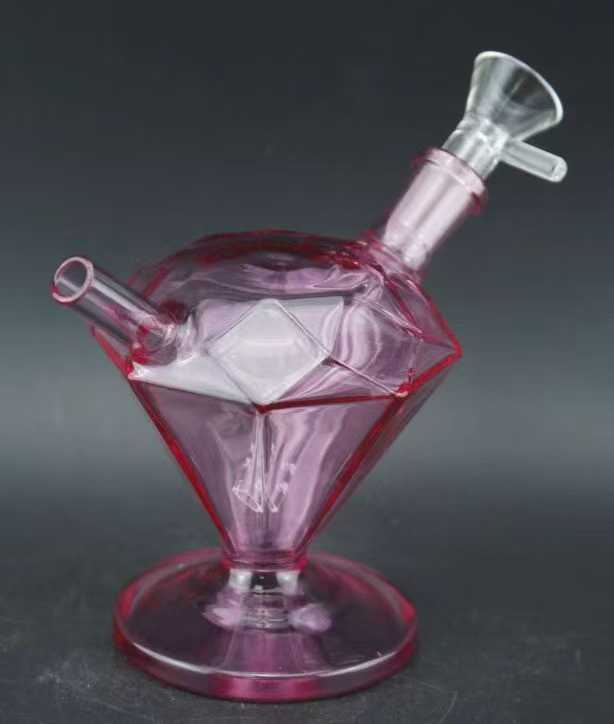
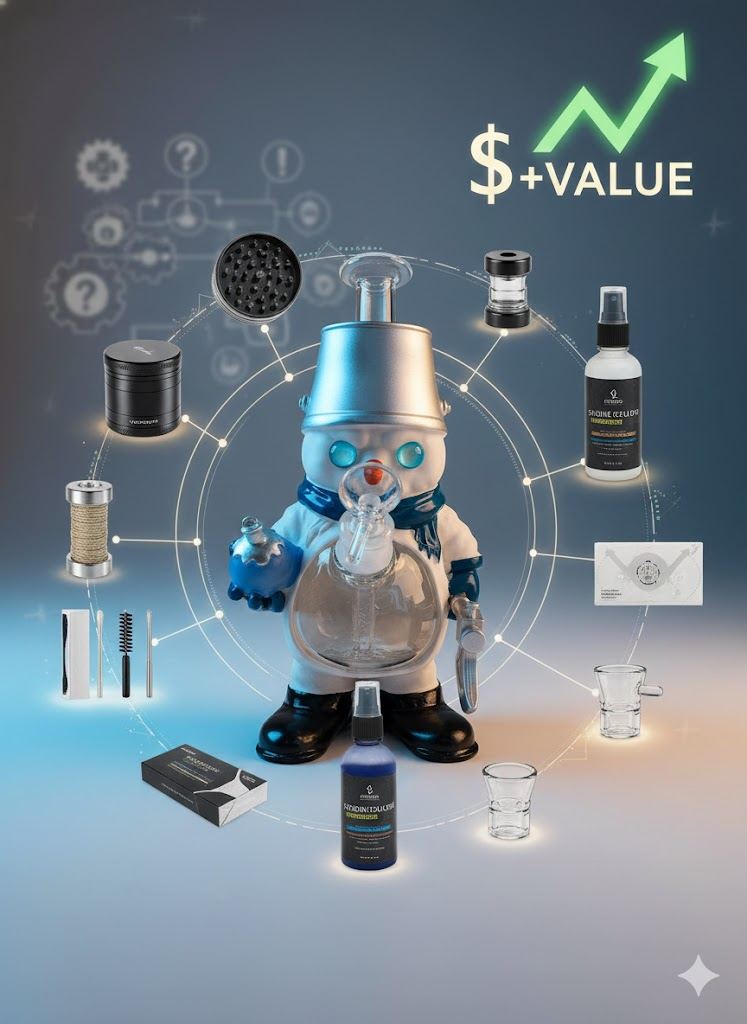
The concept of modularity has reshaped how wholesale buyers think about glass inventory. Rather than stocking dozens of complete, one-piece water pipes that each serve a single function, forward-thinking distributors are shifting toward systems where individual components can be swapped, upgraded, and replaced independently. A downstem developed for one piece fits another. A percolator removed for cleaning goes back in or gets exchanged for a different diffusion style. A cracked bowl becomes a five-dollar replacement instead of a hundred-dollar loss. This is the practical promise of modular glass, and it is changing purchasing patterns across the industry. The shared vocabulary for joints and attachments matches the component terminology described in the public reference entry on bong maintained on Wikipedia, which helps buyers and factories specify parts unambiguously.
For B2B buyers sourcing from manufacturers, understanding how modular design works, what it demands from a production standpoint, and where the commercial advantages lie is no longer optional. The retailers who grasp this shift early are building stickier customer relationships and healthier margins. The ones who do not are watching their buyers source interchangeable components elsewhere.
Defining Modular Glass Pipe Systems
A modular glass pipe is any water pipe, hand pipe, or dab rig designed so that one or more of its functional components can be detached and replaced with a different part serving the same role. Think of it the way the plumbing industry moved toward standardized fittings decades ago: instead of soldering every joint permanently, threaded unions let plumbers swap sections of pipe without replacing the entire run. Modular glass applies the same logic to borosilicate glassware.
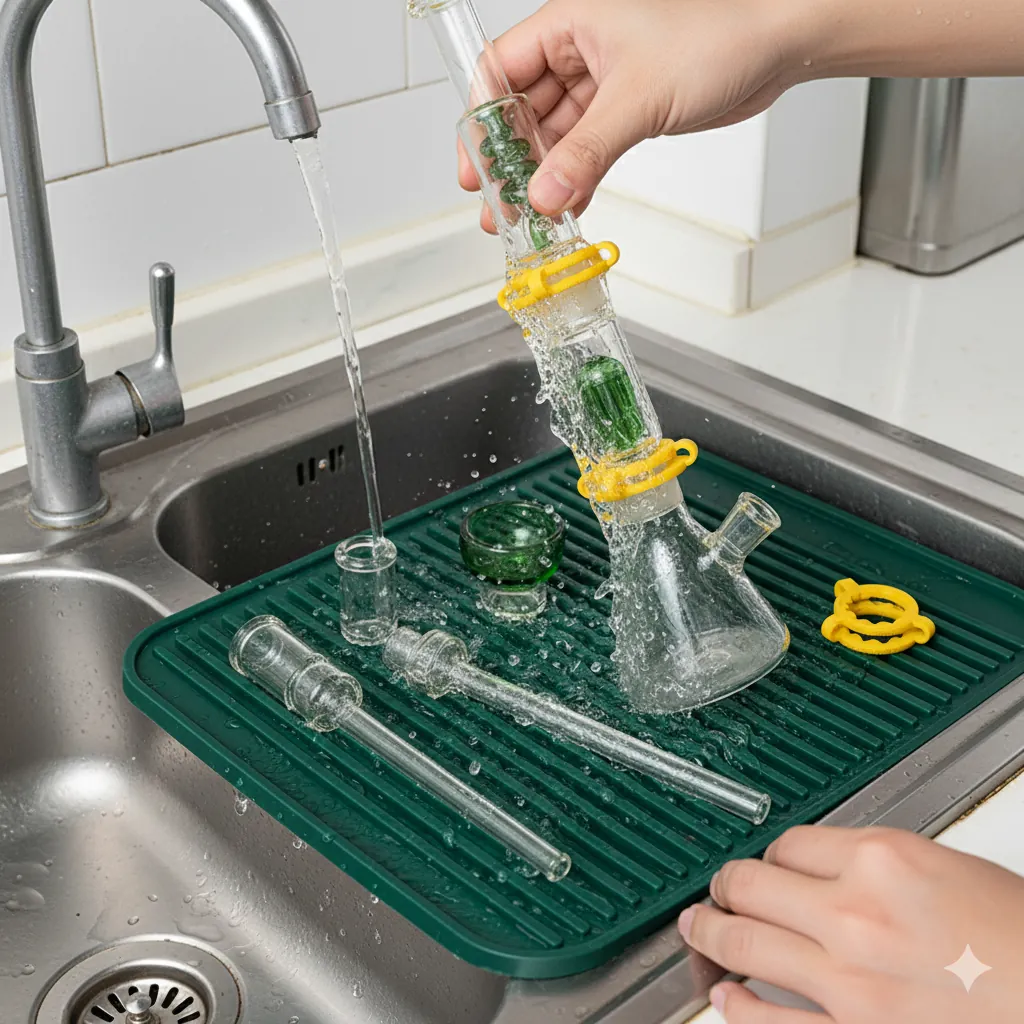
The most common modular configuration involves a glass base piece with a fixed chamber and a removable downstem. The downstem slides into a ground glass joint and can be pulled out for cleaning, replaced with a longer or shorter version, or swapped for a model with a different percolator built in. Beyond downstems, modular systems may include interchangeable bowls, swappable mouthpieces, replaceable percolator modules (each percolator type offering distinct diffusion characteristics), and adaptable adapter rings. Each component serves a distinct functional purpose, and each can be manufactured, packaged, and sold independently.
For wholesale buyers, the distinction between a modular system and a traditional one-piece piece matters commercially. A one-piece water pipe is a single SKU that generates revenue once. A modular system is a platform that generates revenue repeatedly. The base piece is the initial purchase. The replacement downstem, the extra bowl in a different color, the upgraded percolator module, these are follow-on purchases that compound over the product’s lifetime. The wholesale parts and accessories category exists precisely to serve this growing demand for standalone components that integrate into larger systems.
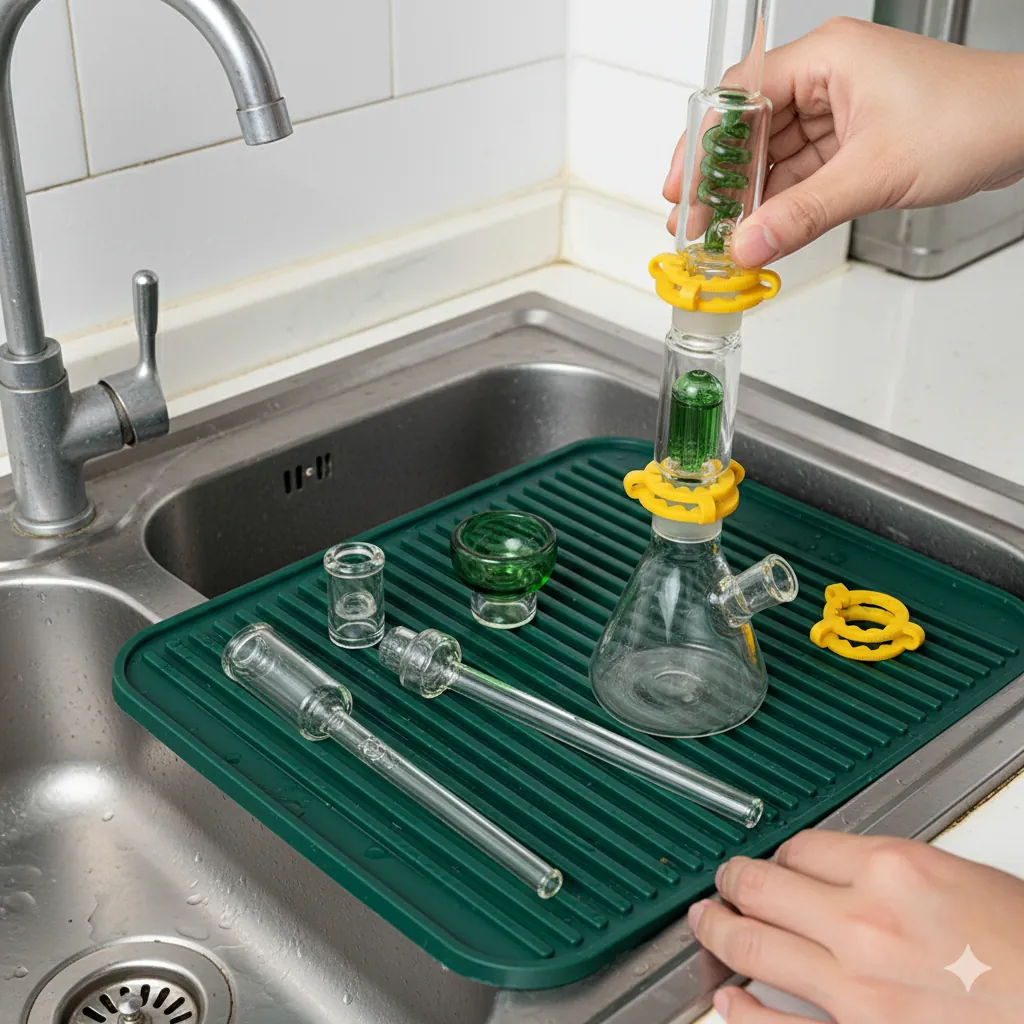
Standard Joint Sizes Ensure Cross-Compatibility
The entire modular glass ecosystem depends on standardized joint dimensions. Without consistent sizing, interchangeability collapses and each manufacturer’s components exist in isolation. The glass pipe industry has converged on three primary joint diameters: 10mm, 14mm, and 18mm. These measurements refer to the outer diameter of the male joint or the inner diameter of the female joint they mate with.
The 14mm joint is the most common in mid-size water pipes and serves as the default for much of the modular aftermarket. The 10mm joint appears frequently on compact pieces and travel-sized rigs where space constraints favor smaller connections. The 18mm joint is standard on larger water pipes and many wholesale dab rigs, where higher airflow and larger concentrate loads demand a wider connection point. Any buyer developing a modular line should decide early which joint size their system will standardize on, since that decision determines which components are compatible and which downstream accessories the ecosystem supports.
Joint gender matters as well. Male joints protrude outward and insert into female joints, which are recessed. Most modular glass systems place the female joint on the base piece and the male joint on the removable component, though some designs reverse this. Ground glass joints, where the mating surfaces are frosted to create a friction seal without gaskets, remain the dominant connection method in quality glassware. Some budget manufacturers use rubber grommets instead, but grommets degrade over time and introduce a replacement part that feels cheap. Ground glass joints, when manufactured to proper tolerances, maintain their seal through hundreds of insertion and removal cycles.
A few manufacturers have attempted to develop proprietary connection systems that deviate from the 10/14/18mm standard. These have not gained meaningful market traction. Retailers and end users both prefer standardized sizing because it preserves flexibility. A proprietary joint size locks the buyer into a single manufacturer’s component range, which reduces perceived value and limits the ecosystem effect that makes modular systems commercially attractive in the first place.
Why Retailers Stock Interchangeable Glass Components
The commercial argument for modular glass rests on several reinforcing advantages that become clearer once a retailer commits to stocking a system rather than isolated pieces. The first is repeat purchase behavior. When a customer breaks a downstem on a one-piece water pipe, they face an inconvenient choice: attempt a repair, go without, or buy an entirely new piece. When the downstem is a standalone component, the customer returns to the same retailer and purchases a replacement. The transaction is smaller, but the customer relationship deepens, and the lifetime value of that customer increases materially.
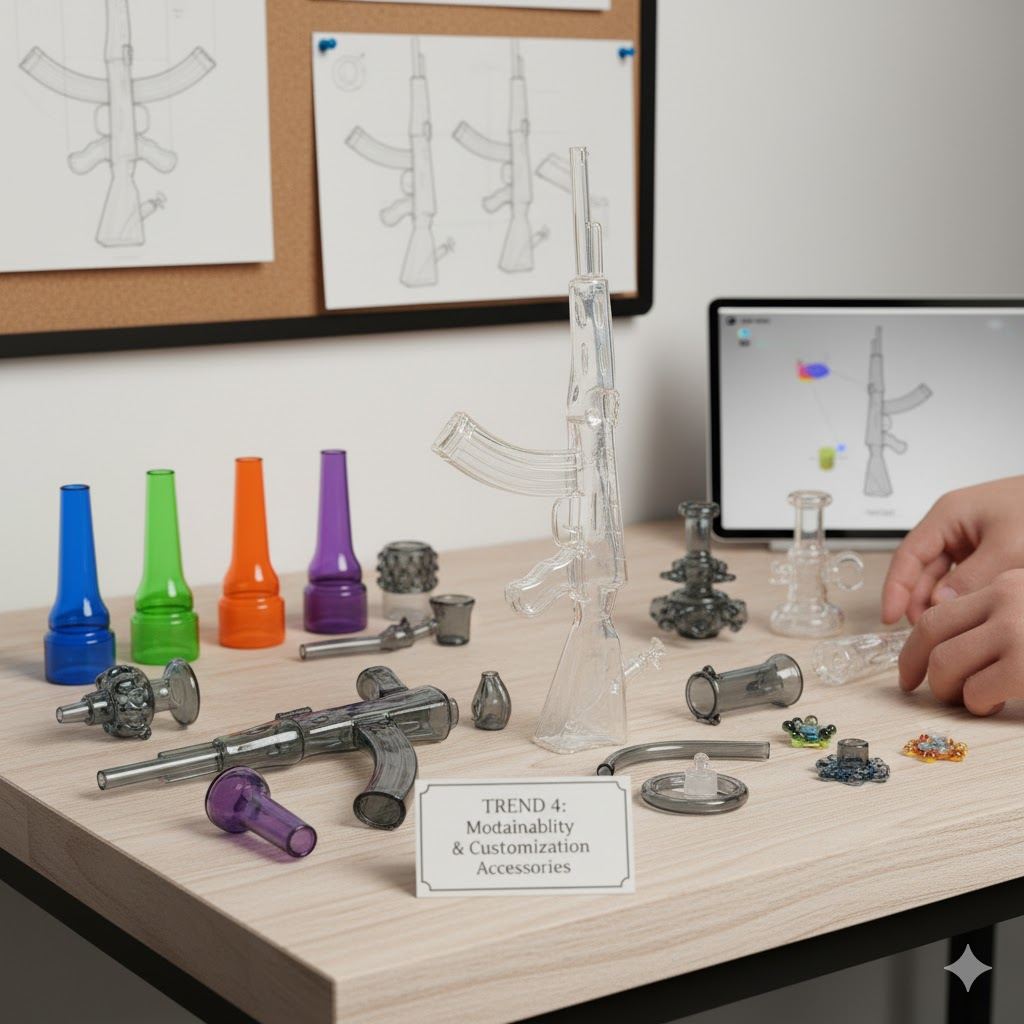
Customization is the second driver. End users increasingly want to personalize their glassware, and modular systems let them do so without committing to a single fixed configuration. A customer might start with a base piece and a standard downstem, then add a colored percolator module, then swap in a different mouthpiece. Each component purchase is an expression of preference, and the accumulated collection feels uniquely theirs. Retailers who display modular components as mix-and-match options, showing customers how different parts combine, consistently see higher average order values than those who display finished pieces alone.
Inventory efficiency is the third factor, and perhaps the most important for wholesale buyers managing limited warehouse space and capital. Instead of stocking thirty different complete water pipes in various styles, a retailer can stock ten base pieces and twenty compatible components. The number of possible combinations far exceeds thirty, yet the actual inventory footprint is smaller. This efficiency extends to shipping as well. Components pack more densely than complete pieces, and the breakage rate in transit drops because smaller, thicker parts survive handling better than large assembled glassware.
Margin structure also favors modular components. Individual parts like bowls, downstems, and adapter rings carry higher percentage margins than complete pieces, partly because the perceived value of a small precision component exceeds its production cost, and partly because customers shopping for a specific replacement part are less price-sensitive than those browsing for a new complete piece. The variety of glass pipe parts and accessories available from a single manufacturer lets buyers build a deep component catalog without managing relationships with multiple suppliers. And for retailers building a brand around customization, the visual range of available components, shown in the assortment below, creates compelling in-store and online displays.
Turn Your Concept Into Production-Ready Glass
Elfglass takes you from design brief and CAD/STEP files to prototyping, branding, and mold exclusivity, with your IP protected by NDA. Send us your concept and we will return a manufacturable plan and quote.
MOQ from 100 pieces | BSCI / WRAP / ISO 9001 | NDA before every project
How Elfglass Manufactures Modular Glass Systems
Elfglass has been manufacturing glass pipes and accessories since 2010, operating from a 1,000 square meter facility in Shenzhen with a team of 20 skilled workers and a monthly production capacity of 10,000 pieces. The company’s Parts & Accessories line is a deliberate response to the modular glass trend, supplying wholesale buyers with the individual components they need to build or support their own modular systems. This line includes downstems, bowls, adapters, and replacement percolator modules manufactured to the same quality standards as the company’s complete water pipes and dab rigs.
Manufacturing modular components requires tighter process control than manufacturing one-piece glassware. Every downstem must have a joint that fits consistently within a narrow tolerance band. Every bowl shank must seat cleanly without rocking or leaking. The glasswork itself follows the same borosilicate processing sequence the factory has refined over sixteen years: raw material cutting, torch or lathe shaping, and kiln annealing to relieve internal stresses. What differs is the inspection intensity applied to each component’s connection geometry.
The factory operates under OEM and ODM arrangements with a minimum order of 100 pieces per design or SKU. Sampling turnaround runs one to three days, and production lead time for orders of 100 pieces and above is seven to twelve days. Payment terms follow a T/T structure with 30 percent deposit and 70 percent before shipment. Custom molds developed for a client remain exclusive to that client. The facility holds BSCI, WRAP, and ISO 9001 certifications, which matter to wholesale buyers sourcing modular components because consistent quality across component batches is essential for interchangeability. Buyers interested in developing a custom modular line can reach the team through the contact page to discuss specifications and sampling.
Design Considerations for OEM Modular Lines
Buyers who want to create their own branded modular system face design decisions that do not arise when sourcing one-piece glassware. The first and most consequential is joint placement. Where the joint sits on the base piece determines which components can reach where, how the assembled piece balances, and what stress concentrations exist at the glass-to-glass connection. A joint placed too close to the base creates instability. A joint placed at an extreme angle increases the likelihood of cracks propagating from the joint opening. Experienced OEM manufacturers work with buyers during the design phase to optimize joint placement for both structural integrity and functional performance.
Wall thickness is another consideration that takes on new importance in modular designs. A water pipe with three joint openings has three points where the wall is interrupted and stress can concentrate. If the glass is too thin at these junctions, the piece becomes fragile. If it is too thick, the weight increases and the cost of materials rises. Finding the right balance requires experience with borosilicate behavior under thermal cycling, and manufacturers who have produced modular systems before will have data to draw on. The range of clear and colored glass options also affects design choices, since some colorants alter the working properties of the glass slightly and may influence minimum wall thickness recommendations.
Component ecosystem breadth deserves careful thought before launch. A modular system with too few compatible components feels limited and fails to deliver on the customization promise that attracts buyers in the first place. A system with too many proprietary sizes becomes confusing and fragments inventory. The most successful modular lines start with two or three base pieces that share a common joint size, then offer a curated range of compatible components: two or three downstem lengths, several bowl styles, a selection of percolator modules, and a handful of adapter rings. This approach gives end users meaningful customization options without overwhelming them or the retailer’s inventory system.
Color consistency across production runs is a subtler challenge that becomes important when components are meant to be mixed and matched. If a customer orders a replacement downstem six months after buying the base piece, they expect the glass color to match. Maintaining color consistency across production runs requires careful control of raw material sourcing and batch tracking. Manufacturers who produce modular systems should document their color formulations and retain reference samples for each production run so that reorder batches can be matched accurately. The shape vocabulary shown in typical pipe design guides provides a useful starting point for deciding which base forms work best as modular platforms.
Quality Control Challenges on Interchangeable Parts
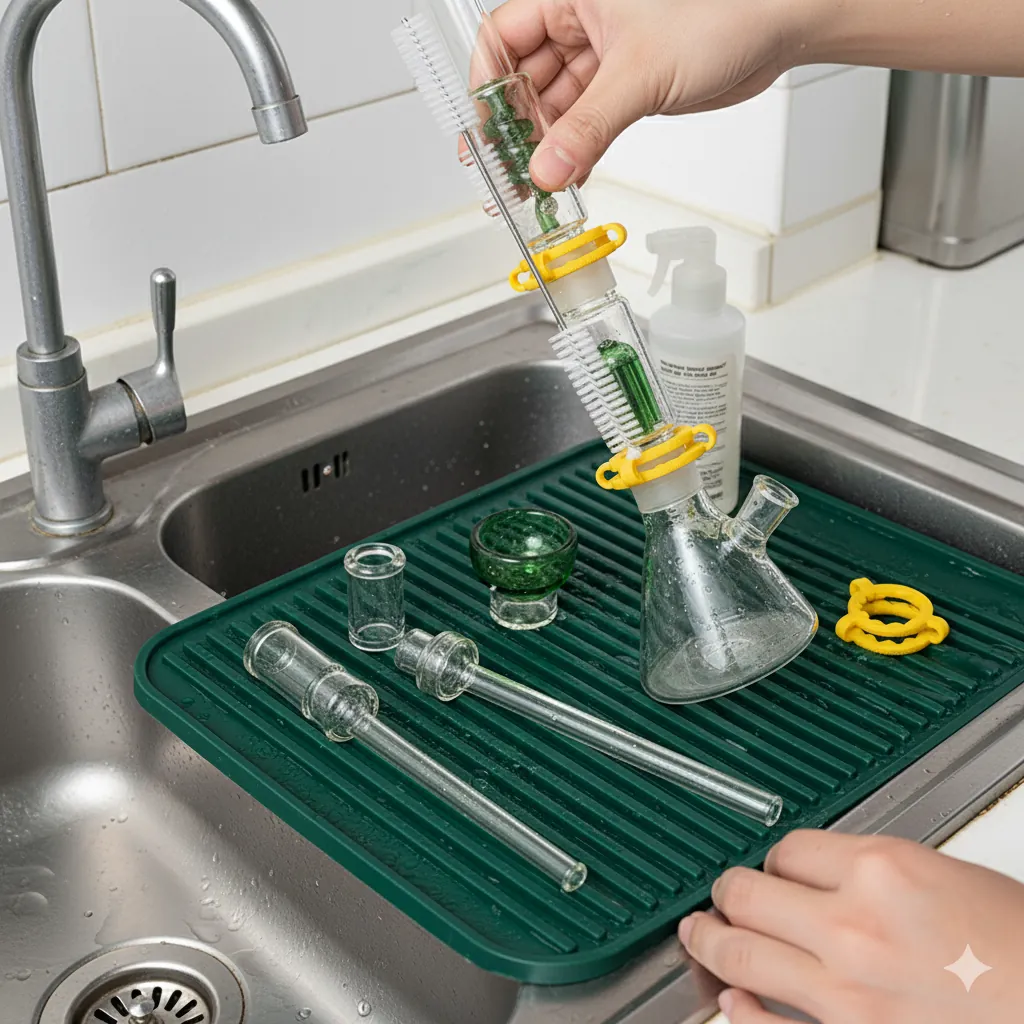
Quality control in modular glass production is fundamentally more demanding than in one-piece manufacturing, because every component must not only meet its own specifications but also interface correctly with every other component it is designed to connect with. A one-piece water pipe that is slightly off-spec in one dimension may still function acceptably. A modular downstem whose joint diameter is off by a fraction of a millimeter either will not seat properly or will sit too loosely, compromising the seal and creating an unusable product.
The ground glass joint is where most quality issues originate. Creating a precise ground glass surface requires consistent technique: the glass must be heated to the right working temperature, shaped with uniform pressure, and then frosted to the correct depth. Variations in any of these steps produce joints that are too tight, too loose, or asymmetric. Because glassblowing is a manual process with inherent variability, each joint must be individually inspected. Manufacturers producing modular systems typically measure every joint with calipers after annealing, then sort components into tight tolerance ranges. Pieces that fall outside the acceptable range are culled or, if the deviation is minor, reworked.
Batch-to-batch consistency is the harder challenge. A manufacturer might produce a run of 500 base pieces in January and a matching run of 500 downstems in March. The joints on both batches must be compatible even though they were produced weeks apart, potentially by different workers, under slightly different ambient conditions. This requires maintaining detailed process records and reference samples for each component type. ISO 9001 certification, which Elfglass holds, provides a structured framework for this kind of process documentation, though the certification itself does not guarantee modular compatibility. Buyers should ask potential suppliers specifically about their tolerance specifications for joint dimensions and their procedure for verifying cross-batch compatibility.
Another quality consideration unique to modular systems is the angular alignment of joints. If a joint is not perpendicular to the glass surface it protrudes from, the component inserted into it will sit at an angle. This creates uneven stress distribution that can lead to cracking under thermal cycling, particularly when the piece is used with hot water or torch-heated concentrates. Inspecting joint angle requires a simple fixture or gauge, and any manufacturer serious about modular production should have this check built into their post-annealing inspection workflow. The additional inspection time adds cost, which is why modular components from quality-certified manufacturers carry a price premium over generic alternatives. That premium is justified by the reduction in customer complaints, returns, and reputational damage that poorly fitting components inevitably generate. Interchangeable parts follow the modularity design principle, where standardized interfaces let components mix across product lines.
Frequently Asked Questions About Modular Glass Systems
What Is a Modular Glass Pipe?
A modular glass pipe is a water pipe, dab rig, or hand pipe designed with removable and interchangeable components such as downstems, bowls, percolators, and mouthpieces. These components connect through standardized ground glass joints and can be swapped independently, allowing end users to customize their setup, replace broken parts without discarding the entire piece, and expand their collection over time by adding compatible accessories rather than purchasing entirely new units.
What Are Standard Glass Joint Sizes?
The glass pipe industry uses three standard joint sizes for modular connections: 10mm, 14mm, and 18mm. The 14mm joint is the most widely used in mid-size water pipes and modular systems. The 10mm joint is common on compact pieces and travel rigs. The 18mm joint is standard on larger water pipes and dab rigs that require higher airflow capacity. As long as two components share the same joint size and gender, they are physically interchangeable regardless of manufacturer.
Can I Mix Components From Different Manufacturers?
Yes. Standardized joint sizes mean that a 14mm male downstem from one manufacturer will fit a 14mm female joint on a base piece from another. The fit quality may vary depending on how tightly each manufacturer controls their joint tolerances. Buyers sourcing modular components should request sample sets and test cross-compatibility between their base pieces and third-party accessories before committing to large orders. Manufacturers with ISO 9001 certification typically maintain tighter tolerances and produce more consistently compatible joints.
Why Should Retailers Carry Modular Components?
Modular components generate repeat purchases when customers return for replacement parts, enable customization that increases average order value, and allow retailers to offer broader product variety from a smaller inventory footprint. Individual components also carry higher percentage margins than complete pieces and ship more efficiently due to their smaller size and greater durability in transit. A retailer stocking a modular system sells the base piece once and continues earning revenue from component upgrades, replacements, and additions over the product’s entire service life.
What Is the Minimum Order for Custom Modular Designs?
Elfglass requires a minimum order of 100 pieces per design or SKU for custom modular components. Sampling takes one to three days, and production runs of 100 pieces and above are completed within seven to twelve days. Custom molds are exclusive to the commissioning client. Buyers can submit their own designs or work with the factory’s ODM team to develop a modular system tailored to their market. Payment follows a T/T structure with 30 percent deposit and 70 percent before shipment.
The shift toward modular glass is not a temporary trend but a structural change in how the glassware market organizes itself around component ecosystems rather than standalone products. Wholesale buyers who build their catalogs around modular systems, with standardized joints, compatible component ranges, and reliable manufacturing partners, position themselves for sustained revenue growth as end users increasingly expect the flexibility and customization that only interchangeable designs can deliver.
About the Author
Ava Zeng is the founder of Elfglass, a Shenzhen-based borosilicate glass pipe manufacturer serving B2B brands worldwide. Every guide on this site is grounded in her production-floor experience— the annealing lines, QC checkpoints, and export orders behind each claim.
Before you commit to a supplier, read her founder’s story and trust promise, and the guide to vetting a reliable glass pipe manufacturer— the same red-flag checklist Elfglass applies to its own suppliers.
Ready to Source Custom Glass Pipes?
Get a free quote within 24 hours. MOQ from 100 pieces. NDA-protected design consultation.
