
The Counterintuitive Math of Smoke Shop Glass Pipe Sourcing
A smoke shop owner in Florida walks into her store every Monday morning and checks the glass pipe display. Three of the 24 slots are empty — the bestsellers sold out over the weekend. She had ordered 50 pieces from her supplier two weeks ago, but the shipment has not arrived yet. Meanwhile, the display case is full of 15 designs that have not sold a single unit in 60 days. She is simultaneously out of stock on what sells and overstocked on what does not.
This is the core sourcing problem for smoke shop retailers: managing a glass pipe inventory management (customers want choices) with velocity (capital tied up in slow movers cannot be spent on fast movers). The difference between a profitable smoke shop and a struggling one is not the retail price or the location — it is the sourcing strategy that determines which products are on the shelf when customers walk in. This article covers the sourcing frameworks that high-turnover smoke shops use to minimize stockouts, reduce dead inventory, and maximize revenue per square foot of display space.
The 80/20 Rule in Glass Pipe Retail: What Actually Sells
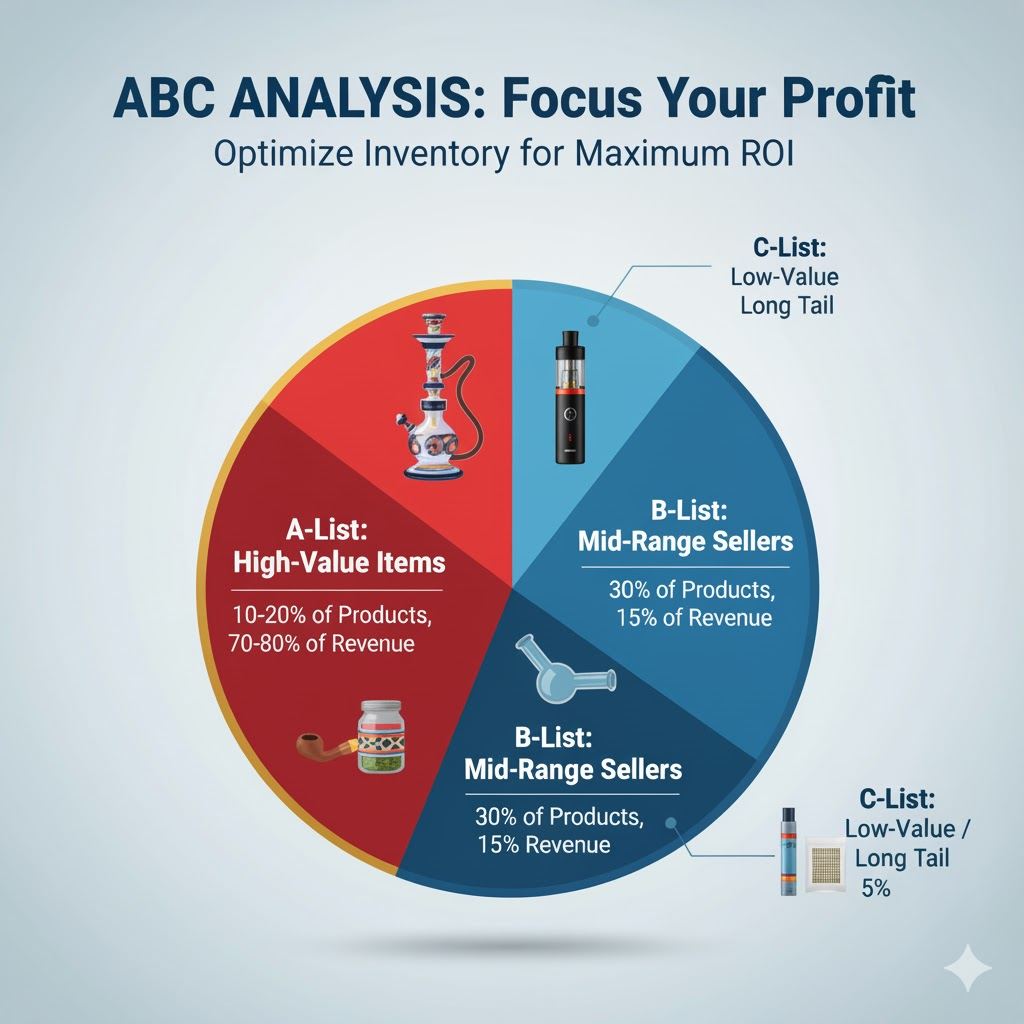
Across smoke shops in the US, glass pipe sales follow a remarkably consistent pattern: approximately 20% of SKUs generate 80% of revenue. The specific products vary by market, but the category distribution is predictable:
| Category | Typical % of Revenue | Typical % of SKUs Displayed | Implication |
|---|---|---|---|
| Classic hand pipes (straight tube, spoon, hammer) | 35-40% | 15-20% | Core revenue driver; must never be out of stock |
| Colored/designer hand pipes | 20-25% | 25-30% | Higher margin, lower velocity; display variety drives impulse buys |
| Water pipes / bongs (small-medium) | 20-25% | 15-20% | Higher ticket price; fewer units but larger revenue per sale |
| Dab rigs | 10-15% | 10-15% | Growing category; requires educated staff to sell |
| Accessories (bowls, downstems, screens) | 5-8% | 10-15% | Add-on sales; high margin but low revenue contribution |
| Novelty / premium art pieces | 2-5% | 5-10% | Display value and brand positioning; very low velocity |
The sourcing implication is clear: the 15-20% of SKUs that generate 35-40% of revenue (classic hand pipes) should never experience a stockout, while the 25-30% of SKUs displayed for variety (designer pipes) can tolerate longer reorder cycles because customers browse them as impulse purchases rather than specific-demand items.
The Sourcing Framework: Three-Tier Inventory Model
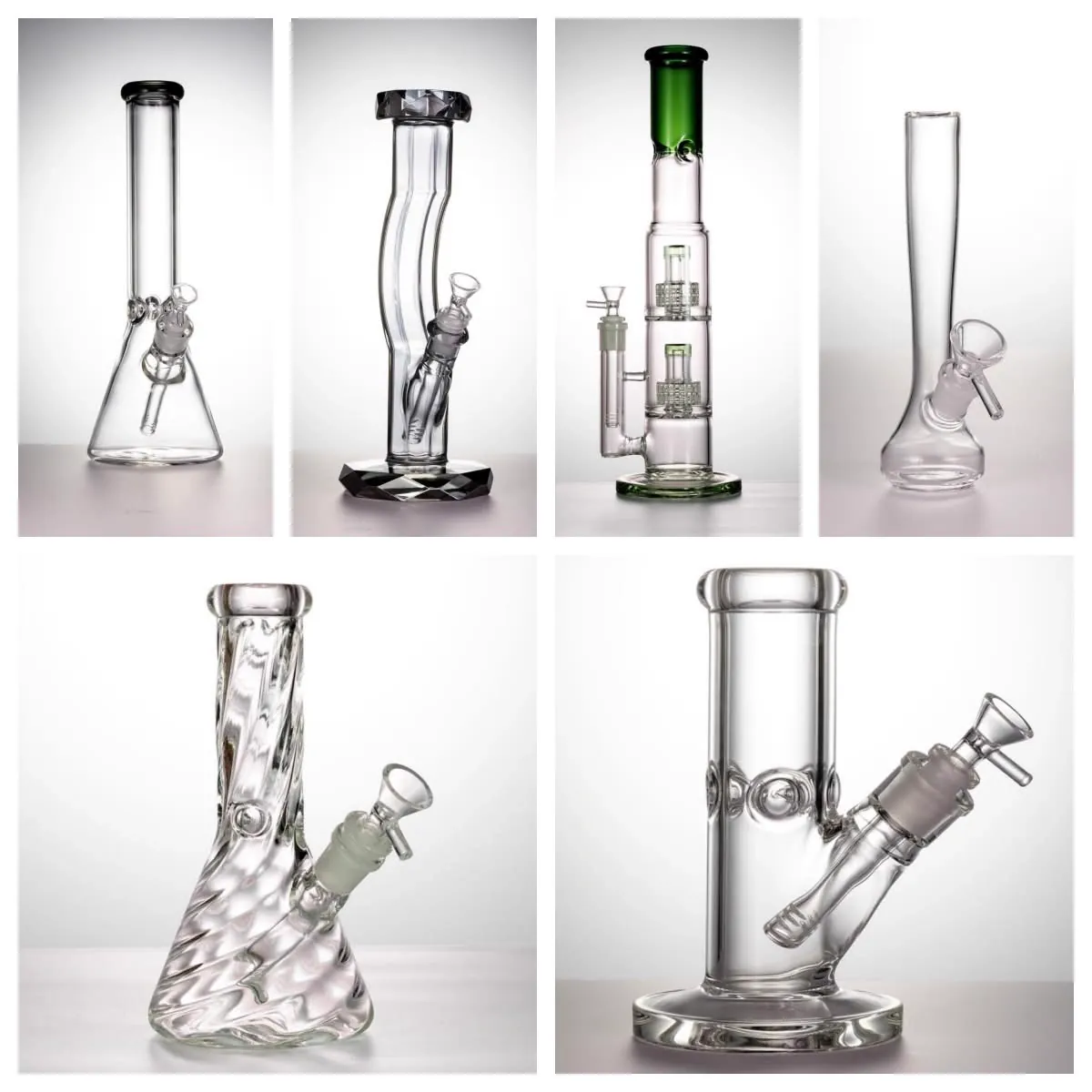
High-turnover smoke shops organize their glass pipe sourcing into three tiers, each with different reorder triggers, supplier relationships, and inventory targets:
Tier 1: Core Stock (Never Out)
These are your top 5-8 SKUs — the classic hand pipes, best-selling colors, and standard water pipes that sell consistently every week. Sourcing rules:
| Parameter | Target |
|---|---|
| Weeks of supply on hand | 3-4 weeks (enough to cover reorder lead time + safety margin) |
| Reorder trigger | When stock drops below 2 weeks of supply |
| Reorder quantity | 4-6 weeks of supply (economical shipping quantity) |
| Supplier relationship | Primary supplier with standing order capability |
| Shipping mode | Sea freight (cost-efficient for predictable, regular shipments) |
| Price sensitivity | High — even $0.50 per unit matters at high volume |
Tier 2: Variety Stock (Rotate Seasonally)
These are the designer pipes, seasonal colors, and trend-driven pieces that create display variety and attract browsing customers. Sourcing rules:
| Parameter | Target |
|---|---|
| Weeks of supply on hand | 6-8 weeks (lower velocity, less frequent reorder) |
| Reorder trigger | When a design has not sold in 8 weeks, mark down or remove |
| Reorder quantity | Smaller batches (10-25 pieces per design) |
| Supplier relationship | Secondary suppliers + primary supplier’s design catalog |
| Shipping mode | Sea LCL (consolidated with Tier 1 orders) or air for trending items |
| Price sensitivity | Moderate — design differentiation matters more than lowest cost |
Tier 3: Display / Premium Stock (Curate, Don’t Stock)
These are the art pieces, large water pipes, and premium items that create visual appeal and brand positioning. They sell rarely but serve a purpose beyond revenue. Sourcing rules:
| Parameter | Target |
|---|---|
| Weeks of supply on hand | 1-2 pieces per design (display models, not inventory) |
| Reorder trigger | When sold — reorder only if the design performs; otherwise rotate |
| Reorder quantity | 1-3 pieces |
| Supplier relationship | Artisan suppliers, custom commissions |
| Shipping mode | Air (small quantities, high value per unit) |
| Price sensitivity | Low — these pieces are brand investments, not margin drivers |
Stock the SKUs That Actually Sell
We help you build a three-tier inventory from proven best-sellers and give you reorder data on what moves fastest. Tell us your shop profile and we will recommend a stocking mix.
MOQ from 100 pieces | BSCI / WRAP / ISO 9001 | NDA before every project
How to Source Each Tier: Supplier Selection Criteria

Each tier requires a different type of supplier. Using one supplier for all three tiers is common but suboptimal — no single factory excels at consistent basics, trendy designs, and artisan-quality pieces simultaneously.
| Tier | Ideal Supplier Profile | Key Selection Criteria |
|---|---|---|
| Tier 1 (Core) | Large factory with automated production, consistent quality, competitive pricing on standard designs | Price, consistency, MOQ flexibility, reliable lead times |
| Tier 2 (Variety) | Mid-size factory with design team that releases new styles regularly, willing to do small batches | Design range, small MOQ (50-100 per design), speed to market |
| Tier 3 (Premium) | Small workshop or artisan glassblowers, hand-blown unique pieces | Craftsmanship, uniqueness, willingness to do one-offs |
Many smoke shop buyers start with a single supplier for simplicity. This works until the business reaches approximately $15,000-20,000 per month in glass pipe purchases — at which point the cost of not optimizing by tier (overpaying for variety, under-investing in core stock reliability) exceeds the complexity cost of managing multiple supplier relationships.
The Reorder Rhythm: Aligning Supply with Demand Patterns

Glass pipe demand is not constant throughout the year. Understanding US Census Bureau retail data helps you time orders to avoid stockouts during peak periods and reduce excess inventory during slow months:
| Period | Demand Pattern | Sourcing Action |
|---|---|---|
| January–February | Post-holiday slowdown; customers spent on gifts | Reduce orders; clear dead inventory with promotions |
| March–April | Spring pickup; 4/20 preparations begin | Increase Tier 1 orders; stock up on bestsellers for 4/20 rush |
| May–June | Post-4/20 normalization; summer travel season | Maintain Tier 1; introduce summer-themed Tier 2 designs |
| July–August | Moderate; back-to-school shopping (younger demographic) | Place holiday season orders early (sea freight lead times) |
| September–October | Pre-holiday buildup; gift buyers start shopping | Heavy ordering for Q4; stock Tier 1 deeply + curated Tier 2/3 gifts |
| November–December | Peak season; holiday gift purchases | No new orders (stock should already be in hand); focus on selling |
The critical sourcing mistake is ordering reactively — placing orders when stock runs out rather than 6-8 weeks ahead of anticipated demand. Because sea freight from China takes 4-5 weeks door-to-door, a reorder placed when stock hits zero means 4-5 weeks of stockouts. The smoke shops that avoid stockouts are the ones that order based on forecast, not on what the shelf looks like today.
Dead Inventory: The Silent Profit Killer
Every glass pipe that sits on the shelf for more than 90 days without selling is costing the retailer money — not just the tied-up capital, but the display space that could be occupied by a faster-moving product. The cost of dead inventory:
| Dead Inventory Metric | Calculation | Example (20 unsold pipes at $9 wholesale) |
|---|---|---|
| Capital tied up | Units × wholesale cost | $180 |
| Opportunity cost (at 8% annual return) | Capital × 8% × (days / 365) | $3.16 for 90 days |
| Display space cost | Space per unit × rent per sq ft × (days / 365) | $4.50 for 90 days (est.) |
| Risk of breakage / theft over time | ~2% of value per 90 days | $3.60 |
| Total cost of 90-day dead inventory | $191.26 for 20 pipes |
The fix is a systematic markdown policy: any SKU that has not sold in 60 days gets a 20% price reduction. At 90 days, it gets a 40% reduction or is bundled with a bestseller. At 120 days, it is removed from display and liquidated at cost or below. The loss on the dead item is less than the ongoing cost of keeping it on the shelf — and the freed display space generates more revenue from faster-moving products.
Learn more about our wholesale hand pipe catalog for smoke shops.
Learn more about request a sourcing consultation from Elfglass.
Building a glass pipe inventory that turns? Elfglass helps smoke shop buyers build three-tier inventory plans — core stock that never runs out, variety pieces that keep the display fresh, and premium items that elevate your brand. Request a sourcing consultation with our retail inventory team.
For related reading, see our building a balanced glass pipe product mix for a detailed breakdown.
For related reading, see our planning wholesale glass pipe lead times for a detailed breakdown.
Ready to Start Your Custom Glass Pipe Project?
Get a free quote within 24 hours. MOQ from 100 pieces. NDA-protected design consultation.
About the Author
Ava Zeng has spent over 16 years at Elfglass working with smoke shop retailers across 40+ countries, helping them build inventory strategies that balance variety with velocity. She writes from direct experience with the sourcing rhythms, seasonal patterns, and dead-inventory problems that determine whether a smoke shop’s glass pipe department generates profit or ties up capital.
Frequently Asked Questions
How many glass pipe SKUs should a smoke shop carry?
Most successful smoke shops carry 40-80 glass pipe SKUs at any given time. The optimal mix is approximately 5-8 core bestsellers (Tier 1), 20-30 variety designs (Tier 2), and 10-20 premium/display pieces (Tier 3). Carrying more than 80 SKUs typically creates dead inventory problems; carrying fewer than 30 limits customer choice and reduces average transaction value.
How often should a smoke shop reorder glass pipes?
Core stock (Tier 1) should be reordered every 3-4 weeks using sea freight to maintain 2-4 weeks of safety stock. Variety stock (Tier 2) should be reordered every 6-8 weeks in smaller batches. Premium pieces (Tier 3) are reordered on demand — when a piece sells, evaluate whether to replace it with the same design or try something new. The key is ordering ahead of demand, not reactively when shelves are empty.
What is the biggest sourcing mistake smoke shops make?
Over-buying variety and under-buying core stock. Shop owners are drawn to new designs and order small quantities of many styles — but fail to keep adequate stock of the 5-8 bestsellers that generate 40% of revenue. The result: customers find the display interesting but cannot buy what they actually want. Fix this by ring-fencing 60% of your purchasing budget for Tier 1 core stock before allocating the remainder to variety and premium pieces.
How do I identify dead inventory in my glass pipe display?
Any SKU that has not sold in 60 days is a candidate for intervention. Pull your POS data and rank SKUs by days since last sale. Items at 60 days should be price-reduced 20%. Items at 90 days should be reduced 40% or bundled. Items at 120+ days should be removed from display and liquidated. The display space freed by removing dead items generates more revenue than the marginal loss from markdowns.
Should I buy glass pipes from one supplier or multiple?
Start with one reliable supplier for simplicity. As your purchasing volume exceeds $15,000-20,000 per month, add a second supplier for variety/premium pieces while keeping your primary supplier for core stock. This lets you optimize each tier: the primary supplier competes on price and consistency for basics, while the secondary supplier competes on design range and small-batch flexibility. Managing 2-3 suppliers is the sweet spot for most independent smoke shops.
